
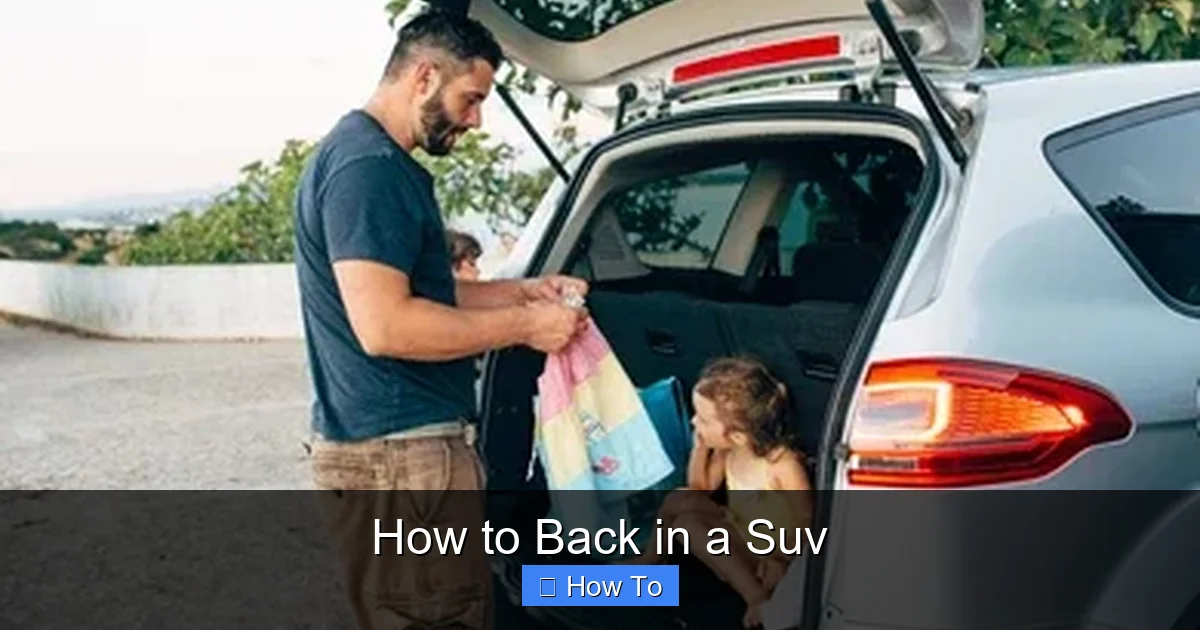
Backing up a SUV can feel intimidating due to blind spots and size, but with the right techniques, it becomes simple and safe. This guide walks you through essential steps, from adjusting mirrors to using backup cameras, so you can park with confidence in any situation.
Key Takeaways
- Adjust your mirrors and seat properly before starting to reverse—this gives you the best view and control.
- Use your backup camera and sensors as helpful tools, but never rely on them alone—always check over your shoulder.
- Turn your head and look over your right shoulder while backing up—this gives you a direct view of what’s behind you.
- Go slow and use small steering corrections—SUVs are larger, so sudden moves can lead to mistakes.
- Practice in empty parking lots to build confidence and muscle memory before tackling tight spaces.
- Use reference points on your SUV to judge distance and alignment when reversing into spots.
- Stay calm and take your time—rushing increases the risk of accidents or damage.
How to Back in a SUV: A Complete Step-by-Step Guide
Backing up a SUV might seem tricky at first—especially if you’re new to driving larger vehicles. SUVs are taller, wider, and have bigger blind spots than sedans or compact cars. But with the right techniques and a little practice, reversing your SUV can become as natural as driving forward.
In this guide, you’ll learn how to back in a SUV safely and confidently. We’ll cover everything from setting up your vehicle correctly to mastering tight parking spots. Whether you’re backing into a driveway, a parking space, or navigating a narrow alley, these tips will help you avoid obstacles, protect your vehicle, and feel more in control.
By the end of this guide, you’ll know exactly how to use your mirrors, backup camera, and body positioning to reverse with precision. You’ll also learn common mistakes to avoid and how to troubleshoot tricky situations. Let’s get started!
Why Backing Up a SUV Is Different
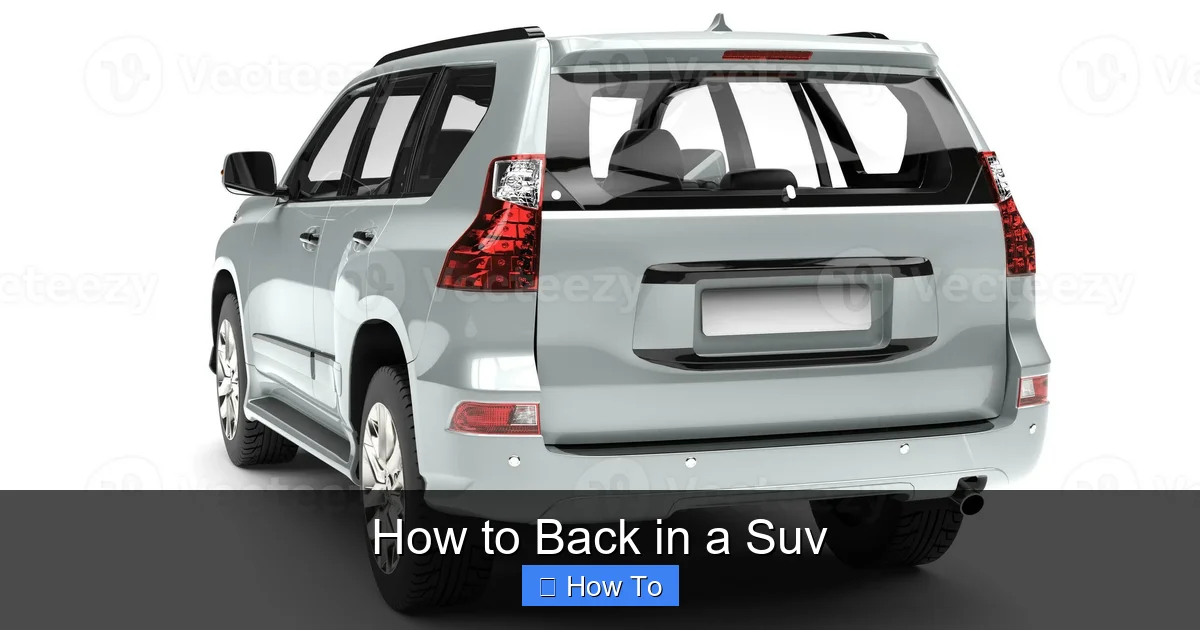
Visual guide about How to Back in a Suv
Image source: static.vecteezy.com
SUVs are popular for their space, power, and versatility. But their size comes with challenges—especially when reversing. Here’s why backing up a SUV requires extra care:
– Larger blind spots: The rear window is often smaller, and the back end is bulkier, making it harder to see directly behind you.
– Higher seating position: While this gives you a better view of the road ahead, it can distort your sense of distance when reversing.
– Longer wheelbase: This means the back of the SUV swings wider when turning, which can surprise new drivers.
– Heavier weight: SUVs take longer to stop, so sudden movements can be risky.
Understanding these differences is the first step to mastering how to back in a SUV. The good news? Once you learn the right techniques, you’ll handle your SUV like a pro.
Step 1: Prepare Your SUV Before Reversing
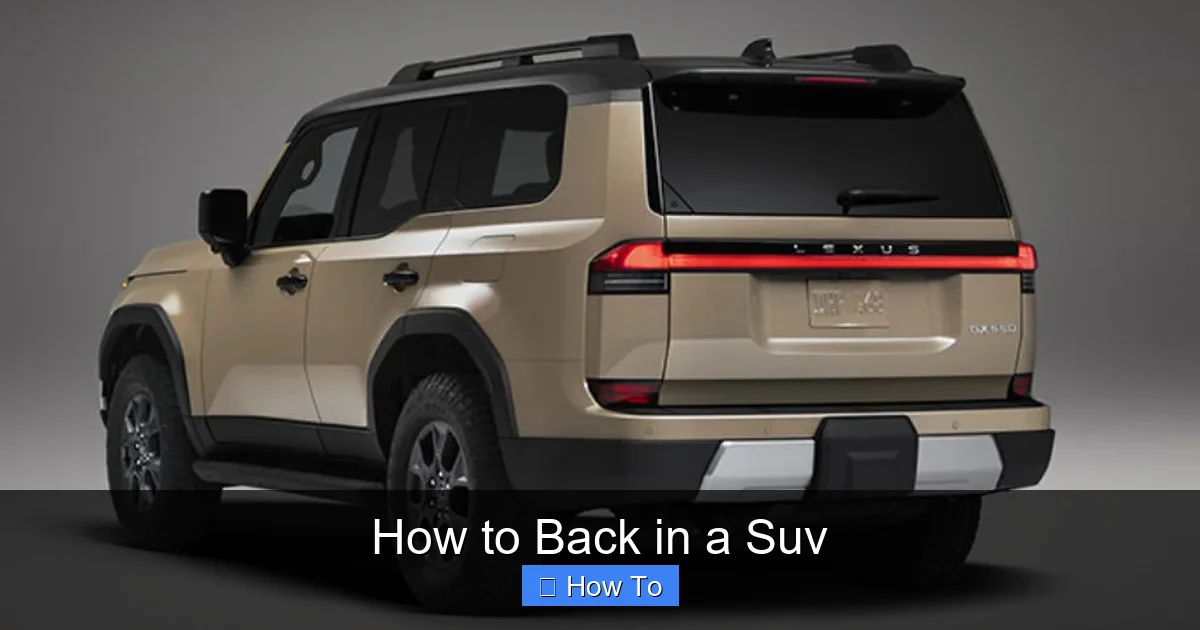
Visual guide about How to Back in a Suv
Image source: cdn.hiconsumption.com
Before you even shift into reverse, take a moment to set up your vehicle for success. Proper preparation reduces stress and prevents accidents.
Adjust Your Seat and Steering Wheel
Start by sitting in a comfortable, upright position. Your back should be against the seat, and your feet should easily reach the pedals. Adjust the steering wheel so you can grip it at 9 and 3 o’clock with a slight bend in your elbows.
Why does this matter? A good seating position gives you better control and reduces fatigue—especially important when you’re focusing on reversing.
Set Your Mirrors Correctly
Mirrors are your first line of defense when backing up. Here’s how to adjust them:
– Side mirrors: Lean your head to the left until it touches the window. Adjust the left mirror so you can just see the edge of your SUV. Then lean to the right and do the same for the right mirror. This minimizes blind spots.
– Rearview mirror: Make sure it’s centered and gives you a clear view out the back window.
Pro tip: Some SUVs have convex or wide-angle mirrors. These help you see more, but they can make objects appear farther away than they are. Keep that in mind when judging distance.
Check Your Backup Camera and Sensors
Most modern SUVs come with backup cameras and parking sensors. These are incredibly helpful, but they’re not perfect. Here’s how to use them wisely:
– Backup camera: Gives you a live view of what’s behind you. Use it to spot low objects, curbs, or children that might be out of mirror view.
– Parking sensors: Beep faster as you get closer to an object. Some systems even show distance on the screen.
But remember: technology can fail. A camera lens might be dirty, or a sensor could be blocked. Always double-check with your own eyes.
Step 2: Use the Right Body Position While Reversing
How you position your body makes a big difference when backing up. The best technique is to turn and look over your shoulder.
Turn Your Head and Look Over Your Right Shoulder
Here’s the golden rule: Turn your head and look directly out the back window over your right shoulder. This gives you the clearest view of what’s behind you.
To do this:
– Place your right hand on the top of the steering wheel.
– Turn your body and head to the right, looking through the rear window.
– Keep your left hand on the bottom of the wheel for support.
This position lets you see the back corners of your SUV and any obstacles in your path. It’s far more effective than relying only on mirrors or cameras.
Use Your Left Hand for Support (Optional)
Some drivers prefer to place their left hand at the bottom of the steering wheel and use it to guide the wheel while turning. This works well if you have good shoulder mobility.
But if you find it uncomfortable, stick with the right-hand-on-top method. The key is to find a position that lets you see clearly and steer smoothly.
Step 3: Shift into Reverse and Start Slowly
Now it’s time to begin reversing. Take it slow—speed is your enemy when backing up.
Shift into Reverse
Press the brake firmly, then move the gear selector into reverse. Listen for the confirmation beep (if your SUV has one). Some vehicles require you to press a button or lift a collar to shift into reverse—check your owner’s manual if you’re unsure.
Release the Brake Gradually
Once in reverse, slowly release the brake. Most SUVs will creep backward without pressing the gas. This gives you full control.
If you need a little more speed, gently press the accelerator—but never rush. A good rule of thumb: go slow enough that you could stop instantly if needed.
Use Small Steering Movements
When you turn the wheel, the back of the SUV swings in the opposite direction. For example:
– Turning the wheel to the right makes the back end swing left.
– Turning the wheel to the left makes the back end swing right.
Because of this, use small, smooth steering corrections. Big turns can cause the SUV to move unpredictably, especially in tight spaces.
Step 4: Use Reference Points to Guide You
Reference points are visual cues on your SUV that help you judge distance and alignment. Every SUV is a little different, so take time to learn yours.
Find Your Rear Corners
Look for the edges of your rear bumper or taillights. These help you see where the back of your SUV is in relation to curbs, walls, or other cars.
For example:
– If you’re backing into a parking space, align the corner of your bumper with the line on the ground.
– If you’re reversing toward a wall, watch how close the taillights get to the surface.
Use the Side Mirrors to Check Alignment
While looking over your shoulder, glance at your side mirrors to see how close you are to the sides of the space. This helps you stay centered.
Pro tip: If your SUV has power-folding mirrors, make sure they’re unfolded before reversing. Folded mirrors give you a false sense of width.
Watch for the “Sweeping” Effect
Because of the longer wheelbase, the back of your SUV will “sweep” outward when turning. This means it can clip objects even if the front clears them.
To avoid this:
– Make wider turns when possible.
– Use your mirrors to monitor the back corners.
– If in doubt, stop and check.
Step 5: Master Common Backing Scenarios
Different situations require different techniques. Here’s how to handle the most common ones.
Backing into a Parking Space
This is one of the most common challenges. Follow these steps:
1. Approach slowly: Drive past the space and stop when your rear bumper is even with the line.
2. Turn the wheel sharply: Turn the wheel all the way toward the space. This starts the back end swinging in.
3. Straighten out: As your SUV enters the space, begin straightening the wheel.
4. Adjust as needed: Use small corrections to center the vehicle.
5. Stop when aligned: Use your backup camera or reference points to know when to stop.
Tip: If the space is tight, back in at a slight angle first, then straighten out.
Reversing Out of a Driveway
Driveways often have slopes, curbs, and hidden obstacles. Here’s how to do it safely:
1. Stop at the edge: Before reversing, stop and look both ways for traffic.
2. Use your mirrors and camera: Check for cars, bikes, or pedestrians.
3. Back up slowly: Turn your head and look over your shoulder.
4. Steer toward the road: Turn the wheel in the direction you want the back end to go.
5. Straighten and proceed: Once clear, shift into drive and move forward.
Never back out blindly. Always check your surroundings first.
Backing Up on a Hill
Hills add another layer of difficulty. Gravity can pull your SUV backward unexpectedly.
To reverse uphill:
– Use the brake to control speed.
– Apply gentle gas if needed to prevent rolling back.
– Keep your foot ready to brake.
To reverse downhill:
– Let the SUV creep slowly.
– Use engine braking (don’t ride the brake).
– Stay alert for obstacles.
In both cases, turn your head and look over your shoulder—don’t rely on the camera alone.
Step 6: Use Technology Wisely
Modern SUVs come with advanced safety features. Use them—but don’t depend on them.
Backup Camera Tips
– Keep the lens clean: Wipe it regularly with a soft cloth.
– Understand the guidelines: Most cameras show dynamic lines that move as you steer. Use them to predict your path.
– Don’t ignore blind spots: The camera doesn’t show everything—especially low objects or people right behind the bumper.
Parking Sensors and Alerts
– Listen to the beeps: Slow beeps mean you’re getting close. Fast beeps mean stop.
– Check the display: Some SUVs show distance in feet or meters.
– Test them regularly: Make sure sensors are working before relying on them.
360-Degree Cameras (If Equipped)
Some SUVs have multiple cameras that stitch together a bird’s-eye view. These are great for tight spaces, but:
– They can distort distance.
– They may not show very close objects.
– Always double-check with your eyes.
Step 7: Practice Makes Perfect
The best way to get better at backing up a SUV is to practice. Start in a safe, empty area like a large parking lot.
Set Up a Practice Course
Use cones or parking lines to create scenarios:
– Back into a space between two cones.
– Reverse around a corner.
– Practice backing up a slight incline.
Start simple, then increase difficulty as you improve.
Focus on Smoothness
Don’t worry about speed—focus on control. Smooth steering and gradual movements prevent mistakes.
Get Feedback
Ask a friend or family member to watch from outside. They can spot things you might miss, like how close you are to a cone or curb.
Troubleshooting Common Problems
Even experienced drivers run into issues. Here’s how to handle them.
“I Can’t See Behind Me!”
If your blind spot is too large:
– Adjust your mirrors again.
– Use your backup camera.
– Turn your head and look over your shoulder—no substitute for direct vision.
“I Keep Hitting the Curb”
This usually happens when you underestimate how far the back swings. Solutions:
– Go slower.
– Use reference points.
– Practice in a quiet area.
“The Camera Is Blurry or Dirty”
Clean the lens with a microfiber cloth. If it’s foggy, turn on the rear defroster. If the problem persists, have it checked by a technician.
“I’m Scraping the Side”
This often happens when turning too sharply. Remember: the back swings opposite the front. Make wider turns and use your side mirrors.
Tips for Confident SUV Reversing
Here are a few final tips to help you back in a SUV with confidence:
– Stay calm: Nervousness leads to mistakes. Take deep breaths and go slow.
– Use your signals: Turn on your brake lights or hazard lights if you’re moving very slowly.
– Be aware of pedestrians: Children and pets can be hard to see. Always check before reversing.
– Know your SUV’s dimensions: Check the owner’s manual for length, width, and turning radius.
– Upgrade if needed: Consider adding blind-spot mirrors or a better camera system.
Conclusion
Learning how to back in a SUV doesn’t have to be stressful. With the right preparation, body positioning, and practice, you can reverse safely and confidently in any situation.
Remember: always adjust your mirrors and seat, turn your head to look over your shoulder, and use your backup camera as a helper—not a replacement—for your eyes. Go slow, use reference points, and practice regularly.
SUVs are powerful, capable vehicles, and mastering reverse driving is part of becoming a skilled driver. Don’t rush the process. Every time you back up, you’re building experience and confidence.
Soon, reversing your SUV will feel as natural as driving forward. Stay safe, stay aware, and enjoy the ride!