
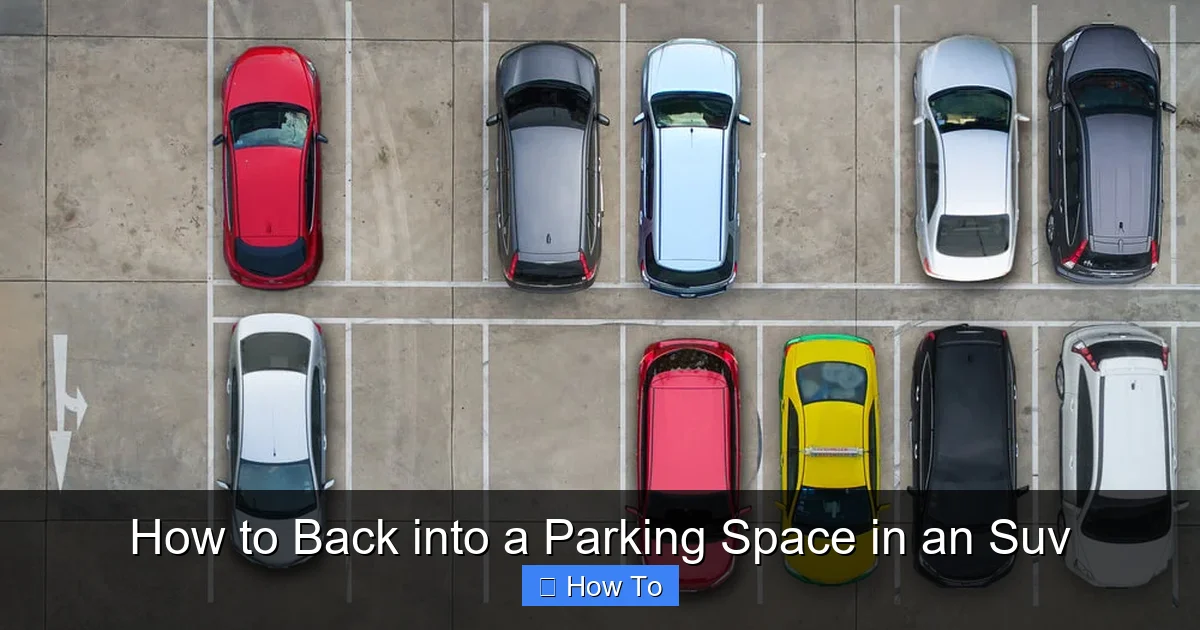
Backing into a parking space in an SUV may seem intimidating, but with the right technique, it becomes a safe and efficient skill. This guide walks you through each step—from preparation to execution—so you can park with confidence, improve visibility, and reduce blind spots.
Key Takeaways
- Backing in improves safety: When you back into a parking space, you exit forward, giving you better visibility and control when leaving.
- Use your mirrors and cameras: Modern SUVs come equipped with backup cameras and sensors—use them to guide your movements and avoid obstacles.
- Take it slow and steady: Rushing increases the risk of mistakes. Move slowly, check your surroundings frequently, and make small steering adjustments.
- Practice in empty lots: Build confidence by practicing in low-traffic areas before trying busy parking garages or tight spaces.
- Adjust your seat and mirrors first: Proper setup ensures maximum visibility and control before you begin reversing.
- Signal your intent: Use your turn signal to let other drivers know you’re preparing to back in, reducing confusion and potential accidents.
- Stay aware of pedestrians and cyclists: Always scan for people, especially children, who may not be visible in your mirrors or camera.
How to Back into a Parking Space in an SUV
Parking an SUV can feel like a challenge, especially when you’re trying to back into a tight space. SUVs are larger, have bigger blind spots, and require more precision than smaller vehicles. But here’s the good news: backing into a parking space is not only possible—it’s actually safer and smarter than pulling in headfirst. When you back in, you leave by driving forward, which gives you better visibility and control. This guide will walk you through the entire process, step by step, so you can master this essential skill with confidence.
Whether you’re a new SUV owner or just looking to improve your parking technique, this guide is for you. We’ll cover everything from preparation and positioning to steering and final adjustments. You’ll also learn how to use your vehicle’s technology, avoid common mistakes, and practice safely. By the end, you’ll be backing into parking spaces like a pro—no sweat, no stress.
Why Backing In Is Better for SUVs
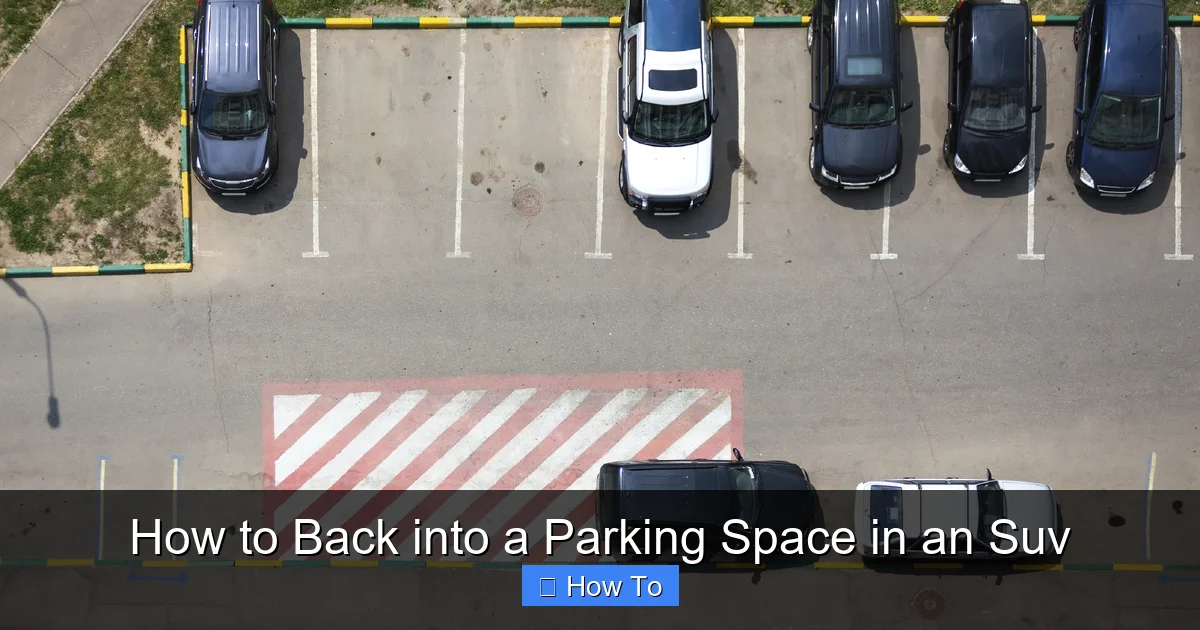
Visual guide about How to Back into a Parking Space in an Suv
Image source: safestart.com
Before we dive into the steps, let’s talk about why backing into a parking space is a smart move—especially in an SUV. SUVs are taller and wider than most cars, which means they have larger blind spots, particularly to the sides and rear. When you pull into a space headfirst, you’re relying heavily on mirrors and guesswork to back out later. But when you back in, you reverse the problem: you enter slowly and carefully, then leave by driving forward with a clear view of traffic.
Safety is the biggest benefit. According to the National Highway Traffic Safety Administration (NHTSA), backing accidents account for thousands of injuries each year, many involving children or pedestrians. When you back into a space, you reduce the time you spend reversing in busy areas. Instead, you reverse in a controlled, low-traffic moment and then drive forward when traffic is heavier.
Another advantage is improved visibility when exiting. Imagine you’re in a crowded parking lot. If you pulled in headfirst, you’d have to back out into traffic, craning your neck to see around pillars, other cars, and shoppers. But if you backed in, you can simply drive forward with a clear view of the lane. This makes merging safer and less stressful.
Backing in also helps protect your vehicle. When you reverse slowly into a space, you’re more aware of curbs, shopping carts, and other obstacles. You’re less likely to scrape your bumper or sides. Plus, if someone opens their door into your path, you’ll see it sooner when backing in than when backing out.
Finally, it’s just more efficient. In busy lots, drivers are constantly moving. If everyone backs in, the flow improves because cars leave faster and with less hesitation. It’s a small change that makes a big difference.
Preparing Your SUV for Backing In
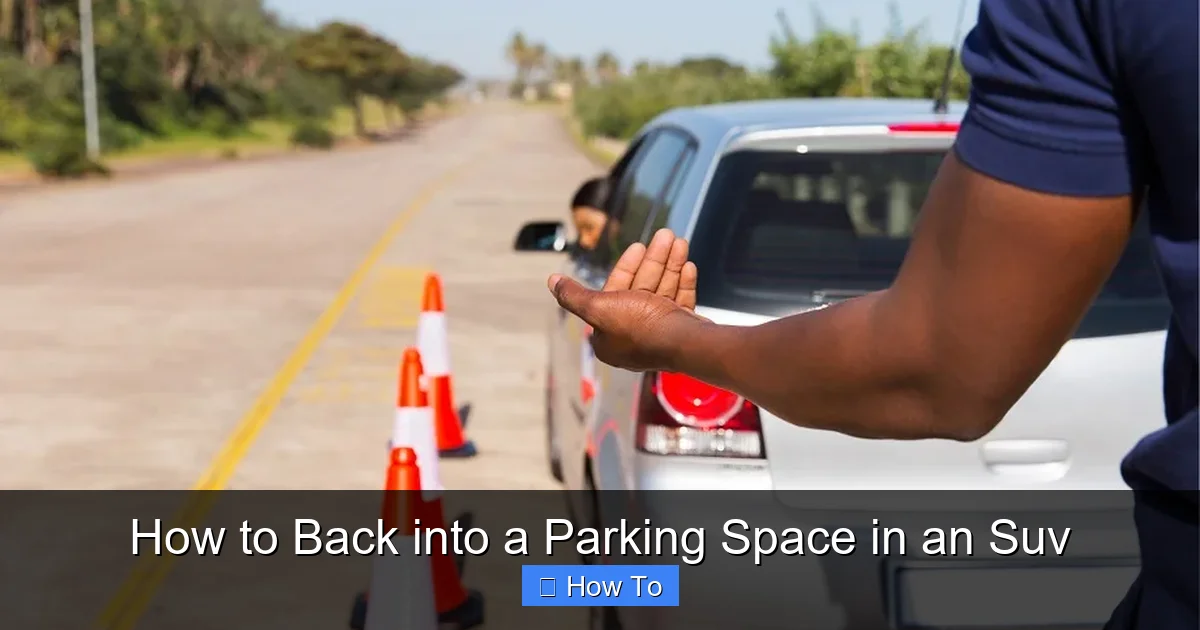
Visual guide about How to Back into a Parking Space in an Suv
Image source: s.driving-tests.org
Before you even start moving, take a moment to prepare. A little setup goes a long way in making the process smooth and safe.
Adjust Your Seat and Mirrors
Start by making sure your seat is in the right position. You should be able to press the pedals fully while keeping a slight bend in your knees. Your back should be supported, and your hands should rest comfortably on the steering wheel at 9 and 3 o’clock.
Next, adjust your side mirrors. Lean your head against the left window and adjust the left mirror so you can just see the edge of your SUV. Then lean toward the center console and adjust the right mirror the same way. This minimizes blind spots.
Don’t forget the rearview mirror. Make sure it’s clean and angled to give you the best view out the back window. If your SUV has a backup camera, ensure the lens is clean and unobstructed.
Check Your Surroundings
Before you put the vehicle in reverse, look around. Walk around your SUV if needed. Check for low curbs, shopping carts, children, pets, or anything that might be hidden from view. Look up, too—low-hanging branches or signs can damage your roof or antenna.
Use your turn signal to indicate your intention to back into the space. This alerts other drivers and pedestrians that you’re about to maneuver.
Use Technology Wisely
Most modern SUVs come with backup cameras, parking sensors, and even 360-degree cameras. These tools are incredibly helpful, but they’re not a substitute for looking around.
The backup camera shows you what’s directly behind you, but it has a limited field of view. Objects to the sides or low to the ground might not appear. Parking sensors beep when you’re close to an obstacle, but they can’t detect everything—especially soft or narrow objects like poles or shopping cart handles.
Use these features as aids, not crutches. Always turn your head and look over your shoulder while reversing.
Step-by-Step Guide to Backing Into a Parking Space
Now that you’re prepared, let’s walk through the actual process. Follow these steps carefully, and remember: slow and steady wins the race.
Step 1: Position Your SUV Correctly
Start by driving past the parking space you want to use. Stop when your rear bumper is aligned with the front of the space. This gives you room to swing in.
Turn on your right turn signal (if backing into a space on the right side of the lane) or left signal (for the left side). This tells others what you’re about to do.
Step 2: Check All Around
Before shifting into reverse, do a full 360-degree check. Look out the windows, check your mirrors, and glance at your backup camera. Make sure no one is walking behind you or pulling into the space next to you.
Step 3: Shift to Reverse and Begin Backing
Press the brake, shift into reverse, and release the brake slowly. Keep your foot ready to brake at any moment.
As you start moving, turn your head to look out the back window. Use your side mirrors to monitor your position relative to the lines.
Step 4: Turn the Steering Wheel at the Right Time
This is the trickiest part. You need to turn the wheel in the direction you want the back of the SUV to go.
For a space on the right: Turn the steering wheel to the right as you begin backing. This will swing the rear of the SUV into the space.
For a space on the left: Turn the wheel to the left.
Don’t turn too early or too late. The key is to start turning when your front bumper clears the adjacent vehicle or line. If you turn too soon, you might hit the curb. Too late, and you’ll overshoot the space.
Step 5: Straighten Out as You Enter
Once the SUV is mostly in the space, begin straightening the wheel. Watch your side mirrors to make sure you’re centered.
If you’re not aligned, don’t panic. You can make small adjustments by moving forward and backward slightly. Just remember to check your surroundings each time.
Step 6: Stop When Centered
When your SUV is fully in the space and centered between the lines, press the brake firmly. Shift to park (or engage the parking brake if you’re on a hill).
Double-check your position. Are you too close to the car in front or behind? Are you centered? Make any final adjustments if needed.
Practical Tips for Success
Even with the steps above, backing in can be tricky. Here are some practical tips to make it easier.
Use Reference Points
Every SUV is different, but you can find reference points that help you judge distance. For example, when the edge of the parking line appears at a certain spot in your side mirror, you know you’re aligned. Practice in an empty lot to find your own reference points.
Practice the “S” Pattern
Instead of trying to back in perfectly on the first try, use a gentle “S” pattern. Back up a little, adjust, go forward a bit, then back again. This gives you more control and reduces the chance of overcorrecting.
Keep Your Hands at 9 and 3
This hand position gives you the best control over the steering wheel. It also makes it easier to turn quickly if needed.
Don’t Rush
It’s tempting to hurry, especially if someone is waiting behind you. But rushing leads to mistakes. Take your time. Most people will understand—especially if you’ve signaled your intent.
Use Your Horn if Necessary
If you’re unsure whether someone can see you, give a quick tap on the horn. It’s a polite way to alert others without being aggressive.
Troubleshooting Common Problems
Even experienced drivers run into issues. Here’s how to handle the most common problems.
Problem: I’m Hitting the Curb
This usually happens when you turn too early or too sharply. Solution: Start your turn later, and make smaller steering adjustments. Use your side mirror to watch the distance to the curb.
Problem: I’m Too Close to the Car in Front
You might have backed in too far. Solution: Shift to drive, move forward slightly, then shift back to reverse and adjust. Always check your surroundings before moving.
Problem: I’m Not Centered in the Space
This is common, especially in tight spaces. Solution: Use small forward and backward movements to nudge your SUV into alignment. Watch both side mirrors equally.
Problem: My Backup Camera Is Blurry
Dirt, snow, or condensation can block the lens. Solution: Clean the camera with a soft cloth. If it’s foggy, turn on the rear defroster if your SUV has one.
Problem: I’m Nervous About Pedestrians
This is valid—especially in busy areas. Solution: Go extra slow, make eye contact with people nearby, and use your horn if needed. Consider backing in during quieter times until you gain confidence.
Practicing Safely
Like any skill, backing into a parking space takes practice. Don’t expect to get it right the first time—and that’s okay.
Start in an Empty Lot
Find a large, empty parking lot—like at a closed store or school. Use cones or chalk to mark practice spaces. Practice backing in from different angles and distances.
Try Different Scenarios
Practice backing into tight spaces, wide spaces, and spaces next to other vehicles. Try it at night and in the rain to build confidence in all conditions.
Ask for Feedback
Have a friend or family member watch you park. They might notice things you miss, like how close you are to the curb or whether you’re centered.
Be Patient with Yourself
It’s normal to feel frustrated at first. Celebrate small wins—like getting closer to the line or avoiding a curb. Over time, it will become second nature.
Advanced Techniques for Experienced Drivers
Once you’re comfortable with the basics, you can try more advanced techniques.
Use the “Two-Stage” Method
Instead of backing in all at once, use a two-stage approach. First, back up until your SUV is at a 45-degree angle to the space. Then straighten out and complete the maneuver. This gives you more control.
Master the 360-Degree Camera
If your SUV has a 360-degree camera, learn how to use it effectively. It shows a bird’s-eye view of your vehicle, helping you see curbs, lines, and obstacles from above. Practice switching between camera angles to get the best view.
Adjust for Load and Terrain
If your SUV is loaded with passengers or cargo, it may handle differently. The rear may sit lower, changing your perspective. Adjust your reference points accordingly. Also, be extra cautious on slopes—use the parking brake and shift to park securely.
Conclusion
Backing into a parking space in an SUV might seem daunting at first, but it’s a skill worth mastering. It’s safer, more efficient, and gives you better control when exiting. With the right preparation, technique, and practice, you’ll be backing in like a pro in no time.
Remember to adjust your seat and mirrors, use your technology wisely, and take it slow. Practice in safe environments, and don’t be afraid to make small adjustments. Over time, this method will become second nature—and you’ll wonder why you ever parked any other way.
So next time you pull into a parking lot, try backing in. Your future self—and everyone else on the road—will thank you.