
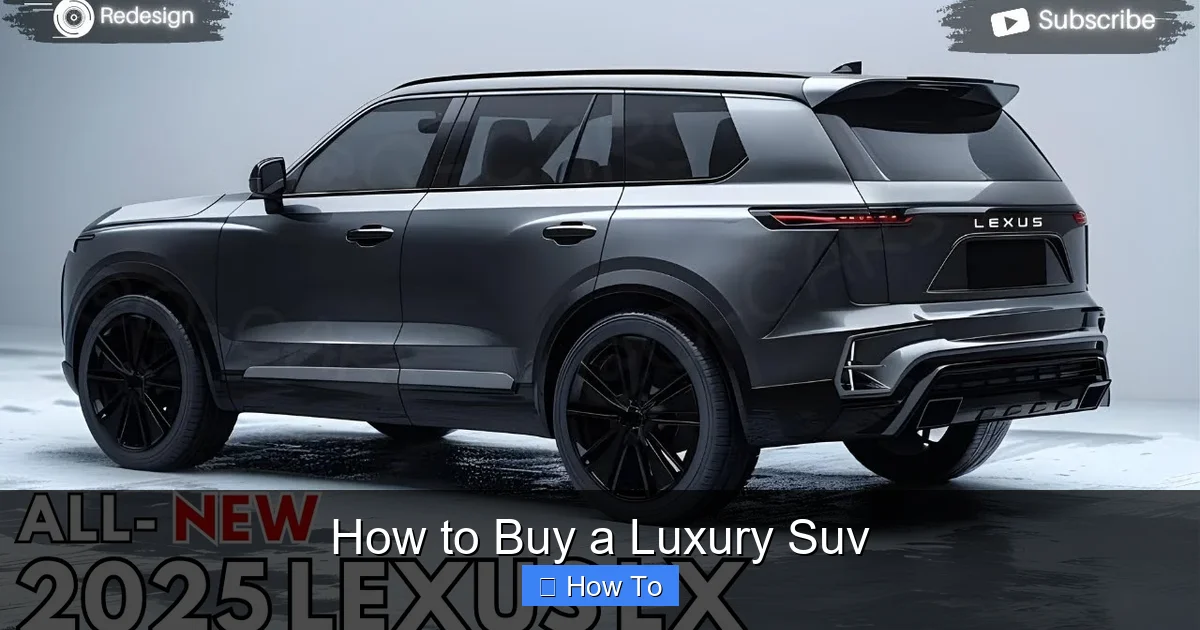
Buying a luxury SUV is exciting but requires smart planning. This guide walks you through every step—from setting a budget to test driving—so you can choose the right vehicle with confidence. You’ll learn what features matter most and how to avoid common pitfalls.
Key Takeaways
- Set a realistic budget: Include not just the purchase price, but also insurance, fuel, maintenance, and depreciation costs.
- Research top luxury SUV brands: Compare models from brands like BMW, Mercedes-Benz, Audi, Lexus, and Range Rover based on reliability, features, and resale value.
- Prioritize must-have features: Focus on safety tech, comfort, performance, and infotainment systems that match your lifestyle.
- Test drive multiple models: Experience how each SUV handles, rides, and feels in real-world conditions before deciding.
- Explore financing and leasing options: Compare loan rates, lease terms, and incentives to find the most cost-effective way to own your luxury SUV.
- Negotiate confidently: Use market data and dealer incentives to get the best possible deal without overpaying.
- Inspect and verify before buying: Whether new or used, always check vehicle history, warranty coverage, and condition.
How to Buy a Luxury SUV: A Complete Step-by-Step Guide
Buying a luxury SUV is more than just a purchase—it’s an investment in comfort, performance, and status. Whether you’re upgrading from a standard SUV or stepping into the world of high-end vehicles for the first time, the process can feel overwhelming. With so many brands, models, features, and financing options, it’s easy to get lost in the details.
But don’t worry. This guide will walk you through every step of how to buy a luxury SUV with confidence. You’ll learn how to set a realistic budget, research the best models, test drive like a pro, and negotiate the best deal. By the end, you’ll be ready to drive off in the luxury SUV that fits your lifestyle, needs, and budget.
Let’s get started.
Step 1: Define Your Needs and Lifestyle
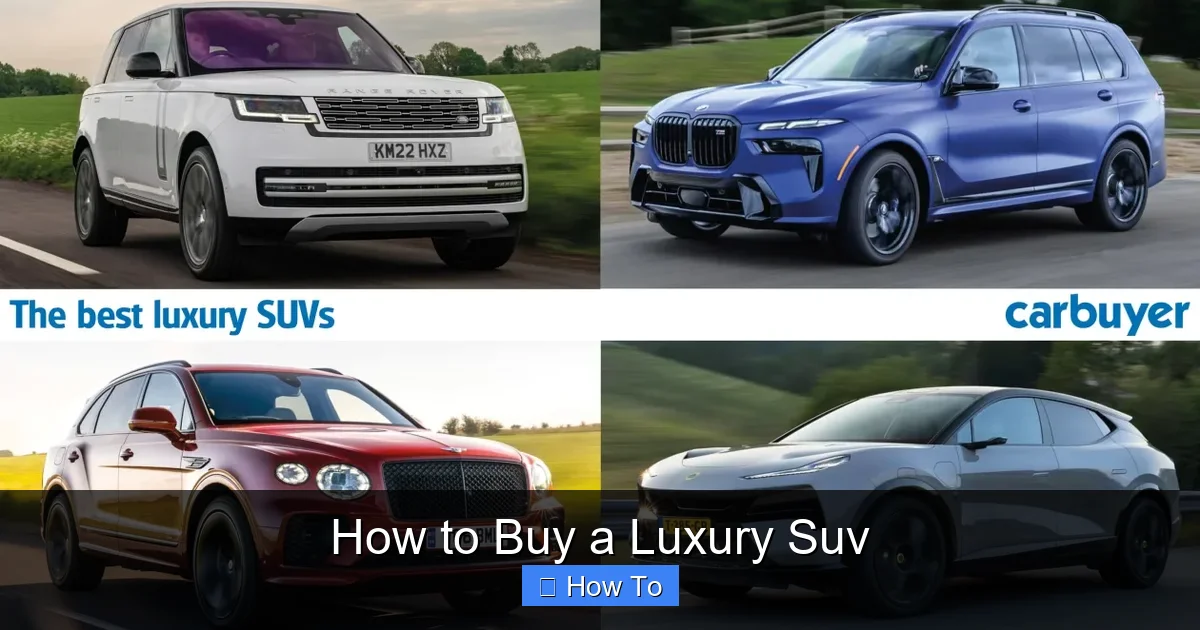
Visual guide about How to Buy a Luxury Suv
Image source: mediacloud.carbuyer.co.uk
Before you even look at a single SUV, take time to understand what you really need. A luxury SUV isn’t just about looking good—it should serve your daily life.
Ask Yourself Key Questions
- How many passengers do I usually carry?
- Do I need extra cargo space for gear, pets, or weekend trips?
- Will I drive mostly in the city, on highways, or off-road?
- Do I prioritize comfort, performance, or fuel efficiency?
- Will I use the SUV for family trips, business, or weekend adventures?
For example, if you have a growing family, you might want a three-row SUV like the Acura MDX or Volvo XC90. If you’re a solo driver who loves weekend getaways, a sporty two-row like the BMW X5 or Mercedes-Benz GLE might be a better fit.
Consider Your Driving Environment
If you live in a snowy area, all-wheel drive (AWD) is a must. If you’re in a city with tight parking, a smaller luxury SUV like the Audi Q5 or Lexus NX could be easier to maneuver.
Matching your SUV to your lifestyle ensures you’ll love it long after the initial excitement fades.
Step 2: Set a Realistic Budget
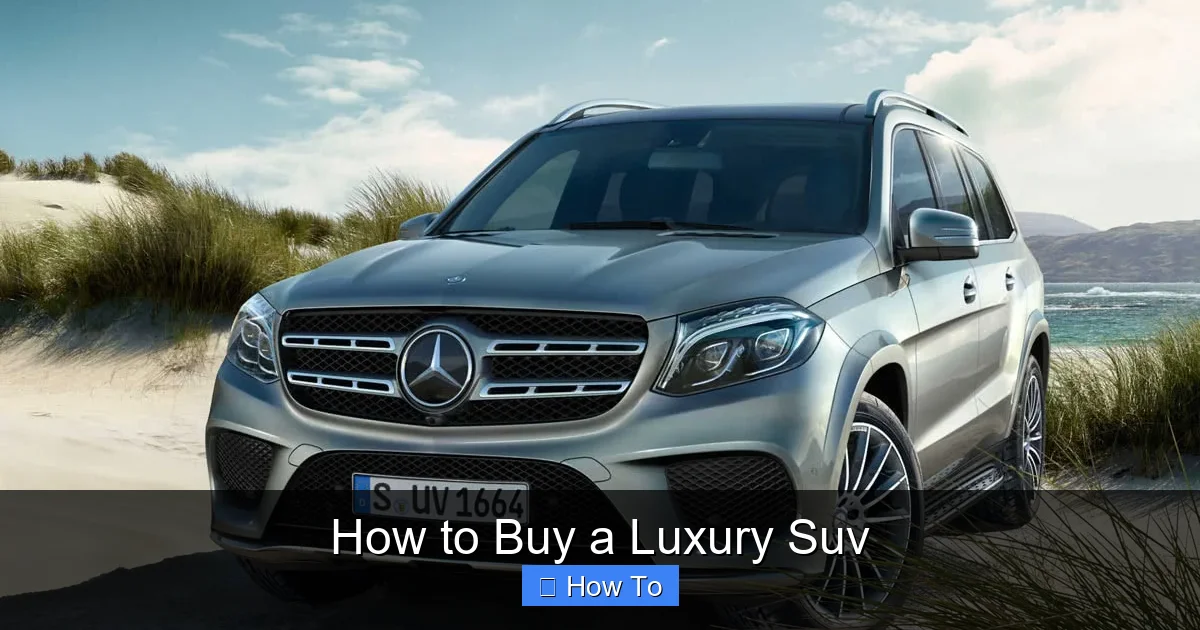
Visual guide about How to Buy a Luxury Suv
Image source: cdn.luxe.digital
Luxury SUVs come with luxury price tags—but the cost doesn’t stop at the sticker price. You need to plan for the full cost of ownership.
Calculate the Total Cost of Ownership
- Purchase price: The base price plus options and fees.
- Financing or lease payments: Monthly costs based on loan terms or lease agreements.
- Insurance: Luxury vehicles often have higher premiums due to repair costs and theft risk.
- Fuel: Many luxury SUVs use premium gas and have lower fuel efficiency.
- Maintenance and repairs: High-end parts and specialized service can be expensive.
- Depreciation: Luxury SUVs lose value quickly—some up to 50% in the first three years.
A good rule of thumb: don’t spend more than 10–15% of your monthly take-home pay on your vehicle payment. Use online calculators to estimate insurance, fuel, and maintenance costs for specific models.
Decide: Buy or Lease?
Buying gives you ownership and the freedom to customize or keep the vehicle long-term. Leasing offers lower monthly payments and the chance to drive a new SUV every few years—but you don’t own it.
If you drive less than 12,000 miles a year and like having the latest tech, leasing might make sense. If you plan to keep the SUV for 5+ years, buying is usually better.
Step 3: Research Top Luxury SUV Brands and Models
Not all luxury SUVs are created equal. Some focus on comfort, others on performance, and some on cutting-edge tech. Here’s a quick look at the top players.
BMW
Known for sporty handling and driver-focused design. The BMW X5 and X7 offer powerful engines, sharp steering, and premium interiors. Great for those who love to drive.
Mercedes-Benz
Luxury and comfort are Mercedes’ strong suits. The GLE and GLS models feature plush seats, quiet cabins, and advanced safety tech. Ideal for long commutes or family road trips.
Audi
Audi blends style, tech, and performance. The Q5, Q7, and Q8 offer sleek designs, intuitive infotainment, and Quattro all-wheel drive. A favorite among tech-savvy buyers.
Lexus
Reliability and value stand out with Lexus. The RX and GX are known for long-term durability, low maintenance costs, and strong resale value. Perfect if you want luxury without the hassle.
Range Rover
For off-road capability and bold style, Range Rover leads the pack. The Range Rover Sport and Velar combine rugged performance with high-end interiors. Best for adventurous drivers.
Other Notable Brands
- Acura: Offers luxury at a slightly lower price point (e.g., MDX).
- Volvo: Focuses on safety and Scandinavian design (e.g., XC90).
- Cadillac: American luxury with bold styling (e.g., Escalade).
- Genesis: Rising star with strong value and warranty (e.g., GV80).
Use comparison tools on sites like Edmunds, Kelley Blue Book, and Car and Driver to see side-by-side specs, reviews, and pricing.
Step 4: Prioritize Must-Have Features
Luxury SUVs come loaded with features—but not all are worth the extra cost. Focus on what matters most to you.
Safety and Driver Assistance
Look for:
- Adaptive cruise control
- Lane-keeping assist
- Automatic emergency braking
- Blind-spot monitoring
- 360-degree camera
These features can prevent accidents and reduce stress on long drives.
Comfort and Convenience
Consider:
- Heated and ventilated seats
- Massage seats (yes, really!)
- Panoramic sunroof
- Tri-zone or quad-zone climate control
- Power liftgate
If you spend a lot of time in your car, these small luxuries make a big difference.
Infotainment and Tech
Check for:
- Large touchscreen (10+ inches)
- Apple CarPlay and Android Auto
- Premium sound system (e.g., Bose, Harman Kardon, Bang & Olufsen)
- Wireless charging
- Wi-Fi hotspot
Make sure the system is easy to use—some luxury brands have clunky interfaces that frustrate drivers.
Performance and Capability
Decide if you want:
- A powerful V6 or V8 engine
- Hybrid or plug-in hybrid options (e.g., Lexus RX 450h, BMW X5 xDrive45e)
- Air suspension for a smoother ride
- Towing capacity (some SUVs can tow 5,000+ lbs)
- Off-road modes (especially for Range Rover or Jeep Grand Cherokee SRT)
Don’t overbuy. A high-performance engine sounds great, but it costs more in fuel and maintenance.
Step 5: Test Drive Multiple Models
Reading specs is one thing—driving the SUV is another. Always test drive before you buy.
Schedule Test Drives
Visit dealerships or use online scheduling tools to book test drives for your top 2–3 choices. Try to drive them back-to-back if possible.
What to Focus On During the Drive
- Comfort: Are the seats supportive? Is the ride smooth over bumps?
- Visibility: Can you see clearly out of all windows and mirrors?
- Noise level: Is the cabin quiet at highway speeds?
- Handling: Does it feel stable in corners? Is steering responsive?
- Infotainment: Is the system intuitive? Do buttons and screens respond quickly?
- Space: Can passengers sit comfortably? Is cargo room sufficient?
Bring your family or a friend along. A second opinion can help you spot things you might miss.
Test in Real Conditions
If possible, drive on highways, city streets, and rough roads. Try parking in a tight spot. Simulate your daily commute.
Step 6: Explore Financing and Leasing Options
Once you’ve picked your SUV, it’s time to figure out how to pay for it.
Get Pre-Approved for a Loan
Before visiting the dealer, get pre-approved by your bank or credit union. This gives you leverage and helps you avoid high dealer financing rates.
Compare interest rates, loan terms (36–72 months), and monthly payments. A lower rate can save you thousands over the life of the loan.
Understand Lease Terms
If leasing, pay attention to:
- Mileage limits (usually 10,000–15,000 miles/year)
- Lease length (typically 24–36 months)
- Due at signing (down payment, fees, first month)
- Excess wear and tear charges
Leasing can be cheaper month-to-month, but you’ll pay more in the long run if you always lease.
Look for Incentives and Rebates
Manufacturers often offer:
- Low APR financing
- Cashback rebates
- Lease specials
- Loyalty bonuses (for returning customers)
Check the brand’s website or ask the dealer about current offers.
Step 7: Negotiate the Best Deal
Negotiating doesn’t have to be scary. With the right info, you can save thousands.
Know the Market Value
Use tools like Kelley Blue Book (KBB) or Edmunds to find the invoice price (what the dealer paid) and fair market price. Aim to pay close to invoice, especially on slow-selling models.
Negotiate the Price, Not the Payment
Dealers may try to focus on monthly payments to hide a higher price. Always negotiate the total price first, then discuss financing.
Be Ready to Walk Away
If the dealer won’t meet your price, be prepared to leave. There are other dealers and models. Walking away often leads to a better offer.
Ask About Add-Ons
Dealers may push extras like:
- Extended warranties
- Paint protection
- Fabric coating
- GPS tracking systems
Most of these are overpriced. Only buy what you truly need.
Step 8: Inspect and Verify Before Buying
Whether you’re buying new or used, don’t skip this step.
For New SUVs
- Check for damage or defects during delivery.
- Verify all features work (lights, sensors, infotainment).
- Review the warranty—most luxury brands offer 4-year/50,000-mile basic coverage.
For Used or CPO (Certified Pre-Owned) SUVs
- Get a vehicle history report (Carfax or AutoCheck).
- Have a trusted mechanic inspect it.
- Check for accidents, flood damage, or odometer rollback.
- Confirm CPO warranty details—these often include extended coverage and roadside assistance.
Never skip the inspection. A small issue now could become a costly repair later.
Troubleshooting Common Issues
Even with careful planning, problems can arise. Here’s how to handle them.
Problem: The Dealer Won’t Negotiate
Solution: Try a different dealership or wait for a sales event (end of month, holiday weekends). Use competing offers as leverage.
Problem: The SUV Has Recurring Mechanical Issues
Solution: Check consumer reports and forums for common problems. Avoid models with known issues (e.g., transmission problems in early BMW X5 models).
Problem: Insurance Is Too Expensive
Solution: Shop around for quotes. Some insurers offer discounts for safety features or bundling home and auto policies.
Problem: You’re Overwhelmed by Options
Solution: Narrow your list to 2–3 models. Focus on your top priorities (e.g., safety, space, tech) and eliminate anything that doesn’t meet them.
Conclusion
Buying a luxury SUV is a big decision—but it doesn’t have to be stressful. By following these steps, you’ll make a smart, informed choice that fits your lifestyle and budget.
Start by defining your needs, then set a realistic budget that includes all costs. Research top brands and models, prioritize features that matter, and always test drive before buying. Explore financing and leasing options, negotiate confidently, and inspect the vehicle thoroughly.
With the right approach, your luxury SUV will be more than just a car—it’ll be a source of comfort, confidence, and joy for years to come.
Now that you know how to buy a luxury SUV, it’s time to hit the road. Happy driving!