
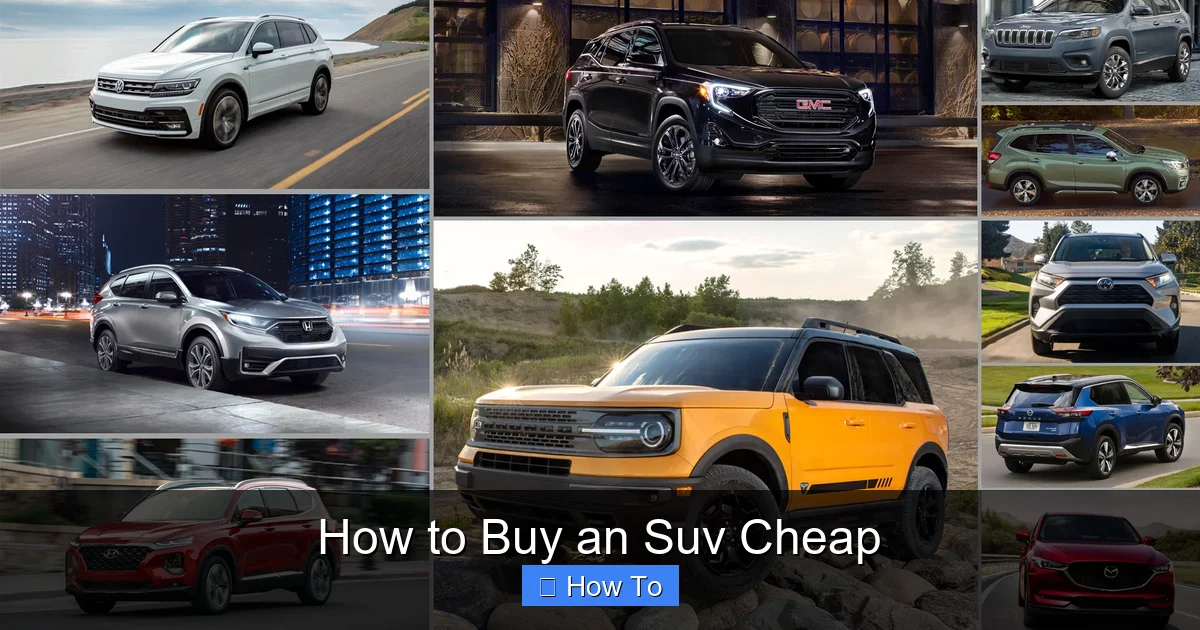
Buying an SUV on a budget is easier than you think—if you know where to look and when to buy. This guide reveals proven strategies to help you save money without sacrificing reliability or features.
Key Takeaways
- Shop at the right time: End-of-month, end-of-quarter, and end-of-year sales offer the best discounts and incentives.
- Consider certified pre-owned (CPO) SUVs: They’re often nearly new, come with warranties, and cost significantly less than brand-new models.
- Expand your search radius: Looking beyond your local area can uncover better deals, especially in less competitive markets.
- Negotiate like a pro: Research invoice prices, use competing offers, and don’t rush the process to get the lowest price.
- Check for hidden fees: Avoid dealer add-ons like paint protection, VIN etching, and extended warranties that inflate the final price.
- Use online tools and price alerts: Websites like Kelley Blue Book, Edmunds, and TrueCar help you compare prices and track deals.
- Get pre-approved for financing: Knowing your budget and interest rate ahead of time gives you leverage during negotiations.
How to Buy an SUV Cheap: A Step-by-Step Guide
Buying an SUV doesn’t have to drain your bank account. Whether you’re looking for a rugged off-roader, a family-friendly crossover, or a fuel-efficient hybrid, there are smart ways to get a great deal without compromising on quality. In this guide, we’ll walk you through every step of the process—from research to final purchase—so you can buy an SUV cheap and feel confident in your decision.
SUVs are popular for good reason: they offer space, safety, and versatility. But their popularity also means higher prices, especially for new models. The good news? With the right strategy, you can save thousands. This guide is packed with practical tips, real-world examples, and insider knowledge to help you navigate the market like a pro.
By the end of this article, you’ll know exactly how to find the best deals, avoid common pitfalls, and drive away in an SUV that fits both your needs and your budget.
Step 1: Set a Realistic Budget
Before you start browsing SUVs, it’s crucial to know how much you can afford. A clear budget prevents overspending and helps you focus on vehicles that won’t strain your finances.
Calculate Your Monthly Payment Limit
Start by reviewing your monthly income and expenses. Experts recommend that your car payment—including insurance, fuel, and maintenance—should not exceed 15–20% of your take-home pay. For example, if you earn $4,000 per month after taxes, your total vehicle-related costs should stay under $800.
Use an online auto loan calculator to estimate monthly payments based on different loan terms and interest rates. Most lenders offer 36- to 72-month loans. While longer terms mean lower monthly payments, they also mean more interest over time. Aim for the shortest term you can comfortably afford.
Include All Costs
Don’t forget to factor in:
– Down payment (ideally 10–20% of the vehicle’s price)
– Sales tax (varies by state)
– Registration and title fees
– Insurance (SUVs often cost more to insure than sedans)
– Fuel and maintenance
For example, a $25,000 SUV with a 10% down payment, 5% sales tax, and $1,200 in annual insurance could cost over $30,000 in the first year alone.
Get Pre-Approved for a Loan
Visit your bank or credit union to get pre-approved for an auto loan. This gives you a clear idea of your budget and strengthens your negotiating position at the dealership. Pre-approval also helps you avoid high-interest dealer financing, which can add thousands to your total cost.
Step 2: Decide What You Really Need
Not all SUVs are created equal. Knowing your priorities will help you avoid overspending on features you don’t need.
Choose the Right Size
SUVs come in three main sizes:
– Compact: Great for city driving and fuel efficiency (e.g., Honda CR-V, Toyota RAV4). Typically cost $25,000–$35,000 new.
– Midsize: More space and power, ideal for families (e.g., Ford Explorer, Hyundai Santa Fe). Usually $35,000–$50,000 new.
– Full-size: Maximum cargo and towing capacity (e.g., Chevrolet Tahoe, Ford Expedition). Often $50,000+ new.
If you don’t need three rows of seats or heavy towing, a compact or midsize SUV will save you money on purchase price, fuel, and insurance.
Prioritize Must-Have Features
Make a list of non-negotiable features, such as:
– All-wheel drive (AWD) for snowy or off-road conditions
– Advanced safety tech (automatic emergency braking, blind-spot monitoring)
– Apple CarPlay/Android Auto
– Good fuel economy (aim for at least 25 MPG combined)
Avoid paying extra for luxury add-ons like premium sound systems or leather seats unless they’re truly important to you.
Consider Fuel Type
Gas-powered SUVs are still the most affordable upfront, but hybrids and plug-in hybrids (PHEVs) can save money on fuel over time. For example, the Toyota RAV4 Hybrid gets up to 40 MPG combined, while the standard version gets around 30 MPG. If you drive a lot, the hybrid could pay for itself in a few years.
Step 3: Research the Best Deals
Knowledge is power when it comes to buying an SUV cheap. The more you know, the better your negotiating position.
Use Online Pricing Tools
Websites like Kelley Blue Book (KBB), Edmunds, and TrueCar provide up-to-date pricing information based on real sales data. Enter the make, model, year, and trim of the SUV you’re interested in to see:
– Fair market price ranges
– Invoice price (what the dealer paid)
– Available incentives and rebates
For example, a 2023 Honda CR-V EX might have a sticker price of $32,000, but the invoice price could be $30,200. Knowing this gives you room to negotiate.
Compare Prices Across Dealerships
Don’t settle for the first offer you get. Check prices at multiple dealerships within a 50- to 100-mile radius. Some dealers may offer lower prices to attract customers from neighboring areas.
Use online inventory search tools on dealer websites to compare SUVs side by side. Look for vehicles with high inventory levels—dealers are more likely to discount models that have been on the lot for 60+ days.
Sign Up for Price Alerts
Set up alerts on sites like Autotrader, Cars.com, or CarGurus. You’ll get notified when a new listing matches your criteria or when an existing listing drops in price. This is especially helpful for used or CPO SUVs.
Step 4: Time Your Purchase Right
When you buy can be just as important as what you buy. Timing your purchase around sales cycles and incentives can save you hundreds or even thousands.
Shop at the End of the Month, Quarter, or Year
Dealerships have sales targets to meet. At the end of these periods, salespeople are more motivated to close deals—even if it means lowering the price.
For example, a dealer might offer a $2,000 discount on a $35,000 SUV in December to hit their annual goal. That’s real money in your pocket.
Look for Seasonal Promotions
Manufacturers often run special promotions during holidays like Memorial Day, Fourth of July, and Black Friday. These can include:
– Cash rebates
– Low APR financing (e.g., 0.9% for 36 months)
– Loyalty bonuses for returning customers
Check the automaker’s website or sign up for email alerts to stay informed.
Buy Last Year’s Model
When new model years arrive (usually in late summer or early fall), dealers discount the previous year’s inventory to make room. A 2023 SUV might be discounted by $3,000–$5,000 when the 2024 model launches.
Just make sure the older model hasn’t been significantly redesigned. If it has, the discount might not be worth it.
Step 5: Consider Certified Pre-Owned (CPO) SUVs
One of the easiest ways to buy an SUV cheap is to go pre-owned—especially certified pre-owned.
What Is a CPO SUV?
CPO vehicles are used SUVs that have been inspected, refurbished, and certified by the manufacturer or dealer. They typically come with:
– A detailed vehicle history report
– A multi-point inspection (often 100+ points)
– An extended warranty (usually 12 months/12,000 miles or more)
– Roadside assistance
For example, a CPO 2021 Toyota Highlander might cost $32,000—$8,000 less than a new one—but still have low mileage and a clean record.
Benefits of Buying CPO
– Lower depreciation: New SUVs lose 20–30% of their value in the first year. CPO models have already taken that hit.
– Better warranty coverage: Many CPO programs offer longer warranties than standard used cars.
– Peace of mind: You get the reliability of a new SUV at a used price.
Where to Find CPO SUVs
Check manufacturer websites (e.g., Honda CPO, Ford CPO) or use filters on car shopping sites. Always verify the CPO status and warranty details before buying.
Step 6: Negotiate the Price
Negotiating is the most effective way to buy an SUV cheap. Most dealers expect it—and many buyers leave money on the table by not trying.
Start Below Invoice Price
Use KBB or Edmunds to find the invoice price. Begin your offer 5–10% below that number. For a $30,000 invoice, start at $27,000–$28,500.
Don’t mention the sticker price. Focus on the out-the-door price, which includes all fees and taxes.
Use Competing Offers
Get quotes from at least three dealerships. When you return to your preferred dealer, show them the lowest offer and ask to beat it. This creates healthy competition.
For example: “Dealer A offered me $29,500 out the door. Can you match that?”
Be Willing to Walk Away
If the dealer won’t budge, thank them and leave. Often, they’ll call you back with a better offer within hours or days. Walking away shows you’re serious and not desperate.
Avoid Add-Ons and Fees
Dealers may try to upsell you on:
– Paint protection ($500–$1,000)
– VIN etching ($100–$200)
– Extended warranties ($2,000+)
– Fabric protection ($300–$500)
Most of these are unnecessary and overpriced. Politely decline or negotiate them down.
Step 7: Explore Financing and Incentives
Even with a good price, smart financing can save you more money.
Compare Loan Offers
Use your pre-approval as a baseline. If the dealer offers a lower interest rate, take it. But watch out for “0% financing” deals that require a higher purchase price.
For example, a 0% loan might require you to pay $32,000, while a 3% loan on a $30,000 SUV could cost less overall.
Take Advantage of Incentives
Manufacturers offer incentives to boost sales. These can include:
– Cash rebates (e.g., $1,500 back)
– Loyalty bonuses (for returning customers)
– College graduate or military discounts
Stacking multiple incentives can save you thousands. Always ask what’s available.
Step 8: Finalize the Purchase
Once you’ve agreed on a price, it’s time to close the deal.
Review the Contract Carefully
Make sure the out-the-door price matches your agreement. Check for:
– Correct vehicle details (VIN, trim, options)
– Accurate fees (no hidden charges)
– Proper financing terms
If anything looks off, ask for clarification or refuse to sign.
Test Drive Before You Buy
Even if you’ve driven the model before, take the specific SUV for a test drive. Check for unusual noises, smooth shifting, and proper alignment.
Get a Vehicle History Report
For used or CPO SUVs, request a report from Carfax or AutoCheck. Look for:
– Accident history
– Title issues (salvage, flood damage)
– Odometer discrepancies
A clean report gives you confidence in your purchase.
Troubleshooting Common Issues
“The Dealer Won’t Lower the Price”
If negotiation hits a wall, try:
– Asking for free add-ons (floor mats, cargo cover)
– Requesting a higher trade-in value
– Delaying the purchase to a slower sales period
“I’m Getting High-Pressure Sales Tactics”
Stay calm and stick to your budget. Say, “I need time to think,” and walk away if needed. You’re in control.
“The SUV Has Mechanical Problems”
For used vehicles, consider getting a pre-purchase inspection (PPI) by an independent mechanic. It costs $100–$150 but can save you from costly repairs.
Conclusion
Buying an SUV cheap is entirely possible—if you plan ahead, do your research, and negotiate wisely. By setting a budget, choosing the right vehicle, timing your purchase, and exploring CPO options, you can save thousands without sacrificing quality.
Remember, the key is patience and preparation. Don’t rush into a deal. Use the tools and strategies in this guide to make informed decisions and drive away with confidence.
With the right approach, your dream SUV can be both affordable and reliable. Start your search today, and take control of your next vehicle purchase.