
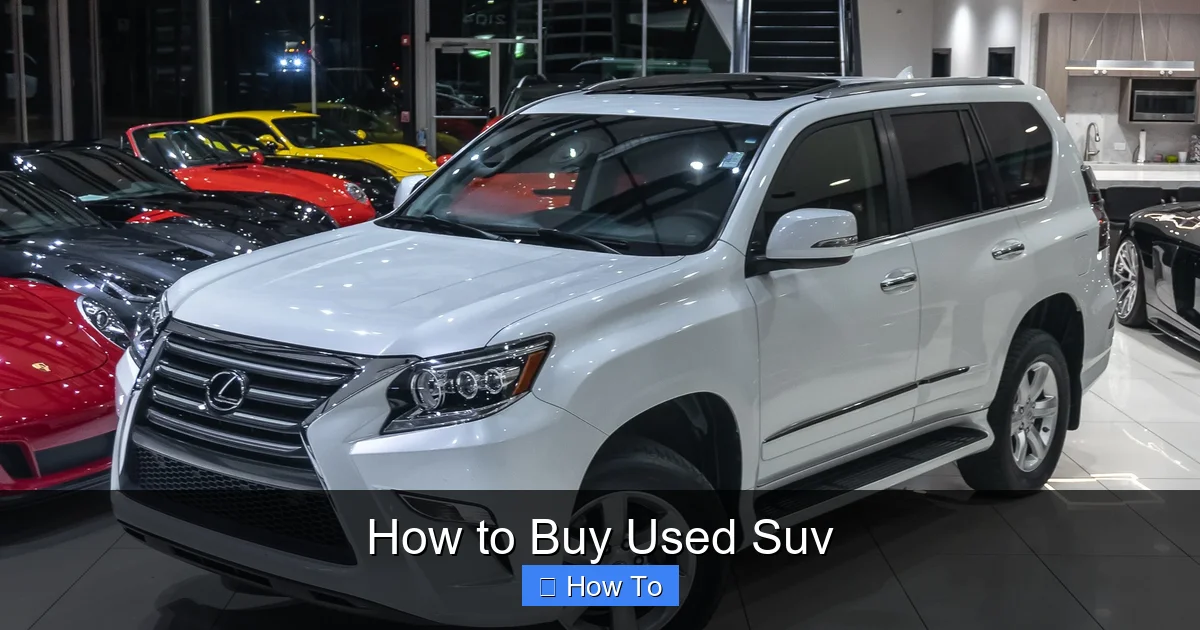
Buying a used SUV can save you thousands—if you know what to look for. This guide walks you through every step, from choosing the right model to finalizing the purchase, so you drive away happy and informed.
Key Takeaways
- Research is your best friend: Compare models, read reviews, and check reliability ratings before you shop.
- Set a realistic budget: Include taxes, insurance, registration, and potential repairs in your total cost.
- Always get a vehicle history report: Services like Carfax or AutoCheck reveal accidents, title issues, and maintenance records.
- Inspect the SUV thoroughly: Look for rust, uneven tire wear, and test all features—or bring a trusted mechanic.
- Test drive in real-world conditions: Drive on highways, hills, and rough roads to feel how the SUV performs.
- Negotiate with confidence: Use market data and any found flaws to lower the price.
- Finalize paperwork safely: Verify ownership, sign contracts carefully, and avoid pressure tactics.
How to Buy a Used SUV: A Complete Step-by-Step Guide
Buying a used SUV is one of the smartest moves you can make—especially if you need space, versatility, and capability without the steep price tag of a new vehicle. But with so many options, potential pitfalls, and hidden problems, it’s easy to feel overwhelmed. That’s why we’ve created this comprehensive guide to help you navigate the process with confidence.
Whether you’re a first-time buyer or upgrading from an older model, this guide will walk you through every step—from initial research to driving off the lot. You’ll learn how to spot a good deal, avoid scams, and choose an SUV that fits your lifestyle and budget. By the end, you’ll have the tools and knowledge to make a smart, informed decision.
Step 1: Determine Your Needs and Budget
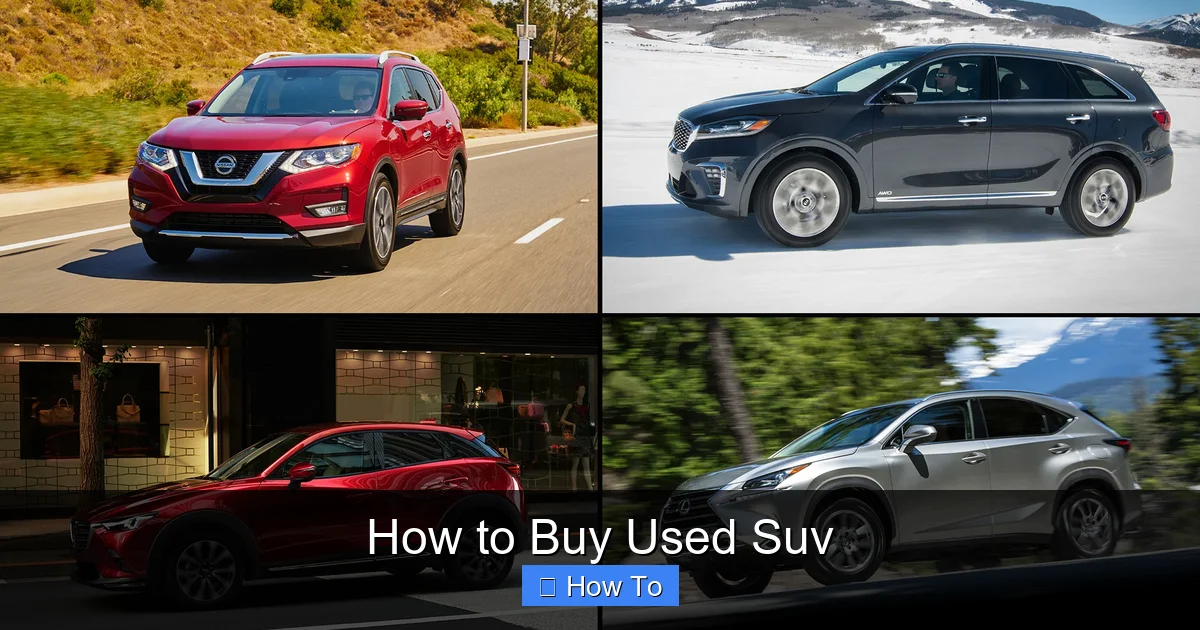
Visual guide about How to Buy Used Suv
Image source: motortrend.com
Before you even look at a single SUV, take time to define what you really need. Not all SUVs are created equal. Some are built for off-roading, others for city driving, and many fall somewhere in between.
Ask Yourself Key Questions
Start by answering these questions:
- How many passengers do I need to seat regularly?
- Do I need cargo space for gear, pets, or equipment?
- Will I be driving in snow, mud, or rough terrain?
- Do I prioritize fuel efficiency, power, or towing capacity?
- How important are tech features like Apple CarPlay, backup cameras, or adaptive cruise control?
For example, a compact SUV like a Honda CR-V or Toyota RAV4 might be perfect for a small family who drives mostly on paved roads. But if you’re hauling boats or trailers, a midsize SUV like a Ford Explorer or Chevrolet Traverse with strong towing power makes more sense.
Set a Realistic Budget
It’s easy to fall in love with a shiny SUV and forget about the real cost of ownership. Your budget should include more than just the purchase price.
Here’s what to factor in:
- Purchase price: The sticker price or negotiated amount.
- Taxes and fees: Sales tax, registration, and title fees vary by state.
- Insurance: SUVs often cost more to insure than smaller cars, especially if they’re larger or have high theft rates.
- Fuel costs: Larger SUVs typically get lower gas mileage.
- Maintenance and repairs: Older or high-mileage vehicles may need new brakes, tires, or suspension work.
A good rule of thumb: don’t spend more than 10–15% of your monthly take-home pay on all vehicle-related expenses.
Decide Between Private Seller and Dealer
You have two main options when buying a used SUV: a private seller or a dealership.
- Private sellers: Often offer lower prices and more room to negotiate. But you get less protection—no warranties, and “as-is” sales are common.
- Dealerships: May charge more, but offer certified pre-owned (CPO) programs, financing options, and some level of warranty. They’re also regulated and less likely to sell lemon vehicles.
If you’re new to car buying or want peace of mind, a reputable dealer might be worth the extra cost. If you’re experienced and confident in your inspection skills, a private sale could save you money.
Step 2: Research the Right SUV Models
Visual guide about How to Buy Used Suv
Image source: prestonford.com
Now that you know your needs and budget, it’s time to narrow down your options. Not all SUVs are reliable, and some models have known issues that can cost you down the road.
Check Reliability and Owner Reviews
Start with trusted sources like:
- Consumer Reports: Offers reliability ratings based on real owner feedback.
- J.D. Power: Ranks vehicles by dependability and owner satisfaction.
- Edmunds and Kelley Blue Book (KBB): Provide expert reviews, pricing data, and common issues.
- Reddit and car forums: Real owners often share honest experiences about problems and maintenance.
For example, the Toyota Highlander consistently ranks high for reliability and resale value. Meanwhile, some older models of the Jeep Grand Cherokee have reported transmission and electrical issues—something you’d want to know before buying.
Compare Fuel Economy and Running Costs
Even if two SUVs look similar, their long-term costs can differ greatly. Use the EPA’s fuel economy website or Edmunds’ True Cost to Own tool to compare:
- Annual fuel costs
- Insurance estimates
- Depreciation
- Maintenance and repair costs
A slightly higher purchase price might be worth it if the SUV saves you money on gas and repairs over five years.
Look for Recalls and Common Problems
Check the National Highway Traffic Safety Administration (NHTSA) website for any open recalls on the models you’re considering. You can search by make, model, and year.
Also, research common issues. For instance:
- Older Ford Explorers may have transmission problems.
- Some Hyundai Santa Fes have had engine recalls.
- Early Nissan Rogues were known for CVT transmission failures.
Knowing these ahead of time helps you avoid trouble—or at least factor in potential repair costs.
Step 3: Find Used SUVs for Sale
Once you’ve picked your top models, it’s time to start shopping. Use multiple sources to cast a wide net.
Use Online Marketplaces
Popular websites include:
- Autotrader: Great for filtering by price, mileage, and features.
- Cars.com: Offers price comparisons and dealer reviews.
- CarGurus: Shows “deal ratings” based on market value.
- Facebook Marketplace and Craigslist: Good for private sellers, but be cautious of scams.
Set up alerts so you’re notified when new listings match your criteria.
Visit Dealerships
Even if you plan to buy privately, visiting dealerships gives you a sense of pricing and condition. Many dealers now list their inventory online, so you can browse before visiting.
Look for certified pre-owned (CPO) programs. These vehicles are inspected, refurbished, and come with extended warranties—often a great value.
Check Local Classifieds and Auctions
Don’t overlook local newspapers, community boards, or even police auctions. Some people sell well-maintained SUVs at low prices, especially if they’re upgrading quickly.
Just remember: if a deal seems too good to be true, it probably is.
Step 4: Get a Vehicle History Report
Before you spend time inspecting or test driving, always get a vehicle history report. This is one of the most important steps in how to buy a used SUV.
Why It Matters
A history report reveals:
- Accident history
- Title status (clean, salvage, rebuilt)
- Odometer readings
- Number of previous owners
- Service and maintenance records
- Recall information
A clean report doesn’t guarantee the SUV is problem-free, but it helps rule out major red flags.
Use Trusted Services
The two most popular services are:
- Carfax: Widely used and trusted by dealers.
- AutoCheck: Owned by Experian, often more affordable.
You can usually get a free report from the seller or dealer. If not, it’s worth paying $20–$40 for peace of mind.
Red Flags to Watch For
Avoid SUVs with:
- Salvage or rebuilt titles (harder to insure and resell)
- Multiple owners in a short time
- Odometer rollback
- Severe accident damage
- Lemon law buybacks
If the report shows minor fender benders or regular maintenance, that’s usually fine. But major damage or title issues should make you walk away.
Step 5: Inspect the SUV Thoroughly
Now it’s time for the hands-on inspection. Even if the SUV looks great online, things can be hiding underneath.
Exterior Inspection
Walk around the SUV and look for:
- Rust or corrosion: Especially around wheel wells, undercarriage, and door seams.
- Dents, scratches, or mismatched paint: Could indicate past accidents.
- Uneven tire wear: May signal alignment or suspension problems.
- Headlights and taillights: Should all work and be free of cracks.
- Windshield and windows: Look for chips, cracks, or wavy glass.
Use a flashlight to check under the vehicle for leaks, rust, or damage.
Interior Inspection
Inside, check:
- Seats and upholstery: Look for tears, stains, or excessive wear.
- Odors: Musty smells could mean water leaks or mold.
- Dash and controls: Test all buttons, knobs, and screens.
- Air conditioning and heating: Should blow cold and hot air quickly.
- Power features: Windows, locks, mirrors, and sunroof should work smoothly.
Sit in the driver’s seat and adjust everything. Does it feel comfortable? Are the mirrors easy to see out of?
Under the Hood
Pop the hood and look for:
- Fluid levels: Oil, coolant, brake fluid, and transmission fluid should be at proper levels and clean.
- Belts and hoses: Should be free of cracks or fraying.
- Battery: Terminals should be clean and tight.
- Leaks: Look for oil, coolant, or transmission fluid stains.
If you’re not comfortable doing this yourself, bring a trusted mechanic. A pre-purchase inspection (PPI) typically costs $100–$200 but can save you thousands.
Step 6: Take a Test Drive
A test drive is your chance to see how the SUV feels on the road. Don’t rush it—drive for at least 15–20 minutes in different conditions.
What to Listen and Feel For
During the drive, pay attention to:
- Engine noise: Should be smooth and quiet. Knocking or rattling is a bad sign.
- Transmission: Shifts should be smooth, not jerky or delayed.
- Brakes: Should stop firmly without pulling to one side or making noise.
- Suspension: The ride should be comfortable. Excessive bouncing or noise over bumps indicates worn shocks.
- Steering: Should feel responsive and not pull to one side.
- Wind and road noise: Excessive noise may mean poor insulation or alignment issues.
Test in Real-World Conditions
Don’t just drive around the block. Try:
- Highway speeds (to test stability and wind noise)
- Hills (to test power and transmission)
- Rough or uneven roads (to test suspension)
- Parking and reversing (to test visibility and maneuverability)
Also, test all features: cruise control, infotainment system, backup camera, and climate controls.
Bring a Checklist
Print or save a test drive checklist on your phone. Mark off each item as you test it. This keeps you focused and ensures you don’t miss anything.
Step 7: Negotiate the Price
Once you’ve found the right SUV, it’s time to talk price. Most sellers expect negotiation—especially private sellers.
Know the Market Value
Use KBB, Edmunds, or NADA Guides to find the fair market value for the SUV based on:
- Year, make, and model
- Mileage
- Condition
- Location
- Features and options
This gives you a strong starting point.
Use Your Findings as Leverage
If you found issues during inspection—like worn tires, a dirty air filter, or minor scratches—use them to justify a lower price.
For example:
“I like the SUV, but the tires are near the end of their life. That’s about $600 to replace. Can you come down $500?”
Be polite but firm. Most sellers would rather sell at a slight discount than lose the sale.
Be Ready to Walk Away
If the seller won’t budge or pressures you to decide on the spot, walk away. There are plenty of other SUVs out there. The best deals often come to those who are patient.
Step 8: Finalize the Purchase
Once you agree on a price, it’s time to close the deal—safely.
Verify Ownership
Make sure the seller is the legal owner. Check:
- The name on the title matches the seller’s ID
- The VIN on the title matches the vehicle
- There are no liens (loans) on the vehicle
If there’s a lien, the seller must pay it off before you buy.
Complete the Paperwork
For private sales, you’ll typically need:
- A signed title (signed over to you)
- A bill of sale (template available online)
- Odometer disclosure statement (required by law)
- Release of liability (filled out by the seller)
For dealer purchases, they’ll handle most of this—but read everything carefully before signing.
Arrange Payment Safely
Never pay in cash for a large amount. Use:
- A cashier’s check (from your bank)
- A wire transfer (if you trust the seller)
- Escrow service (for high-value vehicles)
Avoid personal checks—they can bounce.
Register and Insure the SUV
After purchase, you have a limited time (usually 10–30 days) to register the SUV in your name and get insurance. Visit your local DMV with:
- Proof of insurance
- Signed title
- Bill of sale
- Odometer reading
- Payment for taxes and fees
Once registered, you’re ready to drive!
Troubleshooting Common Issues
Even with careful planning, problems can come up. Here’s how to handle them:
The Seller Won’t Share the VIN
This is a major red flag. The VIN is needed for the history report and title transfer. If they refuse, walk away—they may be hiding something.
The SUV Fails the Inspection
If your mechanic finds serious issues, you have options:
- Ask the seller to fix them before purchase
- Negotiate a lower price to cover repairs
- Walk away
Don’t feel obligated to buy just because you’ve spent time on it.
Financing Falls Through
If you’re getting a loan and it’s denied, ask why. Sometimes it’s a simple fix—like adding a co-signer or choosing a less expensive SUV.
You’re Pressured to Buy Quickly
Legitimate sellers won’t rush you. If they say “another buyer is coming,” it’s likely a tactic. Take your time.
Conclusion
Buying a used SUV doesn’t have to be stressful. By following this guide—researching models, setting a budget, inspecting thoroughly, and negotiating wisely—you can find a reliable, affordable vehicle that meets your needs.
Remember, the key to a successful purchase is patience and preparation. Don’t rush into a deal just because it looks good on the surface. Take your time, ask questions, and trust your instincts.
With the right approach, you’ll not only save money but also drive away with confidence, knowing you made a smart, informed decision. Happy driving!