
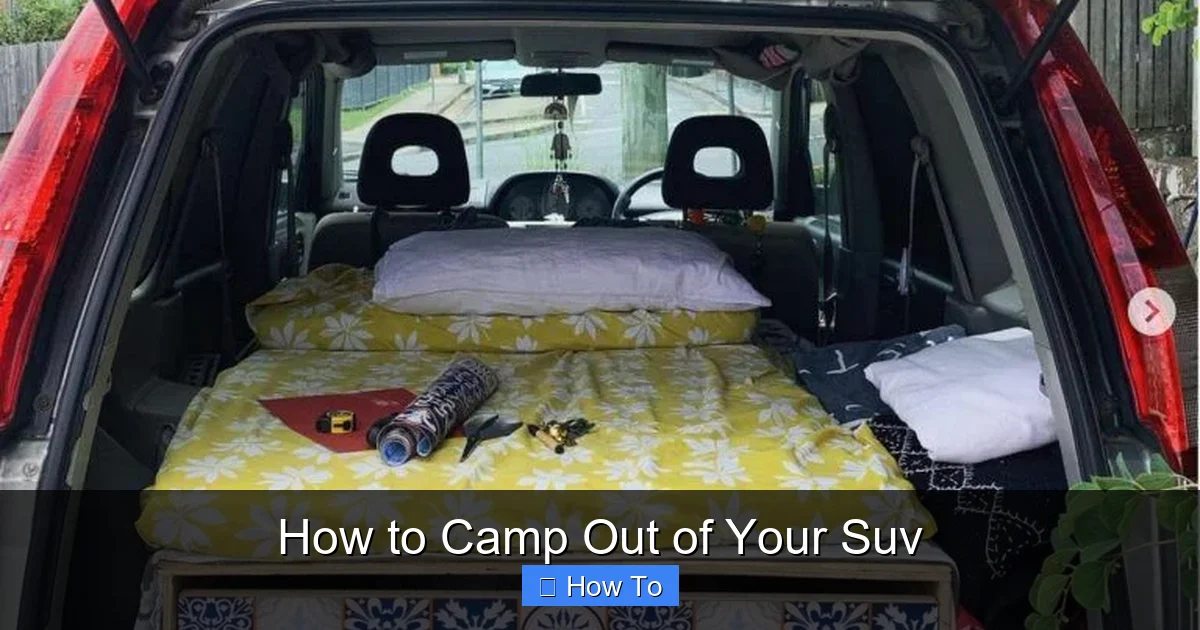
Learn how to camp out of your SUV with a step-by-step guide covering gear, setup, comfort, and safety. Turn your vehicle into a cozy mobile campsite for road trips, festivals, or weekend getaways.
Key Takeaways
- Choose the right SUV: Opt for a model with fold-flat seats, ample cargo space, and good ground clearance for comfort and accessibility.
- Maximize interior space: Remove unnecessary items, use storage bins, and create a flat sleeping platform for a clutter-free campsite.
- Invest in quality bedding: A thick sleeping pad, compact sleeping bag, and inflatable pillow make a huge difference in comfort.
- Ensure ventilation and privacy: Use window shades, mesh screens, and fans to stay cool, safe, and undisturbed.
- Practice stealth camping safely: Park legally, avoid drawing attention, and always follow local regulations to camp discreetly.
- Pack smart with modular gear: Use collapsible cookware, LED lights, and portable power sources to stay organized and self-sufficient.
- Test your setup before you go: Do a trial run at home to troubleshoot issues and ensure everything fits and works properly.
How to Camp Out of Your SUV: A Complete Guide
Camping out of your SUV is one of the most flexible and affordable ways to enjoy the great outdoors. Whether you’re road-tripping across the country, attending a music festival, or escaping for a quiet weekend in the woods, your vehicle can double as a cozy, mobile campsite. No tent required—just your SUV, some smart gear, and a little planning.
In this guide, you’ll learn everything you need to know about how to camp out of your SUV. From choosing the right vehicle to setting up a comfortable sleeping area, managing ventilation, and staying safe, we’ll walk you through each step. By the end, you’ll be ready to hit the road with confidence, knowing exactly how to turn your SUV into a home away from home.
Step 1: Choose the Right SUV for Camping
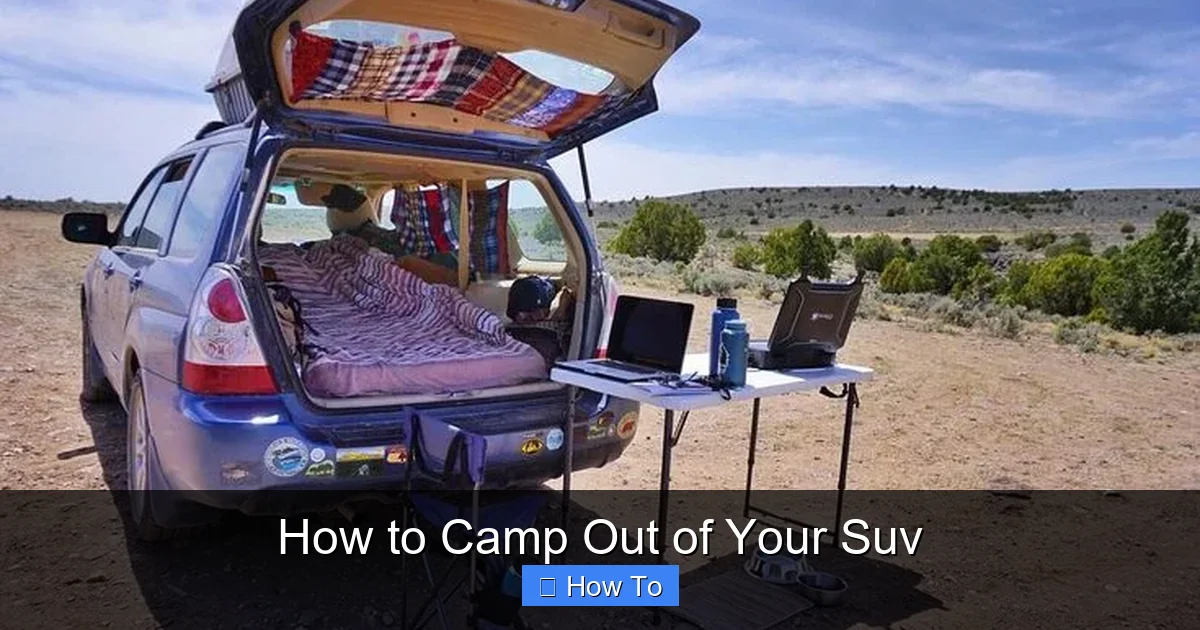
Visual guide about How to Camp Out of Your Suv
Image source: i.pinimg.com
Not all SUVs are created equal when it comes to camping. While most modern SUVs offer decent cargo space, some are better suited for overnight stays than others. Here’s what to look for:
Fold-Flat or Near-Flat Rear Seats
The key to a comfortable sleeping surface is a flat floor. Many SUVs allow the rear seats to fold down completely or nearly flat. Check your owner’s manual to see how your seats recline and whether they lie level with the cargo area. Models like the Subaru Outback, Honda CR-V, Toyota RAV4, and Ford Explorer are popular choices because of their spacious, flat-folding interiors.
Ample Cargo Space
You’ll need room not just for sleeping, but also for gear, food, and personal items. SUVs with at least 35–40 cubic feet of cargo space (behind the rear seats) give you enough room to stretch out and store essentials. If you have a larger SUV like a Chevrolet Tahoe or Jeep Grand Cherokee, you’ll have even more flexibility.
Ground Clearance and 4WD (Optional but Helpful)
If you plan to camp off-road or in remote areas, higher ground clearance and four-wheel drive can make a big difference. They help you access rougher terrain and avoid getting stuck. However, if you’re sticking to paved roads and established campsites, front-wheel drive is usually sufficient.
Sunroof and Windows
A sunroof isn’t essential, but it’s a nice bonus for stargazing and ventilation. Larger side and rear windows also improve airflow and visibility, which can enhance your camping experience.
Fuel Efficiency
Since you’ll likely be driving long distances, consider fuel economy. Compact and midsize SUVs tend to be more efficient than full-size models. If you’re planning a long trip, every mile per gallon counts.
Step 2: Prepare Your SUV Interior
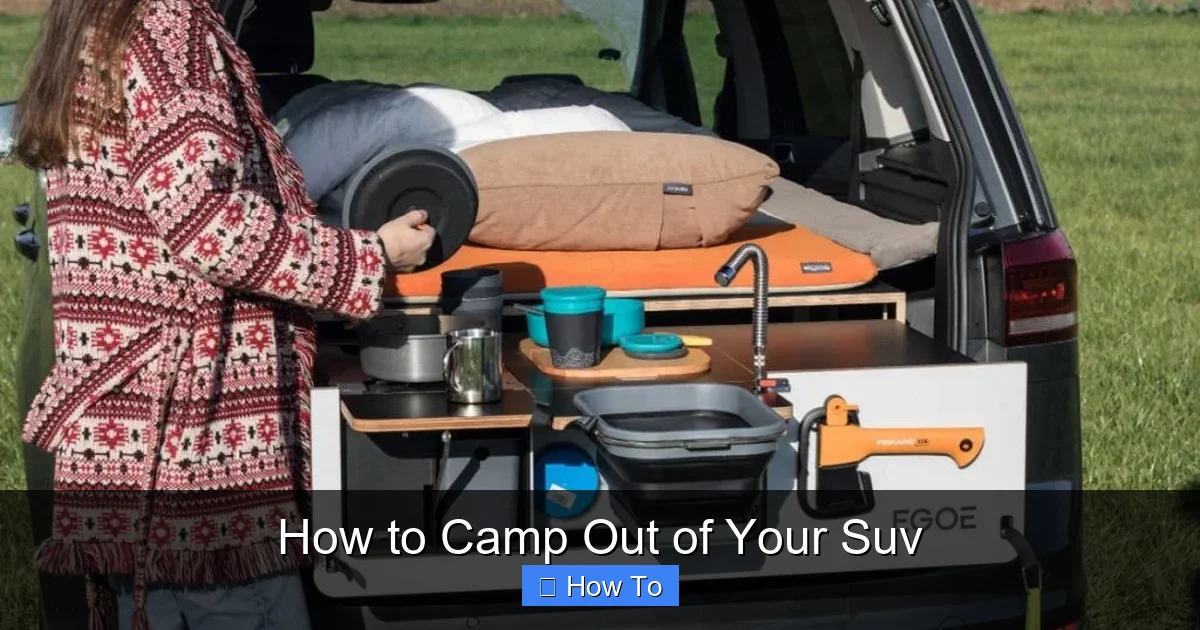
Visual guide about How to Camp Out of Your Suv
Image source: thewaywardhome.com
Once you’ve confirmed your SUV is camping-ready, it’s time to transform the interior into a functional and comfortable space.
Clear Out the Clutter
Start by removing everything from the cargo area—old gym bags, spare parts, random tools. You want a clean slate. Store non-essentials at home or in a separate storage unit if needed.
Create a Flat Sleeping Platform
Even if your seats fold flat, there may be gaps or uneven surfaces. To solve this:
- Use a sleeping platform board—a piece of plywood cut to fit your cargo area. Cover it with foam or carpet for comfort.
- Alternatively, use interlocking foam tiles or a foldable camping cot that spans the width of the vehicle.
- For a no-build option, lay down a thick foam mattress topper or an inflatable air mattress designed for cars.
Pro tip: Measure your cargo area before buying any platform or mattress. A snug fit prevents shifting while you sleep.
Organize Storage
Keep your gear accessible but out of the way:
- Use clear plastic bins for clothes, food, and toiletries. Label them for easy identification.
- Install seatback organizers or trunk dividers to keep small items from rolling around.
- Hang a hanging shoe organizer on the back of a front seat for snacks, flashlights, or chargers.
Secure Loose Items
Nothing ruins a peaceful night like a water bottle flying into your face during a sudden stop. Use bungee cords, cargo nets, or non-slip mats to keep items in place.
Step 3: Set Up Your Sleeping Area
A good night’s sleep is crucial when camping. Here’s how to make your SUV bed as comfortable as possible.
Choose the Right Bedding
- Sleeping Pad: A thick foam pad (at least 2 inches) or an inflatable camping pad provides insulation from the cold floor and cushions your body.
- Sleeping Bag: Pick one rated for the expected temperature. Mummy bags save space; rectangular bags offer more room to move.
- Pillow: Bring a small travel pillow or use an inflatable one. You can also roll up a jacket or sweater.
- Sheets and Blankets: Add a fitted sheet and a lightweight blanket for extra warmth and comfort.
Optimize Space for Two People
If you’re camping with a partner, sleeping sideways (head to one side, feet to the other) can maximize space. Use a wider air mattress or two sleeping pads side by side. Make sure both people can lie flat without feeling cramped.
Use a Mattress Topper for Extra Comfort
A memory foam topper (cut to size) can turn a hard surface into a cloud-like bed. It’s especially helpful if your SUV floor isn’t perfectly flat.
Step 4: Ensure Proper Ventilation and Airflow
Stuffy air, condensation, and heat buildup are common issues when sleeping in a vehicle. Proper ventilation is key to staying comfortable and safe.
Crack the Windows
Leave at least one window slightly open—preferably on opposite sides for cross-ventilation. This allows fresh air to circulate and reduces moisture buildup.
Use Window Shades and Screens
- Privacy shades block light and keep prying eyes out. Many are magnetic or suction-cup based for easy installation.
- Mesh window screens let air in while keeping bugs out. They’re especially useful in warmer months.
Install a Roof Vent or Fan (Optional)
For serious campers, a powered roof vent (like those used in RVs) can dramatically improve airflow. It draws out hot air and pulls in cool air, reducing condensation and odors.
Use a Portable Fan
A small USB or battery-powered fan can help circulate air inside the cabin. Place it near a window to create a gentle breeze.
Step 5: Maintain Privacy and Security
Camping in your SUV often means staying in public or semi-public spaces. Privacy and safety should be top priorities.
Use Window Covers
Reflective sun shades or custom-fit window covers block visibility from the outside. They also help regulate temperature by reflecting sunlight.
Park Strategically
- Avoid parking in isolated areas. Choose well-lit, populated spots like rest areas, campgrounds, or designated overnight parking zones.
- Face your vehicle toward a wall, building, or other cars to reduce visibility into the cabin.
- Use the “driver’s side against the curb” rule to make it harder for people to peer inside.
Lock Your Doors
Always lock your doors at night. Consider adding a secondary lock or alarm system for extra peace of mind.
Be Discreet
Avoid hanging laundry, playing loud music, or leaving gear visible. The goal is to blend in, not draw attention.
Step 6: Power and Lighting
Even basic camping requires some power for lights, phones, and small appliances.
Use a Portable Power Station
A compact power bank or solar-powered station can charge phones, run LED lights, or power a small fan. Look for models with AC outlets, USB ports, and solar charging capability.
LED Lights Are a Must
- String lights or clip-on LED lanterns provide soft, ambient lighting.
- Use red-light mode at night to preserve night vision and avoid disturbing wildlife.
- Attach lights to the ceiling or headliner with adhesive hooks or magnets.
Avoid Draining Your Car Battery
Never run electronics directly from your car’s battery unless you’re driving. Idling for hours to charge devices can drain the battery and leave you stranded. Use a separate power source instead.
Step 7: Cooking and Food Storage
You don’t need a full kitchen to eat well while camping in your SUV.
Pack a Portable Stove
A compact camping stove (propane or butane) lets you cook meals safely outside the vehicle. Never cook inside your SUV—carbon monoxide is a serious risk.
Use a Cooler with Ice or Ice Packs
Keep perishables cold with a high-quality cooler. Rotate ice packs daily or use block ice, which lasts longer than cubes.
Prep Meals in Advance
Save time by preparing meals at home. Pack sandwiches, salads, or pre-cooked dishes in reusable containers. Instant oatmeal, canned beans, and trail mix are also great no-cook options.
Store Food Securely
If you’re camping in bear country, store food in a bear-proof container or lock it in the trunk. Never leave food inside the cabin overnight.
Step 8: Stay Clean and Hygienic
Personal hygiene doesn’t have to suffer just because you’re camping.
Use Baby Wipes or Biodegradable Wipes
These are perfect for quick cleanups when showers aren’t available. Look for eco-friendly, compostable options.
Bring a Portable Shower
Solar shower bags or compact camping showers let you rinse off with warm water. Hang them from a tree or your SUV’s roof rack.
Pack a Small Toilet Kit
Include hand sanitizer, toilet paper, a trowel (for digging catholes), and a portable toilet bag if needed. Always follow Leave No Trace principles.
Change Clothes Regularly
Bring enough clean clothes for your trip. Store dirty laundry in a separate bag to keep your sleeping area fresh.
Step 9: Practice Stealth Camping (If Needed)
“Stealth camping” means staying overnight in your vehicle without drawing attention—often in urban or suburban areas.
Know the Laws
Overnight parking rules vary by city and state. Some places ban sleeping in vehicles altogether. Always research local regulations before parking.
Choose Low-Profile Locations
- Parking lots of big-box stores (like Walmart) often allow overnight stays—check their policy first.
- Rest areas and truck stops are usually safe and legal.
- Avoid residential neighborhoods unless you have permission.
Be Respectful
Keep noise down, don’t litter, and leave no trace. The more respectful you are, the more likely you are to be left alone.
Step 10: Test Your Setup Before You Go
Don’t wait until you’re on the road to discover your air mattress doesn’t fit or your power bank is dead.
Do a Trial Run
Spend a night in your SUV at home. Test your sleeping setup, lighting, ventilation, and storage. Work out any kinks before your trip.
Check for Leaks and Drafts
Make sure windows and doors seal properly. Use weather stripping if needed to reduce noise and drafts.
Practice Setting Up and Breaking Down
Time yourself packing and unpacking. The faster you can do it, the more stress-free your trip will be.
Troubleshooting Common Issues
Even with the best planning, problems can arise. Here’s how to handle common challenges:
Condensation Buildup
If you wake up to a damp interior, improve ventilation. Use moisture absorbers (like silica gel packs) or a small dehumidifier.
Uncomfortable Sleeping Surface
Add more padding or adjust your platform. A rolled-up blanket under your knees or hips can relieve pressure points.
Noise from Traffic or Wildlife
Use earplugs or a white noise app on your phone. Park away from busy roads if possible.
Overheating at Night
Park in the shade, use reflective window covers, and run a fan. Avoid black or dark-colored vehicles, which absorb more heat.
Battery Drain
If your car battery dies, jump-start it or use a portable jump starter. Avoid using electronics while the engine is off.
Conclusion
Camping out of your SUV is a smart, flexible, and budget-friendly way to explore the outdoors. With the right preparation, your vehicle can become a cozy, secure, and comfortable home on wheels. From choosing the right SUV to setting up a flat sleeping area, managing ventilation, and staying safe, every step matters.
Remember, the key to successful SUV camping is planning and practice. Test your setup, pack smart, and always prioritize safety and comfort. Whether you’re chasing sunsets in the desert or waking up to mountain views, your SUV can take you there—and give you a great night’s sleep when you arrive.
So pack your bags, charge your devices, and hit the road. Adventure awaits, and your SUV is ready to be your basecamp.