
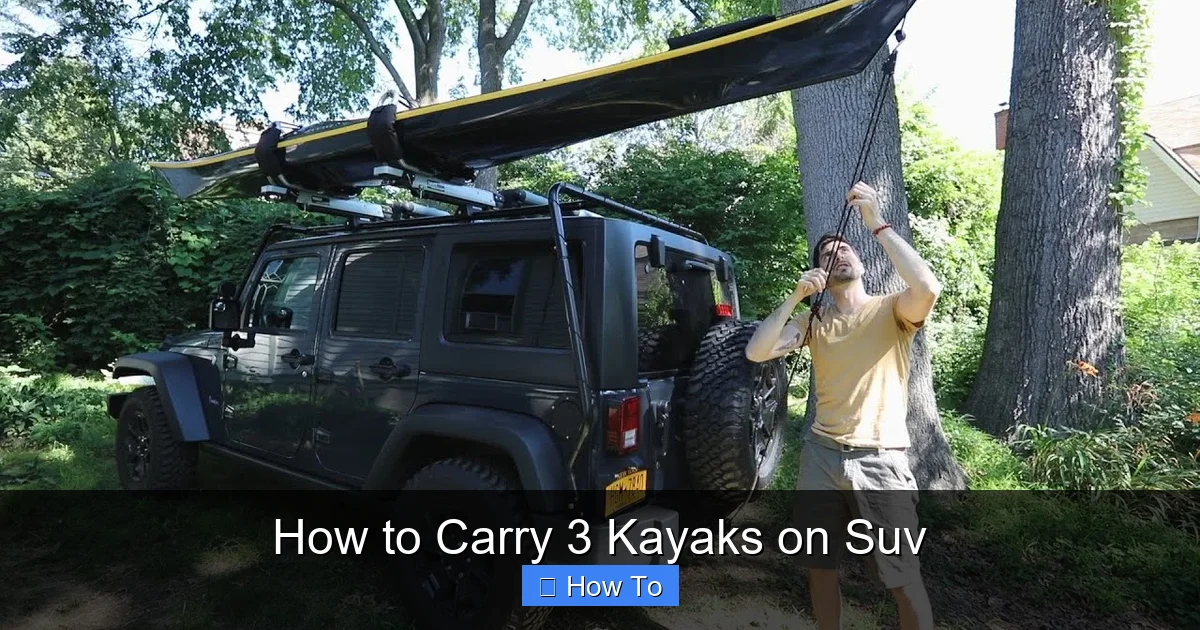
Transporting three kayaks on an SUV may seem daunting, but with the right gear and setup, it’s completely doable. This guide walks you through choosing racks, loading techniques, and safety checks to ensure a smooth, secure trip to the water.
Key Takeaways
- Choose the right roof rack system: A heavy-duty crossbar system with kayak carriers is essential for supporting multiple kayaks safely.
- Use J-style or saddle-style carriers: These provide secure, space-efficient storage and help distribute weight evenly across the roof.
- Load kayaks properly: Always load the heaviest kayak first, place it closest to the vehicle, and secure each with cam straps and bow/stern lines.
- Check weight limits: Never exceed your SUV’s roof load capacity—typically 100–165 lbs—and distribute weight evenly.
- Perform pre-trip inspections: Double-check all straps, knots, and rack attachments before hitting the road.
- Drive cautiously: Reduce speed, avoid sudden maneuvers, and allow extra stopping distance due to increased wind resistance.
- Consider alternatives if needed: For frequent multi-kayak transport, a trailer may be a safer, more convenient long-term solution.
How to Carry 3 Kayaks on SUV: A Complete Step-by-Step Guide
So, you’ve got three kayaks, an SUV, and a weekend adventure calling your name. Whether you’re heading out with friends, family, or a local paddling group, transporting multiple kayaks can feel overwhelming—especially if you’ve never done it before. But don’t worry! With the right equipment, a solid plan, and a few smart techniques, carrying three kayaks on your SUV is not only possible but also safe and stress-free.
In this guide, we’ll walk you through everything you need to know—from choosing the best roof rack system to loading your kayaks securely and driving safely with the extra load. We’ll cover gear recommendations, step-by-step instructions, troubleshooting tips, and even alternatives if roof mounting isn’t ideal for your setup. By the end, you’ll be ready to hit the road with confidence, knowing your kayaks are secure and your vehicle is protected.
Let’s dive in!
Why Carrying 3 Kayaks on an SUV Is Possible (and Practical)
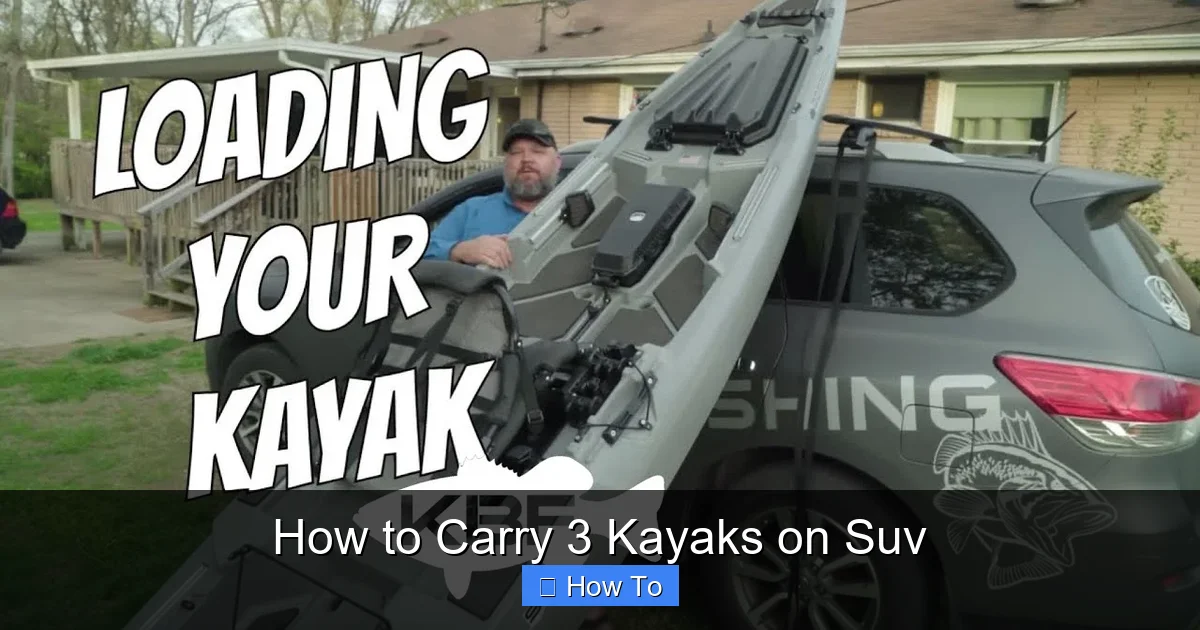
Visual guide about How to Carry 3 Kayaks on Suv
Image source: i.ytimg.com
Many people assume that SUVs can only handle one or two kayaks at a time. But modern SUVs—especially midsize and full-size models like the Toyota Highlander, Ford Explorer, or Subaru Ascent—often have robust roof racks and high weight capacities. With the right setup, three kayaks can be safely transported on top of your vehicle.
The key is understanding your SUV’s limitations and using the proper gear. Most SUVs have a dynamic roof load limit (the weight the roof can handle while driving) of 100 to 165 pounds. Since the average recreational kayak weighs between 40 and 70 pounds, three kayaks typically fall within this range—especially if you’re using lightweight models like inflatables or composite touring kayaks.
Additionally, SUVs offer more roof space than sedans or compact cars, making it easier to space out carriers and reduce wind resistance. With J-style or saddle-style kayak carriers, you can stack or stagger your kayaks to maximize space without compromising safety.
So yes—carrying three kayaks on an SUV is not only possible, but it’s also a practical solution for group outings, family trips, or gear-heavy adventures.
Step 1: Assess Your SUV’s Roof Capacity
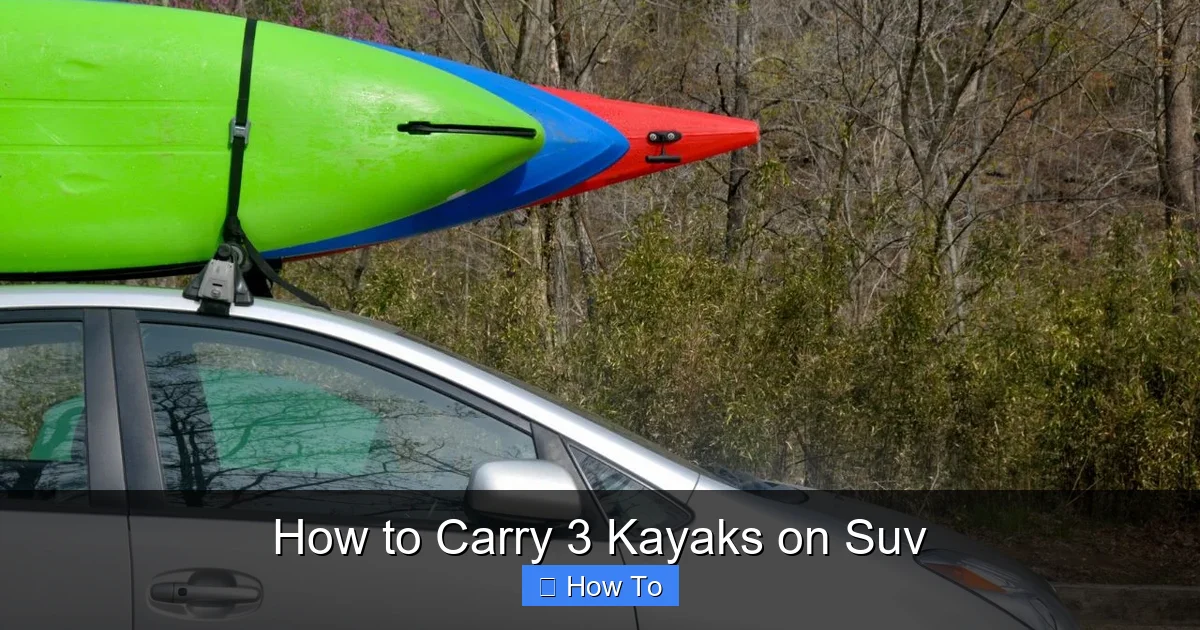
Visual guide about How to Carry 3 Kayaks on Suv
Image source: windpaddle.com
Before you buy any gear or load a single kayak, you need to know your SUV’s roof load limits. This is critical for safety and vehicle integrity.
Check the Owner’s Manual
Your vehicle’s owner’s manual will list two important numbers:
– Static roof load capacity: The maximum weight the roof can support when the vehicle is not moving (e.g., when parked). This is usually much higher—often 300–500 lbs.
– Dynamic roof load capacity: The maximum weight the roof can safely carry while driving. This is the number you need to focus on.
For most SUVs, the dynamic limit ranges from 100 to 165 pounds. Exceeding this can damage your roof, compromise handling, and increase the risk of accidents.
Calculate Total Weight
Add up the weight of your three kayaks. For example:
– Kayak 1: 50 lbs
– Kayak 2: 55 lbs
– Kayak 3: 45 lbs
Total: 150 lbs
If your SUV’s dynamic limit is 150 lbs or higher, you’re in the clear. If it’s lower, you may need to reduce the load—perhaps by leaving one kayak behind or using lighter models.
Consider Additional Gear
Don’t forget to account for the weight of the roof rack, carriers, and straps. A typical roof rack system adds 10–20 lbs. So if your kayaks total 140 lbs and your rack adds 15 lbs, you’re at 155 lbs—right at the edge of a 165-lb limit. That’s acceptable, but you’ll want to drive extra carefully.
Step 2: Choose the Right Roof Rack System
Not all roof racks are created equal. To carry three kayaks safely, you’ll need a sturdy, well-designed system that distributes weight evenly and minimizes wind noise.
Crossbars: The Foundation
Your SUV likely comes with factory-installed roof rails or fixed mounting points. You’ll need crossbars that attach to these to create a stable platform.
Look for:
– Heavy-duty crossbars: Choose aluminum or steel bars rated for at least 165 lbs. Brands like Thule, Yakima, and Rhino-Rack offer reliable options.
– Wide spacing: The farther apart your crossbars, the better the weight distribution. Aim for at least 30–36 inches between them.
– Aerodynamic design: Streamlined bars reduce wind resistance and noise.
Kayak Carriers: J-Style vs. Saddle-Style
There are two main types of kayak carriers:
J-Style Carriers: These hold kayaks on their side in a “J” shape. They’re space-efficient and great for multiple kayaks because you can stagger them. However, they require careful loading and may increase wind resistance.
Saddle-Style Carriers: These hold kayaks upright, resting on their hull. They’re more stable and offer better protection for the kayak’s bottom. They’re ideal if you have wider crossbars and want to carry kayaks side by side.
For three kayaks, a combination works best:
– Use two J-style carriers on one side (staggered)
– Use one saddle-style carrier on the other side
This setup balances space, stability, and aerodynamics.
Number of Carriers Needed
You’ll need at least three carriers—one for each kayak. Some multi-kayak systems allow two kayaks per carrier (stacked), but this is not recommended for long trips or heavy kayaks due to instability.
Step 3: Prepare Your Kayaks for Transport
Before loading, take a few minutes to prepare your kayaks. This ensures they’re secure, protected, and easy to handle.
Clean the Hulls
Dirt, sand, or debris can scratch your kayaks or damage the carriers. Rinse them off and let them dry.
Remove Loose Gear
Take out paddles, life jackets, dry bags, and any loose items. Store them inside the SUV. This reduces weight and prevents theft or loss.
Inspect for Damage
Check for cracks, dents, or weak spots. Transporting a damaged kayak can make it worse—or cause it to come loose.
Use Kayak Covers (Optional)
If you’re driving long distances or through dusty areas, consider using padded kayak covers. They protect against scratches and reduce wind noise.
Step 4: Load the Kayaks Safely
Now comes the most important part: loading your kayaks correctly. A poor loading technique can lead to shifting, damage, or even accidents.
Load the Heaviest Kayak First
Start with the heaviest kayak and place it closest to the center of the roof—directly above the vehicle’s axles. This improves balance and reduces strain on the roof.
Use a Kayak Loader or Step Stool
Lifting 50+ lb kayaks onto a high SUV roof is tough. Use a kayak loader (a wheeled cart that lifts and rolls the kayak into place) or a sturdy step stool to make it easier.
Position Kayaks Correctly
– For J-style carriers: Place the kayak upside down (hull up) to reduce wind resistance and protect the cockpit.
– For saddle-style carriers: Place the kayak right-side up, centered on the carrier.
Stagger the Kayaks
If using J-style carriers, stagger the kayaks so they don’t overlap. This reduces wind drag and prevents them from rubbing against each other.
Secure Each Kayak Individually
Never assume one strap will do. Use:
– Cam straps: Wrap them over the top of each kayak and through the crossbars. Use at least two straps per kayak—one near the front, one near the back.
– Bow and stern lines: These attach from the front and back of each kayak to the SUV’s bumper or tow hooks. They prevent forward and backward movement, especially at high speeds or in wind.
Tighten Straps Properly
Straps should be snug but not overly tight. Over-tightening can warp the kayak hull. Give each strap a firm tug to ensure it’s secure, but don’t crank it down.
Step 5: Double-Check Everything Before Driving
A quick pre-trip inspection can prevent disasters on the road.
Check All Straps and Lines
Make sure every strap is tight, every buckle is closed, and no straps are twisted or loose.
Test for Movement
Gently shake each kayak. If it shifts more than an inch, tighten the straps or adjust the carriers.
Verify ClearanceUse a Flag (If Needed)
If any part of a kayak extends more than 4 feet beyond the front or back of your SUV, attach a red or orange flag to meet legal requirements in many states.
Step 6: Drive Safely with 3 Kayaks on Your SUV
Transporting three kayaks changes how your SUV handles. Be prepared.
Reduce Speed
Wind resistance increases significantly with multiple kayaks. Drive 5–10 mph below the speed limit, especially on highways.
Avoid Sudden ManeuversAllow Extra Stopping Distance
Your SUV will take longer to stop. Leave more space between you and the car ahead.
Watch for Low Clearances
Parking garages, drive-thrus, and tree branches can be hazards. Know your total height (SUV + kayaks) and avoid low-clearance areas.
Check Straps During Long Trips
Stop every 2–3 hours to re-tighten straps. Vibration and wind can loosen them over time.
Troubleshooting Common Issues
Even with the best preparation, problems can arise. Here’s how to handle them.
Kayaks Shifting While Driving
Cause: Loose straps or improper loading.
Solution: Pull over safely and re-secure all straps. Add bow/stern lines if missing.
Excessive Wind Noise or Buffeting
Cause: Poor aerodynamics or staggered kayaks creating turbulence.
Solution: Use aerodynamic fairings on crossbars or adjust kayak positioning. Consider a kayak wind deflector.
Roof Rack Squeaking or Rattling
Cause: Loose bolts or worn rubber pads.
Solution: Tighten all rack bolts and replace worn padding. Apply silicone lubricant to moving parts.
Kayak Damage During Transport
Cause: Rubbing against other kayaks or carriers.
Solution: Use foam padding between kayaks and carriers. Avoid over-tightening straps.
Difficulty Loading Heavy Kayaks
Cause: Lack of assistance or tools.
Solution: Use a kayak loader, ask for help, or consider a trailer for future trips.
Alternatives to Roof Mounting
If roof mounting three kayaks feels too risky or impractical, consider these alternatives:
Kayak Trailer
A small, single-axle trailer designed for 2–4 kayaks is a great investment. It eliminates roof weight, improves fuel efficiency, and makes loading easier. Popular options include the Malone Trailers and Suspenz trailers.
Hitch-Mounted Kayak Carrier
Some carriers attach to your SUV’s trailer hitch and hold kayaks behind the vehicle. These are lower to the ground and easier to load, but they reduce rear visibility and require a hitch.
Rooftop Cargo Box + Kayak Straps
If you have a large cargo box, you can strap one kayak on top of it (if weight allows) and use the remaining roof space for two more. This is less common but can work in a pinch.
Final Tips for Success
– Practice loading at home before your trip.
– Use bright-colored straps so you can easily spot them during checks.
– Keep a toolkit in the car with extra straps, bungee cords, and a wrench.
– Take photos of your setup for reference on future trips.
– Respect weight limits—your safety is more important than convenience.
Conclusion
Carrying three kayaks on an SUV is absolutely achievable with the right preparation and equipment. By assessing your vehicle’s capacity, choosing a sturdy roof rack system, loading your kayaks properly, and driving cautiously, you can transport your gear safely and enjoy your paddling adventures without stress.
Remember, safety comes first. Always double-check your setup, respect weight limits, and never rush the loading process. And if roof mounting ever feels too risky, don’t hesitate to explore alternatives like trailers or hitch carriers.
With this guide in hand, you’re ready to hit the road—three kayaks and all. Happy paddling!