
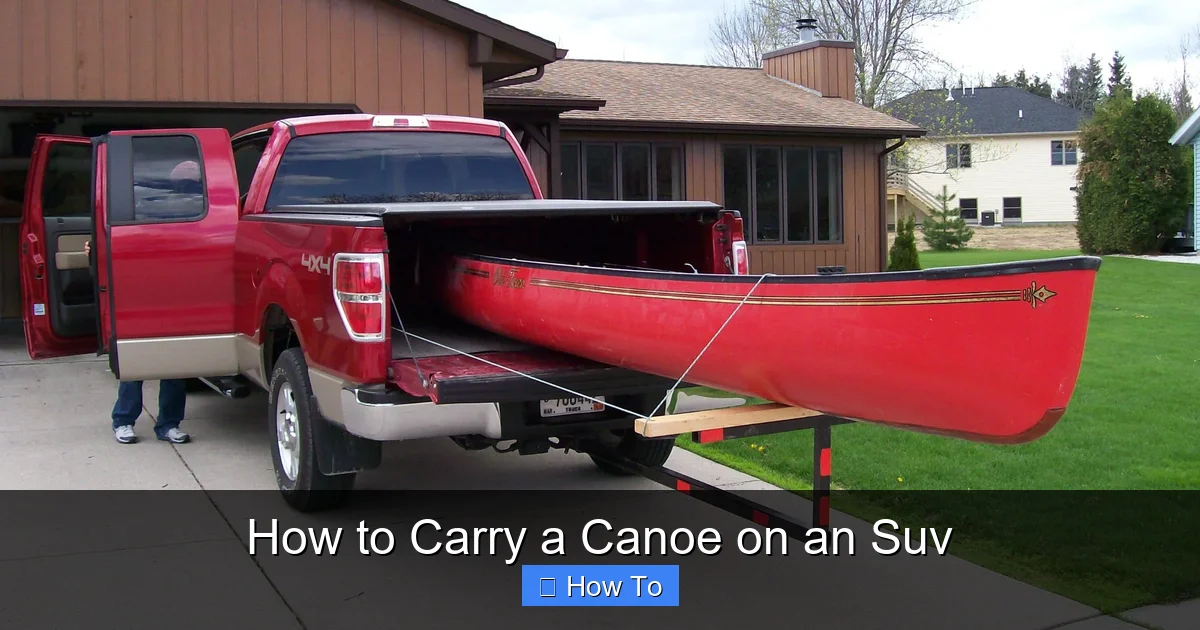
Transporting a canoe on an SUV doesn’t have to be stressful. This guide walks you through choosing the right gear, loading safely, and securing your canoe for a smooth, worry-free trip to the water.
Key Takeaways
- Choose the right roof rack: Use a sturdy, compatible roof rack system designed for SUVs to support the weight and length of your canoe.
- Use proper canoe carriers: Invest in padded J-style or saddle-style carriers to protect both your canoe and vehicle roof.
- Secure with high-quality straps: Always use ratchet or cam buckle straps with bow and stern lines for maximum stability and safety.
- Load with a partner: Canoes are heavy and awkward—always have someone help you lift and position the canoe on the roof.
- Check local laws: Some states require flags or lights on overhanging loads, so verify regulations before hitting the road.
- Inspect before driving: Double-check all straps, knots, and connections before starting your journey and periodically during long trips.
- Practice makes perfect: Do a dry run at home to build confidence and identify potential issues before your first real trip.
How to Carry a Canoe on an SUV
So you’ve got your canoe, your SUV, and a weekend adventure calling your name. But before you hit the water, there’s one crucial step: safely transporting that canoe from your garage to the launch site. Carrying a canoe on an SUV might seem intimidating at first—especially if you’re new to paddling or roof-top cargo—but with the right gear, preparation, and technique, it’s totally doable. In fact, once you get the hang of it, loading and securing your canoe will become second nature.
This guide will walk you through every step of the process, from choosing the right equipment to safely loading, securing, and driving with your canoe on top of your SUV. Whether you’re heading to a calm lake, a winding river, or a remote wilderness spot, we’ve got you covered. By the end, you’ll feel confident, prepared, and ready to enjoy your time on the water—without worrying about your gear flying off the roof.
Step 1: Choose the Right Roof Rack System
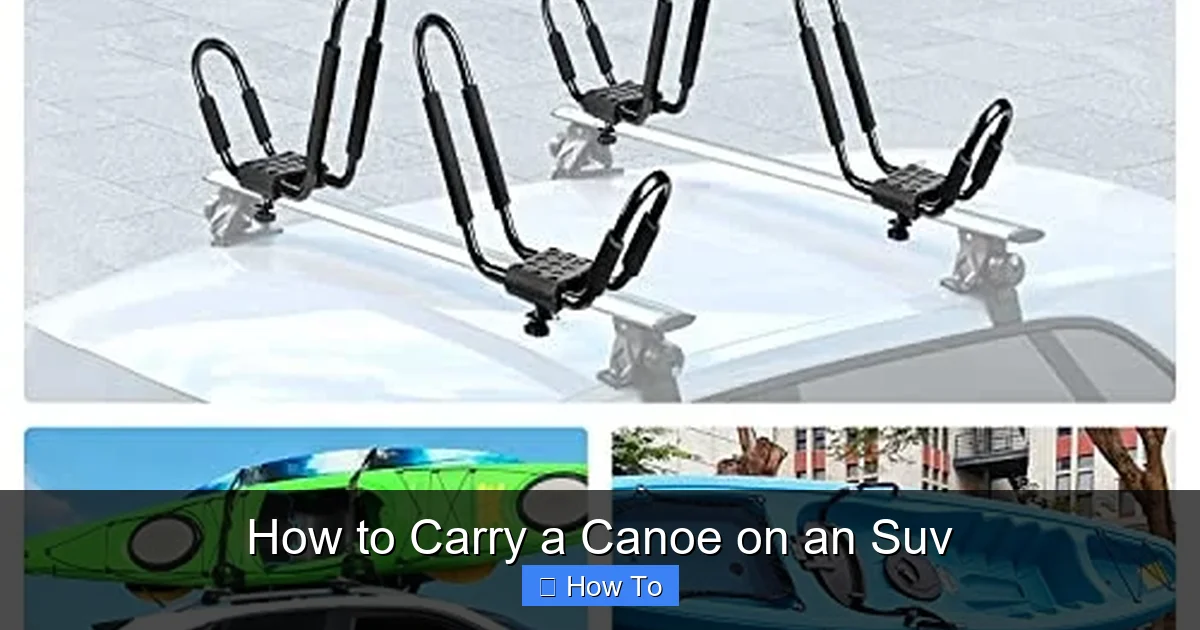
Visual guide about How to Carry a Canoe on an Suv
Image source: canoeworld.info
Before you even think about lifting a canoe onto your SUV, you need a solid foundation: a reliable roof rack. Not all roof racks are created equal, and using the wrong one can lead to damage—to your vehicle, your canoe, or worse, other drivers on the road.
Understand Your SUV’s Roof Type
Most modern SUVs come with one of three roof types:
– Raised rails: These are the most common. They run along the sides of the roof and provide built-in attachment points.
– Flush rails: These sit flat against the roof and are often hidden under plastic covers.
– Bare roof: Some older or smaller SUVs have no rails at all, requiring a clamp-on system.
Knowing your roof type helps you choose compatible crossbars and carriers.
Install Crossbars (If Needed)
If your SUV has raised or flush rails, you’ll likely need crossbars to create a stable platform. Crossbars run perpendicular to the rails and support the weight of your canoe. Look for crossbars rated for at least 150 pounds—most canoes weigh between 40 and 80 pounds, but you want extra capacity for safety.
Popular brands like Thule, Yakima, and Rhino-Rack offer SUV-specific systems. Make sure the crossbars are evenly spaced and securely tightened according to the manufacturer’s instructions. A loose crossbar can shift during driving, causing damage or accidents.
Check Weight and Load Limits
Every SUV has a dynamic (while driving) and static (parked) roof load limit. Check your owner’s manual—most SUVs can handle 100–165 pounds dynamically. A typical 16-foot canoe weighs around 60–70 pounds, so you’re usually in the clear, but always double-check. Overloading can damage your roof or cause handling issues.
Step 2: Select the Best Canoe Carriers
Visual guide about How to Carry a Canoe on an Suv
Image source: thumbs.dreamstime.com
Once your roof rack is ready, it’s time to choose how you’ll hold the canoe in place. Canoe carriers come in two main styles: J-style and saddle-style.
J-Style Carriers
These hold the canoe at an angle, resembling the letter “J.” They’re compact, aerodynamic, and great for single-canoe transport. J-carriers are easy to load and unload, and they keep the canoe secure with minimal contact points. However, they can put pressure on one side of the canoe, so padding is essential.
Look for models with thick, non-marring foam padding and adjustable arms. Some even include built-in locks for added security.
Saddle-Style Carriers
Saddle carriers sit flat on the crossbars and cradle the canoe horizontally. They distribute weight more evenly and are ideal if you’re carrying multiple canoes or want maximum stability. They’re also better for long-distance travel since they reduce wind resistance.
The downside? They take up more roof space and can be trickier to load alone. But with a helper, they’re a solid choice.
Universal vs. Custom Fit
Some carriers are universal and fit most crossbars, while others are designed for specific brands. Universal options are more affordable and versatile, but custom-fit models often provide a tighter, more secure hold. If you plan to transport your canoe frequently, investing in a high-quality, brand-specific carrier is worth it.
Step 3: Gather the Right Straps and Tie-Downs
A roof rack and carrier are only as good as the straps holding your canoe down. Cheap or worn straps can fail, especially on bumpy roads or at high speeds. Don’t skimp here.
Use Ratchet or Cam Buckle Straps
Avoid bungee cords or rope—they stretch and loosen over time. Instead, use heavy-duty ratchet or cam buckle straps made from polyester webbing. These provide consistent tension and are less likely to slip.
Look for straps with a minimum breaking strength of 1,500 pounds and a working load limit of at least 500 pounds. Most quality straps are rated for 1,200–1,500 pounds, which is more than enough for a canoe.
Include Bow and Stern Lines
Even with strong roof straps, wind and road vibrations can cause the front (bow) and back (stern) of the canoe to shift. That’s why you need bow and stern lines—additional ropes or straps that anchor the ends of the canoe to your SUV’s front bumper and rear hitch or tow hook.
These lines prevent the canoe from lifting or sliding forward/backward, especially during sudden stops or strong crosswinds. Use marine-grade rope or dedicated tie-down straps with hooks for easy attachment.
Protect Your Canoe and Vehicle
Always use padding between the straps and your canoe to prevent scratches or dents. Foam pipe insulation, pool noodles, or specialized strap pads work well. Similarly, protect your SUV’s roof and bumpers with soft cloths or rubber guards where straps make contact.
Step 4: Prepare for Loading
Now that your gear is ready, it’s time to load the canoe. This is where many people make mistakes—rushing, lifting incorrectly, or trying to do it alone. Take your time and follow these steps.
Clear the Area
Choose a flat, open space with no overhead obstacles like trees or power lines. Make sure there’s enough room to lift the canoe overhead and position it on the roof.
Position the Canoe Correctly
The canoe should be centered on the roof, with equal overhang on both sides. Most experts recommend no more than 4 feet of overhang front and back. If your canoe is longer than your SUV, you may need a flag or light to meet legal requirements (more on that later).
Use a Loading Aid (Optional)
If you’re loading alone, consider a canoe loader—a wheeled cart or ramp that helps you slide the canoe onto the roof. These are especially helpful for heavier canoes or taller SUVs.
Alternatively, use a step stool or tailgate to gain height. Just make sure it’s stable and won’t tip over.
Step 5: Load the Canoe Safely
This is the moment of truth. With your helper (or using a loading aid), carefully lift the canoe and place it on the roof.
Lift with Your Legs, Not Your Back
Bend your knees, keep your back straight, and lift evenly. Communicate with your partner—use phrases like “ready,” “lift,” and “set” to stay coordinated.
Position the Canoe Upside Down
Always transport your canoe upside down (gunwales down). This lowers the center of gravity, improves aerodynamics, and prevents water from pooling inside during rain.
Center and Secure Temporarily
Once the canoe is on the roof, slide it into position so it’s centered over the crossbars. Use a bungee cord or rope to hold it in place while you attach the carriers and straps. This prevents it from sliding off while you’re adjusting.
Step 6: Secure the Canoe with Straps
Now it’s time to lock everything down. Proper strapping is critical for safety.
Attach the Main Roof Straps
Run the straps over the canoe and through the carriers or crossbars. Thread them under the crossbars and tighten using the ratchet or cam buckle. Pull firmly—there should be no slack.
Avoid over-tightening, which can warp the canoe. A good rule of thumb: you should be able to press down on the canoe slightly, but it shouldn’t move side to side.
Connect Bow and Stern Lines
Attach one end of the bow line to the front of the canoe (usually the bow eye or a secure point near the tip). Run it down to the front bumper or tow hook of your SUV and tie it off with a secure knot like a trucker’s hitch or bowline.
Repeat for the stern line at the back. These lines should be taut but not so tight that they bend the canoe.
Double-Check All Connections
Give every strap and line a firm tug. Make sure nothing is loose, twisted, or rubbing against the vehicle. Check that the canoe isn’t shifting when you push it gently from the side.
Step 7: Final Safety Checks Before Driving
You’re almost ready to go—but don’t hit the road just yet. A few final checks can prevent disasters.
Verify Overhang and Visibility
If your canoe extends more than 4 feet beyond the front or back of your SUV, you may need a red flag during the day or a red light at night. Check your state’s Department of Motor Vehicles (DMV) website for specific rules.
Also, ensure the canoe doesn’t block your headlights, taillights, or license plate.
Test Drive in a Safe Area
Before merging onto a highway, drive slowly around your neighborhood or a parking lot. Listen for unusual noises, feel for vibrations, and check mirrors frequently. If something feels off, pull over and inspect.
Recheck Straps Periodically
On long trips, stop every 50–100 miles to check your straps. Heat, wind, and vibration can cause them to loosen over time.
Troubleshooting Common Issues
Even with careful preparation, problems can arise. Here’s how to handle the most common ones.
The Canoe Shifts While Driving
This usually means your straps aren’t tight enough or your bow/stern lines are missing. Pull over, re-tighten all straps, and add or adjust the bow and stern lines.
Straps Are Rubbing or Squeaking
Use more padding between the straps and canoe. Silicone lubricant on metal parts can reduce squeaking, but avoid oil-based products that can damage rubber or plastic.
Canoe Is Difficult to Load Alone
Consider a canoe loader, a second person, or switching to a lighter canoe. Some paddlers also use a rope and pulley system anchored to a tree or post to assist with lifting.
Wind Noise or Buffeting
This is normal with roof loads, but excessive noise may mean the canoe isn’t centered or the carriers aren’t aerodynamic. Adjust positioning or add a wind deflector if needed.
Tips for Long-Distance or Frequent Transport
If you’re a regular paddler, these tips will save you time and hassle.
Invest in a Canoe Cover
A fitted cover protects your canoe from road grime, UV rays, and bird droppings during transport. It also reduces wind resistance.
Use a Hitch-Mounted Carrier (Alternative)
For frequent use, consider a trailer or hitch-mounted canoe carrier. These keep the weight off your roof and make loading easier, though they require a trailer hitch and more storage space.
Label Your Gear
If you have multiple straps or carriers, label them with tape or tags. This makes setup faster and reduces confusion.
Keep a Roof Rack Toolkit
Store a small kit in your SUV with extra straps, padding, a flashlight, and a multi-tool. You never know when you’ll need to make adjustments on the road.
Conclusion
Carrying a canoe on an SUV might seem daunting at first, but with the right preparation, it’s a safe and manageable task. Start with a sturdy roof rack, choose the right carriers, and always use high-quality straps with bow and stern lines. Load with care, double-check everything, and never skip the final safety inspection.
Remember, the goal isn’t just to get your canoe to the water—it’s to do it safely, so you can focus on what really matters: enjoying the paddle, the scenery, and the peace that comes with being on the water. With practice, you’ll be loading and unloading like a pro in no time.
So grab your gear, call a friend, and get ready for your next adventure. The river is waiting.