
Carrying a ladder on an SUV doesn’t have to be stressful. This guide walks you through safe, secure methods using roof racks, ladder racks, or foam padding—so you can transport your ladder without damage or danger.
Key Takeaways
- Choose the right equipment: Use a compatible roof rack, ladder rack, or foam padding to protect both your SUV and ladder during transport.
- Secure the ladder properly: Always use high-quality ratchet straps or bungee cords with hooks to prevent shifting or falling.
- Balance weight evenly: Center the ladder on the roof to maintain vehicle stability and avoid handling issues.
- Check local laws: Some areas have regulations on overhanging loads—know the rules to avoid fines or accidents.
- Inspect before driving: Double-check all straps, hooks, and ladder position before hitting the road.
- Drive cautiously: Reduce speed, avoid sudden turns, and allow extra stopping distance when carrying a load.
- Use a spotter if needed: For long ladders, have someone assist during loading and unloading for safety.
How to Carry Ladder on SUV
Whether you’re a weekend DIYer, a professional contractor, or just tackling home maintenance, transporting a ladder on your SUV is a common but often tricky task. Ladders are bulky, heavy, and can pose serious safety risks if not secured correctly. But with the right tools, techniques, and precautions, you can carry a ladder on your SUV safely and efficiently—without damaging your vehicle or endangering others on the road.
In this comprehensive guide, you’ll learn everything you need to know about how to carry a ladder on an SUV. We’ll cover the best equipment options, step-by-step loading instructions, safety tips, and troubleshooting advice. By the end, you’ll feel confident strapping that ladder to your roof and hitting the road with peace of mind.
Why Proper Ladder Transport Matters
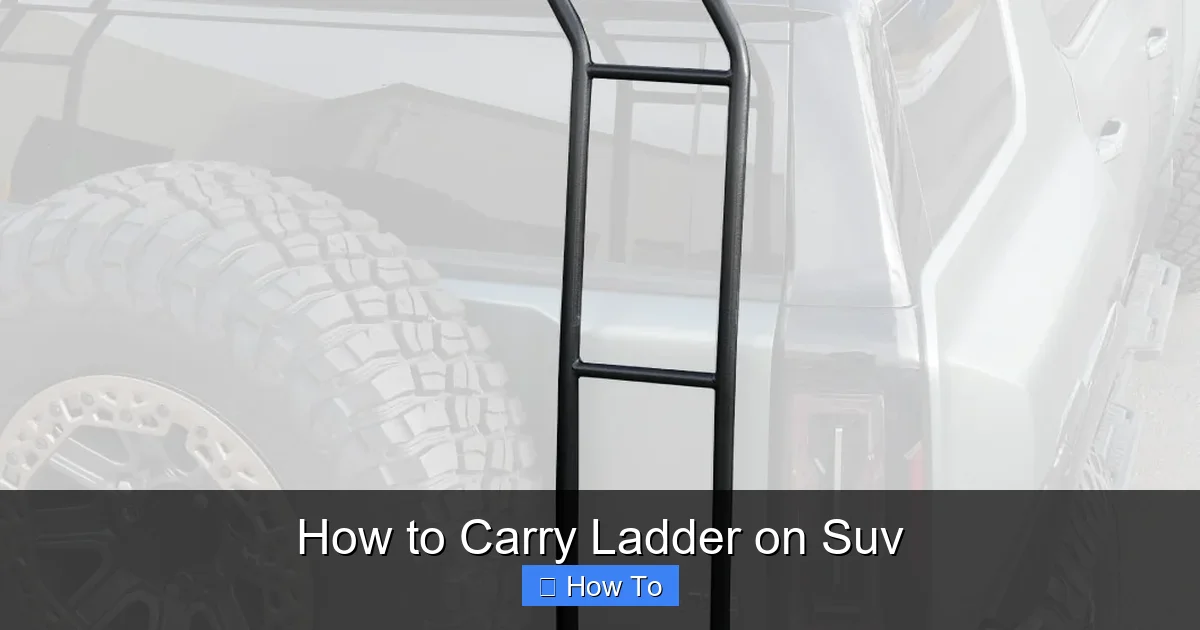
Visual guide about How to Carry Ladder on Suv
Image source: gobiracks.com
Before diving into the how-to, it’s important to understand why proper ladder transport is so critical. A poorly secured ladder can shift, fall, or even fly off your SUV while driving—causing accidents, injuries, or costly damage. In fact, unsecured loads are a leading cause of roadside debris and vehicle collisions.
Additionally, ladders can scratch or dent your SUV’s roof if not protected. Over time, repeated friction from metal-on-metal contact can wear down paint and expose the vehicle to rust. And let’s not forget the legal side: many states have laws regulating how long a load can overhang your vehicle. Violating these rules can result in fines or even liability in the event of an accident.
So, taking the time to do it right isn’t just about convenience—it’s about safety, legality, and protecting your investment.
Choosing the Right Equipment
Visual guide about How to Carry Ladder on Suv
Image source: thumbs.dreamstime.com
The first step in learning how to carry a ladder on an SUV is selecting the right gear. The equipment you use will depend on your SUV’s design, the type of ladder, and how often you transport it.
Roof Racks
Most modern SUVs come equipped with factory-installed roof rails or crossbars. These are the foundation for secure ladder transport. If your SUV has roof rails, you can attach crossbars (also called roof bars) that span the width of the vehicle. These bars provide anchor points for straps and help distribute the ladder’s weight.
If your SUV doesn’t have built-in rails, you can install aftermarket roof racks. Brands like Thule, Yakima, and Rhino-Rack offer universal and vehicle-specific systems that clamp onto door frames or use gutter mounts. Always check your SUV’s weight capacity—most roof racks support 100–165 pounds, which is plenty for a standard ladder.
Ladder Racks
For frequent ladder users, a dedicated ladder rack is the gold standard. These are specialized racks designed to hold ladders securely, often with built-in clamps or cradles. They can be mounted on the roof, rear hitch, or even the side of a truck bed (if your SUV has a compatible setup).
Roof-mounted ladder racks are ideal for single ladders and keep the load centered. Hitch-mounted racks are great if you don’t want to climb onto the roof, but they may reduce ground clearance. Side-mounted racks are less common on SUVs but work well for certain models with reinforced side rails.
Foam Padding and Pool Noodles
If you’re transporting a ladder occasionally and don’t want to invest in a full rack, foam padding is a budget-friendly alternative. Cut a pool noodle lengthwise and wrap it around the crossbars or roof rails. This creates a cushioned surface that protects both the ladder and your SUV from scratches.
You can also use foam pipe insulation, which comes in various diameters and is easy to cut and attach. Just secure it with zip ties or duct tape. While not as secure as a dedicated rack, foam padding works well for short trips and light-duty use.
Straps and Tie-Downs
No matter which equipment you choose, you’ll need strong, reliable straps to secure the ladder. Avoid using old bungee cords or rope—these can stretch, snap, or loosen over time.
Instead, opt for ratchet straps with S-hooks or cam buckle straps. Ratchet straps provide maximum tension and are ideal for heavy ladders. Cam buckle straps are easier to use and great for lighter loads. Look for straps rated for at least 500 pounds working load limit (WLL) and made from durable polyester webbing.
Always use at least two straps—one near the front and one near the back of the ladder. For longer ladders, add a third strap in the middle for extra security.
Step-by-Step Guide to Carrying a Ladder on an SUV
Now that you have the right equipment, let’s walk through the process of safely loading and securing your ladder.
Step 1: Prepare Your SUV and Ladder
Start by cleaning the roof of your SUV. Remove any dirt, snow, or debris that could interfere with the rack or straps. Check that your roof rails or crossbars are tightly secured and free of rust or damage.
Next, inspect your ladder. Make sure it’s clean, dry, and free of loose parts. If it’s an extension ladder, collapse it fully and lock the rungs in place. For step ladders, fold them closed and secure the spreader bars.
Step 2: Position the Ladder on the Roof
With a helper if possible, lift the ladder onto the roof. Place it centered over the crossbars, with the feet facing forward (this reduces wind resistance). The ladder should rest flat and level—avoid tilting it at an angle.
If your ladder is longer than your SUV, it’s okay for it to overhang slightly, but never more than 4 feet beyond the front or back bumper (check local laws). Use red flags or reflective tape on any overhanging ends to increase visibility.
Step 3: Secure the Ladder with Straps
Attach your first strap near the front of the ladder. Hook one end to a crossbar or roof rail, wrap the strap under the ladder, and hook the other end to the opposite side. Repeat with a second strap near the rear.
If using ratchet straps, tighten them gradually and evenly. Don’t overtighten—this can warp the ladder or damage your SUV’s roof. The goal is firm pressure, not crushing force.
For added security, cross the straps in an “X” pattern over the ladder. This helps prevent side-to-side movement.
Step 4: Double-Check Everything
Before driving, give the ladder a firm shake. It shouldn’t move more than an inch in any direction. Check that all hooks are fully engaged and straps aren’t twisted.
Also, ensure the ladder isn’t blocking your view through the windshield or rear window. If it is, reposition it or consider a rear-mounted rack instead.
Step 5: Drive Safely
Once you’re on the road, drive cautiously. Reduce your speed, especially on highways or windy days. Avoid sudden acceleration, hard braking, or sharp turns—these can shift the load.
Check your mirrors frequently to monitor the ladder. If you hear flapping or rattling, pull over and re-secure the straps.
Alternative Methods for Carrying a Ladder
Not every SUV is suited for roof-mounted ladders. Here are a few alternative methods to consider.
Rear Hitch Rack
If your SUV has a trailer hitch, a rear-mounted ladder rack is a great option. These racks attach to the hitch receiver and hold the ladder vertically or horizontally behind the vehicle.
Pros: No need to climb on the roof, better ground clearance, easier loading.
Cons: Reduces rear visibility, may block license plate or taillights, not all SUVs have hitches.
Inside the SUV
For shorter ladders (under 6 feet), you may be able to lay them flat in the cargo area. Fold down the rear seats and slide the ladder in lengthwise. Use cargo nets or bungee cords to keep it from sliding.
Pros: No roof damage, full visibility, protected from weather.
Cons: Takes up cargo space, not suitable for long ladders.
Towing a Trailer
For very long or heavy ladders, consider towing a small utility trailer. This keeps the ladder off your SUV entirely and allows you to carry additional tools or materials.
Pros: Maximum capacity, no roof strain, versatile.
Cons: Requires a hitch and trailer license, less fuel-efficient.
Safety Tips and Best Practices
Transporting a ladder safely goes beyond just strapping it down. Here are some essential tips to keep in mind.
Never Exceed Weight Limits
Check your SUV’s owner’s manual for the maximum roof load capacity. This includes the weight of the rack, straps, and ladder. Exceeding this limit can damage the roof structure or cause handling problems.
Use Reflective Markers
If your ladder overhangs, attach red or orange flags to the ends. This alerts other drivers, especially at night or in low visibility. Some states require this by law.
Avoid High Winds
Strong winds can catch a ladder like a sail, making your SUV unstable. If possible, avoid driving in windy conditions. If you must, reduce speed and stay in the right lane.
Inspect Straps Regularly
Over time, straps can wear out, fray, or lose tension. Inspect them before each trip and replace any that show signs of damage.
Unload Carefully
When you arrive, unload the ladder with the same care you used to load it. Have a helper if needed, and avoid dropping it on the ground.
Troubleshooting Common Issues
Even with the best preparation, problems can arise. Here’s how to handle some common issues.
Ladder Shifts While Driving
If your ladder moves during transport, it’s likely due to loose straps or uneven tension. Pull over safely and re-secure the straps. Consider adding a third strap or using a tighter crisscross pattern.
Straps Won’t Stay Tight
Old or low-quality straps may slip. Upgrade to ratchet straps with locking mechanisms. Also, ensure the hooks are fully engaged and the webbing isn’t twisted.
Ladder Scratches the Roof
This usually happens when there’s no padding between the ladder and the roof. Use foam padding, rubber mats, or a dedicated ladder rack to prevent contact.
Difficulty Lifting the Ladder
Ladders can be heavy—especially extension ladders. Use a ladder hoist, ask for help, or consider a rear-mounted rack to reduce lifting.
Overhang Causes Legal Issues
If you’re pulled over for an overhanging load, you may face fines. Always check local regulations. In most states, loads can overhang up to 4 feet with proper marking.
Conclusion
Learning how to carry a ladder on an SUV doesn’t have to be complicated. With the right equipment—like a sturdy roof rack, quality straps, and protective padding—you can transport your ladder safely and confidently. Always prioritize security, balance, and visibility, and never skip the pre-drive inspection.
Remember, a little extra time spent securing your ladder can prevent accidents, damage, and legal trouble. Whether you’re hauling a step ladder to fix a gutter or an extension ladder for a roofing job, follow these steps to ensure a smooth, safe journey.
By following this guide, you’ll not only protect your SUV and ladder but also set a standard for responsible driving. So next time you need to transport a ladder, you’ll know exactly what to do—no stress, no guesswork, just safe and secure travel.