
Carrying a paddle board on an SUV doesn’t have to be stressful. With the right equipment and technique, you can transport your board safely and protect both your gear and vehicle. This guide walks you through every step—from choosing the right roof rack to securing your board and driving with confidence.
Key Takeaways
- Choose the right roof rack system: Crossbars are essential—factory or aftermarket—and must support the weight and length of your paddle board.
- Use padded board carriers or cradles: These prevent scratches and reduce wind resistance while keeping the board stable.
- Secure the board with high-quality straps: Ratchet or cam buckle straps with cam locks help prevent shifting during transit.
- Protect your board and SUV: Use nose cones, edge guards, and soft roof pads to avoid damage from wind, friction, or sudden stops.
- Load and unload carefully: Always lift with your legs, use a step stool if needed, and have a helper for longer boards.
- Drive mindfully: Expect increased wind resistance, reduced fuel efficiency, and slower handling—adjust your driving accordingly.
- Check local laws and weight limits: Some areas restrict oversized loads, and exceeding your SUV’s roof load capacity can be dangerous.
How to Carry Paddle Board on SUV: A Complete Step-by-Step Guide
So you’ve got your paddle board, your SUV is ready, and you’re itching to hit the water. But before you can enjoy those serene lake views or ocean waves, you’ve got to figure out how to carry your paddle board on your SUV safely and securely. Don’t worry—this isn’t rocket science, but it does require some planning and the right gear.
In this guide, we’ll walk you through everything you need to know about transporting your paddle board on an SUV. Whether you’re a weekend warrior or a full-time water enthusiast, we’ve got you covered. From choosing the right roof rack to strapping down your board and driving with confidence, we’ll break it all down into simple, easy-to-follow steps.
By the end of this article, you’ll know exactly how to carry paddle board on SUV without damaging your gear, your vehicle, or your peace of mind. Let’s dive in.
Why Proper Paddle Board Transport Matters
Visual guide about How to Carry Paddle Board on Suv
Image source: m.media-amazon.com
Transporting a paddle board might seem straightforward—just toss it on the roof and go, right? Not so fast. Paddle boards are long, lightweight, and often made from materials that can scratch, dent, or warp under stress. And if they’re not secured properly, they can become dangerous projectiles in the event of sudden braking or high winds.
Plus, your SUV’s roof has a weight limit. Overloading it or distributing weight unevenly can affect handling, fuel efficiency, and even cause structural damage over time. That’s why knowing how to carry paddle board on SUV the right way is essential—not just for convenience, but for safety.
When done correctly, transporting your board becomes a breeze. You’ll spend less time worrying and more time paddling. And with the right setup, you can even carry multiple boards at once.
Step 1: Assess Your SUV and Roof Capacity
Visual guide about How to Carry Paddle Board on Suv
Image source: m.media-amazon.com
Before you buy any gear or start loading, take a moment to understand your SUV’s capabilities.
Check Your Roof Load Rating
Every SUV has a maximum dynamic roof load capacity—this is the weight the roof can safely handle while the vehicle is moving. You’ll usually find this information in your owner’s manual or on a label inside the driver’s door jamb.
Most SUVs can handle between 100 to 165 pounds (45 to 75 kg) on the roof. But remember: this includes the weight of the roof rack, straps, and the board itself. A typical paddle board weighs between 20 to 35 pounds (9 to 16 kg), so you’re usually safe—but always double-check.
Determine Roof Type
SUVs come with different roof types:
- Raised side rails: These are common on many SUVs and provide attachment points for crossbars.
- Flush-mounted rails: Sleek and integrated, these often require specific adapters.
- Bare roof (no rails): You’ll need a clamp-on roof rack system that attaches to the door frames.
Knowing your roof type helps you choose the right roof rack system.
Measure Your SUV’s Roof Width
Paddle boards are long—typically 10 to 12 feet (3 to 3.7 meters)—so you’ll need enough space to mount crossbars that span the width of your SUV. Measure the distance between the side rails or door frames to ensure your crossbars will fit.
Step 2: Choose the Right Roof Rack System
The roof rack is the foundation of your paddle board transport setup. Without it, you can’t securely carry your board.
Factory vs. Aftermarket Crossbars
Many SUVs come with factory-installed crossbars. These are convenient and often designed specifically for your vehicle. But they may not be strong enough or wide enough for paddle boards.
Aftermarket crossbars (like those from Thule, Yakima, or Rhino-Rack) offer more strength, adjustability, and compatibility. Look for crossbars rated for at least 150 pounds and with a wide enough span to support your board.
Key Features to Look For
When shopping for crossbars, consider:
- Weight capacity: Must exceed the combined weight of your board, rack, and accessories.
- Aerodynamic design: Reduces wind noise and drag.
- Easy installation: Tool-free or quick-release systems save time.
- Compatibility: Ensure they fit your SUV model and year.
Popular Roof Rack Options for Paddle Boards
Some top-rated systems include:
- Thule WingBar Evo: Aerodynamic, quiet, and strong—great for long boards.
- Yakima JetStream: Lightweight aluminum with excellent load capacity.
- Rhino-Rack Vortex: Affordable and durable, with a sleek profile.
These systems often come with universal fit kits, making them compatible with a wide range of SUVs.
Step 3: Select the Right Paddle Board Carrier
Once you have crossbars, you need a way to hold your board securely. That’s where paddle board carriers come in.
Types of Paddle Board Carriers
There are three main types:
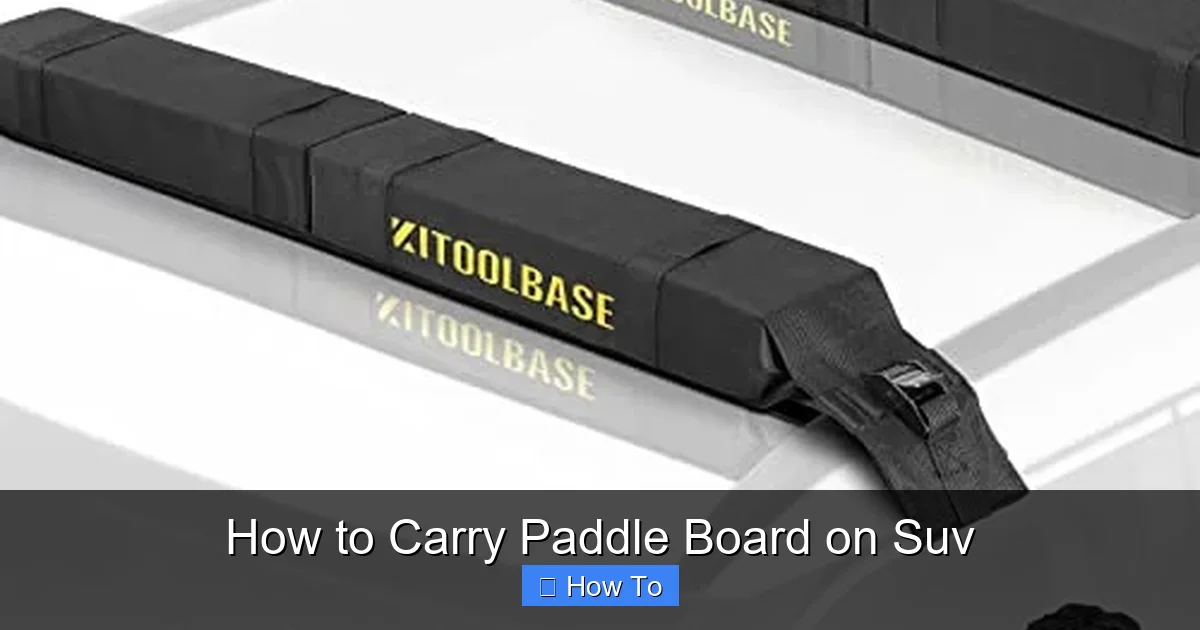
- Soft roof pads: Foam pads that rest on the roof and crossbars. Great for occasional use and budget-friendly. However, they offer less stability and can shift in wind.
- Hard cradles: Plastic or composite cradles that clamp onto crossbars and hold the board in place. More secure and better for frequent use.
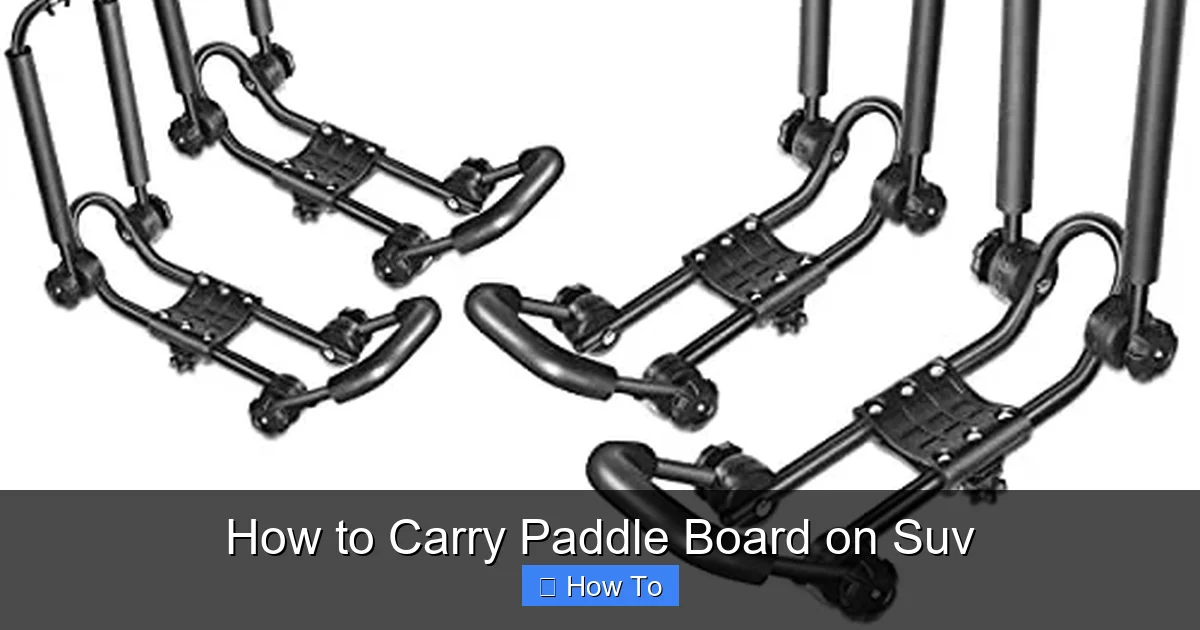
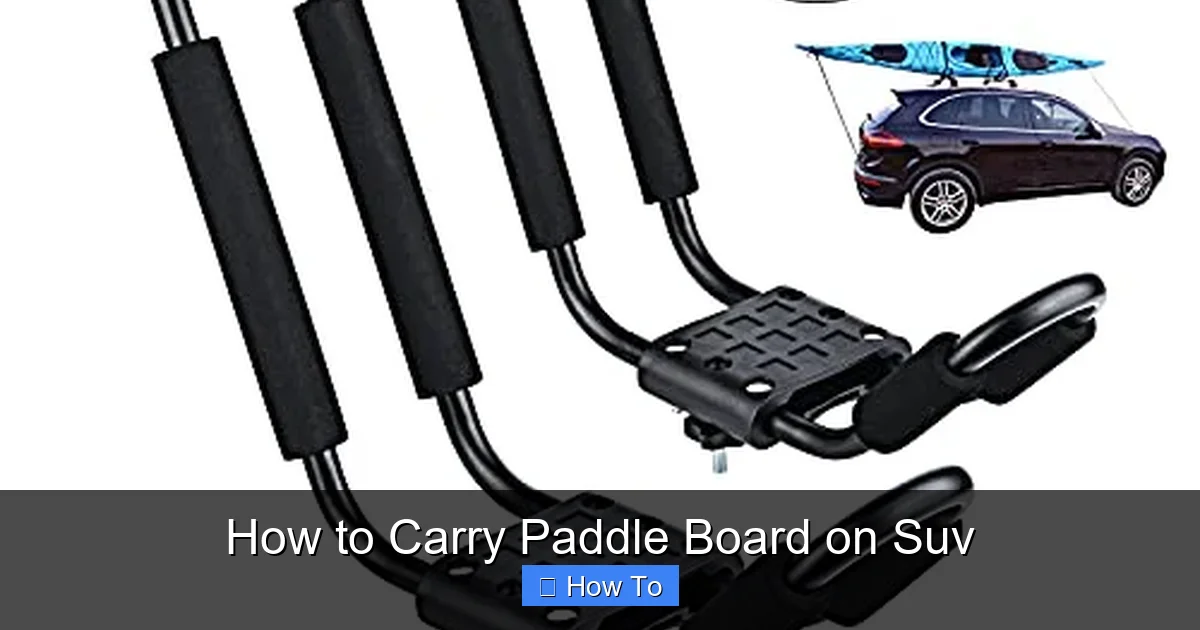
- J-style racks: Hold the board vertically, like a kayak. Saves space and reduces wind resistance, but can be harder to load.
For most paddle boarders, hard cradles are the best balance of security, ease of use, and protection.
Features to Look For in a Carrier
When choosing a carrier, consider:
- Padded contact points: Prevents scratches and dents on your board.
- Adjustable width: Fits different board sizes and shapes.
- Quick-release levers: Makes loading and unloading faster.
- Locking capability: Deters theft when parked.
Brands like Malone, Thule, and Yakima offer excellent paddle board-specific carriers.
DIY Option: Foam Blocks and Straps
If you’re on a tight budget, you can use foam blocks (like pool noodles cut in half) placed over the crossbars. Place your board on top and secure with straps. This works in a pinch, but it’s less secure and not recommended for long trips or high speeds.
Step 4: Gather the Right Straps and Tie-Downs
No matter how good your rack is, your board won’t stay put without strong, reliable straps.
Types of Straps
There are two main types:
- Cam buckle straps: Easy to use—just pull tight and click the cam lock. Great for most paddle board setups.
- Ratchet straps: Offer maximum tension but can overtighten and damage your board if not used carefully.
For paddle boards, cam buckle straps are usually the best choice. They’re simple, secure, and less likely to crush your board.
Strap Features to Consider
Look for:
- Wide, soft webbing: Prevents cutting into the board.
- Rubber or padded hooks: Protects your SUV’s paint and trim.
- Length: At least 10 feet (3 meters) to wrap around the board and crossbars.
- UV and weather resistance: Ensures longevity.
How Many Straps Do You Need?
Use at least two straps—one near the front and one near the back. For longer boards (12 feet or more), consider a third strap in the middle for extra security.
Step 5: Prepare Your Paddle Board
Before loading, take a few minutes to prep your board.
Clean the Board
Wipe off sand, salt, or debris. This prevents scratches and keeps your SUV’s roof clean.
Remove Accessories
Take off fins, leashes, or any loose parts. These can snag on straps or get damaged during transport.
Use a Nose Cone or Edge Guard
A soft nose cone (like a foam cover) protects the front of your board from wind pressure and potential impacts. Edge guards can also help prevent chafing from straps.
Consider a Board Bag
If you’re traveling long distances or in rough weather, a padded board bag adds an extra layer of protection. It also makes handling easier.
Step 6: Load the Paddle Board onto Your SUV
Now it’s time to get your board on the roof. This step requires care to avoid injury or damage.
Use a Step Stool or Platform
Most SUVs have high roofs. Use a sturdy step stool or loading platform to reach the crossbars comfortably. This reduces strain and gives you better control.
Get a Helper (If Possible)
For boards over 10 feet, having a second person makes loading much easier. One person can lift the front while the other guides the back.
Lift with Your Legs, Not Your Back
Bend your knees, keep your back straight, and lift slowly. Paddle boards are light but long, so balance is key.
Position the Board Correctly
Place the board upside down (deck side down) on the cradles or pads. This reduces wind resistance and helps water drain if it rains.
Center the board so it’s evenly distributed over the crossbars. Avoid overhang—most experts recommend no more than 4 feet (1.2 meters) beyond the front or back of the vehicle.
Secure the Board with Straps
Thread the straps through the crossbars and over the board. Hook the ends securely, making sure they won’t come loose.
Tighten the straps gradually, alternating sides to keep the board centered. Don’t overtighten—just enough to prevent movement.
Use Bow and Stern Lines (Optional but Recommended)
For extra security, especially on highways or in windy conditions, attach bow and stern lines. These run from the front and back of the board to the tow hooks or anchor points on your SUV.
They prevent the board from lifting or shifting forward/backward during sudden stops or gusts.
Step 7: Double-Check Everything Before Driving
Before you hit the road, do a final safety check.
Test for Movement
Gently shake the board. It shouldn’t shift or rattle. If it does, tighten the straps or adjust the position.
Check Strap Tension
Make sure all straps are snug and the hooks are secure. Look for any signs of rubbing or pinching.
Inspect Clearance
Ensure the board doesn’t block your view, interfere with the antenna, or extend too far beyond the vehicle (check local laws).
Verify Weight Distribution
The board should be centered and not leaning to one side. Uneven weight can affect handling.
Step 8: Drive Safely with Your Paddle Board
Transporting your board changes how your SUV handles. Be prepared.
Expect Increased Wind Resistance
A paddle board on the roof creates drag, which can reduce fuel efficiency by 10–20%. You’ll also notice more wind noise and reduced acceleration.
Adjust Your Driving
- Drive slower than usual, especially on highways.
- Avoid sudden braking or sharp turns.
- Leave extra space between you and other vehicles.
- Be cautious in high winds or storms.
Watch for Low Clearances
Parking garages, drive-thrus, and tree branches can be hazards. Know your total vehicle height (SUV + board) and plan your route accordingly.
Check the Board Periodically
On long trips, stop every hour or so to check the straps and board position. Vibration and wind can loosen things over time.
Troubleshooting Common Issues
Even with the best setup, problems can happen. Here’s how to fix them.
Board Shifts During Transit
Cause: Loose straps or improper positioning.
Solution: Stop and retighten straps. Use bow and stern lines for added stability.
Straps Rubbing or Chafing
Cause: Straps too tight or not padded.
Solution: Use wider straps or add foam padding at contact points.
Wind Noise or Flapping
Cause: Poor aerodynamics or loose board.
Solution: Ensure the board is centered and use a nose cone. Consider a J-style rack to reduce drag.
Roof Scratches or Damage
Cause: Metal hooks or hard contact points.
Solution: Use rubber-coated hooks and soft roof pads. Avoid dragging the board onto the roof.
Difficulty Loading Alone
Cause: Board too long or SUV too tall.
Solution: Use a loading assist tool (like a ramp or pulley system) or invest in a rear-mounted rack.
Alternative Transport Methods
Roof racks aren’t the only way to carry a paddle board on an SUV.
Trailer Hitch Racks
These attach to your trailer hitch and hold the board behind the vehicle. Great for avoiding roof weight limits and easier loading. Downsides: reduced visibility and added length.
Rear Door or Tailgate Mounts
Some systems let you mount the board vertically on the back of your SUV. Ideal for short trips but can block license plates or cameras.
Inside the SUV
If you have a large SUV (like a Suburban or Expedition), you might fit the board inside. Use blankets or foam to protect the interior. This avoids wind resistance but takes up passenger or cargo space.
Maintenance and Storage Tips
After your trip, take care of your gear.
Clean Your Board and Rack
Rinse off saltwater, sand, and dirt. Dry thoroughly to prevent mold or corrosion.
Inspect Straps and Hardware
Check for fraying, rust, or wear. Replace damaged parts immediately.
Store Properly
Keep your board in a cool, dry place away from direct sunlight. Store straps and racks in a dry garage or shed.
Conclusion
Learning how to carry paddle board on SUV doesn’t have to be complicated. With the right roof rack, carrier, straps, and a little know-how, you can transport your board safely and confidently—no matter where your adventures take you.
Start by assessing your SUV’s roof capacity, choose a reliable rack system, and invest in quality carriers and straps. Load carefully, secure everything tightly, and drive with awareness. And don’t forget to check your setup regularly.
Whether you’re heading to a calm lake or a choppy coastline, proper transport ensures your board arrives in perfect condition—ready for the next paddle. So gear up, strap down, and enjoy the ride.