
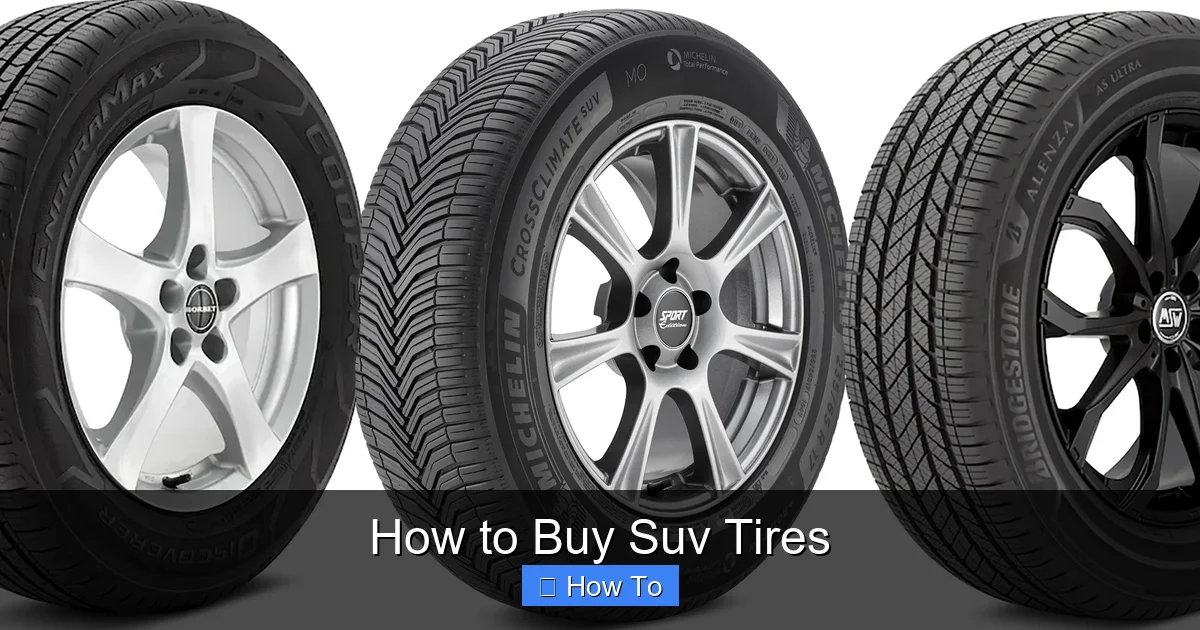
Choosing the right tires for your SUV can feel overwhelming, but it doesn’t have to be. This guide walks you through every step—from understanding tire sizes to comparing all-season, all-terrain, and winter options—so you can make a smart, safe, and cost-effective decision. Whether you’re replacing worn tires or upgrading for better performance, we’ve got you covered.
Key Takeaways
- Know your SUV’s tire size: Check your owner’s manual or the sidewall of your current tires to find the correct size (e.g., 265/65R17). This ensures a proper fit and safe performance.
- Choose the right tire type: All-season tires are great for everyday driving, while all-terrain and mud-terrain tires offer better off-road capability. Winter tires provide superior grip in snow and ice.
- Consider your driving conditions: City commuters may prioritize comfort and fuel efficiency, while off-roaders need durability and traction. Match your tires to your typical terrain and weather.
- Balance performance and budget: Premium tires last longer and perform better, but mid-range options can offer excellent value. Avoid the cheapest tires—they may compromise safety.
- Check load index and speed rating: SUVs are heavier than cars, so ensure your tires can handle the weight and speed. Look for a load index of 110+ and a speed rating of S or higher.
- Buy from reputable retailers: Purchase from trusted brands or retailers that offer warranties, installation, and road hazard protection.
- Rotate and maintain your tires: Regular rotation, proper inflation, and alignment extend tire life and improve safety. Don’t skip maintenance after purchase.
How to Buy SUV Tires: A Complete Step-by-Step Guide
If you own an SUV, you already know these vehicles are built for power, space, and versatility. But to get the most out of your ride—whether you’re cruising city streets, tackling mountain trails, or braving winter storms—you need the right tires. Choosing the best SUV tires isn’t just about picking the biggest or toughest-looking ones. It’s about matching the tire to your vehicle, your driving habits, and your environment.
In this guide, we’ll walk you through everything you need to know to buy SUV tires with confidence. From decoding tire sizes to comparing performance features and finding the best deals, we’ll cover all the bases. By the end, you’ll be equipped to make a smart, informed decision that keeps you safe, saves you money, and enhances your driving experience.
Let’s get started.
Step 1: Know Your SUV’s Tire Size
Visual guide about How to Buy Suv Tires
Image source: m.media-amazon.com
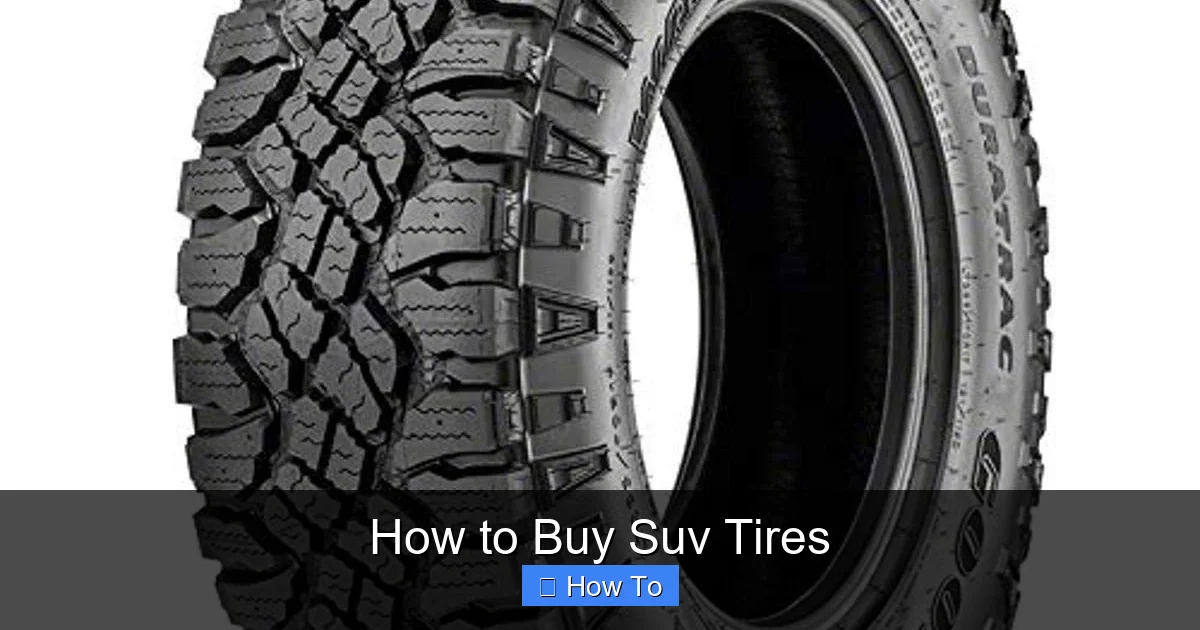
The first and most important step in buying SUV tires is knowing the correct size. Installing the wrong size can affect your speedometer accuracy, handling, fuel efficiency, and even safety. So, how do you find the right size?
Check the Owner’s Manual
Your SUV’s owner’s manual is the most reliable source for tire size information. Look for a section labeled “Tire Information” or “Specifications.” It will list the recommended tire size, load index, and speed rating.
Look at the Sidewall of Your Current Tires
If you can’t find the manual, check the sidewall of one of your existing tires. You’ll see a series of numbers and letters like “265/65R17 112T.” Here’s what that means:
- 265 = Tire width in millimeters
- 65 = Aspect ratio (sidewall height as a percentage of width)
- R = Radial construction (most common)
- 17 = Rim diameter in inches
- 112 = Load index (how much weight the tire can support)
- T = Speed rating (maximum safe speed)
Use the Door Jamb Sticker
Open your driver’s side door and look at the sticker on the door jamb. It often lists the recommended tire size, inflation pressure, and sometimes even the type of tire (e.g., all-season).
Online Tire Size Calculators
If you’re unsure or considering a different size (like upgrading to larger wheels), use an online tire size calculator. These tools let you compare sizes and see how changes affect speedometer readings and clearance.
Pro Tip: Stick with the manufacturer-recommended size unless you’re intentionally modifying your SUV. Changing tire size can affect your warranty, insurance, and vehicle performance.
Step 2: Understand Different Types of SUV Tires
Visual guide about How to Buy Suv Tires
Image source: datocms-assets.com
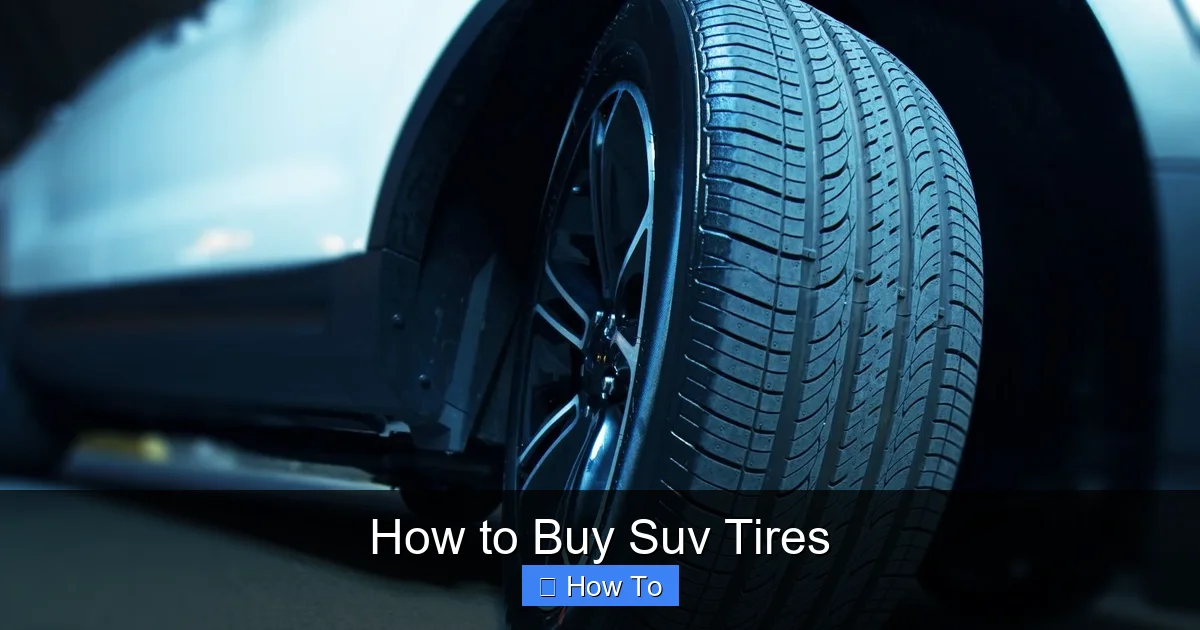
Not all tires are created equal. SUVs come in many shapes and sizes—from compact crossovers to full-size off-road beasts—and so do their tire needs. Here are the main types of SUV tires and when to use them.
All-Season Tires
These are the most common tires for SUVs and are ideal for everyday driving in mild to moderate climates. They offer a balance of comfort, tread life, wet and dry traction, and light snow performance.
Best for: City and highway driving, families, commuters, and mild winter conditions.
Examples: Michelin Defender LTX, Bridgestone Dueler H/L Alenza, Goodyear Assurance WeatherReady.
All-Terrain Tires
Designed for drivers who want to venture off the pavement without sacrificing too much on-road comfort. All-terrain tires have deeper treads and stronger sidewalls than all-season tires, giving them better grip on dirt, gravel, and light mud.
Best for: Weekend adventurers, light off-roading, rural driving, and mixed terrain.
Examples: BFGoodrich All-Terrain T/A KO2, Toyo Open Country A/T III, Cooper Discoverer AT3.
Mud-Terrain Tires
These are the toughest tires for serious off-roading. They feature aggressive tread patterns, large lugs, and reinforced sidewalls to handle deep mud, rocks, and rough trails. However, they’re noisy on highways and wear faster on pavement.
Best for: Off-road enthusiasts, rock crawling, and extreme terrain.
Examples: Nitto Trail Grappler, Mickey Thompson Baja Boss, Maxxis Razr MT.
Winter/Snow Tires
If you live in an area with heavy snow, ice, or freezing temperatures, winter tires are a must. They’re made with softer rubber compounds that stay flexible in cold weather, and they have specialized tread patterns for maximum grip on snow and ice.
Best for: Cold climates, mountain driving, and safety in winter conditions.
Examples: Bridgestone Blizzak DM-V2, Michelin X-Ice Snow, Nokian Hakkapeliitta R5.
High-Performance Tires
Some SUVs—like sporty crossovers or performance models—benefit from high-performance tires. These offer better handling, cornering, and braking, but may sacrifice tread life and comfort.
Best for: Sporty SUVs, spirited driving, and dry/warm climates.
Examples: Pirelli Scorpion Zero, Continental ExtremeContact DTX, Yokohama Advan Sport.
Pro Tip: If you drive in varied conditions, consider a set of all-season tires for most of the year and switch to winter tires during colder months. Many drivers use tire racks or storage services to make seasonal swaps easy.
Step 3: Consider Your Driving Conditions and Habits
Your lifestyle and environment play a huge role in choosing the right tires. Ask yourself these questions:
Where Do You Drive Most?
- City/Highway: All-season tires are usually sufficient. Look for low road noise and good fuel efficiency.
- Rural/Gravel Roads: All-terrain tires offer better durability and traction.
- Off-Road/Trails: All-terrain or mud-terrain tires are essential.
- Snowy/Icy Areas: Winter tires are strongly recommended, even if your SUV has AWD.
How Many Miles Do You Drive Annually?
High-mileage drivers (15,000+ miles per year) should prioritize tread life and durability. Look for tires with a high treadwear rating (400+) and long warranties.
Do You Carry Heavy Loads?
If you frequently tow, haul gear, or travel with a full load of passengers, choose tires with a higher load index. SUVs often require Load Range E (10-ply) tires for heavy-duty use.
Do You Value Comfort or Performance?
Some drivers prefer a smooth, quiet ride, while others want responsive handling. All-season and touring tires lean toward comfort, while performance and off-road tires focus on grip and control.
Pro Tip: Don’t assume AWD or 4WD means you don’t need good tires. Traction starts with the rubber meeting the road—no drivetrain can compensate for poor tires.
Step 4: Check Load Index and Speed Rating
SUVs are heavier than cars, so tire strength matters. Two key ratings to understand are load index and speed rating.
Load Index
This number (like 112 or 121) tells you how much weight each tire can safely support. The higher the number, the greater the load capacity.
- 110 = 1,060 lbs per tire
- 115 = 1,215 lbs per tire
- 121 = 1,450 lbs per tire
Check your SUV’s Gross Vehicle Weight Rating (GVWR) in the owner’s manual. Multiply the load index by four (for four tires) to ensure it exceeds your vehicle’s weight.
Speed Rating
This letter (like S, T, H, V) indicates the maximum speed the tire can safely sustain. Most SUVs use S (112 mph) or T (118 mph) rated tires. High-performance models may use H (130 mph) or V (149 mph).
Pro Tip: Never go below the manufacturer-recommended load index or speed rating. It’s unsafe and may void your warranty.
Step 5: Compare Tire Brands and Models
With so many brands and models available, it’s easy to feel overwhelmed. Here’s how to narrow down your options.
Stick with Reputable Brands
Well-known brands like Michelin, Bridgestone, Goodyear, Continental, Pirelli, and BFGoodrich have a track record of quality and reliability. They invest in research, testing, and innovation.
Read Reviews and Ratings
Check consumer review sites like Tire Rack, Consumer Reports, or Edmunds. Look for feedback on:
- Tread life
- Wet/dry traction
- Noise levels
- Comfort
- Winter performance (if applicable)
Compare Warranties
Most tires come with a treadwear warranty (e.g., 60,000 miles). Some also offer road hazard protection or free rotation services. Compare what’s included.
Look for Special Features
Modern tires often include advanced features like:
- Run-flat technology
- Silica-enhanced tread compounds for better wet grip
- Silent foam liners for reduced noise
- Eco-friendly designs for better fuel economy
Pro Tip: Don’t just buy the cheapest tires. Low-cost options may wear out quickly or perform poorly in emergencies. Invest in quality—your safety is worth it.
Step 6: Set a Realistic Budget
SUV tires can range from $100 to $500+ per tire, depending on size, type, and brand. Here’s how to budget wisely.
Average Costs by Type
- All-Season: $120–$250 per tire
- All-Terrain: $180–$350 per tire
- Mud-Terrain: $250–$500+ per tire
- Winter: $150–$300 per tire
Factor in Installation and Extras
Tire installation typically costs $15–$25 per tire and includes mounting, balancing, and disposal of old tires. Some retailers offer package deals.
Consider Long-Term Value
A $200 tire that lasts 70,000 miles is a better value than a $120 tire that wears out at 30,000 miles. Calculate cost per mile to compare.
Look for Promotions
Many retailers offer rebates, buy-three-get-one-free deals, or free installation during sales events (especially in spring and fall).
Pro Tip: If you’re on a tight budget, consider reputable mid-tier brands like General, Falken, or Cooper. They often offer great performance at a lower price.
Step 7: Choose Where to Buy Your Tires
You have several options for purchasing SUV tires. Each has pros and cons.
Local Tire Shops
- Pros: Personal service, immediate installation, local support
- Cons: May have limited selection, higher prices
Big-Box Retailers (Walmart, Costco, Sam’s Club)
- Pros: Competitive pricing, membership perks, nationwide locations
- Cons: Limited brand selection, appointment required
Online Retailers (Tire Rack, Discount Tire, Amazon)
- Pros: Huge selection, detailed reviews, home delivery, price matching
- Cons: Shipping costs, need to find local installer
Dealerships
- Pros: OEM (original equipment) tires, expert knowledge
- Cons: Usually the most expensive option
Pro Tip: Many online retailers let you ship tires directly to a local installer. This gives you the best of both worlds—wide selection and professional service.
Step 8: Get Professional Installation
Even the best tires won’t perform well if they’re not installed correctly. Always have your tires installed by a certified technician.
What Installation Includes
- Removing old tires
- Mounting new tires on rims
- Balancing each wheel
- Installing new valve stems
- Checking tire pressure
- Disposing of old tires (often included)
Ask About Additional Services
- Wheel alignment (recommended if you’re replacing all four tires)
- Tire pressure monitoring system (TPMS) reset
- Road hazard warranty
Pro Tip: Keep your old tires until the new ones are installed and tested. This gives you a backup in case of issues.
Step 9: Maintain Your Tires After Purchase
Buying great tires is just the beginning. Proper maintenance ensures they last longer and perform safely.
Check Tire Pressure Monthly
Underinflated tires wear unevenly, reduce fuel economy, and increase blowout risk. Use a quality gauge and check when tires are cold.
Rotate Tires Every 5,000–7,000 Miles
Rotation helps even out wear. Front and rear tires wear differently, especially on AWD vehicles.
Inspect for Damage Regularly
Look for cuts, bulges, cracks, or embedded objects. Address issues immediately.
Align Wheels Annually
Misaligned wheels cause uneven wear and poor handling. Get an alignment if you notice pulling or uneven tread.
Keep Tires Clean
Wash tires with mild soap and water. Avoid petroleum-based cleaners that can degrade rubber.
Pro Tip: Use a tire shine product sparingly—some contain solvents that can dry out rubber over time.
Troubleshooting Common Tire Buying Mistakes
Even experienced drivers make mistakes when buying tires. Here’s how to avoid them.
Buying the Wrong Size
Solution: Double-check your owner’s manual and sidewall markings. When in doubt, ask a professional.
Choosing Tires Based on Looks Alone
Solution: Aggressive tread patterns may look cool but can be noisy and wear quickly on pavement. Match function to form.
Ignoring Load and Speed Ratings
Solution: Always verify these ratings match or exceed your SUV’s requirements.
Skipping Installation Services
Solution: DIY mounting is risky and can damage tires or rims. Always use a professional.
Not Considering Seasonal Needs
Solution: If you live in a snowy area, invest in winter tires. All-season tires aren’t enough for severe winter conditions.
Conclusion
Buying SUV tires doesn’t have to be complicated. By following these steps—knowing your tire size, choosing the right type, considering your driving habits, and shopping smart—you can find tires that keep you safe, save you money, and enhance your SUV’s performance.
Remember, tires are the only part of your vehicle that touches the road. They affect handling, braking, comfort, and safety. So take your time, do your research, and don’t cut corners.
Whether you’re upgrading for better off-road capability, preparing for winter, or just replacing worn-out rubber, the right tires make all the difference. Use this guide as your roadmap, and you’ll be rolling with confidence in no time.
Safe driving!