
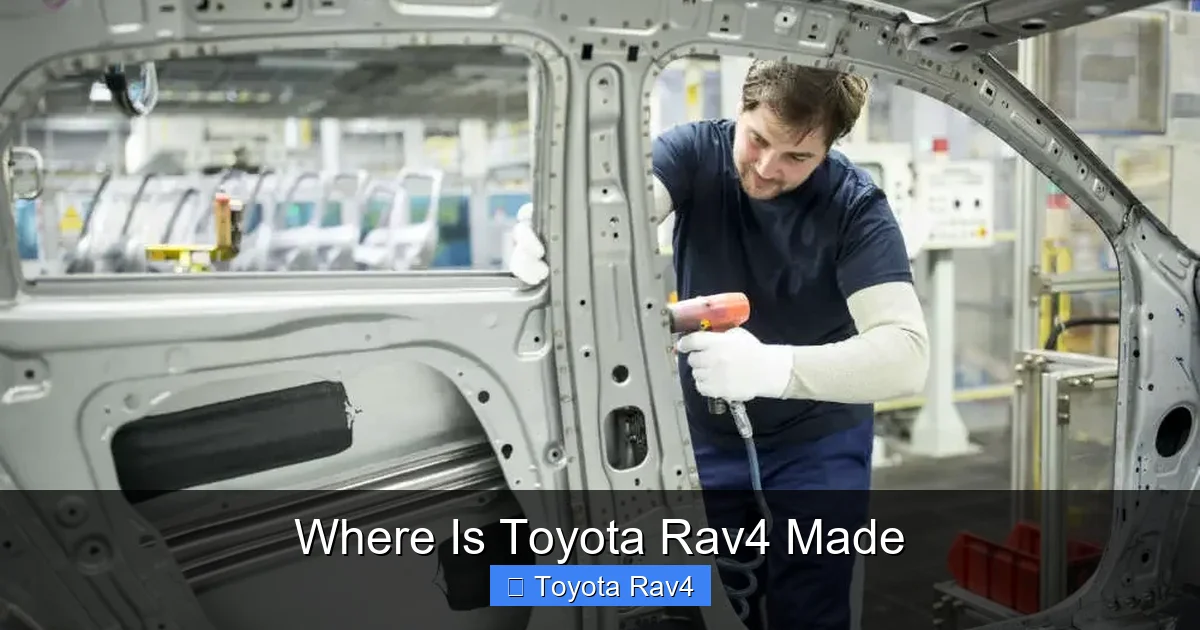
The Toyota RAV4 is manufactured in multiple countries worldwide, including the U.S., Canada, Japan, and China. Production locations vary by model year, trim, and market demand, ensuring global availability and high-quality standards across all facilities.
When you’re in the market for a reliable, versatile, and stylish compact SUV, the Toyota RAV4 consistently ranks among the top choices. Known for its fuel efficiency, advanced safety features, and rugged yet modern design, the RAV4 has become a favorite for families, adventurers, and commuters alike. But have you ever wondered where this popular vehicle is actually made? It’s a question that goes beyond curiosity—knowing where your car is manufactured can give you insight into its quality, availability, and even its environmental footprint.
The Toyota RAV4 isn’t built in just one place. Instead, it’s produced across a global network of state-of-the-art manufacturing facilities. This strategic approach allows Toyota to respond quickly to regional demand, reduce shipping costs, and support local economies. Whether you’re buying a RAV4 in Los Angeles, Toronto, Tokyo, or Sydney, chances are it rolled off an assembly line in one of several key locations around the world. Understanding these production sites not only satisfies curiosity but also helps consumers make informed decisions about their purchase.
Key Takeaways
- Understanding where is toyota rav4 made: Provides essential knowledge
📑 Table of Contents
Global Production Strategy: Why Toyota Builds the RAV4 in Multiple Countries
Toyota’s decision to manufacture the RAV4 in various countries isn’t random—it’s a carefully planned global strategy designed to optimize efficiency, reduce costs, and meet regional preferences. The company operates on a philosophy called “local production for local consumption,” which means building vehicles as close as possible to where they’ll be sold. This approach minimizes long-distance shipping, reduces carbon emissions, and allows Toyota to tailor features to local markets.
For example, RAV4s sold in North America are primarily built in the U.S. and Canada, while those in Asia are often manufactured in Japan or China. This regional focus also helps Toyota navigate trade policies, tariffs, and supply chain challenges more effectively. By spreading production across continents, Toyota ensures that disruptions in one region—like natural disasters or labor strikes—don’t cripple global supply.
Moreover, building the RAV4 in multiple countries allows Toyota to scale production quickly during periods of high demand. When the RAV4 Hybrid became a best-seller, Toyota ramped up output at its Kentucky and Ontario plants to keep up with orders. This flexibility is a major advantage in today’s fast-changing automotive market.
How Production Location Affects Quality and Consistency
One common concern among buyers is whether a vehicle made in one country is as good as one made in another. With the RAV4, Toyota has worked hard to eliminate such doubts. All manufacturing plants follow the Toyota Production System (TPS), a globally standardized method that emphasizes quality, efficiency, and continuous improvement.
Whether a RAV4 is assembled in Kentucky or Guangzhou, it undergoes the same rigorous quality checks. Workers are trained to the same standards, and parts are sourced from approved suppliers worldwide. This consistency ensures that a RAV4 bought in Chicago performs just as well as one purchased in Chengdu.
In fact, many of Toyota’s international plants have received awards for quality and efficiency. The Georgetown, Kentucky plant, for instance, has been recognized multiple times by J.D. Power for manufacturing excellence. Similarly, Toyota’s Tahara plant in Japan is renowned for its precision and innovation. These accolades reinforce the idea that where a RAV4 is made doesn’t compromise its quality—it enhances it through localized expertise and global standards.
Primary Manufacturing Locations for the Toyota RAV4
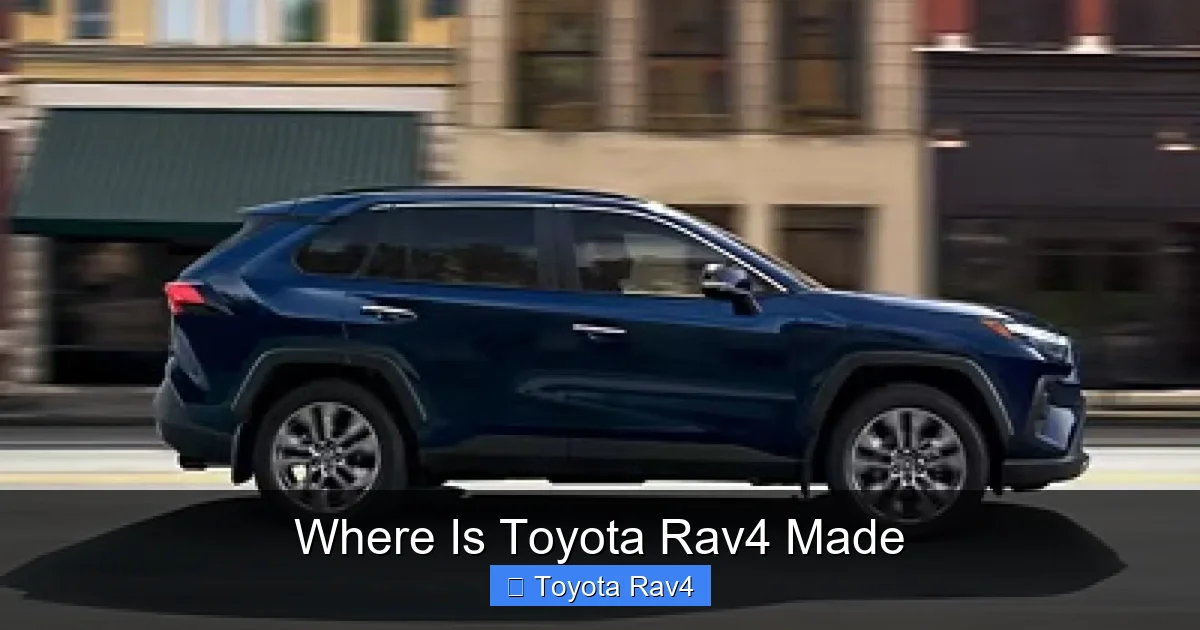
Visual guide about Where Is Toyota Rav4 Made
Image source: di-sitebuilder-assets.dealerinspire.com
Now that we understand Toyota’s global strategy, let’s dive into the specific locations where the RAV4 is built. Each plant plays a unique role in the production ecosystem, serving different markets and offering distinct advantages.
Georgetown, Kentucky, USA: The Heart of North American RAV4 Production
The Toyota Motor Manufacturing, Kentucky (TMMK) plant in Georgetown is the largest Toyota facility outside Japan and the primary production site for RAV4s sold in the United States. Opened in 1988, this 8.1 million-square-foot facility employs over 8,000 people and has the capacity to produce more than 550,000 vehicles annually.
The RAV4 has been built here since 2009, and the plant was recently upgraded to accommodate the latest hybrid and gas-powered models. In fact, the Kentucky plant was the first in North America to produce the RAV4 Hybrid, highlighting Toyota’s commitment to sustainable manufacturing.
What makes TMMK special isn’t just its size—it’s its integration of advanced technology and human skill. Robots assist with welding and painting, but skilled technicians handle final assembly and quality inspections. The plant also features a closed-loop recycling system, reusing water and reducing waste.
For U.S. buyers, this means shorter wait times, better availability, and the pride of driving a “Made in America” vehicle. Plus, buying locally produced cars can sometimes come with tax incentives or rebates, depending on state regulations.
Woodstock, Ontario, Canada: Supporting North American Demand
Just north of the U.S. border, the Toyota Motor Manufacturing Canada (TMMC) plant in Woodstock, Ontario, is another key player in RAV4 production. Opened in 2008, this facility was specifically built to manufacture the RAV4 and has since become a cornerstone of Toyota’s North American operations.
The Woodstock plant produces both gas and hybrid RAV4 models, primarily for the Canadian and U.S. markets. It’s known for its high levels of automation and commitment to sustainability, including solar panels and energy-efficient lighting.
One advantage of the Canadian plant is its proximity to major U.S. cities like Detroit and Chicago, allowing for quick distribution. It also benefits from favorable trade agreements like the USMCA (United States-Mexico-Canada Agreement), which reduces tariffs and streamlines cross-border commerce.
Canadian buyers often appreciate that their RAV4 is built domestically, supporting local jobs and reducing environmental impact from long-haul shipping.
Tahara, Japan: Precision Engineering and Hybrid Expertise
While most North American RAV4s are built in the U.S. and Canada, some models—especially hybrids and those sold in Asia—are manufactured at Toyota’s Tahara plant in Aichi Prefecture, Japan. This facility is one of the most advanced in the world, known for its precision, automation, and quality control.
The Tahara plant produces a range of Toyota vehicles, including luxury models like the Lexus LS. Its reputation for excellence makes it a natural choice for high-demand or technologically advanced RAV4 variants.
For example, early generations of the RAV4 Hybrid were primarily built in Japan before production expanded to North America. Even today, some limited-edition or performance-focused RAV4 models may originate from Tahara.
Japanese manufacturing is often associated with meticulous attention to detail, and the Tahara plant lives up to that reputation. Each vehicle undergoes extensive testing, and the facility uses cutting-edge robotics to ensure consistency.
Tianjin and Guangzhou, China: Meeting Asian Market Demand
In China, the world’s largest automotive market, Toyota produces the RAV4 through joint ventures with local partners. The Tianjin FAW Toyota Motor Co. (TFTM) plant in Tianjin and the GAC Toyota Motor Co. (GTMC) plant in Guangzhou are the main production sites for RAV4s sold in China and other parts of Asia.
These plants were established to meet the growing demand for SUVs in China, where the RAV4 has become increasingly popular due to its reliability and fuel efficiency. The Chinese-built RAV4s are tailored to local preferences, often featuring different interior materials, infotainment systems, and even slight design tweaks.
For example, the Chinese market may offer unique color options or trim levels not available elsewhere. Additionally, some hybrid models in China are built with locally sourced batteries to comply with government regulations and reduce costs.
While these vehicles are designed for Asian consumers, they still adhere to Toyota’s global quality standards. The Tianjin and Guangzhou plants undergo regular audits and are equipped with the same advanced manufacturing systems used in Japan and North America.
How Production Location Impacts Buyers
Knowing where your RAV4 is made isn’t just trivia—it can actually influence your buying experience. From pricing and availability to delivery times and even resale value, the manufacturing location plays a subtle but important role.
Pricing and Incentives
Vehicles built in the same country where they’re sold often come with cost advantages. For instance, a RAV4 made in Kentucky and sold in Texas avoids international shipping fees and import tariffs, which can lower the final price. Additionally, some U.S. states offer tax credits or rebates for vehicles manufactured domestically, especially hybrids.
In Canada, buyers may benefit from similar incentives when purchasing a RAV4 built in Woodstock. These savings can add up, especially when combined with manufacturer rebates or low-interest financing.
Availability and Delivery Times
If you’re in a hurry to get your new RAV4, the production location can affect how quickly it arrives. Models built in North America are typically available sooner for U.S. and Canadian buyers, while those imported from Japan or China may take longer due to shipping and customs processing.
For example, a RAV4 Hybrid ordered in California might arrive in two weeks if it’s coming from Kentucky, but could take six to eight weeks if it’s shipped from Japan. Dealerships often provide estimated delivery times based on production schedules and location.
Trim and Feature Variations
Different markets have different preferences, and Toyota adjusts the RAV4 accordingly. A model built in China might come with a larger touchscreen, different upholstery, or unique safety features tailored to local regulations. Similarly, Japanese-built RAV4s may include advanced driver-assistance systems not yet available in North America.
While the core design and performance remain consistent, these variations mean that not all RAV4s are identical—even if they look the same on the outside. Buyers should check the vehicle identification number (VIN) to determine the manufacturing plant and confirm the features included.
Resale Value and Perception
Some buyers place a premium on vehicles made in certain countries. For example, “Made in USA” labels can boost resale value in the U.S., while Japanese-built cars are often associated with superior engineering.
However, Toyota’s global quality standards have largely eliminated such biases. Today, a RAV4 from Kentucky, Ontario, or Tahara is likely to hold its value equally well, especially if it’s well-maintained and has a clean history.
Sustainability and Ethical Manufacturing
Beyond location and quality, modern car buyers are increasingly concerned about how and where their vehicles are made. Toyota has responded by making sustainability a core part of its RAV4 production process.
Eco-Friendly Practices in RAV4 Plants
All Toyota manufacturing facilities prioritize environmental responsibility. The Georgetown plant, for example, uses a closed-loop water system that recycles 100% of its process water. It also generates renewable energy through solar panels and has reduced landfill waste by over 90%.
Similarly, the Woodstock plant in Canada has achieved zero waste to landfill status and uses energy-efficient lighting and HVAC systems. These efforts not only reduce environmental impact but also lower operating costs, which can translate to better pricing for consumers.
Local Sourcing and Supply Chain Ethics
Toyota emphasizes local sourcing of parts to reduce transportation emissions and support regional economies. In North America, over 75% of RAV4 parts are sourced from the U.S., Canada, or Mexico. This not only strengthens the supply chain but also ensures faster response times during disruptions.
The company also works with suppliers to ensure ethical labor practices and sustainable materials. For example, Toyota has committed to eliminating conflict minerals from its supply chain and increasing the use of recycled materials in vehicle production.
The Future of RAV4 Manufacturing
As the automotive industry evolves, so does Toyota’s approach to building the RAV4. The company is investing heavily in electrification, automation, and flexible manufacturing to meet future demands.
Expansion of Hybrid and Electric Production
With the growing popularity of hybrid and electric vehicles, Toyota is expanding RAV4 Hybrid production at its Kentucky and Ontario plants. The company has also announced plans to introduce a plug-in hybrid version of the RAV4, which may be built in multiple locations to meet global demand.
In the long term, Toyota aims to offer a fully electric RAV4, potentially manufactured in new facilities designed specifically for EVs. These plants will feature advanced battery assembly lines and renewable energy systems.
Smart Factories and Industry 4.0
Toyota is integrating Industry 4.0 technologies—like artificial intelligence, IoT sensors, and predictive maintenance—into its RAV4 production lines. These innovations allow for real-time monitoring of assembly processes, reducing defects and improving efficiency.
For example, sensors on the production line can detect even minor deviations in torque or alignment, triggering automatic corrections before the vehicle moves to the next stage. This level of precision ensures that every RAV4 meets Toyota’s high standards.
Adapting to Market Changes
The automotive industry faces constant change—from shifting consumer preferences to new regulations and supply chain challenges. Toyota’s global production network allows it to adapt quickly. If demand spikes in Europe, for instance, the company can redirect production from one plant to another or adjust trim levels to meet regional needs.
This flexibility is a key advantage in an unpredictable market, ensuring that the RAV4 remains accessible and relevant worldwide.
Conclusion
The Toyota RAV4 is more than just a popular SUV—it’s a symbol of global manufacturing excellence. Built in facilities across the U.S., Canada, Japan, and China, each RAV4 reflects Toyota’s commitment to quality, sustainability, and innovation. Whether your vehicle comes from the high-tech lines of Kentucky, the precision workshops of Tahara, or the efficient plants of Ontario, you can trust that it was made to the same exacting standards.
Understanding where your RAV4 is made gives you insight into its journey from factory to driveway. It also highlights the careful planning and global collaboration that go into every vehicle. As Toyota continues to evolve—embracing hybrids, electrification, and smart manufacturing—the RAV4 will remain a leader in its class, no matter where it’s built.
So the next time you see a RAV4 on the road, remember: it’s not just a car. It’s a product of global craftsmanship, designed to deliver reliability, performance, and peace of mind—wherever you drive.
Frequently Asked Questions
Where is the Toyota RAV4 primarily made for the U.S. market?
The majority of Toyota RAV4s sold in the U.S. are manufactured at the Toyota Motor Manufacturing, Kentucky (TMMK) plant in Georgetown, Kentucky. This facility also produces hybrid versions and is one of Toyota’s most advanced plants.
Are Toyota RAV4s made in Canada?
Yes, the Toyota Motor Manufacturing Canada (TMMC) plant in Woodstock, Ontario, produces RAV4 models for both the Canadian and U.S. markets. These vehicles are built to the same high standards as those made in the U.S.
Does Toyota make RAV4s in Japan?
Yes, some RAV4 models—especially hybrids and those sold in Asia—are manufactured at Toyota’s Tahara plant in Japan. This facility is known for its precision engineering and advanced technology.
Are RAV4s built in China the same quality as those made in the U.S.?
Yes, all Toyota RAV4s, regardless of where they are made, meet the same global quality standards. Plants in China follow the Toyota Production System and undergo regular audits to ensure consistency.
How can I find out where my RAV4 was made?
You can determine the manufacturing plant by checking the 11th character of your vehicle’s VIN (Vehicle Identification Number). Each character corresponds to a specific plant location, which you can look up online or ask your dealer about.
Does the production location affect the RAV4’s warranty?
No, the Toyota RAV4’s warranty is the same regardless of where it was manufactured. All vehicles come with Toyota’s standard warranty coverage, which applies nationwide and is honored at any authorized dealership.