
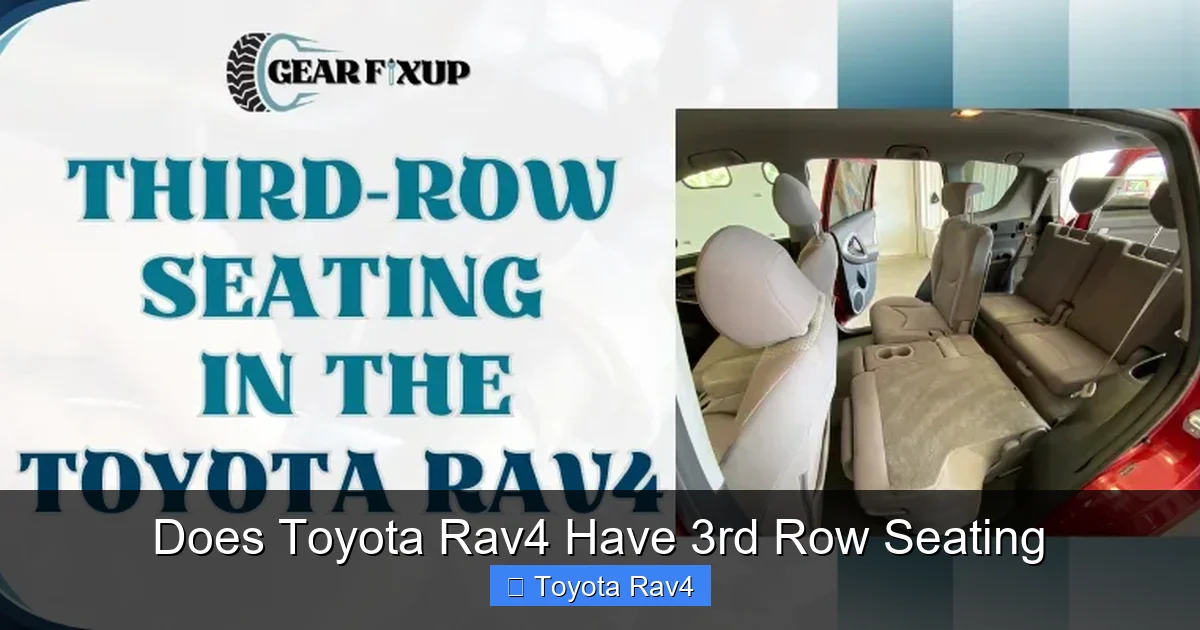
The Toyota RAV4 does not come with standard third-row seating in its current lineup. While earlier models briefly offered a third row, modern RAV4s are designed as five-passenger compact SUVs with generous cargo space and advanced features. Families needing more seating should consider the larger Toyota Highlander instead.
If you’re shopping for a reliable, fuel-efficient SUV that balances city driving with weekend adventures, the Toyota RAV4 is likely high on your list. It’s one of the best-selling vehicles in America for good reason—offering rugged styling, excellent resale value, top safety ratings, and a comfortable ride. But if you’re part of a growing family or frequently transport friends, teammates, or extended family, you might be wondering: *Does the Toyota RAV4 have third-row seating?*
The short answer? Not anymore—and not in any of the current model years. While the RAV4 once experimented with a third-row option over a decade ago, today’s versions are firmly built around a five-passenger layout. That said, this doesn’t mean the RAV4 isn’t family-friendly. In fact, its spacious interior, clever storage solutions, and impressive cargo room make it a fantastic choice for small families, couples, or solo adventurers who value flexibility.
In this guide, we’ll dive deep into the history of third-row seating in the RAV4, explain why Toyota phased it out, compare it to larger Toyota SUVs that do offer third rows, and help you decide whether the RAV4—or another model—is right for your needs. Whether you’re eyeing the gas-powered RAV4, the efficient RAV4 Hybrid, or the plug-in RAV4 Prime, we’ve got the details you need.
Key Takeaways
- No Standard Third Row: The current Toyota RAV4 does not include third-row seating in any trim level or configuration.
- Historical Exception: A third-row option was available on select 2006–2012 RAV4 models, but it was discontinued due to limited space and low demand.
- Five-Passenger Focus: Today’s RAV4 is optimized for five passengers with ample legroom, headroom, and cargo capacity.
- Alternative Options: For families needing seven seats, the Toyota Highlander or Toyota Sequoia are better-suited alternatives within the Toyota lineup.
- Cargo Versatility: Without a third row, the RAV4 offers up to 69.8 cubic feet of cargo space—ideal for gear, groceries, or weekend trips.
- Hybrid & Plug-In Models: Even the RAV4 Hybrid and RAV4 Prime plug-in hybrid versions maintain the same five-seat layout.
- Safety & Tech First: Toyota prioritizes safety (Toyota Safety Sense 3.0) and tech features over extra seating in the RAV4 design.
📑 Table of Contents
- A Brief History of Third-Row Seating in the Toyota RAV4
- Current Toyota RAV4 Seating Capacity and Layout
- Comparing the RAV4 to Toyota SUVs with Third-Row Seating
- Practical Tips for Families Considering the RAV4
- Safety, Tech, and Reliability: Why the RAV4 Still Shines
- Final Verdict: Is the RAV4 Right for Your Family?
A Brief History of Third-Row Seating in the Toyota RAV4
To understand why the RAV4 no longer offers third-row seating, it helps to look back at its evolution. When the third-generation RAV4 launched in 2006, Toyota introduced an optional third-row seat for the first time. This feature was available on certain trims and primarily targeted North American buyers who wanted a compact SUV with seven-passenger capability.
The 2006–2012 RAV4 Third Row: A Short-Lived Experiment
The third-row seats in those early models were… let’s say, *cozy*. Designed mainly for children under 4’10”, the rear bench added just enough space for two small passengers—but at a cost. Adding the third row reduced cargo capacity significantly, even when the seats were folded down. Plus, accessing the back required folding and tumbling the second-row seats, which wasn’t exactly convenient.
Despite the marketing push, real-world feedback was mixed. Many owners found the third row impractical for daily use. Adults couldn’t fit comfortably, and even older kids complained about legroom and visibility. Over time, demand dwindled. By the time the fourth-generation RAV4 arrived in 2013, Toyota made the strategic decision to drop the third-row option entirely.
Why Toyota Removed the Third Row
Toyota didn’t eliminate the third row because they didn’t care about families—they did it because data showed most buyers didn’t use it. Internal surveys revealed that fewer than 10% of RAV4 owners with the third-row option actually used it regularly. Meanwhile, the added complexity, reduced cargo space, and higher price point made the feature a tough sell.
Instead, Toyota doubled down on what the RAV4 did best: delivering a versatile, efficient, and stylish compact SUV for five passengers. They expanded rear legroom, improved materials, added more tech, and enhanced cargo flexibility—all while keeping the vehicle affordable and fuel-efficient.
Current Toyota RAV4 Seating Capacity and Layout
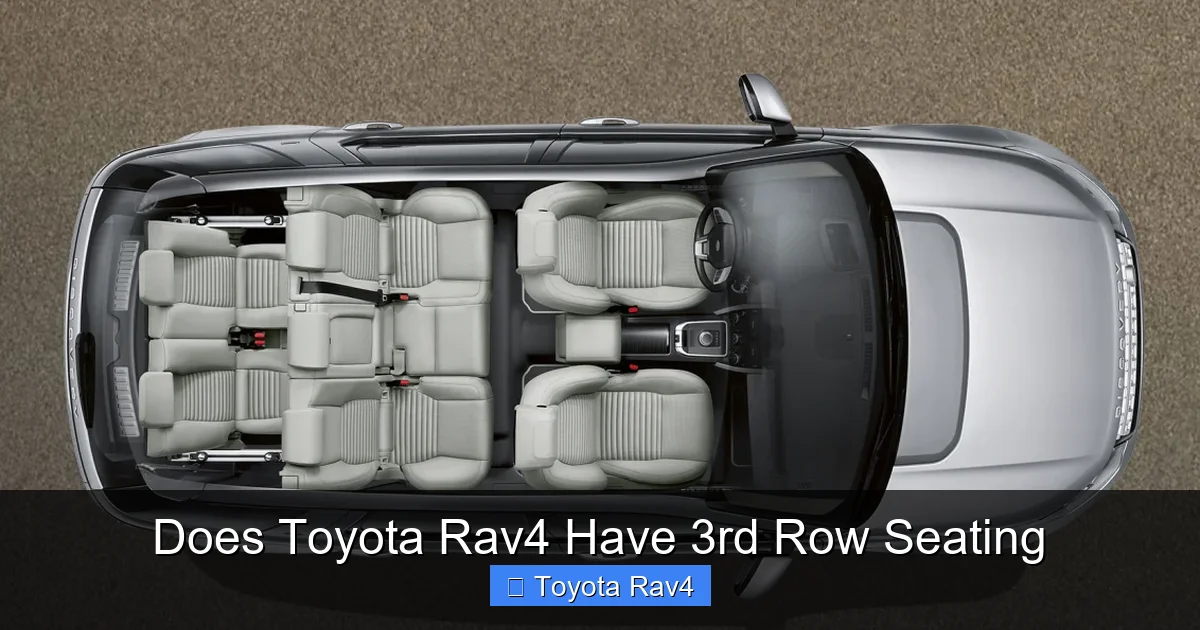
Visual guide about Does Toyota Rav4 Have 3rd Row Seating
Image source: i2.wp.com
Today’s Toyota RAV4—whether you choose the base LE trim or the premium Limited—is designed exclusively for five passengers. That means two front seats and a three-person bench (or optional captain’s chairs in some trims) in the second row.
Interior Space and Comfort
Don’t let the “compact” label fool you. The RAV4 offers surprising interior room. Rear passengers enjoy up to 37.8 inches of legroom—more than many midsize sedans—and ample headroom even for taller adults. The seats are well-padded, supportive, and positioned higher than in many competitors, giving rear riders a better view of the road.
The second-row bench splits 60/40 and reclines slightly, so passengers can get comfortable on long drives. If you opt for the Adventure or TRD Off-Road trims, you’ll get sport-tuned seats with extra bolstering, but comfort remains a priority across all versions.
Cargo Space Without a Third Row
One of the biggest advantages of skipping the third row? Cargo space. With all seats in place, the RAV4 offers 37.5 cubic feet behind the second row—enough for several large suitcases, strollers, or weekend camping gear. Fold the rear seats flat, and you unlock a massive 69.8 cubic feet of storage. That’s more than many midsize SUVs with third rows!
This makes the RAV4 ideal for active lifestyles. Load up bikes, kayaks, dog crates, or moving boxes without sacrificing passenger comfort. And thanks to low load floors, wide openings, and available power liftgates, loading and unloading is a breeze.
Hybrid and Plug-In Variants: Same Five-Seat Layout
Worried about fuel economy? The RAV4 Hybrid and RAV4 Prime plug-in hybrid both retain the same five-passenger design. In fact, the hybrid system’s battery is cleverly tucked under the floor, so it doesn’t eat into passenger or cargo space. The RAV4 Prime even offers up to 42 miles of electric-only range—perfect for school runs or commutes—without compromising interior room.
Comparing the RAV4 to Toyota SUVs with Third-Row Seating
If your household regularly needs to seat six or seven people, the RAV4 might not be the right fit—but that doesn’t mean you have to leave Toyota behind. The brand offers several larger SUVs designed specifically for families who need extra seating.
Toyota Highlander: The Natural Upgrade
The Toyota Highlander is the closest sibling to the RAV4—and it *does* come with standard third-row seating. Available in gas, hybrid, and plug-in hybrid (Highlander Hybrid and Highlander Prime) versions, the Highlander seats up to eight passengers (seven with captain’s chairs).
It’s only about 6 inches longer than the RAV4, but that extra length translates to a usable third row. While still best suited for kids or shorter adults, the Highlander’s rear seats are far more practical than the old RAV4’s. Plus, it retains Toyota’s reputation for reliability, safety, and smooth driving dynamics.
Cargo space is slightly less than the RAV4 when all three rows are in use (about 16 cubic feet behind the third row), but it’s still sufficient for groceries or small bags. Fold the third and second rows, and you get over 84 cubic feet—plenty for hauling large items.
Toyota Sequoia and Land Cruiser: For Serious Space Needs
For even more room—and serious towing power—consider the Toyota Sequoia or the newly redesigned Land Cruiser. Both are full-size SUVs with three rows and seating for up to eight. The Sequoia boasts a powerful V8 engine and can tow up to 9,500 pounds, making it ideal for boat owners or frequent campers. The Land Cruiser blends luxury, off-road capability, and modern tech in a bold package.
However, these vehicles are significantly larger, less fuel-efficient, and more expensive than the RAV4. They’re best suited for buyers who truly need maximum space and capability.
RAV4 vs. Highlander: Which Is Right for You?
Ask yourself: How often do you actually need a third row? If it’s only for occasional carpooling or holiday visits, a RAV4 with fold-flat seats might suffice—you can always rent a larger vehicle for special occasions. But if you regularly transport six or more people, the Highlander’s added space and convenience are worth the extra cost.
Also consider fuel economy. The RAV4 Hybrid gets up to 40 mpg combined, while the Highlander Hybrid manages around 36 mpg—still excellent for a three-row SUV, but noticeably less efficient.
Practical Tips for Families Considering the RAV4
Even without a third row, the RAV4 can be a smart choice for many families. Here’s how to make the most of its five-seat layout.
Maximize Cargo and Passenger Flexibility
Use the 60/40 split-folding rear seats to balance passenger and cargo needs. For example, carry two kids in car seats on one side while loading sports equipment or luggage on the other. The flat-folding design means you can create a nearly level load floor—great for sleeping bags, pet beds, or DIY projects.
Invest in Smart Storage Solutions
The RAV4 includes clever storage spots: a deep center console, door pockets, under-seat bins, and an available cargo area organizer. Add aftermarket accessories like seat-back organizers or trunk dividers to keep gear tidy and secure.
Consider Child Seat Compatibility
The RAV4 earns top marks for child seat installation. It has three sets of LATCH anchors in the second row and accommodates multiple car seat configurations. If you have twins or multiple young children, the wide rear doors and high seating position make buckling in easier.
Plan for Occasional Extra Passengers
Need to squeeze in a sixth person once in a while? The RAV4’s second-row bench can technically fit three adults in a pinch—though it’s tight. For regular six-passenger needs, though, the Highlander remains the better long-term solution.
Safety, Tech, and Reliability: Why the RAV4 Still Shines
Even without a third row, the RAV4 excels in areas that matter most to families: safety, technology, and long-term value.
Toyota Safety Sense 3.0
Every new RAV4 comes standard with Toyota Safety Sense 3.0—a suite of advanced driver aids including automatic emergency braking, lane departure warning, adaptive cruise control, and road sign recognition. It’s one of the most comprehensive standard safety packages in its class.
Infotainment and Connectivity
The RAV4 features an 8- or 9-inch touchscreen with wireless Apple CarPlay and Android Auto (on most trims), Amazon Alexa compatibility, and available Wi-Fi hotspot. Higher trims add JBL audio, wireless phone charging, and a digital rearview mirror.
Proven Reliability and Resale Value
Toyota consistently ranks among the most reliable automakers, and the RAV4 is no exception. It holds its value better than most competitors, meaning lower depreciation and higher trade-in offers down the road.
Final Verdict: Is the RAV4 Right for Your Family?
So, does the Toyota RAV4 have third-row seating? The answer is clear: no—not in any current model. But that doesn’t diminish its appeal. For couples, small families, or individuals who prioritize efficiency, cargo space, and modern features, the RAV4 remains one of the best compact SUVs on the market.
If your lifestyle demands regular seven-passenger capacity, step up to the Toyota Highlander. But if you value agility, fuel economy, and versatility—and don’t mind leaving the extra seats at home—the RAV4 won’t disappoint.
Ultimately, the right SUV depends on your real-world needs, not just specs on a spec sheet. Test drive both the RAV4 and Highlander back-to-back. You might be surprised how much space the RAV4 offers—and how little you miss that third row.
Frequently Asked Questions
Does any Toyota RAV4 model have third-row seating?
Only select 2006–2012 Toyota RAV4 models offered an optional third-row seat. This feature was discontinued after 2012 and is not available on any current RAV4, including hybrid or plug-in versions.
Can I add a third-row seat to my RAV4?
No, Toyota does not offer a factory or aftermarket third-row conversion for the RAV4. The vehicle’s structure and safety systems are not designed to support additional seating beyond five passengers.
What Toyota SUV has third-row seating and is similar to the RAV4?
The Toyota Highlander is the closest alternative. It shares many of the RAV4’s strengths—reliability, efficiency, and safety—but adds standard third-row seating for up to eight passengers.
How much cargo space does the RAV4 have without a third row?
The RAV4 offers 37.5 cubic feet behind the second row and up to 69.8 cubic feet with the rear seats folded—more than many three-row SUVs when their third rows are in use.
Is the RAV4 Hybrid available with third-row seating?
No, the RAV4 Hybrid, like all current RAV4 models, is a five-passenger vehicle. Toyota reserves third-row seating for larger SUVs like the Highlander Hybrid.
Why did Toyota stop offering third-row seating in the RAV4?
Toyota discontinued the third-row option due to low demand, limited usability (especially for adults), reduced cargo space, and the rise of more practical three-row alternatives like the Highlander.