

Choosing the best years for Toyota RAV4 depends on your priorities—whether it’s fuel efficiency, tech features, or long-term reliability. This guide breaks down every generation, highlights top-performing model years, and helps you avoid common pitfalls so you can drive away with confidence.
Key Takeaways
- 2019–2023 RAV4s are top picks: These years feature modern safety tech, improved fuel economy, and a rugged redesign that boosted off-road capability.
- 2006–2008 models offer great value: Known for bulletproof reliability and low maintenance costs, these older RAV4s are ideal for budget-conscious buyers.
- Avoid 2001–2003 first-gen models: Early RAV4s had smaller engines, less safety equipment, and higher failure rates on certain components like the automatic transmission.
- Hybrid versions shine from 2016 onward: The RAV4 Hybrid delivers excellent fuel economy (up to 40 mpg combined) and strong resale value.
- Check for recalls and maintenance history: Even the best years can have issues if poorly maintained—always get a pre-purchase inspection.
- Fifth-gen (2019+) wins for tech and comfort: Apple CarPlay, Android Auto, Toyota Safety Sense 2.0, and a spacious interior make these years stand out.
- Consider certified pre-owned (CPO): A CPO RAV4 from a reputable dealer often includes extended warranties and thorough inspections.
📑 Table of Contents
Introduction: Why the Toyota RAV4 Stands the Test of Time
The Toyota RAV4 has been a staple in the compact SUV market since its debut in 1994. It was one of the first vehicles to blend car-like driving dynamics with SUV versatility—and it quickly became a favorite among families, commuters, and outdoor enthusiasts alike. Over nearly three decades, the RAV4 has evolved from a modest two-door off-roader into a sleek, tech-packed, fuel-efficient crossover that dominates sales charts year after year.
But not every RAV4 model year is created equal. Some years shine brighter than others in terms of reliability, features, and overall value. Whether you’re shopping for a used RAV4 or considering a new one, knowing which years deliver the best experience can save you thousands in repairs, fuel, and frustration down the road. That’s why we’ve put together this comprehensive guide to help you identify the best years for Toyota RAV4—so you can make a smart, informed decision.
A Brief History of the Toyota RAV4
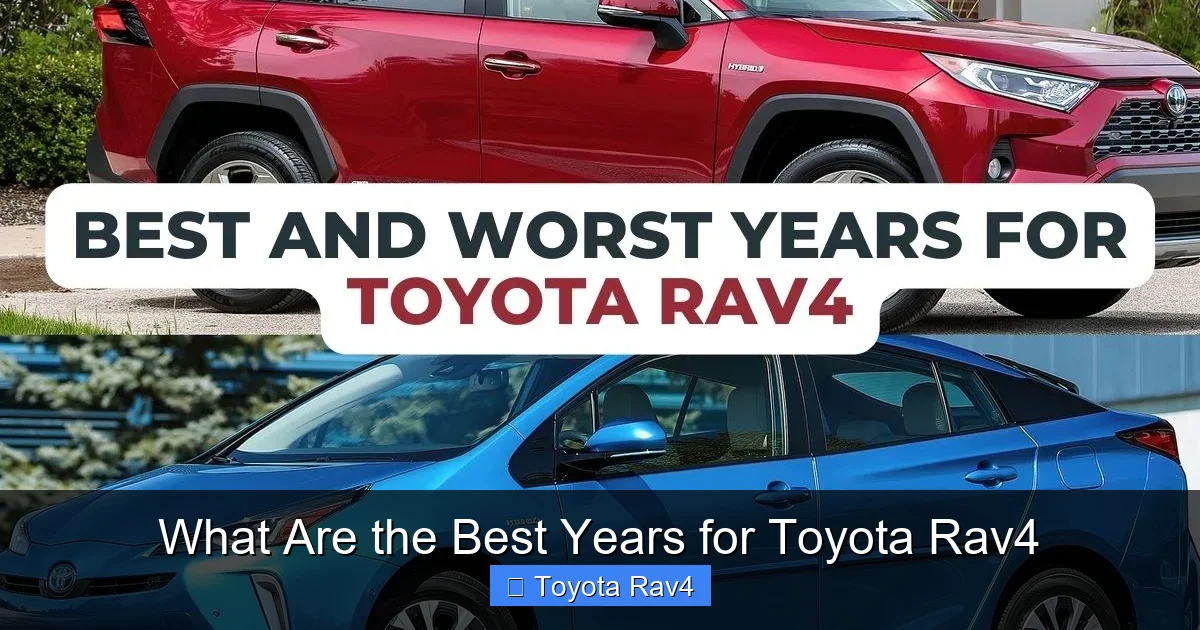
Visual guide about What Are the Best Years for Toyota Rav4
Image source: autoseeks.com
To understand which RAV4 years are the best, it helps to know how the model has evolved. The RAV4 has gone through five major generations, each bringing significant improvements in design, performance, and technology.
First Generation (1996–2000)
The original RAV4 was a compact, boxy SUV available in both two- and four-door versions. It came with a 2.0L four-cylinder engine producing around 120 horsepower. While it was praised for its nimble handling and optional all-wheel drive, early models lacked modern safety features and had limited interior space. Transmission issues and rust problems were common, especially in colder climates.
Second Generation (2001–2005)
Toyota redesigned the RAV4 for 2001, offering a more refined ride and a new 2.4L engine with 161 hp. This generation introduced more standard safety features, including dual front airbags and optional side airbags. However, some 2001–2003 models suffered from premature transmission failure and excessive oil consumption. The 2004–2005 models improved reliability but still lagged behind competitors in tech and fuel economy.
Third Generation (2006–2012)
This generation marked a major leap forward. The 2006 redesign brought a more powerful 2.4L engine (166 hp) and an optional 3.5L V6 (269 hp). Interior quality improved, and the RAV4 grew in size, offering more cargo space and better ride comfort. The 2006–2008 models are widely regarded as some of the most reliable in RAV4 history, with strong resale value and low maintenance costs. The 2009–2012 models added more standard features, but some experienced issues with the power steering pump and suspension components.
Fourth Generation (2013–2018)
The 2013 RAV4 ditched the V6 option and focused on fuel efficiency with a 2.5L four-cylinder engine (176 hp). It featured a sleeker design, improved interior materials, and standard rearview cameras. The 2016 model introduced the RAV4 Hybrid, which quickly became a best-seller due to its impressive 33 mpg combined fuel economy. However, early 2013–2015 models had complaints about the infotainment system and some transmission hesitation. The 2016–2018 models resolved many of these issues and added more advanced safety tech.
Fifth Generation (2019–Present)
The current generation is a game-changer. Launched in 2019, it features a bold, rugged exterior inspired by Toyota’s off-road trucks. Under the hood, you’ll find a 2.5L four-cylinder engine (203 hp) or a hybrid version with up to 219 hp and 40 mpg combined. Standard features include Toyota Safety Sense 2.0, Apple CarPlay, Android Auto, and a spacious, well-designed interior. The 2021–2023 models further refined the ride, added more driver aids, and introduced the Adventure and TRD Off-Road trims for serious trail capability.
Best Years for Toyota RAV4: Top Picks by Generation
Now that you know the history, let’s dive into the best years for Toyota RAV4 based on reliability, features, and overall value.
Best Overall: 2019–2023 RAV4
If you want the most modern RAV4 with the best tech, safety, and fuel economy, look no further than the 2019–2023 models. These years represent the peak of the fifth generation and are consistently rated as some of the best compact SUVs on the market.
The 2019 RAV4 introduced a complete redesign with a more aggressive stance, improved aerodynamics, and a higher ride height. It came standard with Toyota Safety Sense 2.0, which includes adaptive cruise control, lane departure warning, automatic emergency braking, and road sign recognition. The interior was upgraded with soft-touch materials, a user-friendly 7-inch touchscreen, and available wireless charging.
The 2020 model added more standard features, including dual-zone automatic climate control and a power-adjustable driver’s seat on higher trims. The 2021 RAV4 introduced the Adventure and TRD Off-Road trims, which added all-terrain tires, upgraded suspension, and additional underbody protection—perfect for weekend adventurers.
The 2022 and 2023 models refined the experience further with improved noise insulation, a more responsive infotainment system, and enhanced hybrid efficiency. The hybrid version now delivers up to 40 mpg combined, making it one of the most fuel-efficient SUVs in its class.
Reliability remains strong across these years, with few major recalls. The only notable issue is a minor complaint about the rearview camera display lagging in cold weather—something easily fixed with a software update.
Best Value: 2006–2008 RAV4
For buyers on a budget, the 2006–2008 RAV4 offers incredible value. These models are known for their bulletproof reliability, low cost of ownership, and strong resale value. The 2.4L four-cylinder engine is simple, durable, and easy to maintain. With regular oil changes and basic upkeep, these RAV4s often last well over 200,000 miles.
The 2006 model introduced a major redesign with a more modern look, better handling, and improved safety features like standard side airbags and optional stability control. The 2007 and 2008 models added more standard equipment, including power windows, locks, and mirrors, as well as optional navigation and a premium JBL sound system.
One advantage of these older models is their simplicity. Without complex electronics or turbocharged engines, repairs are straightforward and affordable. Common maintenance items like brakes, tires, and suspension components are widely available and inexpensive.
The only downside is the lack of modern tech. You won’t find Apple CarPlay, adaptive cruise control, or even a backup camera. But if you prioritize reliability and low cost over bells and whistles, the 2006–2008 RAV4 is a smart choice.
Best Hybrid: 2016–2023 RAV4 Hybrid
If fuel efficiency is your top priority, the RAV4 Hybrid is the way to go. Introduced in 2016, the hybrid version combines a 2.5L four-cylinder engine with electric motors to deliver up to 33 mpg combined in earlier models and 40 mpg in the 2019–2023 versions.
The 2016–2018 RAV4 Hybrid was a revelation. It offered the same cargo space and driving dynamics as the gas model but with significantly better fuel economy. It also came with standard all-wheel drive, thanks to an electric motor on the rear axle. These models are reliable, with few reported issues, and hold their value well.
The 2019–2023 RAV4 Hybrid takes it to the next level. With a more powerful hybrid system, improved battery efficiency, and standard Toyota Safety Sense 2.0, these models are ideal for eco-conscious drivers who still want SUV versatility. The hybrid system is seamless, with smooth transitions between gas and electric power.
One tip: If you’re buying a used RAV4 Hybrid, check the battery health. While Toyota hybrid batteries are designed to last the life of the vehicle, high-mileage examples may need a replacement after 150,000–200,000 miles. A diagnostic scan at a Toyota dealer can give you peace of mind.
Best for Off-Roading: 2021–2023 RAV4 Adventure & TRD Off-Road
Toyota has always had a reputation for building tough, capable vehicles—and the latest RAV4 proves it. The 2021–2023 RAV4 Adventure and TRD Off-Road trims are designed for drivers who want to venture beyond the pavement.
These trims come with all-terrain tires, upgraded suspension, skid plates, and a more aggressive exterior. The TRD Off-Road adds red suspension components, unique badging, and a sport-tuned exhaust. Both trims feature Toyota’s Dynamic Torque Vectoring AWD system, which sends power to individual wheels for better traction.
While not a true rock-crawler like the 4Runner, the RAV4 Adventure can handle dirt roads, snow, and light trails with ease. It’s a great option for campers, hikers, and weekend warriors who want capability without sacrificing fuel economy or daily comfort.
Best for Families: 2019–2023 RAV4
Families will love the 2019–2023 RAV4 for its spacious interior, advanced safety features, and user-friendly tech. With seating for five and up to 69.8 cubic feet of cargo space with the rear seats folded, it’s perfect for road trips, school runs, and grocery hauls.
The rear seats are roomy, with plenty of legroom and headroom for growing kids. The cabin is quiet, thanks to improved sound insulation, and the ride is smooth and comfortable. Available features like heated and ventilated seats, a panoramic sunroof, and a hands-free power liftgate add to the convenience.
Safety is a top priority. Every 2019–2023 RAV4 comes standard with Toyota Safety Sense 2.0, which includes pre-collision braking, lane keep assist, and adaptive cruise control. In crash tests, the RAV4 earned top marks from the IIHS and NHTSA, making it one of the safest SUVs in its class.
Years to Avoid and Common Issues
While the RAV4 is generally reliable, some model years have known issues that buyers should be aware of.
2001–2003 RAV4: Proceed with Caution
The early second-generation RAV4s (2001–2003) are best avoided if possible. These models suffered from premature automatic transmission failure, especially in higher-mileage examples. The 2.0L and 2.4L engines were also prone to excessive oil consumption, which could lead to engine damage if not monitored.
Additionally, rust was a common problem, particularly in the wheel wells and undercarriage. Safety features were minimal, with no side airbags or stability control on most trims.
If you must consider one of these years, look for a well-maintained example with a documented service history and have it inspected by a trusted mechanic.
2013–2015 RAV4: Minor Tech Glitches
The 2013–2015 RAV4s are solid vehicles overall, but they had some early issues with the infotainment system. Complaints included slow response times, freezing screens, and Bluetooth connectivity problems. The transmission also exhibited some hesitation during acceleration, especially in cold weather.
These issues were largely resolved in the 2016 refresh, so if you’re set on a fourth-gen RAV4, aim for 2016 or later.
2009–2012 RAV4: Power Steering and Suspension Concerns
Some 2009–2012 RAV4s experienced problems with the electric power steering (EPS) system, leading to stiff or unresponsive steering. Suspension components, particularly struts and control arms, also wore out prematurely on higher-mileage examples.
Regular maintenance and timely replacements can mitigate these issues, but it’s something to watch for when shopping.
Tips for Buying the Best Toyota RAV4
No matter which year you choose, here are some practical tips to ensure you get the best RAV4 for your needs.
Get a Pre-Purchase Inspection
Always have a trusted mechanic inspect any used RAV4 before you buy. They can check for hidden damage, verify maintenance records, and test critical systems like the transmission, suspension, and hybrid battery (if applicable).
Check the Vehicle History Report
Use services like Carfax or AutoCheck to review the vehicle’s history. Look for accidents, flood damage, title issues, and service records. A clean report is a good sign, but it’s not a guarantee of condition.
Test Drive Multiple Trims
RAV4 trims vary widely in features and driving feel. Test drive the LE, XLE, Limited, and Hybrid versions to see which one suits your lifestyle. Pay attention to ride comfort, noise levels, and how the infotainment system responds.
Consider Certified Pre-Owned (CPO)
A CPO RAV4 from a Toyota dealer comes with a comprehensive warranty, roadside assistance, and a thorough inspection. While it may cost more than a private sale, the peace of mind is often worth it.
Negotiate Based on Market Value
Use pricing guides like Kelley Blue Book or Edmunds to determine a fair price. Factor in mileage, condition, and local market trends. Don’t be afraid to walk away if the seller isn’t willing to negotiate.
Conclusion: Finding Your Perfect RAV4
The Toyota RAV4 has earned its reputation as one of the most reliable and versatile compact SUVs on the market. Whether you’re looking for a budget-friendly used model, a fuel-efficient hybrid, or a modern family hauler, there’s a RAV4 year that fits your needs.
For most buyers, the 2019–2023 RAV4 offers the best combination of safety, tech, and efficiency. Budget shoppers will appreciate the 2006–2008 models for their durability and low cost of ownership. And hybrid enthusiasts should seriously consider the 2016–2023 RAV4 Hybrid for its impressive fuel economy and strong resale value.
Avoid the 2001–2003 models if possible, and always do your homework before buying. With the right research and a little patience, you can drive away in a RAV4 that will serve you well for years to come.
Frequently Asked Questions
What is the most reliable year for the Toyota RAV4?
The 2006–2008 RAV4 is often considered the most reliable due to its simple, durable engine and low maintenance costs. These models consistently rank high in owner satisfaction and longevity studies.
Is the 2019 RAV4 a good buy?
Yes, the 2019 RAV4 is an excellent buy. It features a complete redesign with modern safety tech, improved fuel economy, and a spacious interior. It’s one of the best years for Toyota RAV4 in terms of overall value.
Should I buy a RAV4 Hybrid?
Absolutely. The RAV4 Hybrid, especially from 2016 onward, delivers outstanding fuel economy (up to 40 mpg), standard all-wheel drive, and strong reliability. It’s ideal for commuters and eco-conscious drivers.
What problems do Toyota RAV4s have?
Common issues vary by year. Early models (2001–2003) had transmission and oil consumption problems. 2013–2015 models had infotainment glitches. Always check the specific year and get a pre-purchase inspection.
How long do Toyota RAV4s last?
With proper maintenance, a Toyota RAV4 can last 200,000 to 300,000 miles or more. Many owners report driving their RAV4s well beyond 250,000 miles with only routine servicing.
Is the 2023 RAV4 worth the extra cost over a 2021?
The 2023 RAV4 offers minor refinements like improved infotainment responsiveness and better noise insulation. Unless you want the latest updates, a 2021 or 2022 model provides nearly the same experience at a lower price.