
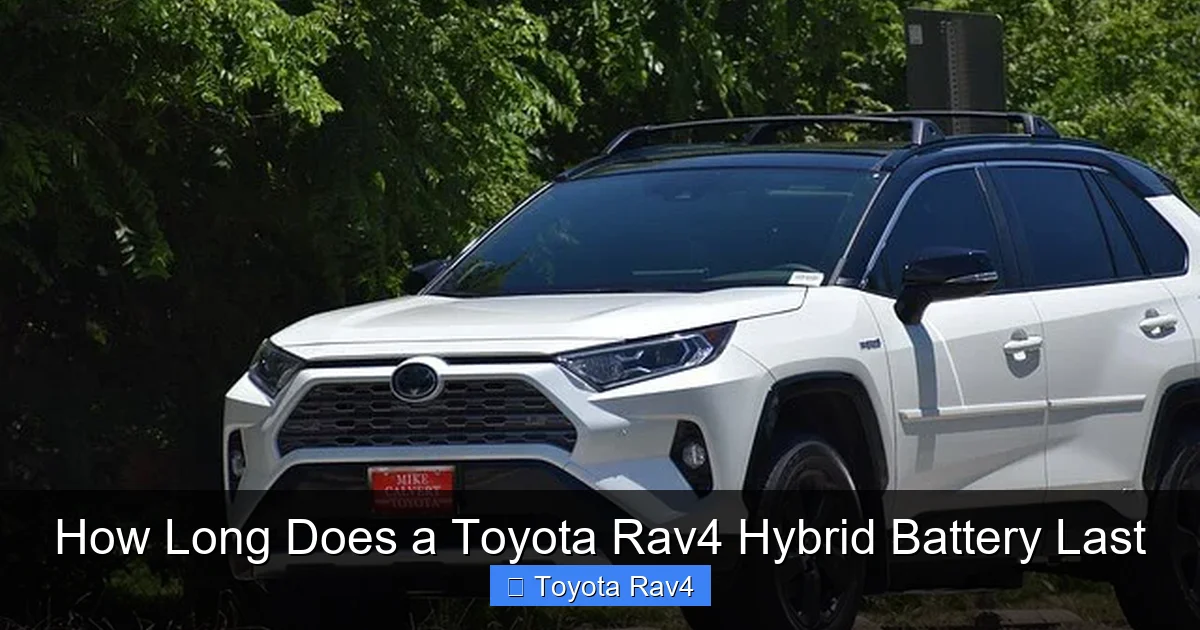
The Toyota RAV4 hybrid battery typically lasts between 10 to 15 years or 150,000 to 200,000 miles, depending on driving habits and climate. With proper care and regular maintenance, many owners report their hybrid batteries lasting well beyond the warranty period, making the RAV4 a reliable long-term investment.
Key Takeaways
- Typical Lifespan: The Toyota RAV4 hybrid battery lasts 10–15 years or 150,000–200,000 miles on average.
- Warranty Coverage: Toyota offers an 8-year/100,000-mile warranty on hybrid batteries, extendable in some states.
- Driving Habits Matter: Smooth acceleration, avoiding extreme speeds, and regular use help extend battery life.
- Climate Impact: Hot and cold weather can reduce battery efficiency and longevity if not managed.
- Maintenance Tips: Keep the battery cool, avoid deep discharges, and follow Toyota’s recommended service schedule.
- Replacement Costs: A new RAV4 hybrid battery costs $2,000–$4,000, but refurbished options are more affordable.
- Signs of Failure: Reduced fuel economy, warning lights, and slower acceleration may indicate battery issues.
📑 Table of Contents
- How Long Does a Toyota RAV4 Hybrid Battery Last?
- Understanding the Toyota RAV4 Hybrid Battery
- Factors That Affect Hybrid Battery Lifespan
- Signs Your RAV4 Hybrid Battery Is Failing
- How to Extend the Life of Your RAV4 Hybrid Battery
- What to Do When the Battery Needs Replacement
- Warranty and Protection Plans
- Real-World Examples and Owner Experiences
- Conclusion
How Long Does a Toyota RAV4 Hybrid Battery Last?
If you’re considering buying a Toyota RAV4 Hybrid—or you already own one—you’ve probably asked yourself: *How long does a Toyota RAV4 hybrid battery last?* It’s a smart question. After all, the hybrid battery is the heart of the vehicle’s efficiency and performance. Unlike traditional gas engines, hybrid vehicles rely on a combination of gasoline and electric power, and the battery plays a crucial role in that balance.
The good news? Toyota has built a reputation for reliability, and the RAV4 Hybrid is no exception. Most owners can expect their hybrid battery to last between 10 and 15 years, or roughly 150,000 to 200,000 miles. That’s a solid lifespan, especially when you consider that many conventional car components start showing wear much earlier. But like any advanced technology, the battery’s longevity depends on several factors—how you drive, where you live, and how well you maintain your vehicle.
In this guide, we’ll dive deep into everything you need to know about the RAV4 Hybrid battery. We’ll explore what affects its lifespan, how to care for it, what to do when it starts to fade, and whether replacing it is worth the cost. Whether you’re a current owner or thinking about making the switch to hybrid, this article will give you the confidence to get the most out of your RAV4.
Understanding the Toyota RAV4 Hybrid Battery
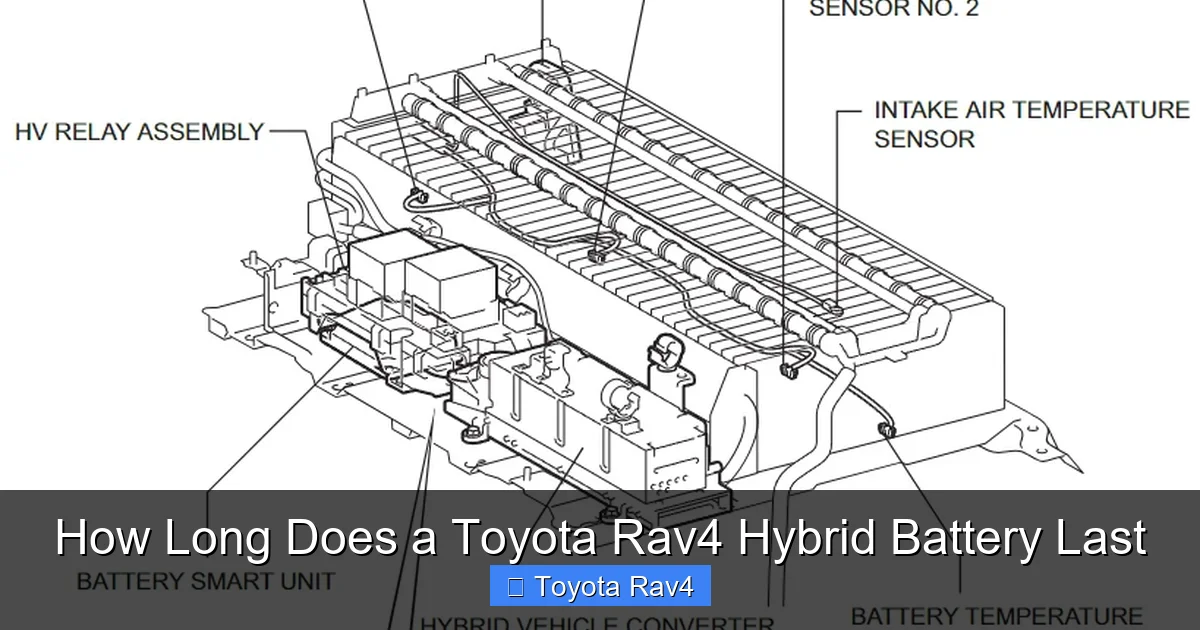
Visual guide about How Long Does a Toyota Rav4 Hybrid Battery Last
Image source: toyotaspace.com
Before we talk about how long the battery lasts, let’s first understand what it is and how it works. The Toyota RAV4 Hybrid uses a nickel-metal hydride (NiMH) or lithium-ion (Li-ion) battery pack, depending on the model year. Newer models (2019 and later) typically use lithium-ion batteries, which are lighter, more efficient, and have a longer lifespan than older NiMH versions.
This battery isn’t like the standard 12-volt car battery that starts your engine. Instead, it’s a high-voltage pack that stores energy generated during braking (called regenerative braking) and powers the electric motor. When you’re driving at low speeds or idling, the car can run purely on electric power. When you accelerate or climb hills, the gasoline engine kicks in to assist. The battery and engine work together seamlessly, managed by Toyota’s Hybrid Synergy Drive system.
One of the biggest advantages of the RAV4 Hybrid battery is its durability. Unlike early hybrid models from the 2000s—which sometimes had battery issues—Toyota has refined its technology over decades. The RAV4 Hybrid’s battery is designed to last the life of the vehicle under normal conditions. In fact, many owners report that their batteries are still going strong after 10 years and well over 150,000 miles.
How the Battery Powers the RAV4 Hybrid
The RAV4 Hybrid operates on a parallel hybrid system, meaning both the gasoline engine and electric motor can power the wheels independently or together. The battery supplies electricity to the electric motor, which helps during startup, low-speed driving, and acceleration. When you brake, the system captures kinetic energy and converts it back into electricity to recharge the battery.
This process is completely automatic. You don’t need to plug in your RAV4 Hybrid—it charges itself while you drive. That’s one reason why the battery can last so long: it’s constantly being used and recharged in a controlled way, which helps maintain its health.
Battery Types: NiMH vs. Lithium-Ion
Toyota has transitioned from nickel-metal hydride (NiMH) to lithium-ion (Li-ion) batteries in newer RAV4 Hybrid models. Here’s how they compare:
– **NiMH Batteries:** Used in older models (pre-2019), these are heavier and less energy-dense but are known for their durability and ability to handle deep discharges. They’re also more tolerant of extreme temperatures.
– **Lithium-Ion Batteries:** Found in newer RAV4 Hybrids, these are lighter, more efficient, and offer better performance. They charge faster and have a longer lifespan, but they’re more sensitive to heat and require more sophisticated cooling systems.
Both types are designed to last, but lithium-ion batteries generally offer better long-term value due to their efficiency and lighter weight, which improves fuel economy.
Factors That Affect Hybrid Battery Lifespan
Now that you know how the battery works, let’s talk about what can shorten or extend its life. While the RAV4 Hybrid battery is built to last, certain habits and conditions can wear it out faster. Understanding these factors can help you get the most out of your battery—and your vehicle.
Driving Habits and Patterns
How you drive has a big impact on battery health. Aggressive driving—like rapid acceleration, hard braking, and speeding—puts extra strain on the battery and electric motor. These actions force the battery to discharge quickly and recharge under high load, which can degrade its cells over time.
On the other hand, smooth, steady driving helps preserve battery life. If you drive gently, avoid jackrabbit starts, and use cruise control on highways, you’ll reduce stress on the battery. Also, frequent short trips can be harder on the battery because it doesn’t get enough time to fully recharge between uses. Longer drives allow the system to balance charge levels more effectively.
For example, if you mostly drive around town for errands, your battery might cycle more frequently, which can contribute to wear. But if you take regular highway trips, the battery gets a chance to stabilize, which is better for longevity.
Climate and Temperature Extremes
Weather plays a surprising role in battery life. Both extreme heat and cold can affect how well the battery performs and how long it lasts.
In hot climates, high temperatures can cause the battery to overheat, especially if the cooling system isn’t working properly. Overheating accelerates chemical degradation inside the battery cells, reducing their capacity over time. That’s why Toyota includes a cooling system for the battery pack—usually air-cooled or liquid-cooled—to keep temperatures in check.
In cold climates, the battery’s chemical reactions slow down, reducing its ability to hold a charge. You might notice reduced electric-only driving range in winter. However, modern RAV4 Hybrids have thermal management systems that help warm the battery when needed.
To protect your battery in extreme weather:
– Park in the shade or use a sunshade in hot climates.
– Use a garage or covered parking in winter.
– Avoid leaving the car in direct sunlight for long periods.
– Let the car warm up briefly before driving in cold weather.
Maintenance and Service History
Regular maintenance is key to keeping your RAV4 Hybrid battery healthy. While the battery doesn’t require the same kind of attention as an engine, it does benefit from proper care.
Follow Toyota’s recommended service schedule, which includes checking the hybrid system, battery coolant, and electrical connections. Mechanics can run diagnostics to monitor battery health and detect early signs of wear.
One important tip: don’t ignore warning lights. If the “Check Hybrid System” or “Maintenance Required” light comes on, get it checked right away. Early detection can prevent minor issues from becoming major problems.
Also, keep the 12-volt auxiliary battery in good condition. A weak 12-volt battery can cause the hybrid system to work harder, indirectly affecting the main battery.
Vehicle Age and Mileage
Age and mileage are natural factors in battery degradation. Even with perfect care, all batteries lose some capacity over time. This is normal and expected. Most RAV4 Hybrid batteries will still function well after 10 years, but you might notice a slight drop in electric range or fuel economy.
For example, a 2016 RAV4 Hybrid with 120,000 miles might still have a healthy battery, but it could be operating at 85–90% of its original capacity. That’s still perfectly usable—just not as efficient as when it was new.
The good news? Toyota designs its batteries to last well beyond the warranty period. Many owners report no major battery issues even after 15 years or 200,000 miles.
Signs Your RAV4 Hybrid Battery Is Failing
Even with the best care, hybrid batteries don’t last forever. Eventually, they’ll start to show signs of wear. Knowing what to look for can help you address problems early and avoid being stranded.
Reduced Fuel Economy
One of the first signs of battery trouble is a noticeable drop in fuel efficiency. The RAV4 Hybrid is known for its excellent gas mileage—typically 40+ mpg combined. If you suddenly find yourself filling up more often, it could mean the battery isn’t holding a charge as well as it used to.
For instance, if your RAV4 used to get 42 mpg and now only gets 35 mpg, that’s a red flag. While other factors (like tire pressure or engine issues) can affect mileage, battery degradation is a common cause in older hybrids.
Warning Lights on the Dashboard
The RAV4 Hybrid has several warning lights related to the hybrid system. The most common ones include:
– **Check Hybrid System:** Indicates a problem with the hybrid battery or motor.
– **Maintenance Required:** Suggests the battery or system needs inspection.
– **EV Mode Unavailable:** Means the car can’t run on electric power alone.
If any of these lights come on, don’t ignore them. Use an OBD2 scanner to read the error codes, or take your vehicle to a Toyota dealership or qualified hybrid technician.
Reduced Electric-Only Driving
One of the joys of driving a hybrid is the silent, electric-only mode at low speeds. If your RAV4 Hybrid starts the gasoline engine more often—even when driving slowly—it could mean the battery isn’t holding enough charge.
For example, if the engine kicks in when you’re idling at a stoplight or driving under 25 mph, that’s a sign the battery is struggling.
Slower Acceleration or Power Loss
A failing battery may not provide enough power to assist the gasoline engine during acceleration. You might notice the car feels sluggish or takes longer to reach highway speeds.
This is especially noticeable when merging onto freeways or climbing hills. If your RAV4 Hybrid used to feel peppy but now feels weak, the battery could be the culprit.
Unusual Noises or Smells
While rare, a severely degraded battery can sometimes produce unusual sounds—like clicking or buzzing—from under the rear seat (where the battery is located). In extreme cases, overheating batteries may emit a burning smell.
If you notice any strange noises or odors, stop driving and have the vehicle inspected immediately.
How to Extend the Life of Your RAV4 Hybrid Battery
The good news is that there are several things you can do to help your RAV4 Hybrid battery last as long as possible. A little care goes a long way.
Drive Smoothly and Avoid Aggressive Habits
Gentle driving is one of the best ways to protect your battery. Avoid rapid acceleration and hard braking. Instead, accelerate gradually and anticipate stops to use regenerative braking effectively.
Use cruise control on highways to maintain a steady speed, which reduces battery cycling. Also, try to avoid short, frequent trips when possible. If you can, combine errands into one longer drive to give the battery time to recharge.
Keep the Battery Cool
Heat is the enemy of battery life. Park in the shade whenever possible, especially during summer. Use a windshield sunshade to reduce cabin and battery temperature.
If you live in a hot climate, consider parking in a garage or under a carport. Some owners even install aftermarket battery cooling fans, though this is usually unnecessary if the factory system is working properly.
Maintain the 12-Volt Battery
The 12-volt auxiliary battery powers the car’s electronics and helps start the hybrid system. A weak or dying 12-volt battery can cause the hybrid system to work harder, putting extra strain on the main battery.
Check the 12-volt battery every few years and replace it if needed—usually every 3–5 years. Keep the terminals clean and free of corrosion.
Follow the Maintenance Schedule
Stick to Toyota’s recommended service intervals. This includes:
– Hybrid system inspections
– Battery coolant checks (if applicable)
– Software updates
– Electrical system diagnostics
Regular checkups can catch small issues before they become big problems.
Avoid Deep Discharges
While the RAV4 Hybrid manages charge levels automatically, it’s still best to avoid letting the battery drain completely. Frequent deep discharges can stress the cells.
Try to keep the battery charge between 20% and 80% when possible. This is especially important if you’re storing the vehicle for a long time.
What to Do When the Battery Needs Replacement
Eventually, even the best-cared-for battery will need to be replaced. When that time comes, you have a few options.
How Much Does a Replacement Cost?
The cost of a new Toyota RAV4 hybrid battery ranges from $2,000 to $4,000, including parts and labor. Prices vary depending on the model year, battery type (NiMH vs. Li-ion), and whether you go to a dealership or independent shop.
Refurbished or remanufactured batteries are a more affordable option, typically costing $1,200 to $2,500. These are used batteries that have been tested, repaired, and restored to working condition. Many come with a warranty of 1–3 years.
Should You Replace It?
If your RAV4 Hybrid is otherwise in good condition, replacing the battery is usually worth it. A new battery can restore fuel economy, performance, and reliability—essentially giving your car a new lease on life.
However, if the car has high mileage (over 200,000 miles) and other major components are failing, it might make more sense to trade it in or sell it.
DIY vs. Professional Replacement
Replacing a hybrid battery is not a DIY job for most people. It requires specialized tools, knowledge of high-voltage systems, and safety precautions. If you’re not trained in hybrid repair, leave it to the professionals.
Toyota dealerships and certified hybrid repair shops have the expertise and equipment to do the job safely and correctly.
Warranty and Protection Plans
One of the biggest advantages of owning a Toyota RAV4 Hybrid is the strong warranty coverage.
Standard Hybrid Battery Warranty
Toyota covers the hybrid battery under an 8-year/100,000-mile warranty. This means if the battery fails due to a defect within that time, Toyota will replace it at no cost.
In some states—like California, New York, and Massachusetts—the warranty is extended to 10 years/150,000 miles due to stricter emissions laws.
Extended Warranties and Service Plans
You can also purchase extended warranties or hybrid-specific protection plans. These can cover battery replacement beyond the standard warranty period, giving you peace of mind.
Some third-party companies offer hybrid battery warranties for older vehicles, though it’s important to read the fine print and check reviews.
What’s Covered—and What’s Not
The warranty covers defects in materials and workmanship. It does not cover damage from accidents, misuse, or lack of maintenance. Normal wear and tear is also not covered, but gradual capacity loss is expected and not considered a defect.
Real-World Examples and Owner Experiences
To give you a better idea of what to expect, here are some real-world examples from RAV4 Hybrid owners:
– **Sarah, 2017 RAV4 Hybrid, 145,000 miles:** “I’ve had no battery issues. My fuel economy is still around 40 mpg, and the car runs like new. I drive mostly on the highway and keep up with maintenance.”
– **Mike, 2015 RAV4 Hybrid, 180,000 miles:** “The battery started to fade around 160,000 miles. I noticed slower acceleration and lower mileage. I replaced it with a refurbished unit for $1,800, and it’s been great ever since.”
– **Linda, 2020 RAV4 Hybrid, 90,000 miles:** “I live in Arizona, so it’s hot. I park in the garage and use a sunshade. No battery problems so far, and I’m confident it’ll last 15 years.”
These stories show that with proper care, the RAV4 Hybrid battery can last a long time—even beyond 200,000 miles in some cases.
Conclusion
So, how long does a Toyota RAV4 hybrid battery last? On average, you can expect it to last 10 to 15 years or 150,000 to 200,000 miles. With good driving habits, proper maintenance, and attention to climate conditions, many owners enjoy even longer battery life.
The RAV4 Hybrid is a smart, reliable choice for anyone looking to save on fuel and reduce emissions. Its hybrid battery is built to last, and Toyota’s strong warranty adds extra peace of mind. Whether you’re buying new or used, understanding how to care for your battery will help you get the most value from your vehicle.
Remember: smooth driving, regular maintenance, and avoiding extreme temperatures are your best tools for extending battery life. And if the time comes for a replacement, there are affordable options available.
The RAV4 Hybrid isn’t just a car—it’s a long-term investment in efficiency, reliability, and sustainability. Take care of it, and it will take care of you for many miles to come.
Frequently Asked Questions
How long does a Toyota RAV4 hybrid battery last?
The Toyota RAV4 hybrid battery typically lasts between 10 and 15 years or 150,000 to 200,000 miles, depending on usage and maintenance. Many owners report their batteries lasting even longer with proper care.
Is the hybrid battery covered under warranty?
Yes, Toyota covers the hybrid battery under an 8-year/100,000-mile warranty. In some states, this extends to 10 years/150,000 miles due to emissions regulations.
Can I drive my RAV4 if the hybrid battery fails?
You may be able to drive short distances using only the gasoline engine, but performance and fuel economy will suffer. It’s best to have the battery repaired or replaced as soon as possible.
How much does it cost to replace a RAV4 hybrid battery?
A new battery costs $2,000–$4,000, while refurbished units range from $1,200 to $2,500. Labor costs vary by location and shop.
What are the signs of a failing hybrid battery?
Common signs include reduced fuel economy, warning lights, slower acceleration, and the gasoline engine starting more frequently. Unusual noises or smells may also indicate a problem.
Can I extend the life of my RAV4 hybrid battery?
Yes, by driving smoothly, avoiding extreme temperatures, maintaining the 12-volt battery, and following Toyota’s service schedule. Regular maintenance and gentle driving habits help prolong battery life.