
The Toyota RAV4 is built in multiple countries around the world, including the United States, Canada, Japan, and China. Each plant follows Toyota’s strict global standards, ensuring consistent quality and reliability across all markets.
Key Takeaways
- Global Production Network: The Toyota RAV4 is manufactured in several countries, including the U.S., Canada, Japan, and China, allowing Toyota to meet regional demand efficiently.
- U.S. Manufacturing Hub: The Georgetown, Kentucky plant is a major production site for the RAV4, especially for North American markets, supporting local jobs and reducing shipping costs.
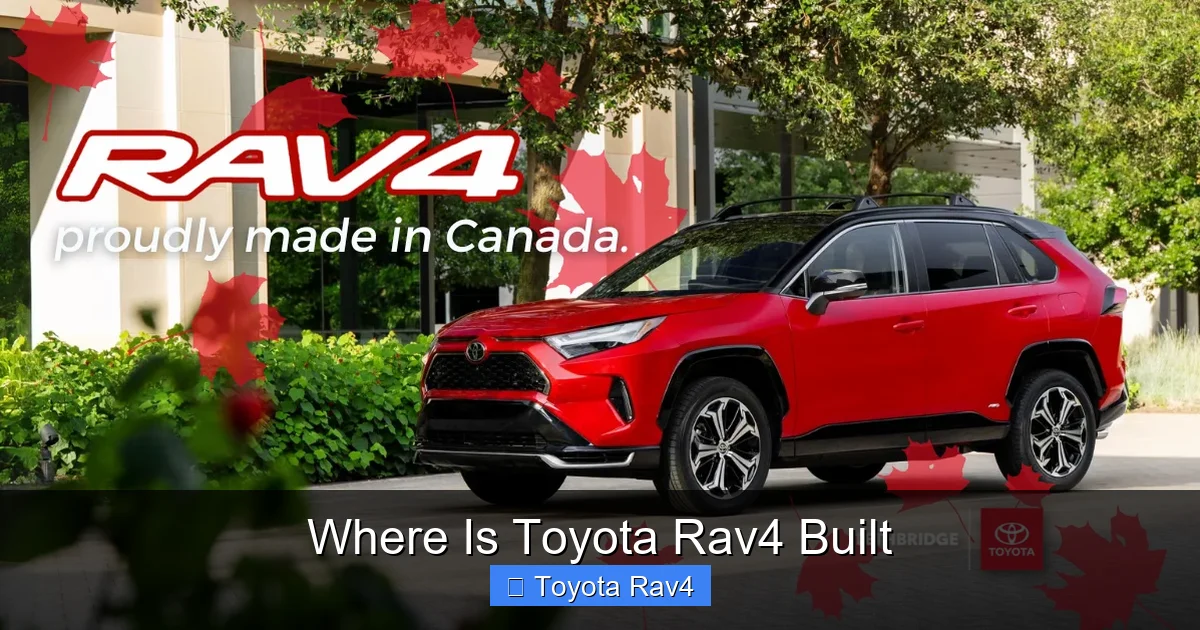
- Canadian Contribution: Toyota’s plant in Woodstock, Ontario, also produces the RAV4, focusing on models destined for Canada and export to nearby regions.
- Japanese Craftsmanship: The Tahara plant in Japan builds higher-trim and hybrid RAV4 models, known for precision engineering and advanced technology integration.
- Quality Consistency: Despite being built in different countries, all RAV4s meet Toyota’s rigorous global quality standards, ensuring reliability and durability.
- Hybrid Production Focus: Hybrid and plug-in hybrid RAV4 variants are primarily assembled in Japan and the U.S., leveraging advanced manufacturing capabilities.
- Future Expansion: Toyota continues to invest in its global plants, with potential for new RAV4 production lines in emerging markets to support growing demand.
📑 Table of Contents
Where Is Toyota RAV4 Built? A Global Perspective
When you’re shopping for a reliable, versatile SUV like the Toyota RAV4, one question often comes to mind: where is it actually made? It’s not just about geography—it’s about understanding the quality, supply chain, and even the environmental impact of your vehicle. The Toyota RAV4 isn’t built in just one place. Instead, it’s produced in several countries across the globe, each playing a key role in meeting the high demand for this popular compact SUV.
Toyota’s strategy of global manufacturing allows the company to respond quickly to regional market needs, reduce shipping times, and support local economies. Whether you’re in North America, Europe, or Asia, chances are your RAV4 was built in a facility not too far from you. This decentralized approach also helps Toyota manage risks like trade tariffs, supply chain disruptions, and fluctuating fuel prices.
But don’t worry—just because the RAV4 is built in multiple locations doesn’t mean quality varies. Toyota maintains strict global standards across all its plants. From the assembly line in Kentucky to the high-tech facility in Japan, every RAV4 undergoes the same rigorous testing and quality control processes. So whether your RAV4 rolls off the line in the U.S. or Japan, you can expect the same level of reliability, safety, and performance.
Major Toyota RAV4 Manufacturing Plants Around the World
Visual guide about Where Is Toyota Rav4 Built
Image source: ddztmb1ahc6o7.cloudfront.net
Toyota operates a network of state-of-the-art manufacturing facilities that produce the RAV4 for different regions. Let’s take a closer look at the key plants responsible for building this best-selling SUV.
Georgetown, Kentucky, USA
One of the most important RAV4 production sites is Toyota’s massive plant in Georgetown, Kentucky. This facility, often called the “heart of Toyota North America,” has been producing vehicles since 1988 and is one of the largest automotive manufacturing plants in the world. The Kentucky plant builds the majority of RAV4s sold in the United States and Canada.
The Georgetown facility is highly automated and employs thousands of workers who follow Toyota’s renowned production system—known for efficiency, precision, and continuous improvement. The plant produces both gasoline and hybrid versions of the RAV4, with the hybrid models gaining popularity due to their fuel efficiency and lower emissions.
One advantage of U.S.-built RAV4s is reduced shipping costs and faster delivery times for American buyers. Additionally, vehicles made in the U.S. may qualify for certain tax incentives or rebates under federal or state programs promoting domestic manufacturing.
Woodstock, Ontario, Canada
Just north of the U.S. border, Toyota’s Woodstock plant in Ontario plays a vital role in RAV4 production. Opened in 2008, this facility was specifically built to manufacture the RAV4 for the Canadian market and for export to nearby regions, including the northeastern United States.
The Woodstock plant is known for its flexibility and lean manufacturing practices. It can quickly adjust production volumes based on demand, which is especially useful during seasonal spikes or when new model updates are released. Like the Kentucky plant, Woodstock produces both standard and hybrid RAV4 models.
Canadian-built RAV4s are often praised for their attention to detail and build quality. The plant also emphasizes sustainability, using energy-efficient systems and recycling materials wherever possible. For Canadian buyers, purchasing a locally made RAV4 can mean shorter wait times and support for domestic jobs.
Tahara, Japan
When it comes to precision engineering and advanced technology, the Tahara plant in Aichi Prefecture, Japan, stands out. This facility is one of Toyota’s most advanced manufacturing sites and is responsible for producing higher-trim RAV4 models, including the RAV4 Hybrid and the RAV4 Prime plug-in hybrid.
Tahara is known for its high level of automation and meticulous quality control. Robots handle many of the assembly tasks, but skilled technicians oversee every step to ensure perfection. The plant also integrates cutting-edge technologies like AI-driven quality checks and real-time data monitoring.
RAV4s built in Tahara are often exported to markets in Asia, Europe, and the Middle East. These models may include features tailored to regional preferences, such as different interior materials, infotainment systems, or suspension tuning. For example, European RAV4s might have slightly different suspension settings to handle rougher road conditions.
Guangzhou, China
In recent years, Toyota has expanded RAV4 production into China to meet the growing demand in the world’s largest automotive market. The Guangzhou plant, operated by GAC Toyota, began producing the RAV4 in 2020. This move allows Toyota to avoid import tariffs and offer more competitive pricing to Chinese consumers.
The Chinese-built RAV4 is nearly identical to those made elsewhere, but it may include localized features such as different infotainment interfaces, climate control settings, or interior trim options. The plant follows Toyota’s global production standards, ensuring that quality remains consistent.
While the Chinese RAV4 is primarily sold within China, some models are exported to nearby countries in Southeast Asia. This regional production strategy helps Toyota stay competitive in a rapidly evolving market.
Why Does the Manufacturing Location Matter?
You might be wondering: does it really matter where your RAV4 is built? After all, it’s still a Toyota, right? While the brand reputation for reliability is consistent, the manufacturing location can influence several factors that matter to buyers.
Quality and Craftsmanship
Different plants may have slight variations in build quality due to workforce training, automation levels, and local regulations. For example, the Tahara plant in Japan is known for its meticulous attention to detail, while the Kentucky plant emphasizes efficiency and volume. However, Toyota’s global quality assurance program ensures that all RAV4s meet the same high standards.
That said, some buyers prefer vehicles made in certain countries due to perceived craftsmanship. For instance, Japanese-built models are often associated with precision engineering, while American-built RAV4s are praised for their robust construction and availability of features.
Availability and Delivery Times
Where your RAV4 is built can affect how quickly you can get behind the wheel. If you’re in the U.S., a RAV4 built in Kentucky or Ontario will likely arrive faster than one shipped from Japan. This can be especially important if you need a vehicle urgently or if you’re waiting for a specific trim or color.
Dealerships often stock RAV4s based on regional production, so knowing where your local inventory comes from can help you plan your purchase. For example, if your dealer primarily sells U.S.-built models, you might have more options available immediately.
Warranty and Service Support
The manufacturing location can also influence warranty coverage and service support. Vehicles built in the U.S. or Canada may have slightly different warranty terms or service networks compared to imported models. However, Toyota’s global warranty program generally provides consistent coverage regardless of where the vehicle was made.
Still, it’s worth checking with your local dealer about any region-specific warranty details. For example, hybrid components might be covered differently depending on the plant where they were assembled.
Environmental and Ethical Considerations
More buyers are considering the environmental and social impact of their vehicle purchases. Manufacturing location can play a role here. Plants in North America and Japan often have stricter environmental regulations and higher labor standards compared to some other regions.
For example, Toyota’s Kentucky plant has earned certifications for energy efficiency and waste reduction. The company also emphasizes fair labor practices and community engagement at its facilities. If sustainability and ethical production are important to you, choosing a RAV4 built in a facility with strong environmental credentials might be a priority.
Hybrid and Plug-In Hybrid RAV4 Production
The rise of hybrid and plug-in hybrid vehicles has changed how and where the RAV4 is built. These advanced powertrains require specialized manufacturing processes and components, which are often handled at specific plants.
Hybrid RAV4 Assembly
The RAV4 Hybrid is primarily built at the Georgetown, Kentucky plant and the Tahara plant in Japan. These facilities have the expertise and infrastructure to handle hybrid systems, including battery packs, electric motors, and regenerative braking systems.
The Kentucky plant has invested heavily in hybrid production, with dedicated lines and trained technicians. This allows Toyota to scale up hybrid output quickly in response to growing demand. In fact, the RAV4 Hybrid has become one of the best-selling hybrid SUVs in the U.S.
RAV4 Prime Plug-In Hybrid
The RAV4 Prime, Toyota’s plug-in hybrid variant, is currently built exclusively at the Tahara plant in Japan. This model features a larger battery and more powerful electric motor, requiring advanced assembly techniques and quality control.
Because the RAV4 Prime is a newer and more complex vehicle, Toyota has chosen to produce it at its most advanced facility. This ensures that every unit meets the highest standards for performance, safety, and reliability. However, this also means that RAV4 Prime models may have longer wait times for buyers outside of Japan.
Future of Hybrid Production
As demand for electrified vehicles grows, Toyota is likely to expand hybrid and plug-in hybrid production to more plants. The company has announced plans to increase its global electrified vehicle output, which could include building the RAV4 Prime in North America in the future.
This expansion would reduce shipping times and costs, making the RAV4 Prime more accessible to buyers in the U.S. and Canada. It would also support Toyota’s goal of achieving carbon neutrality across its operations.
How to Find Out Where Your RAV4 Was Built
Curious about where your specific RAV4 was manufactured? It’s easier than you think. Every vehicle comes with a Vehicle Identification Number (VIN), which contains information about its origin.
Decoding the VIN
The first character of the VIN indicates the country of manufacture. Here’s a quick guide:
– 1, 4, or 5: United States
– 2: Canada
– J: Japan
– L: China
For example, a VIN starting with “2T” means the vehicle was built in Canada, while “JTE” indicates Japanese production. You can enter your VIN on Toyota’s official website or use free online VIN decoders to get detailed information about your RAV4’s origin, model year, engine type, and more.
Checking the Door Jamb Sticker
Another way to find out where your RAV4 was built is to look at the compliance sticker on the driver’s side door jamb. This sticker includes the manufacturing plant code and the country of origin. It’s a quick and reliable way to confirm where your vehicle was assembled.
Asking Your Dealer
If you’re still unsure, your Toyota dealer can help. They have access to detailed production records and can tell you exactly where your RAV4 was built. This information can be useful for warranty claims, service history, or simply satisfying your curiosity.
The Future of RAV4 Manufacturing
As the automotive industry evolves, so does Toyota’s approach to manufacturing the RAV4. The company is investing in new technologies, expanding production capacity, and exploring new markets.
Automation and Smart Manufacturing
Toyota is increasingly using automation, robotics, and AI in its plants to improve efficiency and quality. For example, the Tahara plant uses AI to detect defects in real time, while the Kentucky plant employs robots for welding and painting.
These advancements not only speed up production but also reduce human error and improve worker safety. As technology improves, we can expect even more precise and consistent RAV4 builds.
Sustainability Initiatives
Toyota is committed to reducing the environmental impact of its manufacturing processes. Many RAV4 plants now use renewable energy, recycle water, and minimize waste. The company aims to achieve carbon neutrality across its global operations by 2050.
For example, the Woodstock plant in Canada has installed solar panels and uses energy-efficient lighting. These efforts not only benefit the environment but also reduce operating costs, which can translate to more competitive pricing for consumers.
Expansion into New Markets
With rising demand for SUVs in regions like India, Southeast Asia, and South America, Toyota may open new RAV4 production facilities in these areas. Local manufacturing would reduce import costs and make the RAV4 more affordable for buyers in these markets.
While no official announcements have been made, Toyota’s history of strategic expansion suggests that new plants could be on the horizon. This would further solidify the RAV4’s status as a truly global vehicle.
Conclusion
The Toyota RAV4 is built in multiple countries, each contributing to its reputation for quality, reliability, and innovation. From the high-volume plants in Kentucky and Ontario to the precision-focused facility in Tahara, Japan, every RAV4 is crafted with care and attention to detail.
Knowing where your RAV4 is built can give you insight into its quality, availability, and environmental impact. Whether you prefer a U.S.-built model for quick delivery or a Japanese-built hybrid for advanced technology, Toyota’s global manufacturing network ensures there’s a RAV4 for every need.
As the automotive landscape shifts toward electrification and sustainability, Toyota continues to adapt its production strategies. The future of RAV4 manufacturing looks bright, with smarter plants, greener processes, and broader global reach.
So the next time someone asks, “Where is the Toyota RAV4 built?” you can confidently say: it’s built all over the world—and built to last.
Frequently Asked Questions
Where is the Toyota RAV4 primarily built?
The Toyota RAV4 is primarily built in the United States at the Georgetown, Kentucky plant, which produces the majority of RAV4s for North America. Additional production occurs in Canada, Japan, and China to serve regional markets.
Are RAV4s built in the U.S. different from those built in Japan?
While all RAV4s meet Toyota’s global quality standards, there may be minor differences in features, trim options, or build preferences based on regional demand. However, the core design, safety, and performance remain consistent across all plants.
Can I tell where my RAV4 was made by looking at the VIN?
Yes, the first character of the VIN indicates the country of manufacture. For example, “1,” “4,” or “5” means the U.S., “2” means Canada, “J” means Japan, and “L” means China.
Is the RAV4 Hybrid built in the same plants as the gasoline version?
Most RAV4 Hybrids are built in the same plants as gasoline models, primarily in Kentucky and Japan. The RAV4 Prime plug-in hybrid is currently built only in Japan at the Tahara plant.
Why does Toyota build the RAV4 in multiple countries?
Building the RAV4 in multiple countries allows Toyota to meet regional demand faster, reduce shipping costs, avoid import tariffs, and support local economies while maintaining consistent quality.
Will Toyota build the RAV4 in more countries in the future?
Toyota may expand RAV4 production to new markets like India or Southeast Asia to meet growing demand and reduce costs. While no official plans have been announced, the company’s global strategy supports future expansion.