
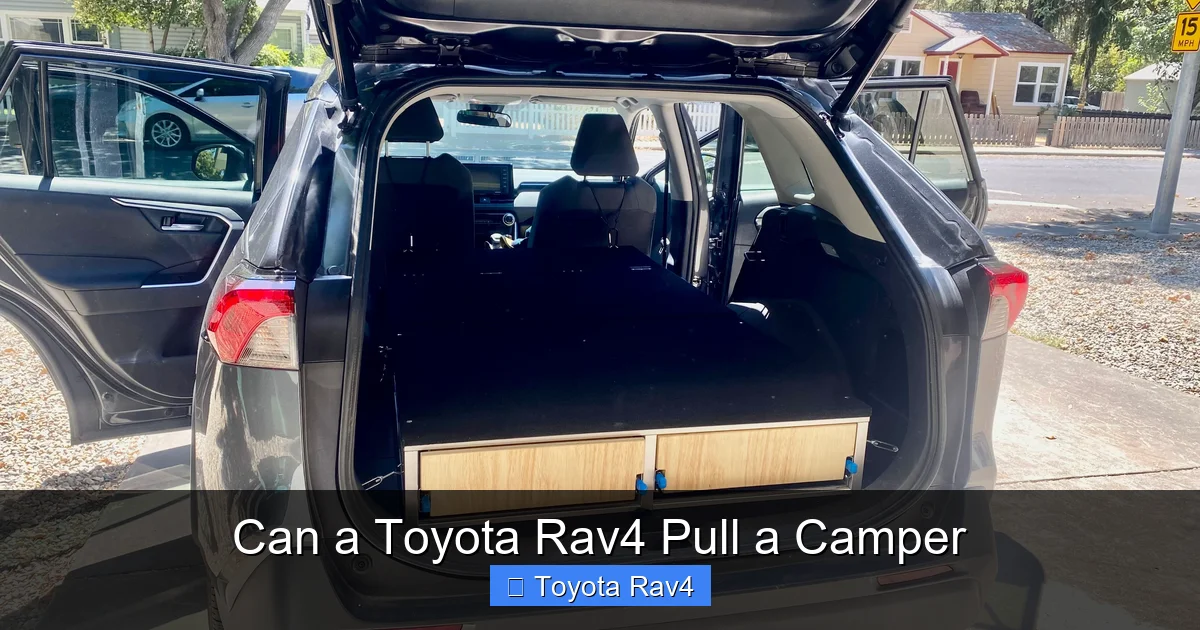
Yes, a Toyota RAV4 can pull a camper—but it depends on the model year, engine type, and camper weight. Most modern RAV4s have a towing capacity between 1,500 and 3,500 pounds, making them suitable for lightweight travel trailers, pop-up campers, and teardrop campers.
Key Takeaways
- Towing capacity varies by model: Older RAV4s (pre-2013) typically tow up to 1,500 lbs, while newer models (2019–2024) can handle up to 3,500 lbs with the right equipment.
- Engine and drivetrain matter: Gas-only RAV4s with all-wheel drive (AWD) generally offer higher towing ratings than hybrid versions.
- Camper weight is critical: Always check the camper’s dry weight, cargo, and hitch weight to ensure it’s within your RAV4’s limits.
- Proper towing equipment is essential: Use a weight-distributing hitch, brake controller, and trailer wiring harness for safety and compliance.
- Fuel efficiency drops when towing: Expect reduced MPG when pulling a camper, especially on hills or highways.
- Not all campers are RAV4-friendly: Large travel trailers or fifth wheels are usually too heavy—stick to lightweight options.
- Practice makes perfect: Towing takes skill—practice in empty parking lots before hitting the road.
📑 Table of Contents
- Can a Toyota RAV4 Pull a Camper? The Short Answer
- Understanding Towing Capacity: What It Means for Your RAV4
- Types of Campers a Toyota RAV4 Can Pull
- Essential Towing Equipment for Your RAV4
- Driving Tips for Towing a Camper with a RAV4
- Real-World Examples: RAV4 Owners Who Tow Campers
- Fuel Economy and Maintenance When Towing
- Conclusion: Is the Toyota RAV4 Right for Your Camping Adventures?
Can a Toyota RAV4 Pull a Camper? The Short Answer
If you’re dreaming of weekend getaways, mountain cabins, or lakeside campsites, you might be wondering: Can my Toyota RAV4 really pull a camper? The good news is—yes, it can! But like any adventure, success depends on preparation, knowledge, and matching the right gear to your vehicle.
The Toyota RAV4 has evolved significantly over the years. What started as a compact, car-based SUV in the mid-1990s has grown into a versatile, family-friendly crossover with impressive capabilities. Today’s RAV4 offers a blend of fuel efficiency, reliability, and enough power to handle light to moderate towing tasks—including pulling a camper. However, it’s not a one-size-fits-all situation. The answer depends on several factors: your RAV4’s model year, engine type, drivetrain, and the weight of the camper you plan to tow.
In this guide, we’ll walk you through everything you need to know about using your Toyota RAV4 to pull a camper. From understanding towing capacity and choosing the right camper to safety tips and real-world examples, we’ve got you covered. Whether you’re a first-time camper owner or a seasoned road warrior, this article will help you make smart, safe decisions for your next adventure.
Understanding Towing Capacity: What It Means for Your RAV4
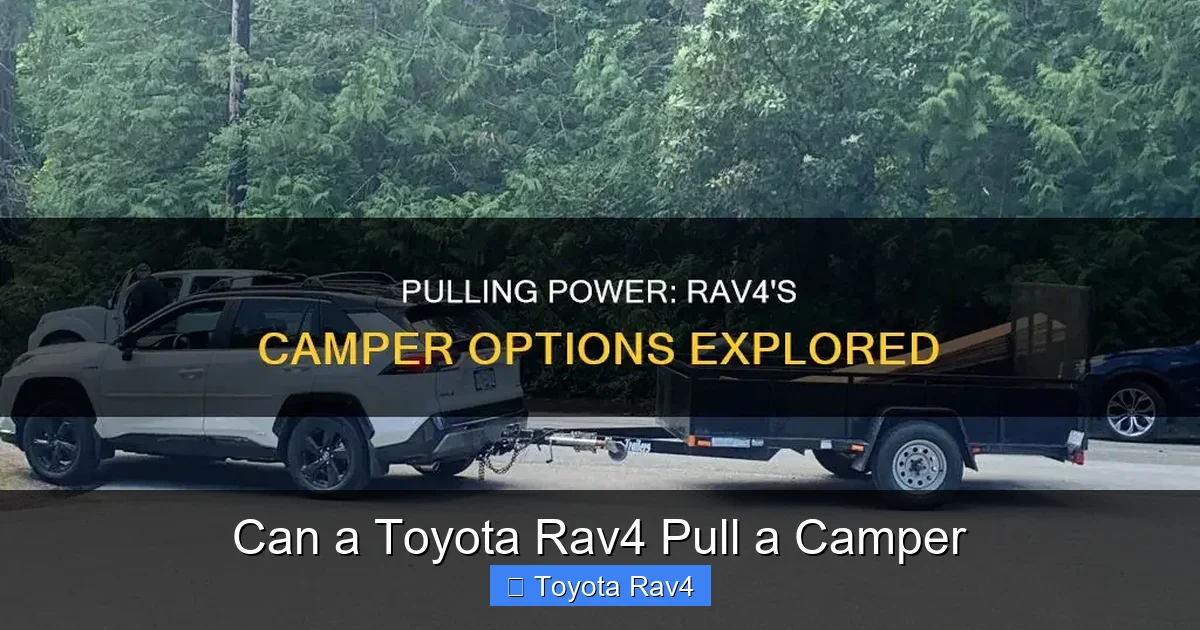
Visual guide about Can a Toyota Rav4 Pull a Camper
Image source: shunauto.com
Before you even think about hitching up a camper, you need to understand your RAV4’s towing capacity. This number tells you the maximum weight your vehicle can safely pull. Exceeding it can lead to mechanical failure, loss of control, or even accidents.
Towing capacity isn’t just about engine power—it’s a combination of the vehicle’s frame strength, transmission cooling, braking system, and suspension. Toyota engineers design each RAV4 model with specific towing limits based on these factors.
For example, the 2023 Toyota RAV4 with the standard 2.5L four-cylinder engine and all-wheel drive has a towing capacity of 3,500 pounds when properly equipped. That’s enough to pull a small travel trailer, a pop-up camper, or a teardrop camper loaded with gear. But if you have a RAV4 Hybrid, the towing capacity drops to 1,750 pounds—significantly less.
Why the difference? Hybrid systems prioritize fuel efficiency over raw power. While they’re excellent for city driving and long commutes, they’re not built for heavy towing. The added weight of the hybrid battery and electric motors reduces the overall towing capability.
How to Find Your RAV4’s Towing Capacity
The best way to find your exact towing capacity is to check your owner’s manual. Toyota provides detailed towing specifications for each trim level and drivetrain configuration. You can also visit the official Toyota website and use their towing guide tool by entering your vehicle’s VIN or model details.
Another reliable source is the sticker inside your driver’s side door jamb. It often includes gross vehicle weight rating (GVWR), gross combined weight rating (GCWR), and sometimes towing capacity. If you’re unsure, contact a Toyota dealership—they can look up your vehicle’s specs using your VIN.
Factors That Affect Towing Capacity
Several variables can influence how much your RAV4 can safely tow:
– **Model Year:** Newer RAV4s (especially 2019 and later) have improved frames and stronger transmissions, allowing higher towing limits.
– **Engine Type:** Gas-only models typically outperform hybrids in towing.
– **Drivetrain:** All-wheel drive (AWD) models often have higher towing capacities than front-wheel drive (FWD) versions.
– **Factory Tow Package:** Some RAV4 trims come with a factory-installed tow package that includes a transmission cooler, upgraded wiring, and a hitch receiver. This can boost towing capacity.
– **Aftermarket Upgrades:** Adding a transmission cooler or heavy-duty suspension can help, but won’t increase the official towing limit—only what Toyota certifies.
Always stick to the manufacturer’s recommended towing capacity. Pushing beyond it voids your warranty and increases safety risks.
Types of Campers a Toyota RAV4 Can Pull
Not all campers are created equal—and not all are suitable for a RAV4. The key is matching the camper’s weight to your vehicle’s capabilities. Let’s break down the types of campers that work well with a RAV4.
Pop-Up Campers (Tent Trailers)
Pop-up campers are among the best options for RAV4 owners. These lightweight trailers fold down for easy towing and pop up at the campsite to reveal sleeping areas, a small kitchen, and sometimes a dinette. Most pop-ups weigh between 1,500 and 2,500 pounds when fully loaded.
For example, the popular Jayco Jay Series pop-up camper has a dry weight of around 1,800 pounds. Add 500 pounds for gear, water, and propane, and you’re still well within the towing range of most RAV4s—even hybrids.
Pop-ups are ideal for weekend trips, family camping, and off-grid adventures. They’re aerodynamic, fuel-efficient to tow, and easy to store when not in use.
Teardrop Campers
Teardrop campers are compact, stylish, and perfect for minimalist travelers. These small trailers typically measure 8 to 10 feet in length and weigh between 1,000 and 2,000 pounds. Their rounded shape reduces wind resistance, making them easier to tow.
Models like the Little Guy Mini Max or the Happier Camper HC1 are excellent choices for RAV4 owners. They often include a small kitchenette, a sleeping platform, and storage—enough for two people to enjoy a comfortable trip.
Because of their low weight, teardrops can be towed by even the smallest RAV4 models. They’re also great for solo travelers or couples who want a cozy, no-fuss camping experience.
Small Travel Trailers
If you need more space, a small travel trailer might be the answer. These hard-sided campers offer full amenities like a bathroom, kitchen, and separate sleeping areas. However, they’re heavier—typically ranging from 2,500 to 4,000 pounds.
Only the most capable RAV4s (2019 and newer with AWD and the tow package) can handle these. For example, a 2022 RAV4 Adventure trim can tow up to 3,500 pounds, making it suitable for lightweight travel trailers like the Airstream Basecamp (around 3,000 pounds) or the Winnebago Micro Minnie FLX (under 3,500 pounds).
Always check the camper’s gross vehicle weight rating (GVWR), which includes the weight of the trailer plus all cargo, water, and supplies. Never tow based on “dry weight” alone.
What Campers Are Too Heavy?
Unfortunately, larger campers are off-limits for most RAV4s. Fifth wheels, large travel trailers (over 4,000 pounds), and toy haulers are simply too heavy. Even if your RAV4 can technically pull them short distances, the strain on the engine, transmission, and brakes is unsafe and could lead to breakdowns.
For example, a 30-foot travel trailer with a GVWR of 7,000 pounds would overwhelm any RAV4. You’d need a full-size pickup truck or SUV with a towing capacity of at least 7,000 pounds.
Essential Towing Equipment for Your RAV4
Towing a camper isn’t just about hitching up and going. You need the right equipment to ensure safety, legality, and peace of mind. Here’s what every RAV4 camper owner should have.
Hitch Receiver and Ball Mount
Your RAV4 needs a Class III or Class IV hitch receiver to attach a trailer. Most newer RAV4s can be equipped with a 2-inch receiver, which is strong enough for campers up to 3,500 pounds.
The ball mount connects the hitch to the trailer coupler. Choose a ball size that matches your trailer’s coupler—most campers use a 2-inch ball. The height of the ball mount is also important. It should allow the trailer to sit level when hitched. If the trailer tilts up or down, it can affect handling and braking.
Weight Distribution Hitch
For heavier campers (over 2,500 pounds), a weight distribution hitch is highly recommended. This system uses spring bars to redistribute the trailer’s weight across all four tires of your RAV4, improving stability and reducing sway.
Without a weight distribution hitch, the rear of your RAV4 can sag, causing poor steering and increased braking distance. It can also put extra strain on the rear suspension.
Trailer Brake Controller
If your camper has electric brakes (most travel trailers do), you’ll need a brake controller inside your RAV4. This device allows you to activate the trailer’s brakes independently or in sync with your vehicle’s brakes.
Toyota doesn’t install brake controllers as standard, but many aftermarket options are available. Popular brands include Tekonsha, Curt, and Reese. Installation usually involves plugging into the vehicle’s wiring harness and mounting the controller under the dashboard.
Trailer Wiring Harness
A wiring harness connects your RAV4’s electrical system to the trailer’s lights, turn signals, and brake lights. Without it, other drivers won’t know when you’re stopping or turning—creating a serious safety hazard.
Most RAV4s can use a plug-and-play harness that connects to the factory wiring. Make sure the harness matches your trailer’s plug type (4-pin, 5-pin, or 7-pin).
Sway Control Devices
Trailer sway—when the camper starts to fishtail behind your vehicle—is a common and dangerous problem. Sway control devices, like friction bars or dual-cam systems, help keep the trailer in line.
These are especially useful in windy conditions or when passing large trucks. Many weight distribution hitches include built-in sway control.
Safety Chains and Breakaway System
Always use safety chains to connect the trailer to your RAV4. They act as a backup if the hitch fails. Cross the chains under the coupler to create a cradle that can catch the trailer if it detaches.
For campers with brakes, a breakaway system is required by law in most states. This battery-powered device activates the trailer’s brakes if it becomes disconnected while moving.
Driving Tips for Towing a Camper with a RAV4
Towing changes how your RAV4 handles, accelerates, and brakes. Here are some essential driving tips to keep you safe on the road.
Take It Slow
Your RAV4 will feel heavier and less responsive when towing. Accelerate gently, brake early, and allow extra space between you and other vehicles. Speed limits for towing are often lower than regular driving—stick to 55–65 mph on highways.
Watch Your Mirrors
Use extended side mirrors if your camper is wider than your RAV4. This helps you see blind spots and changing lanes safely. Some RAV4 trims come with power-folding mirrors—great for tight campsite maneuvering.
Practice Backing Up
Backing up a trailer is tricky. The trailer moves in the opposite direction of your steering wheel. Practice in an empty parking lot before your trip. Go slow, make small corrections, and use your mirrors.
Be Mindful of Hills
Climbing steep grades puts extra strain on your engine and transmission. Use lower gears (like “L” or “S” mode) to maintain control and prevent overheating. Descending hills? Use engine braking to avoid burning out your brakes.
Check Tire Pressure
Both your RAV4 and the camper should have proper tire pressure. Underinflated tires can overheat and fail, especially when towing. Check pressures before every trip.
Plan Your Route
Avoid narrow roads, low bridges, and tight turns. Use GPS apps that support RV or trailer routing, like RV LIFE or CoPilot. They can help you find campgrounds with pull-through sites and avoid low-clearance obstacles.
Real-World Examples: RAV4 Owners Who Tow Campers
Still not sure if your RAV4 can handle a camper? Let’s look at some real-world examples.
Example 1: 2020 RAV4 Hybrid + Pop-Up Camper
Sarah from Colorado owns a 2020 RAV4 Hybrid. She tows a 1,900-pound pop-up camper to mountain campsites every summer. “It’s perfect for weekend trips,” she says. “I get about 25 MPG when towing, and the AWD helps on gravel roads.”
Her setup includes a Class III hitch, brake controller, and sway bars. She avoids highways with steep grades and always checks her camper’s weight before leaving.
Example 2: 2022 RAV4 Adventure + Teardrop Camper
Mike from Oregon uses his 2022 RAV4 Adventure to tow a 2,200-pound teardrop camper. “It handles great,” he says. “I’ve driven it across the country with no issues.”
He added a weight distribution hitch and upgraded his tires for better grip. He also carries extra water and tools in case of emergencies.
Example 3: 2015 RAV4 + Small Travel Trailer
Lisa from Texas has a 2015 RAV4 with AWD. She tows a 2,800-pound travel trailer to state parks. “It’s at the upper limit,” she admits. “I take it slow and avoid long trips in hot weather.”
She installed a transmission cooler to prevent overheating and always checks her fluids before driving.
These stories show that with the right preparation, a RAV4 can be a reliable camper towing vehicle—even for long-distance adventures.
Fuel Economy and Maintenance When Towing
Towing a camper affects more than just handling—it impacts fuel economy and vehicle wear.
Fuel Efficiency Drop
Expect a 20–40% reduction in MPG when towing. A RAV4 that normally gets 30 MPG might drop to 18–22 MPG with a camper. Factors like wind resistance, weight, and terrain play a big role.
To save fuel:
– Remove unnecessary weight from the camper.
– Keep the camper aerodynamic (cover bikes, close vents).
– Drive at steady speeds and avoid rapid acceleration.
Increased Wear and Tear
Towing puts extra stress on your engine, transmission, brakes, and suspension. Regular maintenance is crucial.
– Change your engine oil more frequently (every 3,000–5,000 miles when towing).
– Check transmission fluid and coolant levels before long trips.
– Inspect brakes and tires for wear.
– Rotate tires every 5,000–7,000 miles.
Consider using synthetic oil and high-performance brake pads for better durability.
Transmission Cooling
Overheating is a common issue when towing. If your RAV4 doesn’t have a factory transmission cooler, consider adding one. It helps keep fluid temperatures down, especially in hot weather or on long climbs.
Conclusion: Is the Toyota RAV4 Right for Your Camping Adventures?
So, can a Toyota RAV4 pull a camper? Absolutely—if you choose the right camper and equip your vehicle properly. The RAV4 is a capable, reliable SUV that can handle lightweight to moderate towing tasks with ease.
From pop-up campers and teardrops to small travel trailers, there are plenty of options that fit within the RAV4’s towing limits. Just remember to check your model’s specific capacity, use the right equipment, and drive safely.
While the RAV4 may not be the best choice for large, heavy campers, it’s perfect for weekend warriors, minimalist travelers, and families who want a fuel-efficient, easy-to-drive vehicle for outdoor adventures.
With proper planning and care, your RAV4 can be the gateway to countless camping trips, scenic drives, and unforgettable memories. So pack your gear, hitch up your camper, and hit the road—your next adventure is waiting.
Frequently Asked Questions
Can a Toyota RAV4 Hybrid pull a camper?
Yes, but with limitations. Most RAV4 Hybrids have a towing capacity of 1,500 to 1,750 pounds, making them suitable only for very lightweight campers like small teardrops or unloaded pop-ups. Always check your specific model’s rating.
What is the towing capacity of a 2023 Toyota RAV4?
The 2023 RAV4 gas model with AWD can tow up to 3,500 pounds when properly equipped. The hybrid version is limited to 1,750 pounds. Always verify with your owner’s manual or VIN.
Do I need a special hitch to tow a camper with my RAV4?
Yes. You’ll need a Class III or IV hitch receiver, a ball mount, and possibly a weight distribution hitch for heavier campers. A brake controller and wiring harness are also recommended for safety.
Can I tow a 4,000-pound camper with my RAV4?
No. Even the most capable RAV4s max out at 3,500 pounds. A 4,000-pound camper exceeds the safe towing limit and could damage your vehicle or cause an accident.
How much does towing a camper reduce my RAV4’s fuel economy?
Towing can reduce fuel economy by 20–40%. Expect 18–22 MPG instead of the usual 28–30 MPG, depending on weight, terrain, and driving habits.
Can I install a tow package on my older RAV4?
Yes, many older RAV4s can be retrofitted with aftermarket tow packages, including hitches, wiring, and brake controllers. However, the towing capacity remains the same as specified by Toyota.