

MG SUVs are primarily designed and engineered in China by SAIC Motor, but they are manufactured and assembled in multiple countries worldwide, including India, Thailand, Pakistan, and the UK. This global production strategy allows MG to meet local demand, reduce costs, and comply with regional regulations while maintaining consistent quality across markets.
Key Takeaways
- MG is a British heritage brand now owned by Chinese automaker SAIC Motor. While it has British roots, all modern MG vehicles are developed under Chinese ownership and leadership.
- MG SUVs are mainly produced in China, India, and Thailand. These countries host major manufacturing and assembly plants that supply both domestic and international markets.
- Local assembly reduces import taxes and increases affordability. By assembling vehicles in countries like India and Pakistan, MG keeps prices competitive and boosts local employment.
- Quality standards are consistent across global plants. SAIC ensures that MG SUVs meet international safety and performance benchmarks, regardless of where they’re made.
- The MG ZS, HS, and Hector are among the most popular SUV models. These vehicles are tailored to regional preferences and built in local facilities to suit market needs.
- MG plans to expand production into Europe and South America. The brand is investing in new facilities to strengthen its global footprint and reduce shipping costs.
- Buyers should check the vehicle’s origin before purchase. Knowing where your MG SUV was assembled can help you understand warranty coverage, parts availability, and resale value.
📑 Table of Contents
- Introduction to MG and Its Global SUV Presence
- Where Are MG SUVs Made? A Look at Global Production Hubs
- MG’s Chinese Roots and SAIC Motor’s Role
- Popular MG SUV Models and Their Manufacturing Origins
- Regional Assembly: Benefits for Consumers and Markets
- The Future of MG SUV Production
- How to Know Where Your MG SUV Was Made
- Conclusion: MG’s Global Manufacturing Strategy
Introduction to MG and Its Global SUV Presence
MG, short for Morris Garages, is a name that carries a rich automotive legacy. Founded in the UK in the 1920s, MG became synonymous with sporty, affordable cars that captured the hearts of driving enthusiasts. Iconic models like the MG MGB and MG Midget defined an era of British motoring. However, by the early 2000s, the brand faced financial difficulties and changed ownership multiple times. In 2005, it was acquired by Nanjing Automobile, and later, in 2007, merged into SAIC Motor, one of China’s largest state-owned automotive companies.
Today, MG operates as a global brand under SAIC’s umbrella, with a strong focus on SUVs. The modern MG lineup includes popular models like the MG ZS, MG HS, MG Hector, and the all-electric MG ZS EV. These vehicles are sold in over 60 countries, including the UK, Australia, India, Thailand, and several European and Latin American nations. Despite its British heritage, MG’s current identity is deeply rooted in Chinese engineering and global manufacturing strategies.
What makes MG SUVs unique is their blend of affordability, modern design, and advanced technology. They offer features like touchscreen infotainment, advanced driver assistance systems (ADAS), and efficient turbocharged engines—all at competitive price points. This value proposition has helped MG gain traction in emerging markets and even challenge established brands in Europe.
Where Are MG SUVs Made? A Look at Global Production Hubs
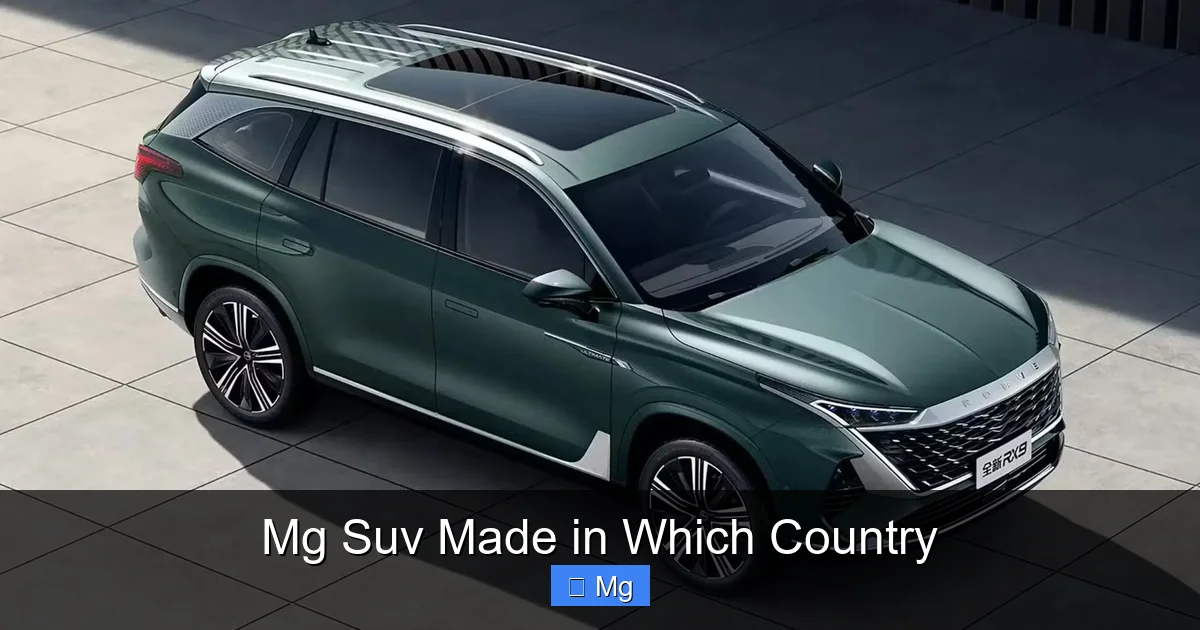
Visual guide about Mg Suv Made in Which Country
Image source: res.cloudinary.com
MG SUVs are not made in just one country. Instead, SAIC Motor employs a decentralized manufacturing model, building vehicles in multiple locations to serve regional markets efficiently. This approach reduces shipping costs, avoids high import duties, and allows MG to respond quickly to local demand.
The primary manufacturing hub for MG SUVs is China. SAIC’s headquarters and main production facilities are located in Shanghai, where the majority of MG’s global models are designed and engineered. The Chinese plants produce vehicles not only for the domestic market but also for export to Europe, the Middle East, and Southeast Asia. For example, the MG HS and MG ZS are assembled in Shanghai and shipped worldwide.
India is another major production center for MG. The MG Motor India plant in Halol, Gujarat, began operations in 2019 and quickly became a key hub for the brand in South Asia. This facility assembles the MG Hector, MG Astor, and MG ZS EV specifically for the Indian market. Local production has allowed MG to price its SUVs competitively and avoid the high import taxes that would apply to fully built units.
Thailand plays a crucial role in MG’s ASEAN strategy. The MG Motor Thailand plant in Rayong produces the MG ZS and MG HS for Southeast Asian markets, including Thailand, Malaysia, Indonesia, and the Philippines. The plant benefits from Thailand’s strong automotive supply chain and favorable trade agreements.
Other countries with MG assembly operations include Pakistan, where the MG HS and ZS are assembled by JW-SEZ Group, and the UK, where MG vehicles are imported but not manufactured. However, SAIC has expressed interest in establishing a European production facility in the future to better serve the EU market and reduce reliance on imports.
Why Does MG Use Multiple Manufacturing Locations?
There are several strategic reasons behind MG’s global production network. First, local assembly helps the brand avoid steep import tariffs. For instance, India imposes high duties on fully imported vehicles, making it more economical to assemble cars locally. By setting up a plant in Gujarat, MG can offer the Hector and ZS at prices that compete with Japanese and Korean rivals.
Second, regional production improves supply chain efficiency. Parts and components can be sourced locally, reducing lead times and transportation costs. In Thailand, MG benefits from a mature automotive ecosystem with suppliers for everything from engines to electronics.
Third, local manufacturing supports job creation and strengthens MG’s relationship with host governments. In India, MG has partnered with local suppliers and invested in training programs, earning goodwill and regulatory support.
Finally, having multiple production sites reduces risk. If one facility faces disruptions—due to natural disasters, labor strikes, or geopolitical issues—others can pick up the slack. This resilience is crucial for a global brand like MG.
MG’s Chinese Roots and SAIC Motor’s Role
To understand where MG SUVs are made, it’s essential to recognize the central role of SAIC Motor. As one of China’s “Big Four” automakers, SAIC produces millions of vehicles annually under brands like Roewe, Maxus, and MG. The company has the resources, technology, and scale to support MG’s global ambitions.
SAIC acquired MG in 2005 after the collapse of the original MG Rover Group. At the time, MG was a struggling brand with limited production capacity. SAIC revitalized it by investing in new models, modern platforms, and global marketing. Today, MG operates as SAIC’s international brand, designed to appeal to younger, tech-savvy buyers.
All modern MG SUVs are developed using SAIC’s global vehicle platforms. For example, the MG ZS is based on the same platform as the Roewe RX3, while the MG HS shares architecture with the Roewe RX5. This platform-sharing strategy reduces development costs and speeds up time-to-market.
SAIC also leverages its Chinese supply chain to keep production costs low. Components like engines, transmissions, and electronics are often sourced from Chinese suppliers, even when vehicles are assembled abroad. This ensures consistency in quality and performance across markets.
Despite being Chinese-owned, MG maintains a distinct brand identity. The design language, marketing campaigns, and dealership experiences are tailored to reflect MG’s British heritage while embracing modern innovation. This blend of tradition and technology resonates with consumers in both emerging and mature markets.
Quality Control and Global Standards
One concern among buyers is whether MG SUVs made in different countries meet the same quality standards. SAIC addresses this through strict quality control protocols. Each MG plant follows the same global manufacturing standards, including ISO/TS 16949 certification for automotive quality management.
Vehicles are tested rigorously before leaving the factory. This includes crash tests, emissions checks, and durability trials. For example, the MG HS has received a 5-star safety rating from Global NCAP, demonstrating that safety is not compromised regardless of production location.
SAIC also conducts regular audits of its global facilities to ensure compliance. Engineers from China often oversee production in India and Thailand to maintain consistency. Additionally, MG offers comprehensive warranties—typically 5 years or 150,000 kilometers—across all markets, reinforcing confidence in build quality.
Popular MG SUV Models and Their Manufacturing Origins
Let’s take a closer look at some of MG’s most popular SUVs and where they are made.
MG ZS
The MG ZS is one of the brand’s best-selling models globally. It’s a compact SUV that offers a spacious interior, modern tech, and strong value. The ZS is produced in China, India, Thailand, and Pakistan.
In China, the ZS is manufactured at SAIC’s Shanghai plant and exported to Europe, Australia, and the Middle East. In India, it’s assembled in Halol and sold as both a petrol and electric variant (ZS EV). The Thai version is built in Rayong and tailored for ASEAN markets with right-hand drive configurations.
The ZS has been well-received for its bold design, 10.1-inch touchscreen, and advanced safety features. Its global availability makes it a flagship model for MG’s international expansion.
MG HS
The MG HS is a midsize SUV that competes with models like the Toyota RAV4 and Honda CR-V. It’s known for its premium interior, turbocharged engine, and long feature list.
The HS is primarily produced in China and Thailand. The Chinese version is exported to Europe and the Middle East, while the Thai plant supplies Southeast Asia. In the UK, the HS is imported from China but assembled in right-hand drive for local sale.
The HS has earned praise for its ride comfort and technology, including a 12.3-inch digital dashboard and adaptive cruise control. Its availability in multiple regions highlights MG’s commitment to serving diverse markets.
MG Hector
The MG Hector is a flagship SUV designed specifically for the Indian market. It’s one of the largest SUVs in its class and features a massive 10.4-inch vertical touchscreen, i-SMART connected car technology, and a panoramic sunroof.
The Hector is assembled exclusively in India at the Halol plant. It’s available with petrol, diesel, and mild-hybrid powertrains. The model has been a hit in India, selling over 100,000 units since its launch in 2019.
While the Hector is not sold globally, its success has influenced MG’s approach to regional customization. It shows how MG adapts its products to local tastes and infrastructure.
MG ZS EV
The MG ZS EV is one of the most affordable electric SUVs on the market. It offers a range of up to 461 km (WLTP) and fast-charging capability.
The ZS EV is produced in China, India, and Thailand. In Europe, it’s imported from China, while in India and Thailand, it’s assembled locally. The Indian version benefits from government incentives for electric vehicles, making it more accessible.
The ZS EV has helped MG establish itself as a leader in affordable EVs. Its global production ensures that customers in different regions can access clean mobility without paying a premium.
Regional Assembly: Benefits for Consumers and Markets
Local assembly of MG SUVs brings several advantages to both consumers and host countries.
For buyers, regional production means lower prices. Import duties can add 20–60% to a vehicle’s cost, depending on the country. By assembling SUVs locally, MG avoids these fees and passes the savings to customers. For example, the MG Hector in India is priced competitively against the Hyundai Creta and Kia Seltos, despite offering more features.
Local assembly also improves after-sales support. Spare parts are more readily available, and service networks can be established faster. In Thailand, MG has partnered with local dealers to offer maintenance packages and roadside assistance, enhancing customer satisfaction.
From an economic perspective, MG’s investments create jobs and stimulate local industries. The Halol plant in India employs over 2,000 people and sources components from Indian suppliers. Similarly, the Thai plant supports hundreds of indirect jobs in logistics and services.
Moreover, regional production allows MG to tailor vehicles to local conditions. In India, the Hector features a higher ground clearance and reinforced suspension for rough roads. In Thailand, the ZS includes sunshades and enhanced cooling for tropical climates.
Challenges of Global Manufacturing
Despite the benefits, global production comes with challenges. Managing quality across multiple plants requires constant oversight. Cultural and language barriers can complicate coordination between SAIC’s Chinese headquarters and overseas teams.
Supply chain disruptions are another risk. The COVID-19 pandemic and semiconductor shortages affected production in India and Thailand, leading to delivery delays. MG has since diversified its supplier base to reduce dependency on single sources.
Additionally, brand perception can vary by region. In Europe, MG is seen as a value brand, while in India, it’s positioned as a premium alternative. Balancing these perceptions while maintaining a consistent global image is an ongoing challenge.
The Future of MG SUV Production
MG is not resting on its laurels. The brand is actively expanding its production footprint to meet growing demand.
One major goal is to establish a manufacturing facility in Europe. SAIC has explored sites in Spain and Hungary, aiming to produce MG SUVs locally for the EU market. This would reduce shipping costs, avoid Brexit-related tariffs, and strengthen MG’s presence in Western Europe.
In Latin America, MG has partnered with local distributors to assemble vehicles in Mexico and Brazil. These efforts are still in early stages but signal MG’s ambition to become a truly global automaker.
Electric vehicles will play a key role in MG’s future. The brand plans to launch more EVs and plug-in hybrids, with production localized where possible. For example, the upcoming MG4 EV will be assembled in China and exported globally, with potential for local assembly in key markets.
SAIC is also investing in smart manufacturing technologies, such as AI-driven quality control and automated assembly lines. These innovations will improve efficiency and consistency across all MG plants.
Sustainability and Green Manufacturing
As environmental concerns grow, MG is focusing on sustainable production. The Halol plant in India uses solar power and rainwater harvesting to reduce its carbon footprint. SAIC has committed to achieving carbon neutrality across its operations by 2050.
MG’s shift to electric vehicles aligns with global trends toward clean mobility. By producing EVs locally, the brand reduces transportation emissions and supports regional green energy goals.
How to Know Where Your MG SUV Was Made
If you’re considering buying an MG SUV, it’s helpful to know where it was manufactured. This information can affect warranty coverage, parts availability, and resale value.
The easiest way to find out is by checking the Vehicle Identification Number (VIN). The first character of the VIN indicates the country of origin:
– L = China
– M = India
– T = Thailand
– P = Pakistan
For example, a VIN starting with “L” means the vehicle was made in China. You can decode the full VIN using online tools or ask your dealer for details.
You can also look at the vehicle’s documentation. The owner’s manual and warranty booklet usually specify the manufacturing country. Additionally, the door jamb sticker often lists the assembly plant.
Knowing the origin can help you make an informed decision. For instance, if you’re in Europe, a vehicle made in China may have different emissions standards than one assembled in the UK. In India, a locally made Hector may have better service support than an imported model.
Conclusion: MG’s Global Manufacturing Strategy
MG SUVs are made in multiple countries, with China, India, and Thailand leading the way. This global production model allows MG to offer affordable, high-quality vehicles tailored to regional markets. Backed by SAIC Motor’s resources and technology, MG has successfully revived a British icon for the modern age.
From the compact ZS to the spacious Hector, MG SUVs combine style, technology, and value. Local assembly reduces costs, supports economies, and improves customer service. As MG expands into new regions and embraces electric mobility, its manufacturing network will continue to evolve.
Whether you’re buying an MG in London, Mumbai, or Bangkok, you’re getting a vehicle designed for global appeal and built with local relevance. The next time someone asks, “MG SUV made in which country?” you’ll know the answer isn’t simple—but that’s exactly what makes MG a truly international brand.
Frequently Asked Questions
Where are MG SUVs primarily manufactured?
MG SUVs are primarily manufactured in China by SAIC Motor, with major production hubs in Shanghai. However, they are also assembled in India, Thailand, and Pakistan to serve regional markets.
Is MG still a British brand?
MG has British origins but is now owned by Chinese automaker SAIC Motor. While it retains its British heritage in branding, all modern MG vehicles are designed and engineered under Chinese ownership.
Are MG SUVs made in India?
Yes, MG SUVs like the Hector, Astor, and ZS EV are assembled in India at the MG Motor plant in Halol, Gujarat. This local production helps keep prices competitive and supports the Indian market.
Do all MG SUVs meet the same quality standards?
Yes, all MG SUVs are built to the same global quality standards. SAIC Motor ensures consistency through strict quality control, regular audits, and international certifications across all manufacturing plants.
Can I find out where my MG SUV was made?
Yes, you can check the Vehicle Identification Number (VIN). The first character indicates the country of origin—L for China, M for India, T for Thailand, and P for Pakistan.
Will MG open manufacturing plants in Europe?
MG has expressed plans to establish a production facility in Europe, possibly in Spain or Hungary, to better serve the EU market and reduce import costs. However, no official launch date has been announced yet.