
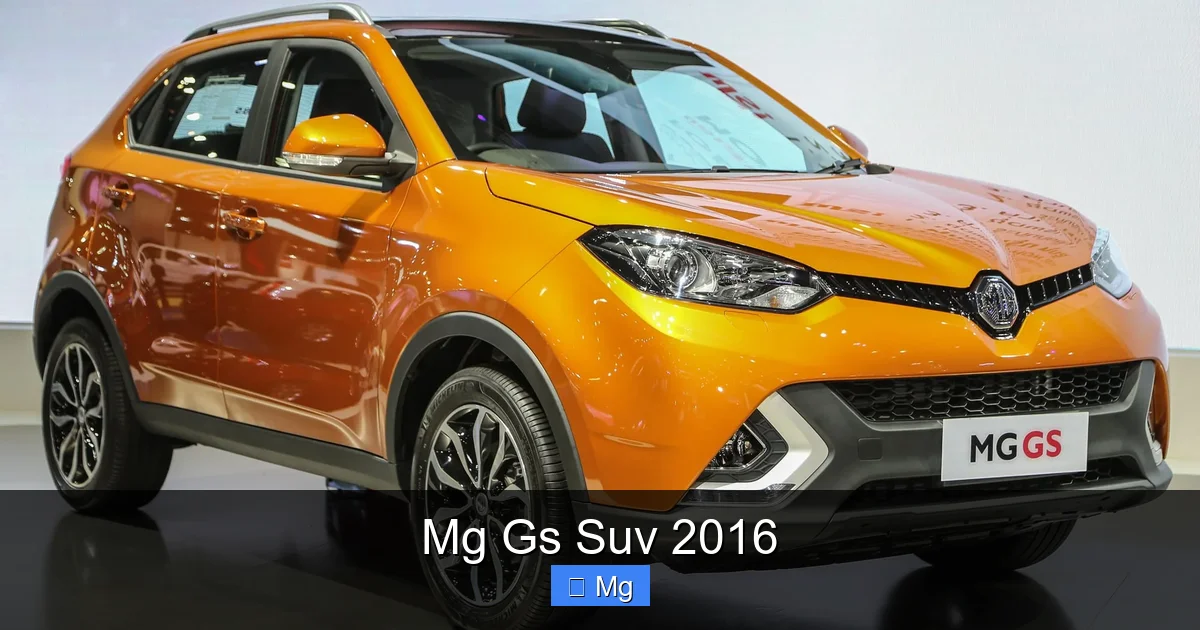
The 2016 MG GS SUV combines bold design, practical space, and reliable performance at an accessible price point. As MG’s first modern SUV, it marked the brand’s strong return to the global market with a vehicle built for everyday comfort and weekend adventures.
The 2016 MG GS SUV arrived with a mission: to reintroduce the MG brand as a serious player in the competitive crossover market. After years of dormancy, MG—now owned by China’s SAIC Motor—unveiled the GS as its first modern SUV, targeting young families, urban commuters, and weekend adventurers. With its bold styling, practical interior, and wallet-friendly price tag, the GS quickly stood out in a segment crowded with well-established names like the Nissan Qashqai, Renault Kadjar, and Hyundai Tucson.
What made the 2016 MG GS SUV particularly appealing was its balance of style and substance. It didn’t try to be a luxury vehicle or an off-road beast. Instead, it focused on delivering everyday usability, modern features, and a driving experience that felt confident on both city streets and country roads. Whether you were dropping kids at school, loading up for a camping trip, or cruising down the highway, the GS offered a comfortable and reliable ride.
Key Takeaways
- First Modern MG SUV: The 2016 MG GS was MG’s re-entry into the SUV segment, signaling the brand’s revival under Chinese ownership.
- Affordable Pricing: Positioned as a budget-friendly crossover, it offered strong value compared to rivals like the Nissan Qashqai and Hyundai Tucson.
- Two Engine Options: Buyers could choose between a 1.5L turbo petrol or a 2.0L turbo petrol engine, both paired with manual or automatic transmissions.
- Spacious Interior: Despite its compact exterior, the GS delivered generous legroom and cargo space, making it ideal for families.
- Modern Tech Features: Included touchscreen infotainment, Bluetooth, rearview camera, and optional panoramic sunroof.
- Safety Ratings: Earned a 4-star Euro NCAP rating, with standard ABS, airbags, and electronic stability control.
- Stylish Design: Aggressive front grille, sharp lines, and LED daytime running lights gave it a bold, contemporary look.
📑 Table of Contents
Design and Exterior Styling
The 2016 MG GS SUV made an immediate visual impact with its aggressive, sporty design. At first glance, it looked more expensive than its price suggested. The front end featured a large, chrome-accented grille shaped like a shield—a signature MG design cue—flanked by sharp LED daytime running lights that gave the vehicle a wide, planted stance. The sculpted hood and bold character lines running along the sides added a sense of motion, even when the car was parked.
Available in a range of vibrant colors like Starlight Silver, Arctic White, and Mars Red, the GS allowed buyers to express their personality. The roof rails and 18-inch alloy wheels (on higher trims) added a rugged touch, hinting at its crossover versatility. Rear styling was equally modern, with LED taillights and a dual exhaust setup that emphasized its sporty character.
One of the standout design elements was the panoramic sunroof, available on the top-tier models. Not only did it flood the cabin with natural light, but it also gave the GS a premium feel rarely seen in this price range. The high ground clearance—around 180mm—gave it a commanding view of the road and added to its SUV credibility, even if it wasn’t meant for serious off-roading.
Color Options and Trim Levels
The 2016 MG GS SUV was offered in three main trim levels: the base Comfort, mid-level Luxury, and top-spec Exclusive. Each trim added more features and visual enhancements. The Comfort model came with 17-inch steel wheels and basic interior materials, while the Luxury and Exclusive trims upgraded to 18-inch alloys, leather-wrapped steering wheels, and upgraded upholstery.
Color choices were designed to appeal to a broad audience. Neutral tones like Silver and White were popular for their resale value and clean look, while bolder options like Mars Red and Electric Blue attracted younger buyers looking for something eye-catching. The two-tone roof option on higher trims added a touch of flair, making the GS stand out in parking lots and traffic.
Interior Comfort and Practicality
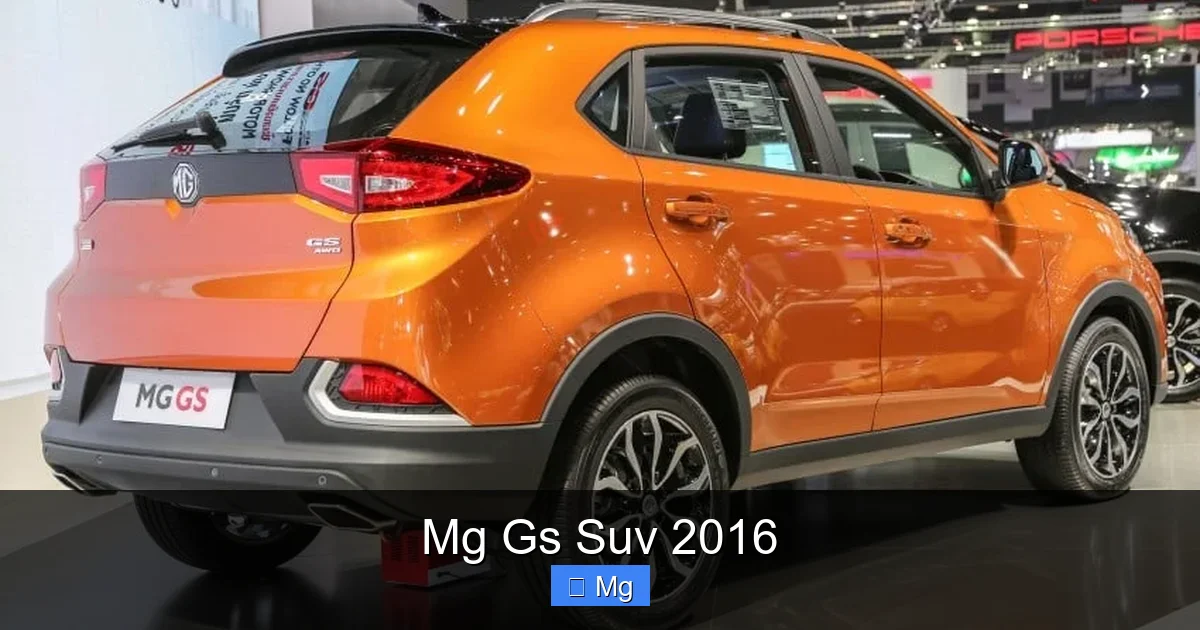
Visual guide about Mg Gs Suv 2016
Image source: paultan.org
Step inside the 2016 MG GS SUV, and you’re greeted by a cabin that feels surprisingly spacious for a compact crossover. The dashboard layout was clean and driver-focused, with easy-to-reach controls and a logical arrangement of buttons and dials. Soft-touch materials were used on the upper dashboard and door panels, giving the interior a more premium feel than expected.
Seating was comfortable for all five passengers, with supportive front seats and ample legroom in the back. Tall passengers could sit comfortably without feeling cramped, thanks to the generous headroom and well-designed seat contours. The rear bench split 60/40 and could be folded flat to expand the cargo area—a practical feature for hauling luggage, groceries, or sports gear.
Cargo space was one of the GS’s strong points. With the rear seats up, it offered around 463 liters of boot space—comparable to rivals like the Nissan Qashqai. Folding the seats down increased that to over 1,400 liters, making it easy to load large items like bicycles or camping equipment. The low loading lip and wide opening made it simple to lift heavy bags in and out.
Storage Solutions and Ergonomics
MG didn’t skimp on small storage details. The center console had a deep storage bin, perfect for phones, wallets, or sunglasses. Cup holders were well-placed in the front and rear, and door pockets were large enough to hold water bottles or maps. The glove compartment was spacious and lined to reduce noise.
The driver’s seat offered a high seating position, which many SUV buyers prefer for better visibility. The steering wheel was adjustable for tilt and reach, helping drivers find a comfortable driving posture. All controls—from the climate system to the audio buttons—were within easy reach, reducing distraction while driving.
One minor critique was the use of some hard plastics on lower trims, especially around the center console and lower doors. However, this was expected given the GS’s budget positioning. Higher trims mitigated this with more soft-touch surfaces and leather accents.
Engine Options and Performance
The 2016 MG GS SUV offered two turbocharged petrol engines, both designed to deliver a balance of power and efficiency. The base engine was a 1.5-liter turbocharged four-cylinder producing 169 horsepower and 250 Nm of torque. It was paired with either a 6-speed manual or a 7-speed dual-clutch automatic transmission. This engine was well-suited for city driving and highway cruising, offering smooth acceleration and decent fuel economy.
The more powerful option was the 2.0-liter turbocharged engine, delivering 218 horsepower and 350 Nm of torque. It came exclusively with a 6-speed automatic transmission and was available only on higher trims. This engine provided stronger performance, especially when merging onto highways or climbing hills, and gave the GS a more confident feel on open roads.
Both engines were responsive and refined for their class. The 1.5L was quieter and more fuel-efficient, making it ideal for daily commutes. The 2.0L, while thirstier, offered a sportier driving experience with quicker throttle response and better overtaking ability.
Driving Dynamics and Handling
The GS was built on a front-wheel-drive platform, with all-wheel drive available on the 2.0L models. While not designed for serious off-roading, the AWD system improved traction in wet or slippery conditions, adding peace of mind during rainy seasons or light gravel roads.
Suspension was tuned for comfort, absorbing bumps and potholes with minimal harshness. The ride quality was smooth and composed, making long drives enjoyable. Steering was light and precise at low speeds, perfect for city maneuvering, but firmed up at higher speeds for better stability.
Braking performance was solid, with disc brakes on all four wheels and electronic brake-force distribution. The GS felt stable and predictable in corners, though it wasn’t as agile as some sportier crossovers. Overall, the driving experience was relaxed and confidence-inspiring—exactly what most SUV buyers want.
Fuel Economy and Emissions
Fuel efficiency varied depending on the engine and transmission. The 1.5L manual achieved around 6.5 L/100km (approximately 36 mpg) in combined driving, making it one of the more economical options in its class. The 1.5L automatic was slightly less efficient at around 7.0 L/100km (34 mpg), while the 2.0L automatic consumed about 8.5 L/100km (27 mpg).
Emissions were in line with Euro 6 standards, making the GS a relatively clean choice for a petrol SUV. The 1.5L engine produced around 150 g/km of CO2, qualifying it for lower road tax bands in many European countries.
Technology and Infotainment
The 2016 MG GS SUV came well-equipped with modern technology, especially considering its price. The centerpiece was a 7-inch touchscreen infotainment system (on higher trims), which supported Bluetooth connectivity, USB/AUX inputs, and smartphone integration. While it didn’t offer Apple CarPlay or Android Auto—a common omission in 2016—it did include voice control for phone and audio functions.
The system was intuitive to use, with large icons and responsive touch inputs. Navigation was available as an optional extra, though many buyers relied on their smartphones for GPS. The sound system was adequate for most users, with six speakers providing clear audio. Higher trims offered an upgraded audio system with better bass and clarity.
Safety and Driver Assistance Features
Safety was a priority for MG, and the 2016 GS earned a 4-star Euro NCAP rating. Standard safety features included dual front airbags, side airbags, curtain airbags, ABS with EBD, electronic stability control (ESC), and traction control. The rearview camera, standard on most trims, made parking and reversing much easier, especially in tight spaces.
Higher trims added features like rear parking sensors, tire pressure monitoring, and automatic headlights. While it lacked advanced driver aids like adaptive cruise control or lane-keeping assist—common in newer models—the GS offered a solid foundation of passive and active safety systems.
The high-strength steel body structure and crumple zones helped protect occupants in the event of a collision. Child seat anchors (ISOFIX) were standard, making it a practical choice for families.
Convenience Features
The GS included several convenience features that enhanced daily usability. Keyless entry and push-button start were available on higher trims, adding a touch of modern luxury. Dual-zone automatic climate control allowed driver and passenger to set their preferred temperatures, while rear air vents kept backseat passengers comfortable.
The panoramic sunroof was a standout feature, flooding the cabin with light and creating an airy atmosphere. Rain-sensing wipers and automatic headlights added convenience, especially during unpredictable weather.
Ownership Experience and Reliability
One of the biggest selling points of the 2016 MG GS SUV was its affordability—not just at purchase, but over time. The initial price was competitive, often undercutting rivals by several thousand dollars. Combined with low insurance group ratings and reasonable maintenance costs, it offered excellent value for money.
MG backed the GS with a 5-year/100,000-mile warranty, which was one of the best in the industry at the time. This gave buyers confidence in the vehicle’s long-term reliability and reduced the fear of unexpected repair costs.
Maintenance and Running Costs
Routine maintenance was straightforward and affordable. Service intervals were every 10,000 miles or 12 months, and parts were generally inexpensive compared to premium brands. Common services like oil changes, brake pads, and tire replacements were priced competitively.
Fuel costs were manageable, especially with the 1.5L engine. Insurance premiums were moderate, typically falling into group 15–20 depending on trim and driver profile. Depreciation was relatively slow for the first few years, helping owners retain more value when reselling.
Common Issues and Owner Feedback
While the GS was generally reliable, some owners reported minor issues. Early models occasionally had glitches with the infotainment system, such as freezing screens or Bluetooth pairing problems. These were usually resolved with software updates.
A few drivers noted that the 1.5L engine could feel underpowered when fully loaded or driving uphill, especially with the automatic transmission. The 2.0L engine addressed this but came with higher fuel consumption.
Build quality was solid overall, though some interior plastics showed wear over time. Rust protection was good, and there were no widespread reports of major mechanical failures.
Owner reviews were largely positive, praising the GS for its value, space, and comfort. Many appreciated the bold design and modern features, especially at the price point. Some wished for more advanced tech and a more refined ride, but most agreed it was a smart choice for budget-conscious buyers.
Pricing and Value for Money
When it launched in 2016, the MG GS SUV was priced from around £17,000 in the UK, making it one of the most affordable crossovers in its class. Even the top-spec Exclusive model stayed under £23,000, undercutting rivals like the Nissan Qashqai and Hyundai Tucson by a significant margin.
Used prices have remained stable, with 2016 models typically available for £8,000–£12,000 depending on mileage, condition, and trim. This strong residual value reflects the GS’s popularity and reliability.
Comparison with Competitors
Compared to the Nissan Qashqai, the GS offered more standard features and a larger boot, though the Qashqai had a more refined ride and better brand reputation. Against the Renault Kadjar, the GS was similarly priced but offered more powerful engine options and a bolder design.
The Hyundai Tucson was more expensive but came with a longer warranty and more advanced safety tech. The MG GS won on value, offering nearly as much for less money.
Who Should Buy the 2016 MG GS SUV?
The 2016 MG GS SUV is ideal for:
– First-time SUV buyers looking for affordability
– Small families needing space and practicality
– Commuters wanting a comfortable, reliable daily driver
– Budget-conscious buyers who don’t want to sacrifice style or features
It’s less suited for those seeking luxury interiors, cutting-edge tech, or off-road capability. But for everyday use, it delivers impressive value.
Conclusion
The 2016 MG GS SUV was a bold statement from a brand making its comeback. It combined stylish design, practical space, and modern features at a price that undercut the competition. While it wasn’t perfect—lacking some advanced tech and refinement—it offered exceptional value for money and helped reestablish MG as a serious player in the automotive world.
Whether you’re looking for a reliable family car, a comfortable commuter, or a weekend adventure vehicle, the MG GS SUV 2016 delivers where it counts. With its strong warranty, low running costs, and appealing design, it remains a smart choice for budget-savvy buyers who want more for less.
Frequently Asked Questions
What engines are available in the 2016 MG GS SUV?
The 2016 MG GS SUV offers two turbocharged petrol engines: a 1.5L with 169 hp and a 2.0L with 218 hp. Both are available with manual or automatic transmissions, depending on the trim.
Is the 2016 MG GS SUV safe?
Yes, it earned a 4-star Euro NCAP safety rating. It comes with standard ABS, airbags, ESC, and a rearview camera, providing solid protection for occupants.
How much cargo space does the MG GS have?
The GS offers 463 liters of boot space with the rear seats up and over 1,400 liters with them folded down, making it practical for families and travelers.
Does the 2016 MG GS have Apple CarPlay or Android Auto?
No, the 2016 model does not support Apple CarPlay or Android Auto. It includes Bluetooth and USB connectivity but relies on built-in or smartphone navigation.
What is the fuel economy of the 1.5L MG GS?
The 1.5L engine achieves around 6.5–7.0 L/100km (34–36 mpg) in combined driving, depending on the transmission and driving conditions.
Is the MG GS 2016 reliable?
Generally yes. It comes with a 5-year warranty and has few major mechanical issues. Minor infotainment glitches have been reported but are usually fixable with updates.