
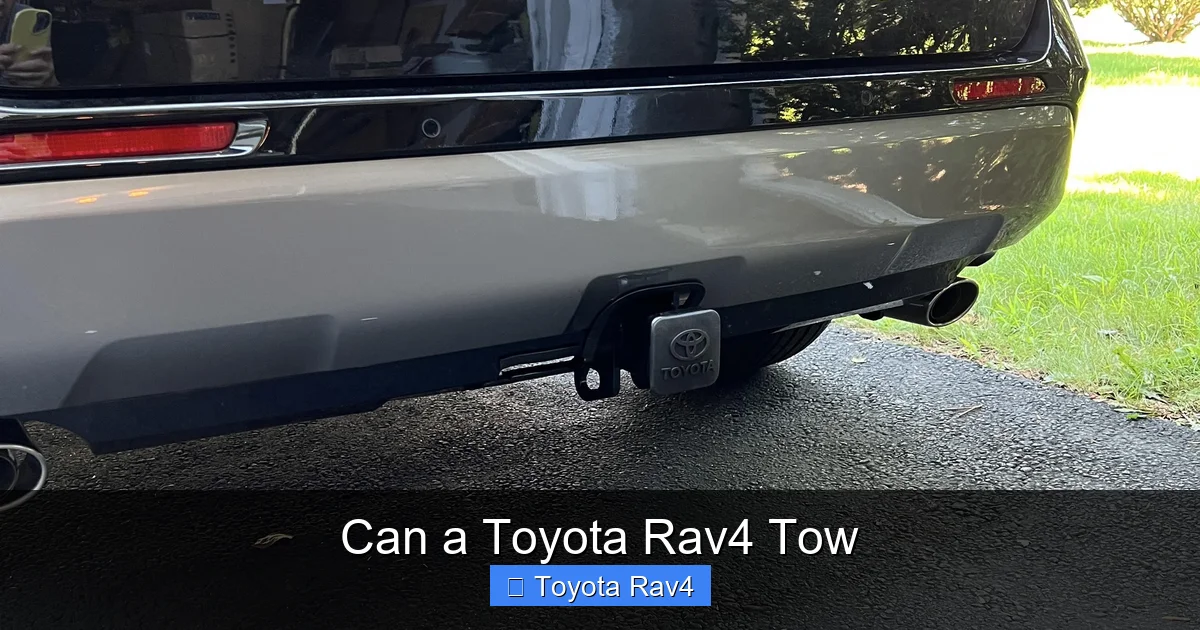
The Toyota RAV4 can tow, but its capacity varies by model year, engine type, and drivetrain. Most modern RAV4s with the 2.5L four-cylinder engine can tow between 1,500 and 3,500 pounds when properly equipped. Always check your owner’s manual and use the right towing gear for safety and performance.
Key Takeaways
- Towing capacity ranges from 1,500 to 3,500 pounds: The RAV4’s towing ability depends on the model year, engine, and whether it’s front-wheel drive (FWD) or all-wheel drive (AWD).
- Hybrid models have lower towing limits: RAV4 Hybrid versions typically max out at 1,750 pounds, while gas-only models can reach up to 3,500 pounds.
- Proper equipment is essential: A tow hitch, wiring harness, and transmission cooler (if needed) are required to safely tow with your RAV4.
- Weight distribution matters: Use a weight-distributing hitch for heavier loads and never exceed the vehicle’s gross combined weight rating (GCWR).
- Fuel efficiency drops when towing: Expect reduced gas mileage when hauling, especially in stop-and-go traffic or uphill terrain.
- Check your owner’s manual: Always refer to Toyota’s official guidelines for your specific trim and model year before towing.
- Not all RAV4s are built to tow: Older models or base trims may lack the necessary cooling systems or structural support for towing.
📑 Table of Contents
- Can a Toyota RAV4 Tow? Everything You Need to Know
- Understanding Towing Capacity: What Does It Mean?
- Toyota RAV4 Towing Capacity by Model Year and Trim
- What Can You Actually Tow with a RAV4?
- Essential Towing Equipment for Your RAV4
- Safety Tips for Towing with a RAV4
- Fuel Economy and Maintenance When Towing
- Common Mistakes to Avoid
- Conclusion: Is the RAV4 Right for Your Towing Needs?
Can a Toyota RAV4 Tow? Everything You Need to Know
If you’re considering buying a Toyota RAV4—or you already own one—you might be wondering: can a Toyota RAV4 tow? It’s a smart question, especially if you’re planning weekend adventures with a small camper, a jet ski, or even a utility trailer full of gear. The short answer is yes, many RAV4 models can tow, but there are important details to understand before you hitch up and hit the road.
The Toyota RAV4 is one of the most popular compact SUVs on the market, known for its reliability, fuel efficiency, and versatility. But when it comes to towing, not all RAV4s are created equal. Towing capacity depends on several factors, including the engine type, drivetrain, model year, and whether the vehicle is equipped with the proper towing package. While the RAV4 isn’t designed to haul heavy trailers like a full-size pickup, it can handle light to moderate loads with the right setup.
In this guide, we’ll break down exactly what you need to know about towing with a Toyota RAV4. From understanding your vehicle’s limits to choosing the right equipment and staying safe on the road, we’ve got you covered. Whether you’re towing a small pop-up camper, a motorcycle trailer, or just hauling firewood, this article will help you make informed decisions and get the most out of your RAV4.
Understanding Towing Capacity: What Does It Mean?
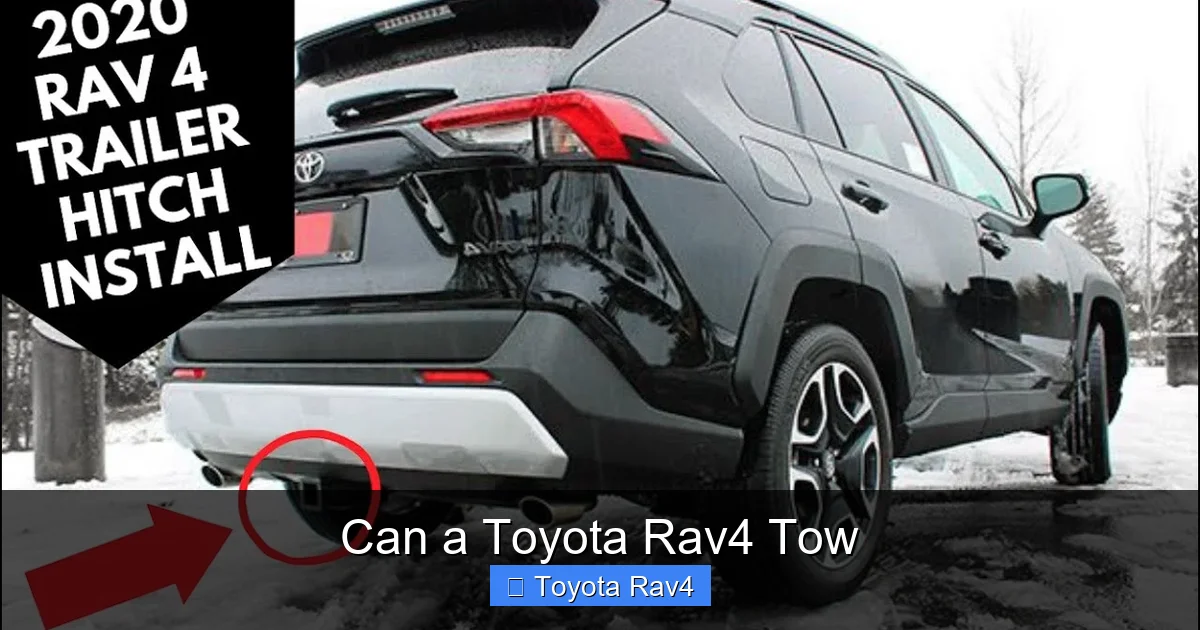
Visual guide about Can a Toyota Rav4 Tow
Image source: i.ytimg.com
Before diving into the specifics of the RAV4’s towing ability, it’s important to understand what “towing capacity” actually means. In simple terms, towing capacity is the maximum weight your vehicle can safely pull behind it. This includes the weight of the trailer itself plus everything inside it—gear, water, fuel, passengers, and more.
Toyota specifies towing capacity based on rigorous testing and engineering standards. However, this number isn’t a suggestion—it’s a hard limit. Exceeding your RAV4’s towing capacity can lead to serious problems, including brake failure, transmission overheating, suspension damage, and loss of vehicle control.
There are a few key terms to know:
– **Towing Capacity:** The maximum weight your vehicle can pull.
– **Gross Vehicle Weight Rating (GVWR):** The maximum total weight your vehicle can safely carry, including passengers, cargo, and fuel.
– **Gross Combined Weight Rating (GCWR):** The total weight of your vehicle plus the trailer and its contents.
– **Tongue Weight:** The downward force exerted on the hitch by the trailer. Ideally, this should be 10–15% of the total trailer weight.
When determining if your RAV4 can tow a specific load, you need to consider all these factors—not just the towing capacity. For example, if your RAV4 has a 3,500-pound towing capacity but your trailer weighs 3,200 pounds and you’re carrying 800 pounds of gear inside the SUV, you could be overloading the vehicle even if the trailer itself is under the limit.
Why Towing Capacity Varies by Model
Not every RAV4 can tow the same amount. Toyota adjusts towing ratings based on the vehicle’s configuration. Here’s why:
– **Engine Type:** The RAV4 has used different engines over the years. The current 2.5L four-cylinder engine (found in most 2019–2024 models) is more powerful than older 2.0L or 2.4L engines, allowing for higher towing capacity.
– **Drivetrain:** All-wheel drive (AWD) models generally have better traction and stability when towing, which can support higher capacity ratings compared to front-wheel drive (FWD) versions.
– **Transmission and Cooling:** Vehicles equipped with a tow package often include an upgraded transmission cooler and enhanced cooling systems, which help prevent overheating during heavy use.
– **Model Year:** Older RAV4s (pre-2013) typically have lower towing limits, often capped at 1,500 pounds. Newer models, especially those from 2019 onward, can reach up to 3,500 pounds.
Toyota RAV4 Towing Capacity by Model Year and Trim
Let’s take a closer look at how much a Toyota RAV4 can tow depending on the year and configuration. This information is based on official Toyota specifications, but always double-check your owner’s manual for your exact vehicle.
2013–2018 Toyota RAV4
During this generation, the RAV4 was available with a 2.5L four-cylinder engine and either FWD or AWD. Towing capacity was modest:
– **FWD Models:** 1,500 pounds
– **AWD Models:** 1,500 pounds (some trims with tow package could reach 2,000 pounds)
Note: The RAV4 Hybrid was introduced in 2016. Hybrid models from this era had a towing capacity of **1,750 pounds**, regardless of drivetrain.
2019–2024 Toyota RAV4 (Fifth Generation)
The current generation RAV4 brought significant improvements in power and capability. The standard 2.5L Dynamic Force four-cylinder engine delivers 203 horsepower (in gas models), allowing for higher towing ratings.
– **Gas Models (FWD):** 1,500 pounds
– **Gas Models (AWD):** Up to 3,500 pounds (when equipped with the factory tow package)
– **RAV4 Hybrid (AWD only):** 1,750 pounds
– **RAV4 Prime (Plug-in Hybrid):** 2,500 pounds
The jump to 3,500 pounds for AWD gas models is a big deal. This means you can tow small campers, teardrop trailers, or even a small boat with confidence—provided you have the right equipment.
Which Trims Can Tow the Most?
Not every RAV4 trim comes ready to tow. In the 2019–2024 lineup, the higher trims (like XLE, XLE Premium, Limited, and Adventure) are more likely to offer the tow package as an option or standard feature. The base LE trim, especially in FWD, typically maxes out at 1,500 pounds.
The **RAV4 Adventure** and **TRD Off-Road** trims are particularly well-suited for towing. These models come standard with AWD, a more robust suspension, and often include the tow package. They’re designed for outdoor enthusiasts who want to haul gear to remote campsites or trailheads.
What Can You Actually Tow with a RAV4?
Now that you know the numbers, let’s talk about real-world applications. What kinds of trailers and loads can a Toyota RAV4 handle?
Small Campers and Teardrop Trailers
One of the most popular uses for RAV4 towing is hauling small campers. Teardrop trailers, pop-up campers, and lightweight travel trailers under 3,000 pounds are ideal matches.
For example:
– A **Little Guy Trailers Mini Max** weighs around 2,200 pounds and is perfect for a RAV4 with 3,500-pound capacity.
– A **Basecamp by Airstream** (2,600 pounds) can also be towed safely, but you’ll want to keep cargo inside the RAV4 light to avoid exceeding the GCWR.
Always check the trailer’s dry weight (empty weight) and add the weight of water tanks, batteries, and gear to get the true loaded weight.
Boats and Jet Skis
If you’re into water sports, the RAV4 can handle small boats and personal watercraft.
– A **single jet ski** on a lightweight trailer typically weighs 800–1,200 pounds—well within the RAV4’s range.
– A **small aluminum fishing boat** (14–16 feet) with motor and gear might weigh 1,500–2,500 pounds, depending on size and equipment.
Just remember: launching and retrieving a boat requires extra care. Wet ramps can be slippery, and the added weight affects braking and steering.
Utility and Cargo Trailers
Need to move furniture, landscaping materials, or equipment? A RAV4 can tow a small utility trailer with ease.
– A **4×6 enclosed trailer** might weigh 1,000 pounds empty and can carry another 1,500 pounds of cargo.
– A **landscape trailer** loaded with mulch, soil, or plants can be managed as long as the total weight stays under your RAV4’s limit.
Tip: Distribute weight evenly in the trailer. Heavier items should be placed over the axles, not at the front or back.
Motorcycles and ATVs
Hauling two motorcycles or a single ATV is a common use case. Most motorcycle trailers weigh under 1,000 pounds fully loaded, making them a great fit for even the lower-capacity RAV4 models.
Just make sure to secure the bikes properly with wheel chocks and tie-down straps. A sudden stop could shift the load and damage your vehicle or trailer.
Essential Towing Equipment for Your RAV4
You can’t just hook up a trailer and go. To tow safely and legally, you need the right equipment. Here’s what every RAV4 owner should consider before towing.
Tow Hitch and Receiver
A tow hitch is the metal assembly that attaches to your vehicle’s frame and accepts a ball mount. Most RAV4s require a Class III hitch, which can handle up to 5,000 pounds—more than enough for the RAV4’s max capacity.
You can buy a hitch from Toyota or aftermarket brands like Curt, Draw-Tite, or Reese. Professional installation is recommended to ensure it’s securely mounted.
Ball Mount and Hitch Ball
The ball mount slides into the hitch receiver, and the hitch ball (usually 2 inches) connects to the trailer coupler. Choose a ball size that matches your trailer’s coupler.
For heavier loads, consider a **weight-distributing hitch**, which uses spring bars to spread the tongue weight across all four tires. This improves stability and reduces sway.
Wiring Harness
To power the trailer’s brake lights, turn signals, and running lights, you’ll need a wiring harness. Toyota offers a plug-and-play harness that connects to the RAV4’s taillight assembly.
Never splice wires yourself—use a proper harness to avoid electrical issues or voiding your warranty.
Transmission Cooler (If Needed)
Towing puts extra strain on your transmission. While many newer RAV4s come with a transmission cooler as part of the tow package, older models may not.
If you’re towing frequently or in hot climates, consider adding an auxiliary transmission cooler. This helps prevent overheating and extends the life of your transmission.
Brake Controller (For Trailers with Electric Brakes)
If your trailer has electric brakes (common on campers over 1,500 pounds), you’ll need a brake controller inside the RAV4. This device lets you manually activate the trailer brakes and adjust their sensitivity.
The RAV4 doesn’t come with a built-in brake controller, so you’ll need to install an aftermarket unit like the Tekonsha Primus IQ or Redarc Tow-Pro.
Safety Tips for Towing with a RAV4
Towing safely is just as important as having the right equipment. Here are some essential tips to keep you and others safe on the road.
Check Your Load
Before you leave, do a quick walk-around:
– Is the trailer properly hitched and locked?
– Are the safety chains crossed and attached?
– Are the lights working?
– Is the load balanced and secure?
Use a bathroom scale to check tongue weight if possible. Aim for 10–15% of the total trailer weight.
Adjust Your Driving
Towing changes how your RAV4 handles. Expect:
– Longer stopping distances
– Reduced acceleration
– Increased sway in wind or on uneven roads
Drive slower than usual, especially on curves, hills, and highways. Leave extra space between you and other vehicles.
Use Trailer Sway Control
If your trailer starts to fishtail, don’t panic. Ease off the accelerator—don’t brake hard. If you have a weight-distributing hitch or sway control system, it may automatically correct the movement.
Avoid sudden steering inputs. Let the trailer settle before making adjustments.
Monitor Temperature Gauges
Keep an eye on your engine and transmission temperature, especially when climbing hills or towing in hot weather. If the temperature rises, pull over and let the engine cool.
Practice Before You Go
If you’ve never towed before, practice in an empty parking lot. Try backing up, turning, and stopping with the trailer attached. It takes time to get used to the extra length and weight.
Fuel Economy and Maintenance When Towing
Towing affects more than just performance—it also impacts your wallet and your vehicle’s longevity.
Fuel Efficiency Drops
Expect a noticeable decrease in fuel economy when towing. A RAV4 that normally gets 30 mpg might drop to 18–22 mpg when hauling a 2,500-pound trailer.
Factors that reduce mileage:
– Aerodynamic drag from the trailer
– Extra weight
– Frequent acceleration and braking
Plan for more frequent fuel stops and budget accordingly.
Increased Wear and Tear
Towing puts stress on your engine, transmission, brakes, and suspension. To keep your RAV4 in top shape:
– Change the oil more frequently (every 3,000–5,000 miles when towing)
– Inspect brakes and tires regularly
– Check fluid levels before long trips
– Rotate tires and align wheels as recommended
Consider using synthetic oil, which handles heat better than conventional oil.
Warranty and Insurance
Towing within your vehicle’s limits won’t void your Toyota warranty, but improper towing might. Always follow the owner’s manual guidelines.
Also, check your auto insurance policy. Some policies require you to notify them if you plan to tow regularly, especially if the trailer is valuable.
Common Mistakes to Avoid
Even experienced drivers make towing errors. Here are some common pitfalls to watch out for.
Overloading the Trailer
It’s easy to pack too much. A trailer that’s “just under” the weight limit can still be unsafe if the load is unbalanced or the RAV4 is also full of passengers and gear.
Always calculate the total weight: trailer + cargo + vehicle + passengers + fuel.
Ignoring the Owner’s Manual
Every RAV4 is different. Don’t rely on general advice—check your specific model’s towing capacity in the owner’s manual or on the Toyota website.
Using the Wrong Hitch or Ball
A mismatched hitch or ball can cause the trailer to detach. Always use the correct size and weight rating.
Towing Without Proper Equipment
Don’t try to tow with just a ball and chains. You need lights, brakes (if required), and a secure connection.
Driving Too Fast
Speed increases sway and reduces control. Stick to posted speed limits and slow down in adverse conditions.
Conclusion: Is the RAV4 Right for Your Towing Needs?
So, can a Toyota RAV4 tow? Absolutely—but with caveats. The RAV4 is not a heavy-duty towing machine, but it’s more than capable of handling light to moderate loads when properly equipped. Whether you’re hauling a small camper, a jet ski, or a utility trailer, the RAV4 can get the job done safely and reliably.
The key is understanding your vehicle’s limits and preparing accordingly. Check your model year, engine, and drivetrain. Invest in the right towing equipment. And always prioritize safety over convenience.
For weekend adventurers, outdoor enthusiasts, and occasional haulers, the RAV4 strikes a great balance between efficiency and capability. It’s not meant to replace a truck, but for many drivers, it’s the perfect companion for life’s lighter adventures.
Before you tow, take the time to learn your RAV4’s specs, practice your skills, and plan your trips wisely. With the right approach, your RAV4 can be a trustworthy towing partner for years to come.
Frequently Asked Questions
Can a Toyota RAV4 tow a camper?
Yes, many RAV4 models can tow small campers, especially teardrop trailers and pop-up campers under 3,000 pounds. AWD gas models with the tow package can handle up to 3,500 pounds, making them suitable for lightweight travel trailers.
What is the towing capacity of a 2023 Toyota RAV4?
The 2023 RAV4 gas AWD models can tow up to 3,500 pounds when equipped with the factory tow package. FWD models are limited to 1,500 pounds, while the RAV4 Hybrid maxes out at 1,750 pounds.
Do I need a special package to tow with my RAV4?
Yes, to safely tow over 1,500 pounds, you’ll need the Toyota tow package, which includes a hitch receiver, wiring harness, and often a transmission cooler. Some trims include it standard, while others require it as an option.
Can the RAV4 Hybrid tow?
Yes, the RAV4 Hybrid can tow up to 1,750 pounds. While it has less capacity than gas-only models, it’s still capable of hauling small trailers, jet skis, or lightweight campers.
How do I increase my RAV4’s towing capacity?
You can’t increase the factory towing capacity, but you can ensure you’re towing safely by using proper equipment like a weight-distributing hitch, brake controller, and transmission cooler. Always stay within the rated limits.
Is it safe to tow with a Toyota RAV4?
Yes, as long as you stay within the vehicle’s towing capacity, use the correct equipment, and follow safe driving practices. The RAV4 is engineered to tow when properly equipped, but exceeding limits can lead to mechanical failure or accidents.