

The Toyota RAV4 is renowned for its durability, often lasting 200,000 to 300,000 miles or more with proper care. Regular maintenance, driving habits, and model year play key roles in how long your RAV4 will serve you reliably.
When it comes to buying a reliable SUV, few names come up as often as the Toyota RAV4. Since its debut in the mid-1990s, this compact crossover has built a rock-solid reputation for dependability, practicality, and long-term value. But how long does a Toyota RAV4 really last? If you’re considering purchasing one—or already own one and want to keep it running smoothly for years—you’re in the right place.
The short answer? With proper care, a Toyota RAV4 can easily last 200,000 to 300,000 miles. Some owners even report hitting 350,000 miles or more. That’s 15 to 20 years of service, depending on your annual mileage. But longevity isn’t just about luck—it’s about smart maintenance, understanding your vehicle’s needs, and knowing what to expect from different model years. In this guide, we’ll dive deep into the factors that influence the RAV4’s lifespan, share real-world examples, and give you practical tips to keep your SUV running strong for decades.
Key Takeaways
- Average lifespan: Most Toyota RAV4s last between 200,000 and 300,000 miles, with some exceeding 350,000 miles.
- Reliability ratings: The RAV4 consistently earns top marks from J.D. Power, Consumer Reports, and other trusted automotive sources.
- Maintenance is key: Following the manufacturer’s service schedule drastically extends the vehicle’s life and prevents major repairs.
- Hybrid models last longer: RAV4 Hybrid versions often outlast gas-only models due to reduced engine wear and regenerative braking.
- Driving conditions matter: Highway driving and moderate climates help preserve the RAV4’s engine, transmission, and body.
- Common issues to watch: Early models (2006–2012) had minor oil consumption and suspension concerns, but newer models are far more robust.
- Resale value stays strong: Even high-mileage RAV4s retain value well, thanks to their reputation for longevity.
📑 Table of Contents
- What Determines How Long a Toyota RAV4 Lasts?
- Real-World Examples: RAV4s That Have Gone the Distance
- Maintenance Tips to Maximize Your RAV4’s Lifespan
- Common Problems and How to Prevent Them
- Hybrid vs. Gas: Which Lasts Longer?
- Resale Value and Long-Term Ownership
- Conclusion: The RAV4 Is Built to Last
What Determines How Long a Toyota RAV4 Lasts?
No two vehicles age the same, even if they’re the same make and model. So what makes one RAV4 last 150,000 miles while another sails past 300,000? It comes down to a mix of design, maintenance, driving habits, and environmental factors. Let’s break it down.
Engine and Drivetrain Durability
The heart of any vehicle is its engine, and Toyota has a long history of building engines that go the distance. Most RAV4s from the last two decades use either the 2.5L four-cylinder (gas or hybrid) or earlier 2.4L and 3.5L V6 engines. These powerplants are known for their simplicity, robust construction, and resistance to wear.
For example, the 2.5L Dynamic Force engine introduced in 2019 is not only fuel-efficient but also built with high-strength materials and advanced cooling systems. It’s designed to handle hundreds of thousands of miles with minimal issues. Even older engines, like the 2AZ-FE 2.4L used in 2006–2012 models, are capable of lasting 200,000+ miles—though they may require more attention to oil consumption and timing belt replacements.
The RAV4’s all-wheel-drive (AWD) system is another strength. Toyota’s AWD setup is electronically controlled and relatively simple compared to more complex systems from other brands. This means fewer parts to fail and easier repairs when issues do arise. Many high-mileage RAV4s still have their original AWD components functioning perfectly.
Transmission Reliability
Transmission problems can be a dealbreaker for any vehicle’s lifespan. Fortunately, the RAV4 has largely avoided major transmission issues. Most models from 2013 onward use a continuously variable transmission (CVT) or an 8-speed automatic, both of which are well-engineered and durable when maintained.
One thing to note: early CVTs in the 2013–2018 RAV4s had occasional complaints about hesitation or jerking, but these were typically resolved with software updates or fluid changes. Regular transmission fluid changes every 60,000 miles can prevent most issues and keep shifting smooth for the long haul.
Body and Frame Longevity
Toyota builds the RAV4 with high-strength steel and corrosion-resistant coatings, especially in newer models. This helps prevent rust and structural degradation, even in harsh climates. However, if you live in an area with heavy road salt (like the Northeast or Midwest), it’s wise to wash the undercarriage regularly during winter months.
Older RAV4s (pre-2013) may show some surface rust on door edges or wheel wells after 10+ years, but frame rust is rare. The unibody construction is solid, and Toyota’s attention to sealing and drainage helps protect critical areas.
Real-World Examples: RAV4s That Have Gone the Distance
Numbers are one thing, but real stories from owners bring the RAV4’s longevity to life. Across forums like Reddit, Toyota Nation, and Edmunds, you’ll find countless testimonials from drivers who’ve pushed their RAV4s far beyond the average lifespan.
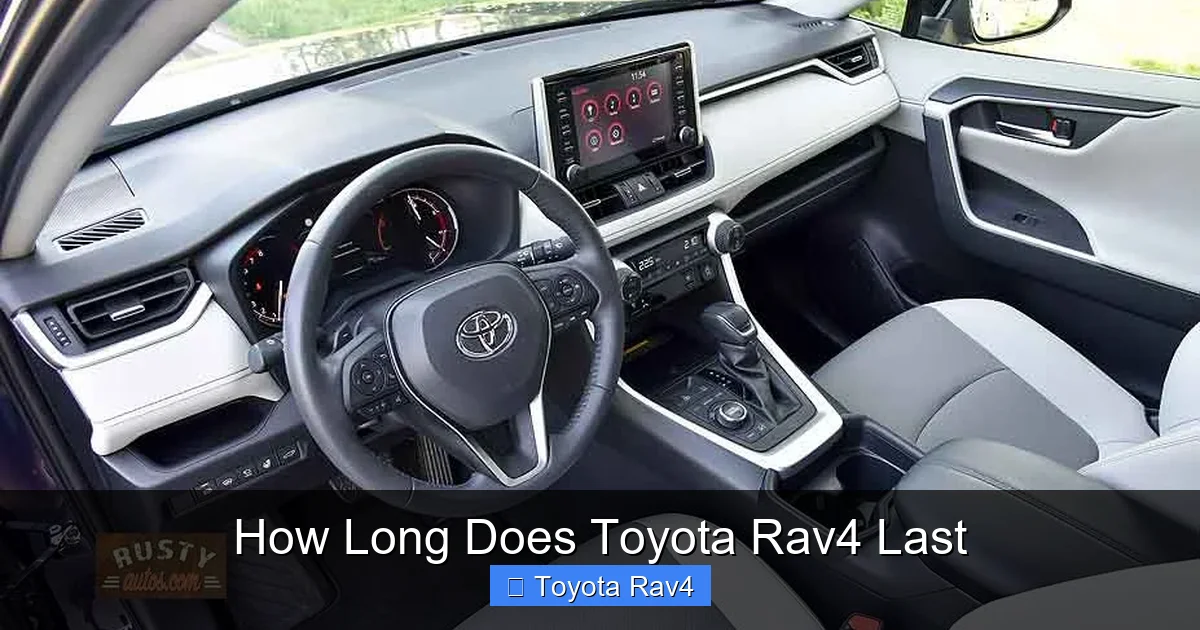
Visual guide about How Long Does Toyota Rav4 Last
Image source: rustyautos.com
Take John from Ohio, who shared that his 2007 RAV4 hit 312,000 miles before the engine finally gave out. He credits regular oil changes every 5,000 miles, timely brake and suspension work, and avoiding extreme driving conditions. “It wasn’t perfect,” he says, “but it got me through college, two kids, and a cross-country move.”
Then there’s Maria from California, who still drives her 2015 RAV4 Hybrid with over 280,000 miles. She uses it for weekend camping trips and daily commutes. “The hybrid system feels smoother than ever,” she says. “I’ve only replaced the 12-volt battery and done routine maintenance.”
These stories aren’t outliers. Consumer Reports data shows that over 90% of RAV4s from the last 10 years are still on the road at 200,000 miles—well above the industry average. That kind of consistency is why the RAV4 consistently ranks as one of the most reliable SUVs in its class.
Maintenance Tips to Maximize Your RAV4’s Lifespan
You don’t need to be a mechanic to keep your RAV4 running like new. A few simple habits can make a huge difference in how long it lasts. Think of maintenance not as an expense, but as an investment in your vehicle’s future.
Follow the Maintenance Schedule
Toyota provides a detailed maintenance schedule in your owner’s manual. Stick to it. This includes oil changes, tire rotations, brake inspections, and fluid replacements. For most RAV4s, that means:
- Oil and filter change every 5,000 to 7,500 miles (or every 6 months)
- Tire rotation every 5,000 to 7,500 miles
- Brake fluid replacement every 30,000 miles
- Transmission fluid change every 60,000 miles
- Coolant replacement every 100,000 miles
- Timing belt replacement (if applicable) every 90,000 to 100,000 miles
Skipping these services might save you money short-term, but it can lead to costly repairs down the road. For example, neglecting transmission fluid can cause overheating and premature wear, potentially cutting your RAV4’s life in half.
Use Quality Parts and Fluids
Not all motor oil is created equal. Toyota recommends using synthetic or synthetic-blend oil for most modern RAV4s. It provides better protection, especially in extreme temperatures. Similarly, use OEM (original equipment manufacturer) or high-quality aftermarket parts for brakes, filters, and belts.
Avoid cheap coolant or transmission fluid from unknown brands. These can contain impurities that damage seals and reduce efficiency. Stick to Toyota Genuine or trusted brands like Mobil 1, Valvoline, or Pentosin.
Drive Smart
How you drive affects how long your RAV4 lasts. Aggressive acceleration, hard braking, and towing beyond capacity put extra stress on the engine, transmission, and suspension. If you frequently drive in stop-and-go traffic or mountainous terrain, consider more frequent oil changes and brake inspections.
On the flip side, highway driving is gentler on your vehicle. Consistent speeds reduce engine strain and help maintain optimal operating temperatures. If you mostly drive short distances, let your RAV4 warm up for a minute or two before driving—this helps oil circulate and reduces wear.
Address Issues Early
Small problems can turn into big ones if ignored. If you notice a strange noise, warning light, or change in performance, get it checked out right away. For example, a failing oxygen sensor might seem minor, but it can reduce fuel efficiency and damage the catalytic converter over time.
Many RAV4 owners use apps like CarMD or OBD2 scanners to monitor their vehicle’s health. These tools can alert you to issues before they become serious, saving you time and money.
Common Problems and How to Prevent Them
No vehicle is perfect, and the RAV4 has had its share of minor issues over the years. Knowing what to watch for can help you avoid costly repairs and extend your SUV’s life.
Oil Consumption (2006–2012 Models)
Some 2006–2012 RAV4s with the 2AZ-FE engine were known to consume oil between changes. This wasn’t necessarily a sign of engine failure, but it could lead to low oil levels and potential damage if ignored.
Solution: Check your oil level monthly and top it off as needed. Consider using a higher-viscosity oil (like 5W-30 instead of 0W-20) if recommended by your mechanic. Toyota issued technical service bulletins (TSBs) for this issue, so dealerships may offer free repairs under warranty extensions.
Suspension Wear (Older Models)
The RAV4’s suspension components—especially struts, control arms, and bushings—can wear out after 100,000 to 150,000 miles, particularly in rough road conditions.
Solution: Have your suspension inspected during routine maintenance. Replace worn parts promptly to maintain ride quality and handling. Upgrading to heavy-duty or OEM-plus components can improve longevity.
Infotainment and Electrical Glitches (2019–2021 Models)
Some newer RAV4s have experienced issues with the touchscreen freezing, Bluetooth disconnecting, or backup camera lagging. These are usually software-related and not mechanical failures.
Solution: Visit a Toyota dealership for a software update. Many of these issues have been resolved with over-the-air or in-dealership updates. Keep your system updated to avoid frustration.
Rust on Door Sills and Rocker Panels
While rare, some RAV4s—especially in snowy regions—have developed surface rust on door sills and rocker panels after 10+ years.
Solution: Wash your RAV4 regularly, especially the undercarriage in winter. Apply rust-proofing treatments or undercoating if you live in a high-moisture area. Inspect for rust annually and treat it early with rust converters.
Hybrid vs. Gas: Which Lasts Longer?
If you’re choosing between a gas and hybrid RAV4, you might wonder which one will last longer. The answer? The hybrid often has an edge—thanks to its dual power system and reduced engine wear.
How Hybrids Reduce Wear
In a RAV4 Hybrid, the electric motor assists the gasoline engine during acceleration and handles low-speed driving. This means the engine doesn’t have to work as hard, reducing internal wear and tear. The regenerative braking system also reduces brake pad wear by using the electric motor to slow the vehicle.
For example, a hybrid RAV4 might go 100,000 miles before needing brake service, while a gas model might need it at 60,000 miles. Over time, that adds up to significant savings and less downtime.
Battery Life and Replacement
One concern with hybrids is the lifespan of the high-voltage battery. But Toyota’s hybrid batteries are built to last. Most RAV4 Hybrid batteries last 150,000 to 200,000 miles—and many go much further.
Toyota offers an 8-year/100,000-mile warranty on hybrid components (10 years/150,000 miles in California and some other states). Even after warranty, battery replacement costs have dropped significantly, and many owners never need one.
Real-world data shows that hybrid RAV4s often outlast their gas counterparts by 20,000 to 50,000 miles. If longevity is your top priority, the hybrid is a smart choice.
Resale Value and Long-Term Ownership
Another benefit of the RAV4’s longevity is its strong resale value. Even high-mileage models hold their value better than most competitors. According to Kelley Blue Book, a 10-year-old RAV4 with 150,000 miles can still sell for 40–50% of its original price—much higher than the industry average.
This makes the RAV4 a great long-term investment. Whether you plan to drive it into the ground or sell it later, you’ll get more money back than with most SUVs. Plus, Toyota’s reputation for reliability means buyers are willing to pay a premium, even for older models.
If you’re keeping your RAV4 for 15+ years, you’ll likely spend far less on repairs than you would with a less reliable vehicle. Over time, that adds up to thousands in savings.
Conclusion: The RAV4 Is Built to Last
So, how long does a Toyota RAV4 last? The answer is clear: with proper care, it can easily last 200,000 to 300,000 miles—and often much more. Its durable engine, reliable transmission, and corrosion-resistant body make it one of the longest-lasting compact SUVs on the market.
But longevity doesn’t happen by accident. It takes regular maintenance, smart driving habits, and attention to early warning signs. Whether you drive a gas or hybrid model, following Toyota’s guidelines and using quality parts will keep your RAV4 running strong for decades.
If you’re looking for a vehicle that won’t let you down, the RAV4 is a top contender. It’s not just about how far it can go—it’s about how well it takes you there, year after year.
Frequently Asked Questions
How many miles can a Toyota RAV4 last?
Most Toyota RAV4s last between 200,000 and 300,000 miles with proper maintenance. Some owners report exceeding 350,000 miles, especially with hybrid models.
What is the most reliable year for the Toyota RAV4?
Recent models (2019–2024) are among the most reliable, thanks to improved engines, updated technology, and stronger build quality. The 2020 and 2021 models also have excellent reliability ratings.
Do RAV4 Hybrids last longer than gas models?
Yes, RAV4 Hybrids often last longer due to reduced engine wear, regenerative braking, and efficient power delivery. The hybrid system also reduces strain on mechanical components.
What maintenance is most important for longevity?
Regular oil changes, transmission fluid changes, brake inspections, and timely replacement of wear items like belts and filters are critical. Following the owner’s manual schedule is key.
Can a high-mileage RAV4 still be reliable?
Absolutely. Many high-mileage RAV4s remain reliable if they’ve been well-maintained. Check service records and have a pre-purchase inspection done if buying used.
What are common issues in older RAV4s?
Older models (2006–2012) may have oil consumption or suspension wear. Newer models can have minor infotainment glitches, but these are usually software-related and fixable.