
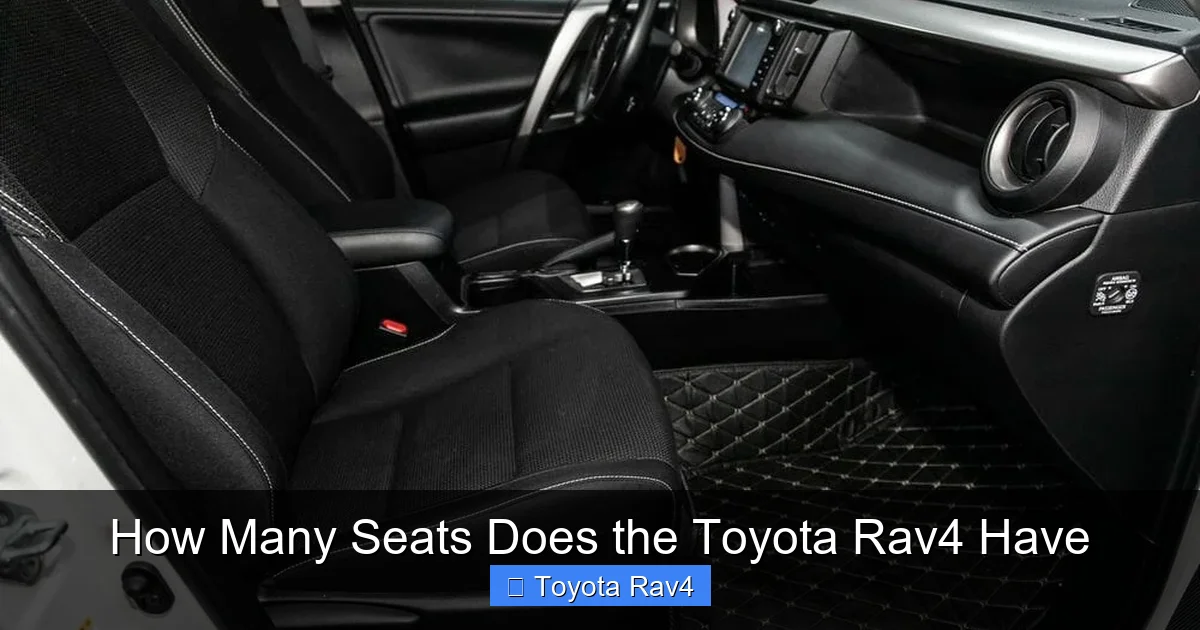
The Toyota RAV4 typically seats five passengers across two rows, with no official third-row option in recent models. However, earlier generations (2006–2012) offered an optional third row for seven seats, making it a versatile choice for small families or occasional extra passengers.
If you’re in the market for a compact SUV that balances practicality, comfort, and reliability, the Toyota RAV4 is likely on your shortlist. One of the first questions many buyers ask is: “How many seats does the Toyota RAV4 have?” It’s a simple question, but the answer has evolved over the years—and understanding the seating options can make a big difference in your decision, especially if you’re planning to transport more than four people regularly.
The Toyota RAV4 has long been a favorite among families, commuters, and outdoor enthusiasts alike. Known for its rugged design, excellent fuel economy, and Toyota’s legendary dependability, the RAV4 strikes a sweet spot between a sedan and a full-size SUV. But when it comes to passenger capacity, things aren’t always as straightforward as they seem. While most modern RAV4s comfortably seat five people, earlier versions once offered a third row—something that might surprise newer buyers. Whether you’re carpooling kids to school, taking friends on a weekend camping trip, or just need extra space for groceries and gear, knowing the seating layout is key.
In this guide, we’ll dive deep into the seating configurations of the Toyota RAV4 across different model years, explain why Toyota made certain design choices, and help you determine whether this SUV fits your lifestyle. We’ll also explore interior features, cargo space trade-offs, and what to expect from hybrid and plug-in hybrid versions. By the end, you’ll have a clear picture of how the RAV4 stacks up in terms of passenger capacity and overall usability.
Key Takeaways
- Standard seating for five: Most Toyota RAV4 models from 2013 onward are designed with two rows and five seats—two in front, three in back.
- Third-row option in older models: The third-generation RAV4 (2006–2012) offered an optional third row, allowing seating for up to seven people.
- No third row in current models: Since the 2013 redesign, Toyota discontinued the third-row option to prioritize cargo space and fuel efficiency.
- Spacious and comfortable interior: Even with five seats, the RAV4 offers generous legroom, headroom, and supportive seating for long drives.
- Cargo flexibility over extra seats: Toyota chose to maximize trunk space and rear cargo area instead of adding a cramped third row.
- Family-friendly features: Rear-seat climate controls, USB ports, and easy-access doors make the RAV4 ideal for families with kids.
- Hybrid and Prime variants seat five: All electrified versions, including the RAV4 Hybrid and RAV4 Prime, maintain the same five-seat layout.
📑 Table of Contents
- Standard Seating: Five Passengers in Modern RAV4 Models
- The Third-Row Option: A Look Back at Older RAV4 Models
- Why Toyota Removed the Third Row: Design and Practicality Trade-Offs
- Interior Comfort and Features for All Passengers
- Cargo Space vs. Passenger Capacity: Finding the Right Balance
- Hybrid and Plug-In Hybrid Variants: Same Seating, More Efficiency
- Conclusion: Is the RAV4 Right for Your Family?
Standard Seating: Five Passengers in Modern RAV4 Models
Starting with the fourth-generation RAV4 introduced in 2013, Toyota standardized the seating layout to accommodate five passengers. This means two front seats and three rear seats, all designed for comfort and safety. The shift away from the optional third row marked a strategic move by Toyota to enhance interior space, improve fuel efficiency, and streamline production.
The front seats are well-bolstered and offer ample adjustability, including power lumbar support on higher trims like the Limited and XSE. Drivers and front passengers enjoy excellent visibility, thanks to the RAV4’s upright seating position and large windows. Heated and ventilated front seats are available on premium models, making cold mornings and hot summer drives much more pleasant.
In the back, the three-seat bench is spacious enough for adults on short to medium trips, though taller passengers might find the middle seat a bit snug. Legroom is generous—around 37 inches—which is competitive for the compact SUV class. Headroom is also ample, even for passengers over six feet tall. The rear seats recline slightly, adding to comfort on longer journeys.
One of the standout features of the modern RAV4’s seating is the 60/40 split-folding rear bench. This allows you to fold down one or both sides to create a flat load floor for cargo. For example, if you’re carrying a bike and two passengers, you can fold down just the left side and still seat two people comfortably in the back. This flexibility is a big win for active families or weekend adventurers.
Safety is another priority. All RAV4 models come equipped with Toyota Safety Sense 2.0 (or newer), which includes features like pre-collision braking, lane departure warning, and adaptive cruise control. Rear-seat passengers are protected by side-impact airbags and seatbelt pretensioners, and LATCH anchors make it easy to install child seats.
The Third-Row Option: A Look Back at Older RAV4 Models
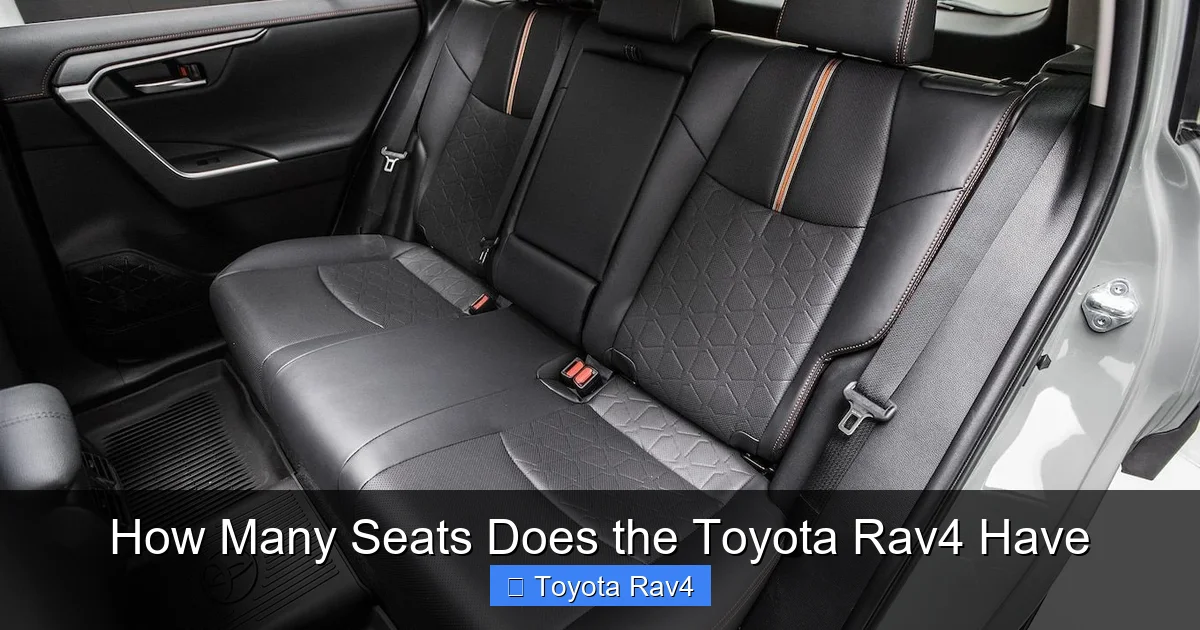
Visual guide about How Many Seats Does the Toyota Rav4 Have
Image source: i.pinimg.com
Before 2013, the Toyota RAV4 offered something rare in the compact SUV segment: an optional third row of seats. Available primarily on the third-generation model (2006–2012), this feature allowed the RAV4 to seat up to seven people, making it a viable alternative to larger SUVs like the Honda Pilot or Toyota Highlander.
The third row was a small, fold-flat bench located behind the second row. It was best suited for children or small adults on short trips. Legroom and headroom were limited—expect around 28 inches of legroom and minimal toe room. Still, for families with three young kids or occasional need for extra seating, it was a useful option.
Toyota marketed the third-row RAV4 as a “7-passenger SUV,” and it was available on most trims, including the base model. However, adding the third row came with trade-offs. The rear cargo area was significantly reduced when the third row was in use. In fact, with all three rows occupied, there was barely enough space for a few small bags or a stroller.
Another limitation was access. To get to the third row, passengers had to fold and tumble the second-row seats—a process that wasn’t always smooth, especially with car seats installed. This made it less practical for daily use compared to larger SUVs with sliding second rows or easier access.
Despite these compromises, the third-row RAV4 found a niche among buyers who wanted SUV versatility without stepping up to a larger, less fuel-efficient vehicle. It was particularly popular in suburban areas where school drop-offs, sports practices, and family outings required extra seating.
However, by the time the fourth generation launched in 2013, Toyota made the decision to discontinue the third-row option. The reasons were clear: customer feedback showed that most buyers rarely used the third row, and the space was better utilized for cargo. Additionally, the growing popularity of crossovers and the introduction of more efficient hybrid systems made the five-seat layout more appealing.
Why Toyota Removed the Third Row: Design and Practicality Trade-Offs
The decision to eliminate the third row from the RAV4 was not made lightly. Toyota conducted extensive market research and found that while the third row was a nice-to-have feature, it was rarely used in real-world conditions. Most families with three or more children opted for larger SUVs, while smaller families didn’t need the extra seats often enough to justify the trade-offs.
One of the biggest drawbacks of the third row was cargo space. With seven passengers onboard, the RAV4’s trunk was nearly unusable. Even with the third row folded, the cargo area was smaller than competitors like the Honda CR-V or Subaru Forester. By removing the third row, Toyota was able to extend the wheelbase slightly and create a much more spacious rear cargo area—up to 37.5 cubic feet with the rear seats up, and 69.8 cubic feet with them folded.
This change aligned with shifting consumer preferences. In the 2010s, buyers began prioritizing fuel efficiency, ride comfort, and interior versatility over maximum passenger capacity. The RAV4’s new platform allowed for better suspension tuning, improved noise insulation, and a more car-like driving experience—all while maintaining Toyota’s reputation for durability.
Another factor was the rise of hybrid technology. The RAV4 Hybrid, introduced in 2016, became one of the best-selling hybrid SUVs in the U.S. The hybrid system required additional battery packaging, which would have been difficult to accommodate with a third row. By standardizing the five-seat layout, Toyota simplified production and ensured consistent performance across all powertrains.
Additionally, the removal of the third row allowed for better rear-seat comfort. The second-row bench could be widened and recontoured, providing more shoulder room and support. Rear passengers also benefited from larger side windows and improved ventilation.
In essence, Toyota chose to optimize the RAV4 for the majority of users—those who value cargo space, fuel economy, and everyday usability over occasional extra seating. This strategic shift helped the RAV4 become the best-selling SUV in America for multiple years running.
Interior Comfort and Features for All Passengers
Even without a third row, the Toyota RAV4 excels in passenger comfort and convenience. The interior is designed with families in mind, offering a blend of practicality and modern technology.
Starting with the front seats, drivers enjoy a commanding view of the road, thanks to the high seating position. The dashboard is intuitive, with easy-to-reach controls and a standard 7-inch touchscreen (upgradable to 8 or 9 inches on higher trims). Apple CarPlay and Android Auto are standard on most models, allowing seamless smartphone integration.
Rear passengers aren’t left out. The second row features ample legroom and a flat floor, making it easier for three people to sit comfortably. USB charging ports are available in the back, so kids can keep tablets or phones powered during long trips. Some trims also include rear climate controls, allowing backseat passengers to adjust temperature independently.
For families with young children, the RAV4 is equipped with LATCH anchors for secure car seat installation. The rear doors open wide, making it easier to buckle in little ones. High-end models like the Limited and XSE offer premium materials, including SofTex synthetic leather, which is durable and easy to clean—perfect for spills and sticky fingers.
Storage is another strong point. There are cup holders, door pockets, and a center console with plenty of room for phones, wallets, and snacks. The glove box is spacious, and some models include a cooled glove box for keeping drinks cold.
Noise levels are well-controlled, thanks to improved sound insulation and acoustic glass. Whether you’re cruising on the highway or navigating city streets, conversations remain clear and comfortable.
Cargo Space vs. Passenger Capacity: Finding the Right Balance
One of the RAV4’s biggest strengths is its ability to balance passenger comfort with cargo versatility. With five seats, you get a generous 37.5 cubic feet of trunk space behind the rear seats—enough for several suitcases, a week’s worth of groceries, or camping gear.
Fold down the 60/40 split rear seats, and that number jumps to 69.8 cubic feet. That’s more than enough for a mountain bike, a stroller, and luggage for a weekend trip. The load floor is low and flat, making it easy to slide in heavy items.
Compare that to older RAV4 models with the third row: cargo space dropped to just 13–15 cubic feet with all seats in use. That’s barely enough for a few backpacks. Even with the third row folded, cargo capacity was limited due to the shorter wheelbase and packaging constraints.
By focusing on five seats, Toyota gave the RAV4 a clear advantage in everyday usability. Whether you’re a parent shuttling kids to activities, a weekend warrior loading up gear, or a commuter who needs space for work equipment, the RAV4 delivers.
Hybrid and Plug-In Hybrid Variants: Same Seating, More Efficiency
The RAV4 Hybrid and RAV4 Prime (plug-in hybrid) maintain the same five-seat configuration as the gas-only model. In fact, the hybrid system is seamlessly integrated without sacrificing passenger or cargo space.
The RAV4 Hybrid uses a 2.5-liter four-cylinder engine paired with electric motors, delivering up to 219 combined horsepower and an EPA-estimated 40 mpg in the city. Despite the added battery pack, rear legroom and cargo volume remain unchanged.
The RAV4 Prime takes it a step further, offering 302 horsepower and up to 42 miles of all-electric range. It’s one of the most powerful and efficient plug-in hybrids on the market. Yet, even with its larger battery, Toyota managed to preserve the same interior dimensions.
This consistency across powertrains makes it easy for buyers to choose the version that fits their driving needs without worrying about seating compromises.
Conclusion: Is the RAV4 Right for Your Family?
So, how many seats does the Toyota RAV4 have? The answer depends on the model year, but for most buyers today, it’s five—comfortably and reliably. While older versions offered a third row, modern RAV4s prioritize space, efficiency, and everyday usability.
If you regularly need to seat six or seven people, a larger SUV like the Highlander or a minivan might be a better fit. But for families of four or five, couples with frequent passengers, or anyone who values cargo flexibility, the RAV4 is an outstanding choice.
With its spacious interior, advanced safety features, and available hybrid powertrains, the RAV4 continues to set the standard for compact SUVs. It’s not just about how many seats it has—it’s about how well those seats serve your lifestyle.
Frequently Asked Questions
Does the Toyota RAV4 have a third row of seats?
No, current Toyota RAV4 models (2013 and newer) do not offer a third row. Only the third-generation RAV4 (2006–2012) had an optional third row for up to seven passengers.
How many people can fit in a Toyota RAV4?
The Toyota RAV4 seats five passengers comfortably—two in the front and three in the back. This has been the standard configuration since 2013.
Can you add a third row to a newer RAV4?
No, Toyota does not offer a factory or aftermarket third-row option for newer RAV4 models. The design and structure do not support it.
Is the rear seat of the RAV4 spacious?
Yes, the rear seat offers generous legroom (about 37 inches) and headroom, making it comfortable for adults on short to medium trips.
Do RAV4 Hybrid models have the same seating?
Yes, the RAV4 Hybrid and RAV4 Prime seat five passengers just like the gas-only version, with no reduction in interior space.
Why did Toyota remove the third row from the RAV4?
Toyota removed the third row to increase cargo space, improve fuel efficiency, and simplify production, based on customer feedback showing limited use of the extra seats.