
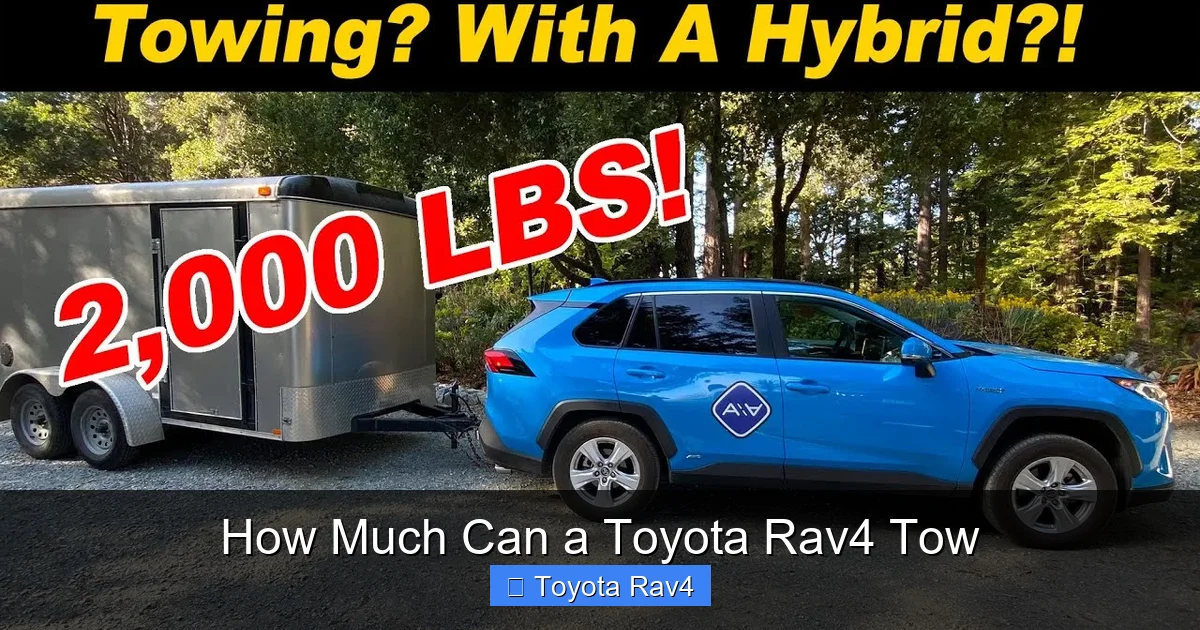
The Toyota RAV4 offers impressive towing capabilities for a compact SUV, with most models able to tow up to 1,500 to 3,500 pounds depending on engine and drivetrain. Whether you’re hauling a small trailer, jet skis, or a lightweight camper, understanding your RAV4’s towing capacity ensures safe and efficient performance on the road.
Key Takeaways
- Towing capacity varies by model year and engine: Gas-only RAV4s typically tow 1,500–2,000 lbs, while hybrid and turbocharged versions can reach up to 3,500 lbs.
- All-wheel drive (AWD) enhances towing performance: AWD models generally have higher towing ratings due to improved traction and stability.
- Proper equipment is essential: A factory-installed or aftermarket tow package, hitch, and wiring harness are required for safe towing.
- Weight distribution matters: Always follow the 10–15% tongue weight rule and use a weight-distribution hitch if needed.
- Fuel economy drops when towing: Expect reduced MPG when hauling heavy loads, especially in stop-and-go traffic or hilly terrain.
- Check your owner’s manual: Always verify your specific RAV4’s towing capacity based on trim, drivetrain, and optional packages.
- Regular maintenance improves towing safety: Brakes, tires, transmission, and cooling systems should be inspected before long trips with a trailer.
📑 Table of Contents
- How Much Can a Toyota RAV4 Tow? A Complete Guide
- Understanding Towing Capacity: What It Means and Why It Matters
- Toyota RAV4 Towing Capacity by Model Year and Engine
- What Affects Your RAV4’s Towing Performance?
- Practical Tips for Towing with Your Toyota RAV4
- Real-World Towing Examples: What Can You Actually Tow?
- Conclusion: Is the Toyota RAV4 Right for Your Towing Needs?
How Much Can a Toyota RAV4 Tow? A Complete Guide
If you’re considering buying a Toyota RAV4—or you already own one—you might be wondering: how much can a Toyota RAV4 tow? It’s a smart question, especially if you’re planning weekend adventures with a small camper, hauling a boat to the lake, or towing a utility trailer for home projects. The good news? The RAV4 is one of the most capable compact SUVs on the market when it comes to towing, offering surprising strength in a stylish, fuel-efficient package.
Unlike larger trucks or full-size SUVs, the RAV4 isn’t built to haul massive loads. But for everyday towing needs—like a pop-up camper, a pair of ATVs, or a small enclosed trailer—it’s more than up to the task. The key is understanding which RAV4 model you have (or plan to buy), because towing capacity varies significantly based on engine type, drivetrain, and optional equipment. From the base gas model to the powerful RAV4 Hybrid and the turbocharged RAV4 Prime plug-in hybrid, each version has its own strengths and limitations.
In this guide, we’ll break down everything you need to know about how much a Toyota RAV4 can tow. We’ll cover the different engine options, explain how drivetrain and trim level affect towing, and share practical tips to help you tow safely and efficiently. Whether you’re a first-time tower or a seasoned adventurer, this article will help you make the most of your RAV4’s towing potential—without risking damage to your vehicle or compromising safety.
Understanding Towing Capacity: What It Means and Why It Matters
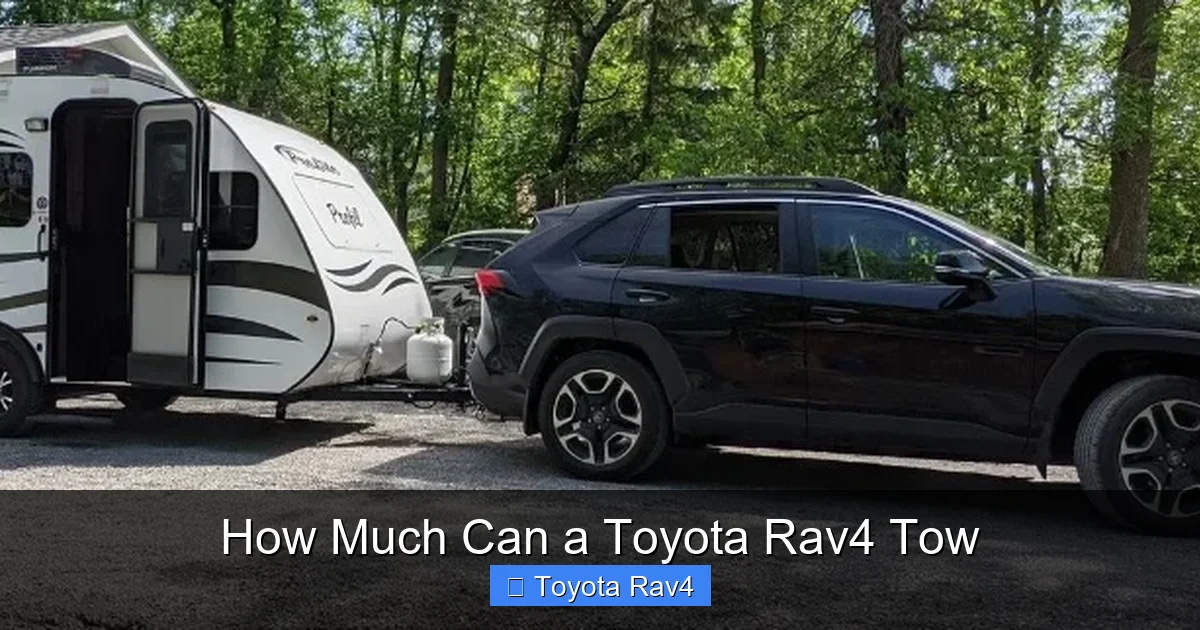
Visual guide about How Much Can a Toyota Rav4 Tow
Image source: towstats.com
Before diving into the numbers, it’s important to understand what “towing capacity” actually means. Simply put, it’s the maximum weight your vehicle can safely pull behind it, including the trailer, cargo, passengers, and any additional gear. Exceeding this limit can lead to serious problems: loss of control, brake failure, transmission overheating, or even structural damage to your vehicle.
Towing capacity isn’t just about engine power—it’s a combination of several factors, including the vehicle’s frame strength, suspension, braking system, cooling capacity, and drivetrain. That’s why two RAV4s with the same engine might have different towing ratings depending on how they’re equipped.
For example, a front-wheel drive (FWD) RAV4 with a basic 4-cylinder engine may only be rated to tow 1,500 pounds, while an all-wheel drive (AWD) RAV4 Hybrid with a tow package can handle up to 3,500 pounds. That’s more than double the capacity! This difference highlights why it’s crucial to check your specific model’s towing rating rather than assuming all RAV4s are the same.
Another key term to know is “gross combined weight rating” (GCWR), which is the total allowable weight of your vehicle, passengers, cargo, and trailer. Your towing capacity is calculated by subtracting the vehicle’s curb weight and payload from the GCWR. Always stay within both limits to ensure safe operation.
Why Towing Capacity Varies by Model
Toyota designs the RAV4 with different powertrains and trim levels to meet a wide range of needs. As a result, towing capacity isn’t a one-size-fits-all number. The biggest factors that influence how much a Toyota RAV4 can tow include:
- Engine type: Gas, hybrid, and plug-in hybrid engines have different power outputs and torque curves.
- Drivetrain: AWD models typically have higher towing capacities than FWD versions due to better traction and stability.
- Trim level: Higher trims often include towing packages or stronger components that boost capacity.
- Optional equipment: A factory tow package may include a transmission cooler, upgraded radiator, and reinforced suspension.
For instance, the 2023 RAV4 LE with FWD and the standard 2.5L 4-cylinder engine has a towing capacity of just 1,500 pounds. But step up to the RAV4 Hybrid XSE AWD, and you’re looking at 3,500 pounds—more than enough for a small travel trailer or a mid-sized boat.
Toyota RAV4 Towing Capacity by Model Year and Engine
Let’s get into the specifics. Below is a breakdown of how much a Toyota RAV4 can tow across recent model years, based on engine and drivetrain.
Gas-Powered RAV4 (2.5L 4-Cylinder)
The standard gas-powered RAV4 uses a 2.5-liter four-cylinder engine that produces around 203 horsepower (as of 2021 and later models). This engine is reliable and fuel-efficient, but its towing capacity is more modest compared to hybrid or turbocharged versions.
- Front-Wheel Drive (FWD): 1,500 pounds
- All-Wheel Drive (AWD): 2,000 pounds
These ratings apply to most gas-only RAV4 models from 2019 to 2024. The jump from FWD to AWD adds 500 pounds of towing capacity, thanks to better weight distribution and traction. However, even the AWD gas model is best suited for light-duty towing—think small utility trailers, bike racks with cargo, or a lightweight teardrop camper.
Toyota RAV4 Hybrid (2.5L + Electric Motors)
The RAV4 Hybrid combines the same 2.5-liter engine with electric motors, delivering a combined output of around 219 horsepower. More importantly, it offers significantly better torque and towing performance.
- All-Wheel Drive (AWD-e): 3,500 pounds
Yes, you read that right—the RAV4 Hybrid can tow up to 3,500 pounds, making it one of the most capable compact SUVs in its class. This is thanks to the hybrid system’s instant torque, improved cooling, and standard AWD. The hybrid’s electric motors also help with low-speed control when maneuvering a trailer.
This capacity opens the door to towing larger items like:
- Small travel trailers (under 3,000 lbs)
- Pop-up campers
- Jet skis or small boats
- Enclosed cargo trailers
Keep in mind that not all RAV4 Hybrids come with the tow package pre-installed. You may need to add it as an option or purchase an aftermarket setup.
Toyota RAV4 Prime (Plug-In Hybrid)
The RAV4 Prime is the most powerful version of the RAV4, combining the 2.5-liter engine with a larger battery and more powerful electric motors. It delivers a combined 302 horsepower, making it the performance king of the lineup.
- All-Wheel Drive (AWD): 3,500 pounds
Despite its impressive power, the RAV4 Prime has the same towing capacity as the standard hybrid—3,500 pounds. This is because towing capacity isn’t just about horsepower; it’s also about cooling, braking, and structural integrity. Toyota engineers have optimized the Prime for performance and efficiency, but the towing limit remains consistent with the hybrid to ensure long-term reliability.
That said, the extra power does make a difference in real-world towing. The RAV4 Prime accelerates faster, climbs hills more easily, and handles heavy loads with less strain on the engine and transmission.
Older RAV4 Models (2013–2018)
If you’re driving an older RAV4, towing capacity was generally lower. For example:
- 2013–2018 RAV4 (Gas, FWD): 1,000–1,500 pounds
- 2013–2018 RAV4 (Gas, AWD): 1,500–2,000 pounds
- 2013–2018 RAV4 Hybrid (AWD): 1,500–1,750 pounds (earlier hybrids had lower ratings)
These older models lacked some of the advanced cooling and transmission systems found in newer versions, so their towing limits were more conservative. Always check your owner’s manual for the exact rating of your specific year and trim.
What Affects Your RAV4’s Towing Performance?
Knowing how much a Toyota RAV4 can tow is only half the story. The other half is understanding what impacts its real-world towing performance. Even if your RAV4 is rated for 3,500 pounds, several factors can affect how safely and smoothly you can tow that load.
Drivetrain: FWD vs. AWD
All-wheel drive (AWD) is a game-changer for towing. It provides better traction, especially in wet, snowy, or uneven conditions. When you’re pulling a heavy trailer, AWD helps distribute power to all four wheels, reducing the risk of wheel slip and improving stability.
Front-wheel drive (FWD) RAV4s are more fuel-efficient and cost less, but they’re not ideal for heavy towing. The front wheels handle both steering and power delivery, which can lead to understeer or loss of control when towing near the limit.
If you plan to tow regularly, especially in challenging terrain, an AWD model is strongly recommended.
Towing Package: Factory vs. Aftermarket
A tow package is essential for safe and reliable towing. Toyota offers a factory-installed tow package on many RAV4 trims, which typically includes:
- Class II or Class III trailer hitch receiver
- Wiring harness for trailer lights
- Transmission cooler (critical for preventing overheating)
- Upgraded radiator
- Heavy-duty suspension components
If your RAV4 doesn’t come with a tow package, you can install an aftermarket one. However, be sure it’s compatible with your model and installed by a professional. A poorly installed hitch or wiring can cause electrical issues or safety hazards.
Trailer Type and Weight Distribution
Not all trailers are created equal. The type of trailer you’re towing—and how the weight is distributed—can greatly affect your RAV4’s performance.
For example, a travel trailer with a center of gravity too far back can cause “trailer sway,” where the trailer fishtails behind the vehicle. This is dangerous and can lead to loss of control.
To avoid this, follow the 10–15% tongue weight rule: the downward force on the hitch should be 10–15% of the total trailer weight. Use a weight distribution hitch if you’re towing near your RAV4’s maximum capacity.
Also, consider the trailer’s aerodynamics. Boxy trailers create more wind resistance, which reduces fuel economy and increases strain on the engine. A streamlined trailer, like a teardrop camper, is easier to tow.
Passenger and Cargo Load
Your RAV4’s towing capacity assumes a lightly loaded vehicle. But if you’re carrying four passengers, luggage, and gear, you’re using up payload capacity that could otherwise go toward towing.
Payload is the total weight your vehicle can carry, including passengers, cargo, and the tongue weight of the trailer. Most RAV4s have a payload capacity of around 1,000–1,200 pounds. Subtract the weight of people and gear, and you’ll see how much is left for towing.
For example, if your RAV4 has a 1,200-pound payload and you’re carrying 600 pounds of people and cargo, you only have 600 pounds left for tongue weight. That means you can’t tow a 3,500-pound trailer unless the tongue weight is under 600 pounds—which is unlikely.
Always do the math before hitting the road.
Practical Tips for Towing with Your Toyota RAV4
Towing safely isn’t just about knowing how much a Toyota RAV4 can tow—it’s about preparation, technique, and maintenance. Here are some practical tips to help you tow with confidence.
1. Inspect Your Vehicle Before Each Trip
Before you hitch up, give your RAV4 a quick once-over:
- Check tire pressure (including the spare)
- Inspect brake pads and fluid levels
- Ensure all lights (headlights, brake lights, turn signals) are working
- Verify the hitch and wiring connections are secure
- Top off coolant and transmission fluid
A pre-tow inspection can prevent breakdowns and accidents.
2. Practice Backing Up and Turning
Towing changes how your vehicle handles. Backing up with a trailer requires opposite steering—turn the wheel right to go left, and vice versa. Practice in an empty parking lot before hitting the highway.
Also, remember that your turning radius is wider with a trailer. Allow extra space when making turns, especially in tight spaces like gas stations or campgrounds.
3. Use a Brake Controller (If Needed)
If you’re towing a trailer with electric brakes (common on heavier trailers), you’ll need a brake controller. This device syncs the trailer’s brakes with your RAV4’s, improving stopping power and safety.
Many aftermarket brake controllers can be installed in the cabin, allowing you to adjust brake force based on load and road conditions.
4. Drive Smoothly and Allow Extra Distance
Towing adds weight and reduces maneuverability. Accelerate and brake gradually to avoid swaying or jackknifing. Leave extra following distance—up to twice the normal space—to allow for longer stopping times.
Avoid sudden lane changes or sharp turns, especially at high speeds.
5. Monitor Temperature Gauges
When towing, your engine and transmission work harder. Keep an eye on the temperature gauge, especially in hot weather or when climbing hills. If the engine starts to overheat, pull over safely and let it cool.
The transmission cooler (included in the tow package) helps, but it’s not a guarantee. Avoid prolonged high-RPM driving when towing.
6. Distribute Weight Properly
Load your trailer so that 60% of the weight is in the front half. This helps maintain proper tongue weight and prevents sway. Secure all cargo to prevent shifting during transit.
Use tie-downs, straps, or nets to keep items from moving. A shifting load can throw off balance and cause dangerous handling issues.
Real-World Towing Examples: What Can You Actually Tow?
Let’s put the numbers into context. Here are some common items people tow with their RAV4s—and whether your model can handle them.
Small Utility Trailer (500–1,000 lbs)
Perfect for yard work, moving furniture, or hauling camping gear. Easily handled by any RAV4, even FWD models.
Pop-Up Camper (1,500–2,500 lbs)
A great option for weekend camping. Most AWD gas models and all hybrid/Prime models can tow these with ease.
Teardrop Trailer (1,000–2,000 lbs)
Compact and aerodynamic, these are ideal for RAV4 owners. Even FWD models can handle them if loaded properly.
Jet Skis or Small Boat (1,500–3,000 lbs)
A pair of jet skis or a 14-foot aluminum boat is within range for hybrid and Prime models. Just watch the tongue weight.
Small Travel Trailer (2,500–3,500 lbs)
Only recommended for RAV4 Hybrid or Prime with AWD and a tow package. Stay under the 3,500-pound limit and avoid overloading.
ATVs or Dirt Bikes (500–1,500 lbs)
Easy to tow with any RAV4, especially with a lightweight trailer.
Remember: always check the actual weight of your trailer and cargo. Manufacturer estimates can be optimistic. Use a public scale to get an accurate reading.
Conclusion: Is the Toyota RAV4 Right for Your Towing Needs?
So, how much can a Toyota RAV4 tow? The answer depends on your model, but the range is impressive for a compact SUV: from 1,500 pounds on base gas models to 3,500 pounds on hybrid and Prime versions with AWD.
For light-duty tasks like hauling a small trailer or a couple of jet skis, even the standard RAV4 is up to the job. But if you’re planning regular trips with a camper or boat, upgrading to a RAV4 Hybrid or Prime with a tow package is worth the investment.
The RAV4 strikes a great balance between fuel efficiency, everyday usability, and towing capability. It’s not a heavy-duty tow rig, but for most families and adventurers, it’s more than enough.
Just remember: towing safely requires preparation, proper equipment, and respect for your vehicle’s limits. Always consult your owner’s manual, use the right hitch and wiring, and never exceed the rated capacity.
With the right setup and a little know-how, your Toyota RAV4 can be a reliable partner for all your towing adventures.
Frequently Asked Questions
Can a Toyota RAV4 tow a camper?
Yes, depending on the model. The RAV4 Hybrid and Prime can tow small to mid-sized campers up to 3,500 pounds, including pop-up and teardrop trailers. Gas-only models are better suited for lighter campers under 2,000 pounds.
Do I need a special package to tow with my RAV4?
Yes, a tow package is highly recommended. It includes a hitch, wiring harness, transmission cooler, and other components essential for safe towing. Some trims include it standard; others require it as an option.
Can I tow with a front-wheel drive RAV4?
Yes, but with limitations. FWD RAV4s are rated for 1,500 pounds, which is suitable for small trailers or lightweight loads. For heavier towing, AWD is strongly recommended for better stability and control.
Does towing reduce fuel economy in a RAV4?
Absolutely. Towing increases aerodynamic drag and engine load, reducing fuel efficiency by 20–40%. Expect lower MPG, especially in hilly areas or with larger trailers.
Can I install a tow hitch on my RAV4 myself?
While possible, it’s best to have a professional install the hitch and wiring. Improper installation can damage your vehicle or create safety hazards. Many dealerships and auto shops offer certified installation services.
What’s the difference between towing capacity and payload?
Towing capacity is the weight your RAV4 can pull behind it. Payload is the weight it can carry inside, including passengers, cargo, and tongue weight. Both limits must be respected to avoid overloading.