
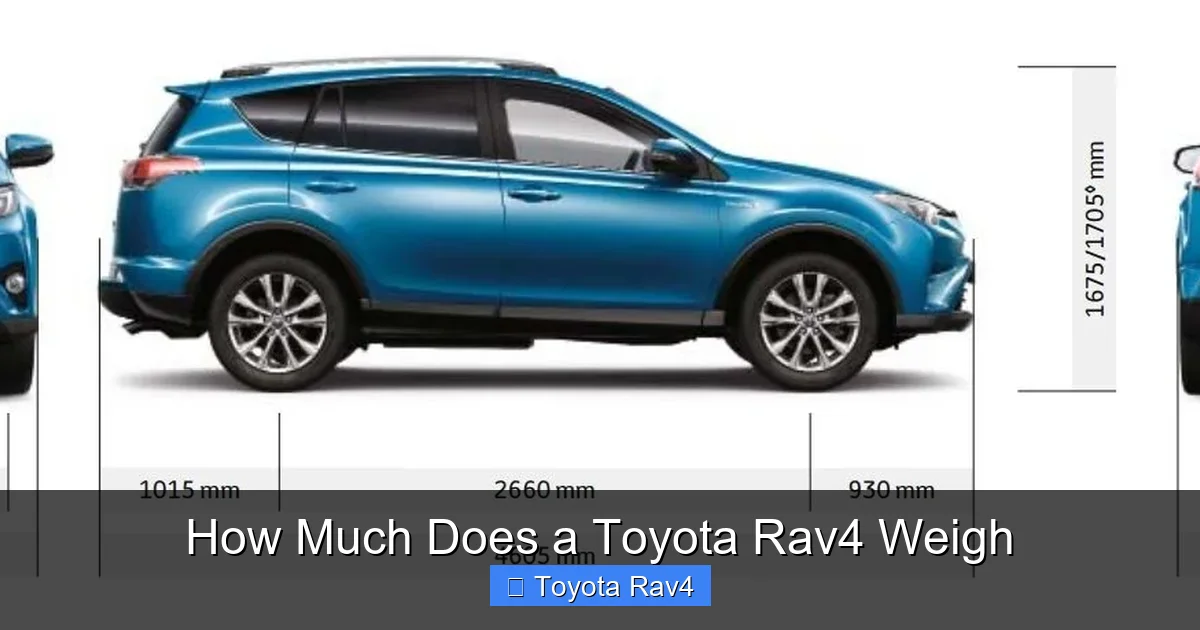
The Toyota RAV4 weighs between 3,370 and 3,690 pounds depending on the model year, trim, drivetrain, and engine. Understanding its weight helps with fuel efficiency, towing, and overall performance—key factors for buyers and current owners alike.
Key Takeaways
- Curb weight varies by trim and drivetrain: Front-wheel drive (FWD) models are lighter than all-wheel drive (AWD) versions, with differences of 100–200 pounds.
- Hybrid models are slightly heavier: The RAV4 Hybrid adds weight due to its battery and electric motors, typically weighing 100–150 pounds more than gas-only trims.
- 2023 and 2024 models are among the heaviest: Newer RAV4s have added safety features, tech, and structural reinforcements that increase overall weight.
- GVWR (Gross Vehicle Weight Rating) matters for towing and cargo: Most RAV4s have a GVWR of 4,500–4,700 pounds, limiting payload and towing capacity.
- Weight affects fuel economy: Heavier trims may see a 1–2 MPG drop compared to lighter counterparts, especially in city driving.
- Towing capacity is directly impacted by weight: A properly equipped RAV4 can tow up to 3,500 pounds, but only if weight distribution and GVWR are respected.
- Understanding weight helps with maintenance and insurance: Heavier vehicles may have different tire, brake, and suspension needs, and can influence insurance premiums.
📑 Table of Contents
- How Much Does a Toyota RAV4 Weigh? A Complete Breakdown
- What Is Curb Weight and Why Does It Matter?
- Toyota RAV4 Weight by Model Year and Trim
- Gas vs. Hybrid vs. Plug-in Hybrid: Weight Differences
- Gross Vehicle Weight Rating (GVWR) and Payload Capacity
- How Weight Affects Fuel Economy and Driving Experience
- Practical Tips for Managing Your RAV4’s Weight
- Conclusion: Why Knowing Your RAV4’s Weight Matters
How Much Does a Toyota RAV4 Weigh? A Complete Breakdown
If you’re thinking about buying a Toyota RAV4—or you already own one—you’ve probably wondered: How much does a Toyota RAV4 weigh? It’s a simple question, but the answer isn’t always straightforward. The weight of a RAV4 depends on several factors, including the model year, trim level, engine type, and whether it’s front-wheel drive (FWD) or all-wheel drive (AWD). Even hybrid versus gas-only versions make a difference.
Knowing the weight of your RAV4 isn’t just trivia—it affects everything from fuel efficiency and handling to towing capacity and safety. A heavier vehicle may feel more stable on the highway, but it could also reduce gas mileage and increase wear on brakes and tires. On the flip side, a lighter RAV4 might be more agile in city driving but could struggle with heavy loads or towing.
In this guide, we’ll dive deep into the numbers. We’ll look at curb weight, gross vehicle weight rating (GVWR), and how different configurations impact the overall heft of this popular compact SUV. Whether you’re comparing trims, planning a road trip with gear, or just curious about what’s under the hood—literally—this article has you covered.
What Is Curb Weight and Why Does It Matter?

Visual guide about How Much Does a Toyota Rav4 Weigh
Image source: howheavyisit.com
Before we get into the specific numbers, let’s clarify what “curb weight” actually means. Curb weight is the total weight of a vehicle with all standard equipment, a full tank of fuel, and all necessary fluids—but without passengers or cargo. It’s the baseline weight you’ll find in most manufacturer specs and is a key metric for comparing vehicles.
Understanding curb weight helps you assess how a car will perform in real-world conditions. For example, a RAV4 with a lower curb weight will generally accelerate faster, stop quicker, and use less fuel. It also plays a role in how the vehicle handles corners and responds to steering input.
The Toyota RAV4’s curb weight ranges from approximately 3,370 pounds for a base FWD model to around 3,690 pounds for a fully loaded AWD or hybrid version. That’s a difference of over 300 pounds—equivalent to carrying an extra passenger or a full suitcase of luggage every time you drive.
How Curb Weight Affects Performance
A lighter RAV4 will feel more responsive, especially in stop-and-go traffic. You’ll notice quicker throttle response and easier maneuverability in tight spaces like parking lots or city streets. On the other hand, a heavier RAV4—especially one with AWD or hybrid components—may feel more planted and stable at highway speeds, which some drivers prefer for long-distance travel.
But there’s a trade-off. Heavier vehicles require more energy to move, which can reduce fuel efficiency. For instance, a 2023 RAV4 LE FWD might get 28 MPG in the city, while the same model with AWD could drop to 26 MPG. That 2 MPG difference might not seem like much, but over 15,000 miles a year, it adds up to about 50 extra gallons of gas—costing you around $200 more annually, depending on fuel prices.
Why Weight Matters for Safety and Handling
Weight also influences safety. Heavier vehicles tend to perform better in crash tests because they have more mass to absorb impact. However, they also take longer to stop. The RAV4’s braking distance increases with added weight, so drivers of heavier trims should allow extra following distance, especially in wet or icy conditions.
Handling is another factor. A well-balanced RAV4—where weight is distributed evenly between the front and rear axles—will corner more predictably. Toyota engineers have worked to keep the RAV4’s weight distribution close to 50/50, even with AWD systems, which helps maintain a sporty feel despite the SUV’s size.
Toyota RAV4 Weight by Model Year and Trim
Now let’s get into the specifics. The weight of a Toyota RAV4 has evolved over the years as Toyota has added new features, updated the platform, and introduced hybrid and plug-in hybrid variants. Below is a detailed breakdown by recent model years and popular trims.
2020–2021 Toyota RAV4 Weight
The 2020 and 2021 RAV4 models were part of the fifth-generation redesign, which introduced a more rugged look and improved off-road capability. These years saw a noticeable increase in weight compared to earlier generations due to stronger chassis materials and added tech.
– **RAV4 LE FWD:** ~3,370 lbs
– **RAV4 XLE FWD:** ~3,420 lbs
– **RAV4 XLE AWD:** ~3,540 lbs
– **RAV4 Limited AWD:** ~3,620 lbs
– **RAV4 Hybrid AWD:** ~3,590 lbs
As you can see, the jump from FWD to AWD adds about 120–170 pounds, mostly due to the additional drivetrain components like the rear differential and transfer case. The hybrid version is heavier than the gas-only AWD model because of the battery pack and electric motors, even though it uses a more efficient powertrain.
2022–2023 Toyota RAV4 Weight
The 2022 and 2023 models saw minor updates, including enhanced safety features like Toyota Safety Sense 2.0 and improved infotainment systems. These additions contributed to a slight increase in weight across the board.
– **RAV4 LE FWD:** ~3,400 lbs
– **RAV4 XLE FWD:** ~3,450 lbs
– **RAV4 XLE AWD:** ~3,570 lbs
– **RAV4 Limited AWD:** ~3,650 lbs
– **RAV4 Hybrid AWD:** ~3,630 lbs
– **RAV4 Prime (Plug-in Hybrid):** ~4,330 lbs
The RAV4 Prime stands out as the heaviest variant, weighing nearly 700 pounds more than the base LE FWD. This is due to its larger battery pack, dual electric motors, and reinforced structure to handle the extra power and weight. While the Prime offers impressive electric-only range (up to 42 miles), its heft impacts acceleration and handling compared to lighter trims.
2024 Toyota RAV4 Weight
The 2024 RAV4 continues the trend of incremental weight gain, with updated styling, more standard tech, and enhanced driver-assistance features. Toyota has also improved sound insulation and interior materials, which add a few extra pounds.
– **RAV4 LE FWD:** ~3,420 lbs
– **RAV4 XLE FWD:** ~3,470 lbs
– **RAV4 XLE AWD:** ~3,590 lbs
– **RAV4 Limited AWD:** ~3,670 lbs
– **RAV4 Hybrid AWD:** ~3,650 lbs
– **RAV4 Prime:** ~4,350 lbs
Even the base models are now heavier than their 2020 counterparts, reflecting the industry-wide trend of adding safety and comfort features that increase vehicle mass.
Gas vs. Hybrid vs. Plug-in Hybrid: Weight Differences
One of the biggest factors affecting RAV4 weight is the powertrain. Let’s compare the three main types: gas-only, hybrid, and plug-in hybrid (RAV4 Prime).
Gas-Only RAV4
The traditional gas-powered RAV4 uses a 2.5-liter four-cylinder engine paired with an 8-speed automatic transmission. This setup is lightweight and efficient, making it ideal for drivers who prioritize fuel economy and lower upfront cost.
Gas-only models are the lightest in the lineup, especially in FWD configuration. They’re great for city driving and short commutes, where their agility and lower weight shine.
RAV4 Hybrid
The RAV4 Hybrid combines the same 2.5-liter engine with electric motors and a nickel-metal hydride battery pack. This system provides better fuel economy—up to 40 MPG combined—but adds weight due to the battery and additional components.
Hybrid models are typically 100–150 pounds heavier than their gas-only counterparts. For example, a 2023 RAV4 XLE AWD weighs about 3,570 lbs, while the Hybrid AWD version weighs 3,630 lbs. That extra weight is noticeable during hard acceleration but doesn’t significantly impact daily driving.
RAV4 Prime (Plug-in Hybrid)
The RAV4 Prime is the heavyweight champion of the lineup. With a larger lithium-ion battery and more powerful electric motors, it can run on electricity alone for up to 42 miles. But all that tech comes at a cost—literally and in pounds.
The Prime weighs around 4,330–4,350 lbs, making it nearly as heavy as some midsize SUVs. This affects handling, braking, and fuel economy when the battery is depleted. However, its 302 horsepower makes it the fastest RAV4 ever, capable of 0–60 mph in just 5.7 seconds.
Gross Vehicle Weight Rating (GVWR) and Payload Capacity
While curb weight tells you how much the vehicle weighs empty, the Gross Vehicle Weight Rating (GVWR) tells you the maximum it can safely carry—including passengers, cargo, and fuel.
Most Toyota RAV4 models have a GVWR between 4,500 and 4,700 pounds. To find the payload capacity, subtract the curb weight from the GVWR.
For example:
– A 2023 RAV4 Limited AWD has a curb weight of ~3,650 lbs and a GVWR of 4,650 lbs.
– Payload capacity = 4,650 – 3,650 = 1,000 lbs.
That 1,000 pounds includes everything: passengers, luggage, roof rack cargo, and even trailer tongue weight if you’re towing. If you regularly carry four adults (about 600–800 lbs combined), you only have 200–400 lbs left for gear—so pack light.
Why GVWR Matters for Towing
Towing capacity is directly tied to GVWR. The RAV4 can tow up to 1,500 pounds standard, or 3,500 pounds when properly equipped with the tow package (available on AWD models). But you must account for the weight of the trailer, cargo inside it, and the tongue weight (typically 10–15% of trailer weight).
For example, a 3,000-pound trailer with 300 pounds of gear has a tongue weight of about 330 pounds. Add that to your payload, and you could easily exceed the RAV4’s limits if you’re not careful.
Always check your owner’s manual and door jamb sticker for exact GVWR and payload numbers. Overloading can damage your suspension, brakes, and transmission—and it’s a safety hazard.
How Weight Affects Fuel Economy and Driving Experience
Weight plays a major role in fuel efficiency. Heavier vehicles require more energy to accelerate and maintain speed, which means more fuel consumption.
The EPA estimates reflect this:
– 2023 RAV4 LE FWD: 28 city / 35 highway MPG
– 2023 RAV4 XLE AWD: 27 city / 34 highway MPG
– 2023 RAV4 Hybrid AWD: 41 city / 38 highway MPG
– 2023 RAV4 Prime: 94 MPGe (electric + gas)
Even though the Hybrid and Prime are heavier, their advanced powertrains more than make up for the extra weight in terms of efficiency. The Prime’s MPGe rating is especially impressive, thanks to its ability to run on electricity for short trips.
Driving Dynamics: Light vs. Heavy RAV4
Drivers often notice the difference in feel between trims. A base RAV4 LE FWD feels nimble and eager, perfect for zipping through traffic. In contrast, a loaded Limited AWD or Prime feels more substantial—like a mini luxury SUV.
The heavier models have a smoother ride over bumps and feel more confident at highway speeds. But they can feel sluggish in quick maneuvers, and parking may require more effort due to increased mass.
If you prioritize agility and fuel savings, go for a lighter FWD trim. If you want stability, towing power, or hybrid efficiency, the extra weight may be worth it.
Practical Tips for Managing Your RAV4’s Weight
Whether you’re buying a new RAV4 or managing an existing one, here are some practical tips to make the most of its weight characteristics.
Choose the Right Trim for Your Needs
Don’t overbuy. If you don’t need AWD or hybrid tech, a base FWD model will save you money, weight, and fuel. Reserve heavier trims for those who frequently drive in snow, tow trailers, or want maximum efficiency.
Watch Your Cargo Load
Use a luggage scale or bathroom scale to weigh heavy items before loading. Avoid overpacking the trunk or roof rack. Remember, every extra pound reduces fuel economy and increases wear on tires and brakes.
Maintain Proper Tire Pressure
Underinflated tires increase rolling resistance, which makes your engine work harder—especially in a heavier vehicle. Check tire pressure monthly and adjust for load when carrying passengers or cargo.
Consider Weight Distribution When Towing
Use a weight-distributing hitch if towing near the 3,500-pound limit. This helps balance the load and prevents the RAV4’s rear end from sagging, which can affect steering and braking.
Regular Maintenance Helps Offset Weight Impact
Heavier vehicles put more stress on suspension and braking systems. Follow Toyota’s maintenance schedule for brake inspections, tire rotations, and alignment checks to keep your RAV4 running smoothly.
Conclusion: Why Knowing Your RAV4’s Weight Matters
So, how much does a Toyota RAV4 weigh? The answer depends on your specific model, but it typically ranges from 3,370 to 3,690 pounds for gas and hybrid versions—and up to 4,350 pounds for the RAV4 Prime. That weight affects everything from fuel economy and handling to towing capacity and safety.
Understanding your RAV4’s weight helps you make smarter decisions about driving, maintenance, and upgrades. Whether you’re comparing trims, planning a camping trip, or just curious about what’s under the hood, this knowledge puts you in control.
The RAV4 remains one of the most popular compact SUVs for a reason: it balances efficiency, capability, and comfort. And now, with a clear picture of its weight, you can enjoy it even more—knowing exactly what you’re driving.
Frequently Asked Questions
How much does a 2023 Toyota RAV4 weigh?
The 2023 Toyota RAV4 weighs between 3,400 and 3,690 pounds, depending on the trim and drivetrain. FWD models are lighter, while AWD and hybrid versions are heavier due to additional components.
Is the RAV4 Hybrid heavier than the gas model?
Yes, the RAV4 Hybrid is typically 100–150 pounds heavier than the gas-only version because of its battery pack and electric motors, even though it offers better fuel economy.
What is the heaviest Toyota RAV4 model?
The RAV4 Prime plug-in hybrid is the heaviest, weighing around 4,330–4,350 pounds. Its large battery and dual electric motors contribute to the increased weight.
How does weight affect the RAV4’s towing capacity?
Heavier trims have the same towing capacity (up to 3,500 lbs with tow package), but you must account for payload. Always ensure total weight (vehicle + cargo + trailer) stays under GVWR.
Does a heavier RAV4 get worse gas mileage?
Generally, yes. Heavier models may see a 1–2 MPG drop compared to lighter ones, though hybrid and Prime models offset this with efficient powertrains.
Can I reduce my RAV4’s weight to improve performance?
While you can’t remove factory components, you can reduce cargo load, avoid overpacking, and maintain proper tire pressure to improve efficiency and handling.