
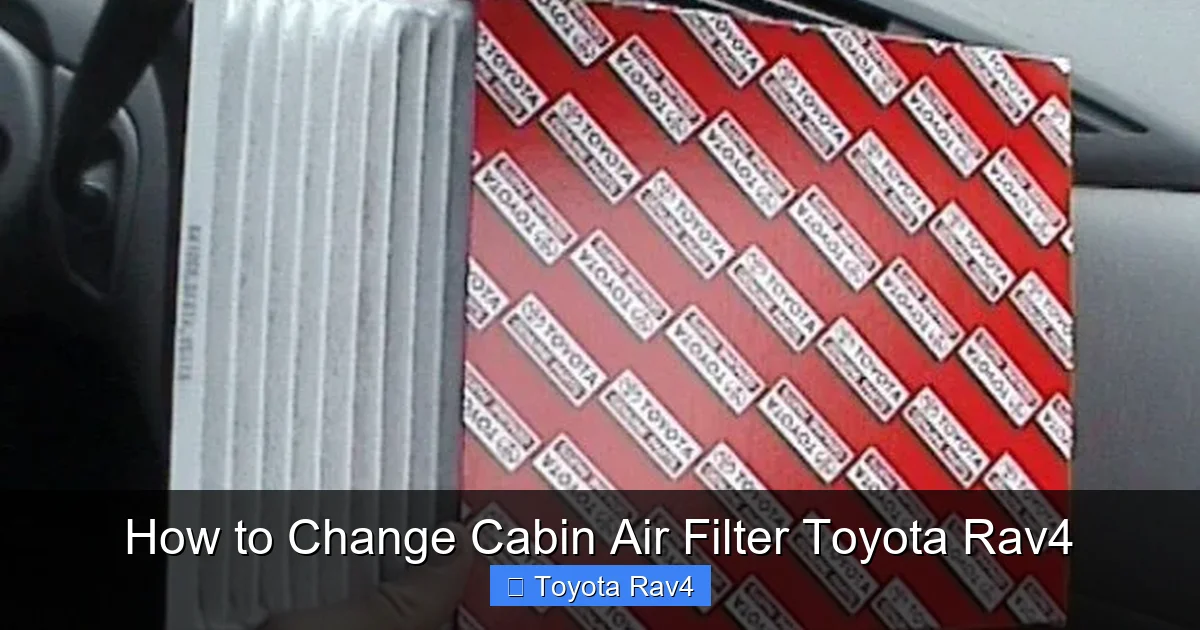
Changing the cabin air filter in your Toyota RAV4 is a quick, easy DIY task that improves air quality and protects your HVAC system. With just a few tools and 15–20 minutes, you can replace the filter yourself and save money on service fees.
Key Takeaways
- Improves air quality: A clean cabin air filter removes dust, pollen, and pollutants, ensuring fresher air inside your RAV4.
- Protects your HVAC system: A clogged filter forces the blower motor to work harder, reducing efficiency and potentially causing damage.
- Easy DIY job: Most RAV4 models allow access to the cabin air filter behind the glove box—no special tools required.
- Replace every 12,000–15,000 miles: Check your owner’s manual, but generally replace it once a year or more often if you drive in dusty or polluted areas.
- Choose the right filter: Use a high-quality OEM or aftermarket filter designed specifically for your RAV4’s year and trim.
- Watch for warning signs: Reduced airflow, musty odors, or increased noise from the vents may indicate a dirty filter.
- Save money: Doing it yourself costs under $20 and avoids a $50–$100 dealership service charge.
📑 Table of Contents
- Why Changing Your Toyota RAV4 Cabin Air Filter Matters
- When Should You Replace the Cabin Air Filter?
- Choosing the Right Cabin Air Filter for Your Toyota RAV4
- Step-by-Step Guide to Changing the Cabin Air Filter in a Toyota RAV4
- Tips for Maintaining Your Cabin Air Filter
- Common Mistakes to Avoid
- Conclusion
Why Changing Your Toyota RAV4 Cabin Air Filter Matters
You love your Toyota RAV4 for its reliability, comfort, and all-weather capability. But did you know that one small component—the cabin air filter—plays a big role in keeping your drives pleasant and healthy? The cabin air filter is responsible for cleaning the air that flows into your vehicle’s interior through the heating, ventilation, and air conditioning (HVAC) system. Over time, this filter collects dust, pollen, leaves, and even exhaust fumes. When it gets clogged, it can’t do its job effectively, leading to poor air quality, reduced airflow, and even unpleasant odors.
Many RAV4 owners overlook this simple maintenance task, assuming it’s something only a mechanic should handle. But the truth is, changing the cabin air filter is one of the easiest and most cost-effective DIY jobs you can do. It takes less than 20 minutes, requires minimal tools, and can save you money on service fees. Plus, a clean filter helps your AC and heater work more efficiently, which means better performance and less strain on your vehicle’s systems. Whether you’re commuting through city traffic, driving on dusty backroads, or just want to breathe easier on your next road trip, replacing your cabin air filter is a smart move.
When Should You Replace the Cabin Air Filter?
Knowing when to change your cabin air filter is key to maintaining good air quality and system performance. Toyota recommends replacing the cabin air filter every 12,000 to 15,000 miles, or at least once a year. However, this can vary depending on your driving conditions. If you frequently drive in heavy traffic, rural areas with lots of dust, or regions with high pollen counts, you may need to replace it more often—perhaps every 6,000 to 8,000 miles.

Visual guide about How to Change Cabin Air Filter Toyota Rav4
Image source: file.kelleybluebookimages.com
Signs Your Filter Needs Replacing
Even if you’re not tracking mileage, there are clear signs that your cabin air filter is due for a change. One of the most obvious is reduced airflow from the vents. If you notice that your AC or heater isn’t blowing as strongly as it used to, a clogged filter could be the culprit. Another telltale sign is a musty or moldy smell when you turn on the climate control. This often indicates that moisture has built up in the filter, creating a breeding ground for bacteria and mildew.
You might also hear unusual noises from the blower motor, such as a whining or grinding sound. This happens because the motor has to work harder to push air through a dirty filter. In extreme cases, a severely clogged filter can even cause the HVAC system to shut down temporarily to prevent overheating. If you notice any of these symptoms, it’s time to check your filter—even if you’ve only driven a few thousand miles since the last replacement.
How Driving Conditions Affect Filter Life
Your driving environment plays a big role in how quickly your cabin air filter gets dirty. For example, if you live in a city with heavy traffic and air pollution, your filter will accumulate soot and exhaust particles faster than someone who drives mostly on highways. Similarly, if you frequently drive on unpaved roads or through construction zones, dust and debris will clog the filter more quickly.
Seasonal changes also matter. During spring and fall, pollen and mold spores are more prevalent, which can quickly saturate the filter. If you have allergies, replacing the filter more often during these seasons can make a noticeable difference in your comfort. On the other hand, if you mostly drive in clean, rural areas with light traffic, you might be able to stretch the replacement interval closer to 15,000 miles. The best approach is to inspect the filter every 6 months—even if you’re not due for a change—so you can catch issues early.
Choosing the Right Cabin Air Filter for Your Toyota RAV4
Not all cabin air filters are created equal. Using the wrong type or a low-quality filter can reduce performance and even damage your HVAC system. When shopping for a replacement, you’ll want to choose a filter that’s specifically designed for your RAV4’s year and model. Most filters are compatible across several model years, but it’s always best to double-check the part number or consult your owner’s manual.
OEM vs. Aftermarket Filters
Toyota offers genuine OEM (Original Equipment Manufacturer) cabin air filters, which are designed to meet the exact specifications of your vehicle. These filters are high quality and often come with a warranty, but they can be more expensive than aftermarket options. If you’re looking for a balance of quality and value, many reputable aftermarket brands—like Bosch, Fram, and K&N—offer filters that perform just as well as OEM parts.
When comparing filters, pay attention to the materials and features. Standard filters are made of pleated paper and are effective at trapping dust and pollen. However, if you want better protection, consider a charcoal-activated filter. These filters have an additional layer of activated carbon that absorbs odors, smoke, and harmful gases like nitrogen dioxide and sulfur dioxide. This is especially useful if you live in a city or frequently drive through tunnels or industrial areas.
Filter Types and Features
There are three main types of cabin air filters: particulate, activated carbon, and combination filters. Particulate filters are the most basic and are great for everyday use. Activated carbon filters add odor and gas filtration, making them ideal for urban drivers. Combination filters offer both particulate and carbon filtration, providing the best of both worlds.
Some premium filters also include antimicrobial treatments to prevent mold and bacteria growth. While these features can add to the cost, they’re worth considering if you’re sensitive to allergens or live in a humid climate. Always read the product description carefully to ensure the filter fits your RAV4 and meets your needs. A quick search online or a visit to your local auto parts store can help you find the right match.
Step-by-Step Guide to Changing the Cabin Air Filter in a Toyota RAV4
Now that you know why and when to replace your cabin air filter, let’s walk through the actual process. The good news is that most Toyota RAV4 models from 2006 to 2024 allow you to access the cabin air filter behind the glove box—no need to remove the dashboard or call a mechanic. With just a few simple steps, you can have a fresh filter installed in under 20 minutes.
Tools and Materials You’ll Need
Before you begin, gather the following items: a new cabin air filter (make sure it’s the correct part for your RAV4), a screwdriver (usually Phillips head), and a flashlight. You may also want to wear gloves to keep your hands clean, especially if the old filter is dirty. Most of these items are likely already in your garage or toolbox, so you won’t need to make a special trip to the store.
If you’re unsure about the exact filter model, check your owner’s manual or look up your vehicle’s year, make, and model on the manufacturer’s website. Many auto parts stores also have lookup tools that can help you find the right filter. Once you have everything ready, park your RAV4 on a level surface, turn off the engine, and engage the parking brake for safety.
Step 1: Locate the Glove Box
The cabin air filter is located behind the glove box on the passenger side of the vehicle. Open the glove box and empty it of any contents. Then, look for two small stoppers or dampers on the sides of the glove box. These are designed to prevent the glove box from falling too far when opened. Gently squeeze or push these stoppers inward to release them, allowing the glove box to drop down further.
On some RAV4 models, you may need to remove a small plastic panel or cover behind the glove box. This is usually held in place by a few screws or clips. Use your screwdriver to remove the screws, or gently pry off the clips with a flathead screwdriver. Be careful not to break the plastic clips—they’re often fragile and can be difficult to replace.
Step 2: Access the Filter Housing
Once the glove box is lowered or the panel is removed, you should see a rectangular plastic cover with a latch or clips. This is the cabin air filter housing. Open the latch or unclip the cover to reveal the old filter inside. Some models have a simple push-tab mechanism, while others may require you to squeeze the sides of the cover to release it.
Take a moment to inspect the housing for any debris or buildup. If you see leaves, dirt, or moisture, use a vacuum or compressed air to clean it out before installing the new filter. A clean housing ensures proper airflow and prevents contaminants from entering the HVAC system.
Step 3: Remove the Old Filter
Carefully pull the old filter out of the housing. Note the direction of the airflow arrows printed on the filter—this will help you install the new one correctly. Most filters have arrows pointing down or toward the back of the vehicle, indicating the direction air flows through the system.
Take a look at the condition of the old filter. If it’s black, clogged, or smells musty, it’s definitely time for a replacement. Even if it looks only slightly dirty, it’s still a good idea to replace it if it’s been more than a year or 12,000 miles. Dispose of the old filter in a sealed bag to prevent spreading dust and allergens.
Step 4: Install the New Filter
Take your new cabin air filter and make sure it matches the size and shape of the old one. Align the airflow arrows on the new filter with the direction indicated in the housing. Gently slide the filter into place, making sure it sits flat and secure. Avoid forcing it—if it doesn’t fit easily, double-check the orientation and model number.
Once the filter is in place, close the housing cover and secure the latch or clips. Make sure it’s fully sealed to prevent air leaks. Then, reattach the glove box or plastic panel, securing it with screws or clips as needed. Test the glove box to ensure it opens and closes smoothly.
Step 5: Test the System
Start your RAV4 and turn on the climate control system. Set the fan to the highest speed and check that air is flowing strongly from all vents. Listen for any unusual noises and smell the air coming out—there should be no musty odors. If everything looks and feels good, you’ve successfully replaced your cabin air filter!
Tips for Maintaining Your Cabin Air Filter
Replacing the cabin air filter is just one part of keeping your RAV4’s interior air clean. To get the most out of your new filter and extend its life, follow these simple maintenance tips. First, keep your vehicle clean inside and out. Vacuum the cabin regularly to reduce dust and debris that can enter the HVAC system through the air intake.
Second, avoid smoking inside the car. Cigarette smoke can quickly clog the filter and leave behind stubborn odors that are hard to remove. If you or your passengers do smoke, consider using an air purifier or odor eliminator to help keep the cabin fresh.
Third, use the recirculation mode wisely. While it helps cool or heat the cabin faster, running it for too long can trap stale air and moisture inside. Switch to fresh air mode periodically to allow outside air to circulate and reduce humidity buildup.
Finally, consider upgrading to a high-efficiency filter if you have allergies or respiratory issues. These filters capture smaller particles like mold spores and bacteria, providing better protection for sensitive passengers. And don’t forget to check your filter every 6 months—even if you’re not due for a change—so you can catch problems early.
Common Mistakes to Avoid
Even though changing the cabin air filter is a simple task, there are a few common mistakes that can cause issues down the line. One of the biggest is installing the filter backward. Always check the airflow arrows and make sure they’re pointing in the correct direction. Installing it backward can restrict airflow and reduce efficiency.
Another mistake is using the wrong filter size or type. A filter that’s too small can allow unfiltered air to bypass the system, while one that’s too large may not fit properly and cause leaks. Always double-check the part number and compatibility before purchasing.
Some people also forget to reattach the glove box or housing cover securely. A loose cover can rattle or allow debris to enter the system. Take your time to ensure everything is properly fastened before testing the system.
Finally, don’t ignore warning signs like reduced airflow or strange smells. These could indicate a clogged filter or a more serious issue with the HVAC system. Addressing problems early can prevent costly repairs and keep your RAV4 running smoothly.
Conclusion
Changing the cabin air filter in your Toyota RAV4 is a quick, easy, and affordable way to improve your driving experience. Not only does it enhance air quality and protect your health, but it also helps your HVAC system run more efficiently. With just a few tools and a little know-how, you can complete this task in under 20 minutes and save money on service fees.
By following the steps outlined in this guide, you’ll be able to replace your filter confidently and keep your RAV4’s interior air fresh and clean. Remember to check your filter regularly, choose the right type for your needs, and avoid common mistakes. Whether you’re a seasoned DIYer or a first-time car owner, this simple maintenance task is well within your reach. So grab your new filter, roll up your sleeves, and enjoy the cleaner, healthier air in your Toyota RAV4.
Frequently Asked Questions
How often should I change the cabin air filter in my Toyota RAV4?
Toyota recommends replacing the cabin air filter every 12,000 to 15,000 miles or once a year. However, if you drive in dusty, polluted, or high-pollen areas, consider changing it more frequently—every 6,000 to 8,000 miles.
Can I change the cabin air filter myself, or do I need a mechanic?
Yes, you can easily change the cabin air filter yourself. Most RAV4 models allow access behind the glove box, and the process takes less than 20 minutes with basic tools.
What happens if I don’t change the cabin air filter?
A dirty filter reduces airflow, causes musty odors, and forces the blower motor to work harder. Over time, this can lead to reduced HVAC performance and potential system damage.
What type of cabin air filter is best for my RAV4?
For most drivers, a standard particulate filter works well. If you live in a city or have allergies, consider a charcoal-activated or combination filter for better odor and gas filtration.
How do I know which cabin air filter fits my RAV4?
Check your owner’s manual or look up your vehicle’s year, make, and model on the manufacturer’s website or at an auto parts store. Always match the part number for accuracy.
Can a dirty cabin air filter affect my car’s fuel efficiency?
While it won’t directly impact fuel economy, a clogged filter can reduce HVAC efficiency, making the system work harder. This may slightly increase engine load, especially when using the AC or defroster.