
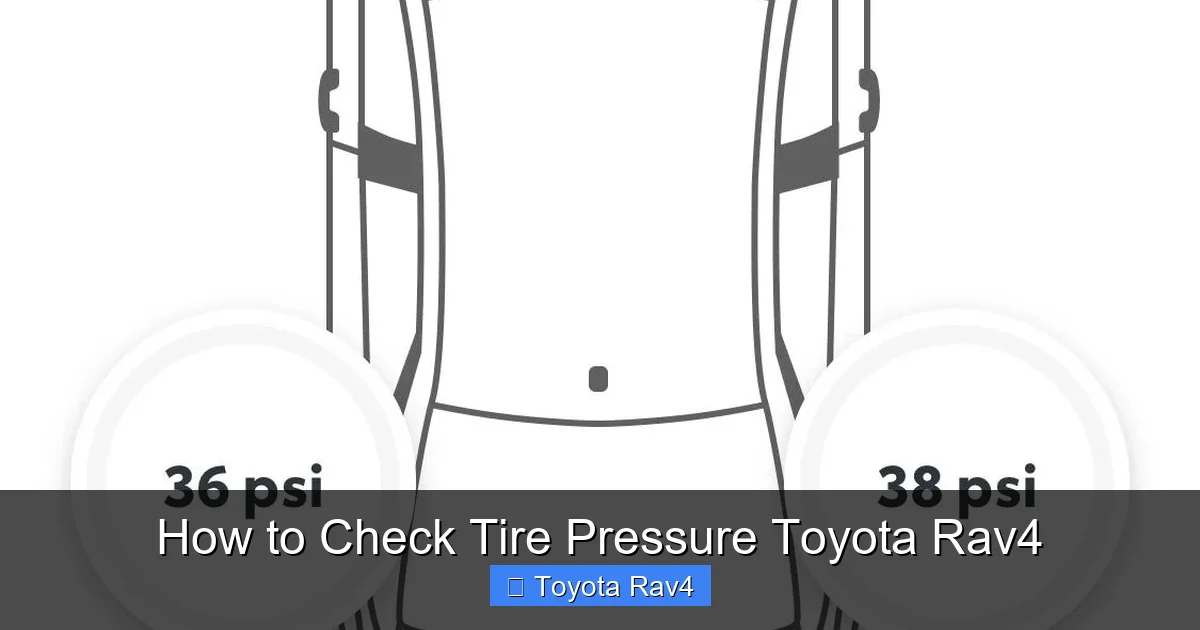
Keeping your Toyota RAV4’s tires properly inflated is essential for safety, fuel efficiency, and tire longevity. This guide walks you through checking tire pressure manually and using the built-in TPMS, with tips tailored specifically for RAV4 owners.
Key Takeaways
- Check tire pressure monthly: Regular checks prevent underinflation, which can reduce fuel economy and increase wear.
- Use the correct PSI: The recommended tire pressure for your Toyota RAV4 is listed on the driver’s door jamb sticker—typically 33–35 PSI for most models.
- Check when tires are cold: Measure pressure before driving or after the car has sat for at least 3 hours for accurate readings.
- Use a quality tire gauge: Digital or analog gauges are more reliable than gas station gauges, which can be inaccurate.
- Understand your TPMS: The Tire Pressure Monitoring System alerts you to low pressure, but it doesn’t replace manual checks.
- Adjust for load and conditions: Increase pressure slightly when carrying heavy loads or driving in extreme temperatures.
- Reset TPMS after inflation: Some RAV4 models require a TPMS reset after adjusting tire pressure to clear warning lights.
📑 Table of Contents
- Why Checking Tire Pressure Matters for Your Toyota RAV4
- Understanding Your Toyota RAV4’s Recommended Tire Pressure
- Tools You Need to Check Tire Pressure on a Toyota RAV4
- Step-by-Step Guide: How to Check Tire Pressure on a Toyota RAV4
- Using the Toyota RAV4’s Built-In TPMS
- Tips for Maintaining Proper Tire Pressure Year-Round
- Common Mistakes to Avoid When Checking Tire Pressure
- Conclusion: Stay Safe and Save Money with Regular Checks
Why Checking Tire Pressure Matters for Your Toyota RAV4
Your Toyota RAV4 is built for adventure—whether you’re commuting to work, heading out on a weekend camping trip, or navigating city streets. But no matter where you go, one thing stays constant: the importance of proper tire pressure. Underinflated or overinflated tires can seriously affect your vehicle’s performance, safety, and efficiency.
Imagine driving with tires that are just a few pounds per square inch (PSI) below the recommended level. Over time, this can lead to increased rolling resistance, which means your engine has to work harder. That translates to lower gas mileage—something no RAV4 owner wants, especially with rising fuel costs. Worse, underinflated tires generate more heat, which can cause tread separation or even a blowout, particularly at highway speeds.
On the flip side, overinflating your tires might seem like a quick fix for fuel economy, but it reduces the tire’s contact patch with the road. This leads to uneven wear, especially in the center of the tread, and can make your ride harsher and less stable. In wet or snowy conditions, this could mean less grip and longer stopping distances.
So, how do you strike the right balance? It starts with regular tire pressure checks. And the good news? It’s easier than you think—especially with your RAV4’s built-in tools and a few simple steps. Whether you’re a seasoned driver or new to the RAV4 family, this guide will help you stay on top of your tire health with confidence.
Understanding Your Toyota RAV4’s Recommended Tire Pressure
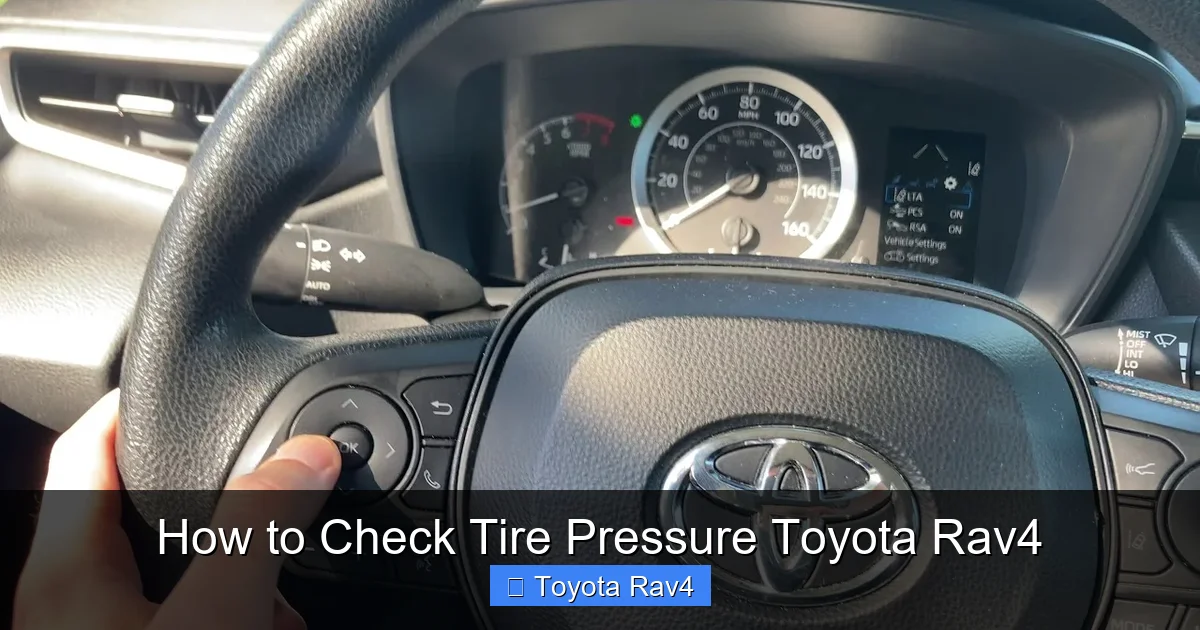
Visual guide about How to Check Tire Pressure Toyota Rav4
Image source: i.ytimg.com
Before you grab a tire gauge, it’s crucial to know what pressure your RAV4 actually needs. Unlike older vehicles where tire pressure was a rough estimate, modern RAV4s are engineered with specific inflation requirements based on weight, tire size, and performance goals.
The correct tire pressure for your Toyota RAV4 isn’t found in the owner’s manual alone—though that’s a good backup. Instead, look for the tire information sticker located on the driver’s side door jamb. Open the door and check the edge of the frame near the latch. You’ll see a white or yellow label with details about tire size, load index, and the recommended cold tire pressure.
For most Toyota RAV4 models—especially the 2019 to 2024 versions—the recommended pressure is **33 to 35 PSI** for normal driving conditions. This applies to both front and rear tires, though some trims or configurations (like the RAV4 Hybrid or Adventure trim) might have slightly different specs. Always refer to your specific door jamb sticker, as it’s tailored to your exact vehicle setup.
It’s also important to note that this pressure is for **cold tires**. That means you should check your tires before you’ve driven more than a mile or two, or after the car has been parked for at least three hours. Driving heats up the tires, which increases the internal air pressure and can give you a falsely high reading. Checking cold ensures accuracy.
One common mistake RAV4 owners make is relying on the tire sidewall for pressure info. The number printed on the tire (like “MAX 44 PSI”) is the maximum pressure the tire can safely hold—not the recommended pressure for your vehicle. Using that number could lead to overinflation and a rough ride.
How to Find the Correct PSI for Your RAV4
Let’s walk through how to locate the correct tire pressure for your specific RAV4 model:
1. **Open the driver’s door** and look at the door jamb on the B-pillar (the vertical part between the front and rear doors).
2. **Find the tire information sticker**—it’s usually white with black text and includes your vehicle’s VIN, tire size, and inflation specs.
3. **Look for “Cold Tire Pressure”**—this will list the PSI for front and rear tires. In most cases, it’s the same for both axles.
4. **Note any special conditions**—some stickers include higher pressure recommendations for full loads or high-speed driving.
For example, a 2022 Toyota RAV4 LE with all-season tires might show:
– Front: 33 PSI
– Rear: 33 PSI
– Full Load: 35 PSI
If you can’t find the sticker or it’s damaged, check your owner’s manual or visit Toyota’s official website and enter your VIN for personalized specs.
Why PSI Varies by RAV4 Trim and Model Year
Not all RAV4s are created equal when it comes to tire pressure. Different trims, drivetrains, and model years can affect the ideal inflation level. Here’s a quick breakdown:
– **RAV4 LE and XLE (2019–2024):** Typically 33 PSI
– **RAV4 Hybrid:** Often 35 PSI due to added battery weight
– **RAV4 Adventure and TRD Off-Road:** May require 35–36 PSI for off-road capability and load capacity
– **RAV4 Prime (Plug-in Hybrid):** Usually 35 PSI because of the heavier battery pack
Older models, like the 2013–2018 RAV4, often recommend 32 PSI, so always double-check your door jamb sticker.
Additionally, if you’ve upgraded to larger wheels or all-terrain tires, your ideal pressure might change. Consult a tire professional or use Toyota’s tire pressure calculator online to adjust accordingly.
Tools You Need to Check Tire Pressure on a Toyota RAV4
Checking tire pressure doesn’t require a mechanic’s toolkit—just a few simple, affordable tools. The good news? You probably already have most of them at home.
Essential Tools for Accurate Tire Pressure Checks
1. **Tire Pressure Gauge:** This is the most important tool. You have two main options:
– **Analog (Dial) Gauge:** Classic, reliable, and doesn’t need batteries. Look for one with a sturdy casing and clear markings.
– **Digital Gauge:** Easy to read, especially in low light. Many models show pressure in PSI, kPa, and BAR. Some even have backlit screens and auto-shutoff.
Avoid using the gauges at gas stations—they’re often worn out, poorly maintained, or inaccurate. Invest in a quality gauge (around $10–$20) and keep it in your glove box or center console.
2. **Air Compressor (Optional but Helpful):** If you find your tires are low, you’ll need a way to add air. Portable 12V compressors plug into your RAV4’s cigarette lighter and can inflate a tire in minutes. Some even come with built-in pressure gauges and automatic shutoff features.
3. **Valve Stem Tool (Optional):** A small tool that helps remove and tighten valve stem caps. Useful if you’re checking tires frequently or live in a cold climate where caps can freeze.
4. **Owner’s Manual:** Always keep this handy for reference. It includes TPMS reset procedures and tire maintenance tips specific to your RAV4.
Recommended Products for RAV4 Owners
Here are a few top-rated tools that RAV4 drivers love:
– **AstroAI Digital Tire Pressure Gauge:** Accurate to ±1 PSI, backlit display, and durable build. Great for quick checks.
– **VIAIR 85P Portable Compressor:** Compact, powerful, and perfect for roadside emergencies. Can inflate a flat tire in under 5 minutes.
– **Slime Valve Stem Caps:** These come with built-in pressure indicators—green means good, red means low. A fun and functional upgrade.
Having the right tools makes checking tire pressure quick, accurate, and stress-free. Plus, it saves you trips to the mechanic or gas station.
Step-by-Step Guide: How to Check Tire Pressure on a Toyota RAV4
Now that you know why it matters and have the right tools, let’s walk through the actual process of checking your RAV4’s tire pressure. It’s simpler than you think—and takes less than 10 minutes.
Step 1: Park on a Level Surface and Let Tires Cool
Start by parking your RAV4 on a flat, level surface—like your driveway or garage. Turn off the engine and let the car sit for at least three hours. This ensures the tires are “cold,” meaning the air inside hasn’t expanded from driving heat. If you’ve just driven, wait before checking.
Step 2: Locate the Valve Stem on Each Tire
Walk around your RAV4 and find the valve stem on each tire. It’s a small, metal or rubber protrusion near the rim, usually covered by a black or silver cap. Remove the cap by twisting it counterclockwise. Keep it safe—don’t lose it!
Step 3: Use Your Tire Gauge to Measure Pressure
Press the tire gauge firmly onto the valve stem. You’ll hear a brief hiss of air—that’s normal. Hold it steady until the reading stabilizes.
– **For analog gauges:** The needle will stop at the current PSI.
– **For digital gauges:** The screen will display the number.
Record the reading for each tire. Compare it to the recommended PSI from your door jamb sticker.
Step 4: Add or Release Air as Needed
If the pressure is too low:
– Use an air compressor to add air in short bursts.
– Recheck with your gauge after each addition.
– Stop when you reach the recommended PSI.
If the pressure is too high:
– Press the center pin inside the valve stem with the back of your gauge or a small tool.
– Let out air in small amounts and recheck.
– Be careful not to overcorrect.
Step 5: Replace Valve Stem Caps and Repeat for All Tires
Once all four tires are at the correct pressure, screw the valve stem caps back on tightly. This keeps dirt and moisture out of the valve.
Don’t forget the spare tire! If your RAV4 has one (some newer models don’t), check it too. It should be inflated to the maximum pressure listed on the tire sidewall—usually 60 PSI.
Step 6: Reset the TPMS (If Needed)
After adjusting tire pressure, your RAV4’s Tire Pressure Monitoring System (TPMS) might still show a warning light. Here’s how to reset it:
1. Turn the ignition to “ON” (don’t start the engine).
2. Press and hold the TPMS reset button (usually under the steering wheel or near the fuse box) until the light blinks three times.
3. Drive the car at 20+ mph for 10–15 minutes to allow the system to recalibrate.
If the light stays on, double-check your tire pressure or visit a Toyota service center.
Using the Toyota RAV4’s Built-In TPMS
Your RAV4 comes equipped with a Tire Pressure Monitoring System (TPMS) that alerts you when one or more tires are significantly underinflated. It’s a helpful safety feature, but it’s not a replacement for manual checks.
How the TPMS Works
The TPMS uses sensors inside each tire (or in the valve stems) to monitor air pressure. When pressure drops below a certain threshold—usually 25% below the recommended level—the dashboard warning light (a tire icon with an exclamation point) will illuminate.
This system is great for catching major leaks or flats, but it won’t alert you to small pressure changes. That’s why monthly manual checks are still essential.
Understanding TPMS Warning Lights
– **Solid TPMS Light:** One or more tires are underinflated. Check pressure immediately.
– **Flashing TPMS Light (then solid):** There’s a system malfunction. Visit a Toyota dealer for diagnosis.
– **No Light:** Everything’s normal—but don’t assume your tires are perfectly inflated.
Limitations of TPMS
While TPMS is a lifesaver, it has limitations:
– It doesn’t show exact PSI—only that pressure is low.
– Sensors can fail or lose battery power (they last 5–10 years).
– It may not detect slow leaks or gradual pressure loss.
That’s why combining TPMS alerts with regular manual checks gives you the best protection.
Tips for Maintaining Proper Tire Pressure Year-Round
Tire pressure isn’t a “set it and forget it” task. It changes with the seasons, driving habits, and road conditions. Here’s how to stay ahead.
Adjust for Seasonal Temperature Changes
Air contracts in cold weather and expands in heat. For every 10°F drop in temperature, tire pressure can decrease by about 1 PSI. That means your RAV4’s tires could be underinflated in winter without you noticing.
– **Winter:** Check pressure weekly. Consider using nitrogen (available at some tire shops) for more stable pressure.
– **Summer:** Heat can increase pressure, especially on long drives. Check after cooling down.
Check Before Long Trips or Heavy Loads
Planning a road trip or hauling gear? Increase tire pressure slightly—usually 2–3 PSI above normal—to handle the extra weight. Refer to your door jamb sticker for “full load” recommendations.
Inspect Tires for Damage During Checks
While checking pressure, take a moment to look for:
– Cracks or bulges in the sidewall
– Embedded nails or debris
– Uneven tread wear
These could indicate deeper issues that affect safety and performance.
Rotate Tires Regularly
Toyota recommends rotating your RAV4’s tires every 5,000 to 7,500 miles. This promotes even wear and helps maintain consistent pressure across all tires.
Common Mistakes to Avoid When Checking Tire Pressure
Even experienced drivers make errors. Here are the most common pitfalls—and how to avoid them.
Checking Tires After Driving
As mentioned, driving heats up tires and increases pressure. Always check when cold for accurate results.
Using Gas Station Air Gauges
These are often inaccurate due to wear and poor maintenance. Bring your own gauge.
Ignoring the Spare Tire
A flat spare is useless in an emergency. Check it every few months.
Overinflating to “Improve” Fuel Economy
Slightly higher pressure might save a few cents on gas, but it reduces traction and increases wear. Stick to the recommended PSI.
Forgetting to Reset TPMS
After adjusting pressure, always reset the system to clear the warning light and ensure accurate monitoring.
Conclusion: Stay Safe and Save Money with Regular Checks
Checking tire pressure on your Toyota RAV4 is one of the simplest yet most impactful maintenance tasks you can do. It takes just a few minutes, costs almost nothing, and delivers big benefits: better fuel economy, longer tire life, improved handling, and enhanced safety.
By following this guide—using the correct PSI, checking when tires are cold, using a quality gauge, and understanding your TPMS—you’ll keep your RAV4 running smoothly in all conditions. Make it a monthly habit, and you’ll avoid costly repairs, dangerous blowouts, and unnecessary stress on the road.
Remember, your tires are the only part of your RAV4 that touches the road. Treat them well, and they’ll take you anywhere you want to go—safely and efficiently.
Frequently Asked Questions
How often should I check tire pressure on my Toyota RAV4?
Check your tire pressure at least once a month and before long trips. Tires can lose air naturally over time, and seasonal temperature changes affect pressure significantly.
Can I rely solely on the TPMS light to monitor tire pressure?
No, the TPMS only alerts you when pressure is significantly low. It doesn’t show exact PSI or detect small changes, so manual checks are still necessary for accuracy.
What happens if I drive with underinflated tires?
Underinflated tires increase rolling resistance, reduce fuel economy, cause uneven wear, and generate excess heat that can lead to blowouts—especially at high speeds.
Is it safe to use a gas station air pump to check pressure?
While convenient, gas station gauges are often inaccurate. Use your own tire pressure gauge for reliable readings, and only use the pump to add air if needed.
Do I need to check the spare tire on my RAV4?
Yes, if your RAV4 has a spare tire, check its pressure every few months. A flat spare won’t help in an emergency, and it should be inflated to the maximum PSI listed on the tire.
Why does my TPMS light stay on after inflating the tires?
The TPMS may need to be reset after adjusting pressure. Turn the ignition on, press the TPMS reset button, and drive at 20+ mph for 10–15 minutes to recalibrate the system.