
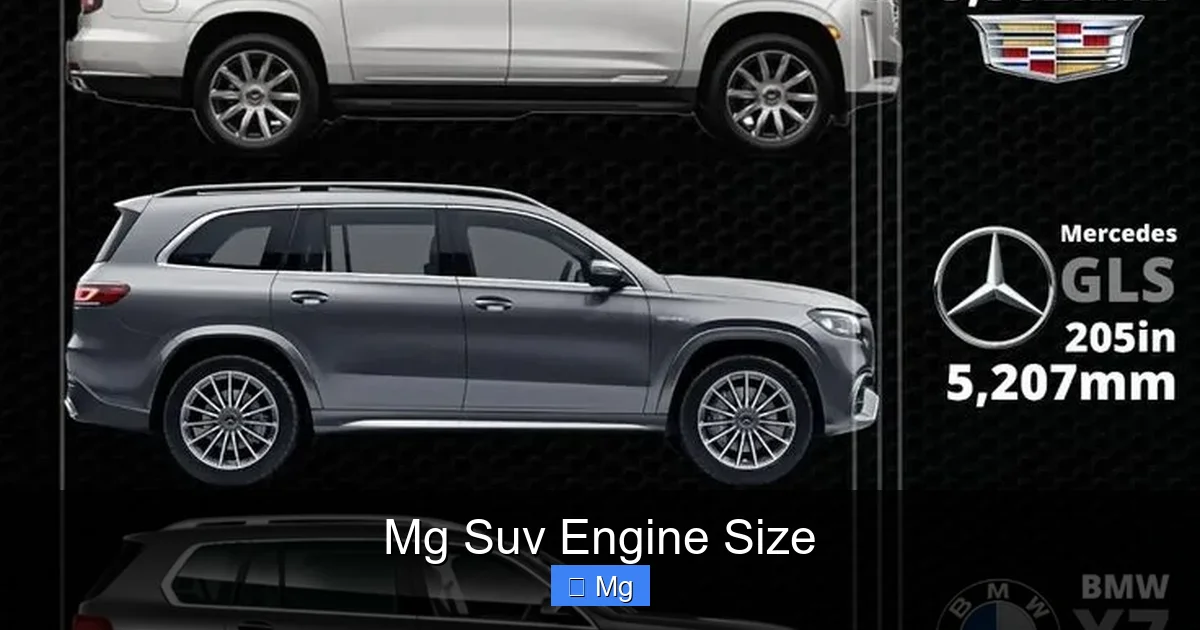
Choosing the right MG SUV engine size can make a big difference in your driving experience. Whether you’re after fuel economy, power, or a balance of both, MG offers a range of engine options tailored to different needs. This guide breaks down everything you need to know about MG SUV engine sizes.
Key Takeaways
- Engine size affects performance and fuel efficiency: Larger engines typically deliver more power but may consume more fuel, while smaller engines offer better mileage and lower emissions.
- MG offers a range of engine options: From compact 1.5L petrol engines to turbocharged 2.0L variants, MG SUVs cater to various driving preferences and budgets.
- Turbocharged engines enhance driving dynamics: Turbocharged versions in models like the MG HS provide a boost in torque and acceleration without drastically increasing engine size.
- Hybrid and electric options are expanding: With the rise of the MG ZS EV and upcoming plug-in hybrids, MG is shifting toward more sustainable powertrains alongside traditional engines.
- Driving conditions influence ideal engine choice: City drivers may prefer smaller, efficient engines, while those frequently driving on highways or towing benefit from larger, more powerful units.
- Maintenance and running costs vary by engine type: Smaller engines generally cost less to maintain, while turbocharged or hybrid systems may require specialized servicing.
- Future models may feature downsized turbo engines: As emissions regulations tighten, MG is likely to focus on smaller, more efficient turbocharged engines with advanced technology.
📑 Table of Contents
- Understanding MG SUV Engine Size: What You Need to Know
- MG SUV Engine Options: A Model-by-Model Breakdown
- How Engine Size Affects Performance and Fuel Economy
- Choosing the Right MG SUV Engine Size for Your Needs
- Future Trends: What’s Next for MG SUV Engines?
- Conclusion: Finding Your Perfect MG SUV Engine
Understanding MG SUV Engine Size: What You Need to Know
When shopping for an MG SUV, one of the first things you’ll notice is the variety of engine options available. From the compact MG ZS to the more robust MG HS and the fully electric MG ZS EV, MG has built a lineup that appeals to a wide range of drivers. But what exactly does “engine size” mean, and why does it matter when choosing your next vehicle?
Engine size, often measured in liters (L), refers to the total volume of all the cylinders in an internal combustion engine. It’s a key indicator of how much air and fuel the engine can burn during each cycle, which directly impacts power output, acceleration, and fuel consumption. In simple terms, a larger engine can produce more power, but it may also use more fuel. Conversely, a smaller engine is typically more fuel-efficient but might lack the punch needed for heavy loads or high-speed driving.
For MG SUVs, engine size plays a crucial role in balancing performance, efficiency, and cost. Whether you’re navigating city streets, cruising on the highway, or occasionally towing a trailer, the right engine size ensures your SUV delivers the driving experience you expect. In this guide, we’ll explore the different engine sizes available across the MG SUV range, how they perform in real-world conditions, and what factors you should consider when making your choice.
MG SUV Engine Options: A Model-by-Model Breakdown
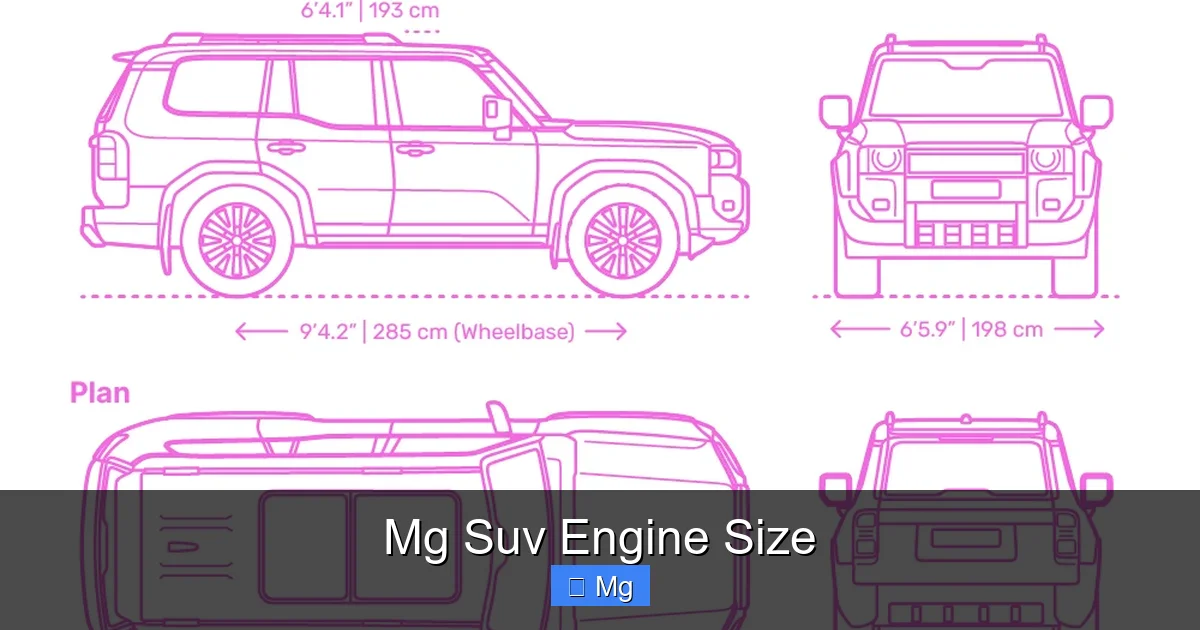
Visual guide about Mg Suv Engine Size
Image source: dimensionsguide.s3.amazonaws.com
MG offers a diverse lineup of SUVs, each with distinct engine configurations tailored to different needs. Let’s take a closer look at the engine sizes available in popular MG SUV models.
MG ZS: Compact Efficiency with 1.5L and 1.0L Options
The MG ZS is one of the brand’s most popular compact SUVs, known for its affordability, modern design, and practical interior. It comes with two main petrol engine options: a 1.5-liter naturally aspirated engine and a 1.0-liter turbocharged three-cylinder unit.
The 1.5L engine produces around 106 horsepower and 141 Nm of torque. It’s paired with either a 5-speed manual or a CVT (continuously variable transmission), making it ideal for city driving and short commutes. This engine prioritizes fuel efficiency, delivering up to 6.5 L/100km (around 43 mpg) in mixed driving conditions. It’s a great choice for drivers who value low running costs and don’t need high performance.
On the other hand, the 1.0L turbocharged engine offers 111 horsepower and 160 Nm of torque. Despite its smaller size, the turbocharger gives it a noticeable boost in low-end torque, which improves acceleration from a standstill. This makes it feel more responsive in traffic and better suited for highway driving. The 1.0T engine also comes with a 6-speed automatic transmission, offering smoother shifts and better refinement.
Both engines are designed with everyday usability in mind. The 1.5L is perfect for budget-conscious buyers, while the 1.0T offers a more engaging drive without sacrificing too much fuel economy.
MG HS: Power and Performance with 1.5L and 2.0L Turbo Engines
Stepping up in size and capability, the MG HS is a midsize SUV that offers a more premium experience. It’s available with two turbocharged petrol engines: a 1.5-liter and a 2.0-liter.
The 1.5L turbo engine delivers 169 horsepower and 250 Nm of torque. It’s paired with a 7-speed dual-clutch automatic transmission, providing quick shifts and smooth power delivery. This engine strikes a good balance between performance and efficiency, making it suitable for both city and highway driving. It’s powerful enough to handle merging onto freeways or climbing hills without strain, while still offering respectable fuel economy—around 7.5 L/100km (31 mpg).
For those who want more power, the 2.0L turbocharged engine is the way to go. It produces 231 horsepower and 360 Nm of torque, making it one of the most powerful engines in MG’s current lineup. This engine is available with a 6-speed automatic transmission and comes standard with all-wheel drive (AWD) on higher trims. The extra power makes the MG HS feel confident when overtaking, towing, or driving on winding roads. However, fuel consumption increases to around 9.0 L/100km (26 mpg), so it’s best suited for drivers who prioritize performance over economy.
The 2.0L engine is particularly appealing for families or adventurers who need extra capability. Whether you’re loading up for a road trip or towing a small trailer, this engine ensures the MG HS can handle the load with ease.
MG ZS EV: The Future with Electric Power
While not a traditional internal combustion engine, the MG ZS EV represents a significant shift in MG’s approach to powertrains. This fully electric SUV uses a single electric motor that produces 176 horsepower and 280 Nm of torque. With instant torque delivery and smooth acceleration, the ZS EV offers a quiet, responsive driving experience.
The electric motor is powered by a 51.1 kWh or 72.6 kWh lithium-ion battery pack, depending on the variant. The larger battery offers up to 440 km (273 miles) of range on a single charge (WLTP), making it suitable for daily commutes and longer journeys. Charging can be done via a standard home wall box or public fast chargers, with the ability to recharge from 10% to 80% in about 40 minutes using a 100 kW fast charger.
The ZS EV doesn’t have an “engine size” in the traditional sense, but its electric motor delivers performance comparable to a 2.0L petrol engine. It’s also more efficient, with energy consumption averaging around 16–18 kWh per 100 km. For eco-conscious drivers or those looking to reduce fuel costs, the ZS EV is a compelling alternative to petrol-powered SUVs.
How Engine Size Affects Performance and Fuel Economy
Engine size is more than just a number—it directly influences how your MG SUV behaves on the road. Understanding the relationship between engine size, performance, and fuel economy can help you make a smarter buying decision.
Power and Acceleration
Larger engines generally produce more power and torque, which translates to better acceleration and higher top speeds. For example, the MG HS with the 2.0L turbo engine can go from 0 to 100 km/h (62 mph) in around 7.5 seconds, while the 1.5L turbo version takes closer to 9 seconds. That difference may not seem huge, but it’s noticeable when merging onto highways or passing slower vehicles.
Turbocharged engines, even with smaller displacements, can deliver power similar to larger naturally aspirated engines. The turbocharger forces more air into the combustion chamber, allowing for more fuel to be burned and more power to be generated. This is why the 1.0L turbo in the MG ZS feels more responsive than the 1.5L naturally aspirated engine, despite having a smaller size.
Fuel Efficiency and Emissions
Smaller engines typically consume less fuel and produce fewer emissions, making them more environmentally friendly and cheaper to run. The 1.5L engine in the MG ZS, for instance, is designed for efficiency, with features like variable valve timing and lightweight components to reduce friction and improve combustion.
However, real-world fuel economy depends on more than just engine size. Driving habits, vehicle weight, aerodynamics, and transmission type all play a role. Aggressive driving, frequent idling, and carrying heavy loads can significantly increase fuel consumption, even in small engines.
Turbocharged engines can be more efficient under light loads because they can operate in a downsized mode, using less fuel when full power isn’t needed. But under heavy acceleration, they may consume more fuel than a larger naturally aspirated engine doing the same work.
Emissions are also a key consideration. Smaller, turbocharged engines often meet stricter emission standards due to advanced fuel injection and exhaust treatment systems. The MG ZS EV, of course, produces zero tailpipe emissions, making it the cleanest option for urban environments.
Towing and Load Capacity
If you plan to tow a trailer, boat, or caravan, engine size becomes even more important. Larger engines with higher torque outputs are better suited for towing because they can maintain speed and control under load.
The MG HS with the 2.0L turbo engine has a towing capacity of up to 2,000 kg (4,400 lbs), making it one of the most capable SUVs in MG’s lineup. The 1.5L turbo version can still tow up to 1,500 kg (3,300 lbs), which is sufficient for small trailers or jet skis. In contrast, the MG ZS is not officially rated for towing in many markets, so it’s best suited for light-duty use.
For electric SUVs like the ZS EV, towing is possible but reduces range significantly due to increased energy consumption. MG recommends reducing speed and planning charging stops when towing with the ZS EV.
Choosing the Right MG SUV Engine Size for Your Needs
With so many options available, how do you decide which engine size is right for you? The answer depends on your driving habits, lifestyle, and priorities.
City and Commuter Driving
If you primarily drive in the city or use your SUV for short commutes, a smaller engine like the 1.5L or 1.0L turbo in the MG ZS is likely the best fit. These engines are fuel-efficient, easy to maneuver in traffic, and cost less to insure and maintain. The 1.0L turbo offers a nice balance of efficiency and responsiveness, making it ideal for stop-and-go driving.
The MG ZS EV is also an excellent choice for city dwellers. With no fuel costs, low maintenance, and zero emissions, it’s perfect for daily trips and short errands. Just make sure you have access to charging at home or work.
Highway and Long-Distance Driving
For drivers who frequently travel on highways or take long road trips, a more powerful engine like the 1.5L or 2.0L turbo in the MG HS is worth considering. These engines provide better high-speed stability, quicker overtaking, and improved comfort at cruising speeds.
The 2.0L turbo, in particular, shines on the open road. Its strong torque output means the engine doesn’t have to work as hard to maintain speed, reducing noise and improving fuel economy on long drives. The AWD system also adds confidence in wet or slippery conditions.
Family and Outdoor Adventures
Families or outdoor enthusiasts who need extra space, power, and capability should look at the MG HS with the 2.0L turbo engine. It offers ample cargo room, seating for five, and the ability to tow or carry heavy gear. The higher ground clearance and AWD option make it suitable for light off-roading or driving on unpaved roads.
While the ZS EV is practical for families, its range and charging infrastructure may be limiting for long trips or remote areas. However, for urban families with access to charging, it’s a clean and cost-effective option.
Budget and Running Costs
Smaller engines generally cost less to buy, insure, and maintain. The 1.5L MG ZS is one of the most affordable SUVs in its class, with low depreciation and competitive insurance rates. Turbocharged engines may cost more upfront and require premium fuel, but they offer better performance and can still be economical with careful driving.
Electric vehicles like the ZS EV have higher initial costs but lower running expenses. Electricity is cheaper than petrol, and EVs have fewer moving parts, reducing maintenance needs. Government incentives and tax breaks in some regions can also lower the total cost of ownership.
Future Trends: What’s Next for MG SUV Engines?
As the automotive industry shifts toward sustainability and efficiency, MG is adapting its engine strategy to meet future demands. While traditional petrol engines will remain available for the foreseeable future, the brand is investing heavily in electrification and advanced powertrains.
Hybrid and Plug-in Hybrid Models
MG has already introduced plug-in hybrid versions of the HS in some markets, combining a 1.5L turbo engine with an electric motor and battery. These models offer the best of both worlds: electric-only driving for short trips and petrol power for longer journeys. Expect more hybrid options in the coming years as MG expands its electrified lineup.
Downsizing and Turbocharging
To meet stricter emissions standards, MG is likely to continue downsizing engines while using turbocharging and direct injection to maintain performance. Smaller, more efficient engines with advanced technology will become the norm, offering the power of larger engines with better fuel economy.
Electric Expansion
The success of the ZS EV has paved the way for more electric SUVs. MG plans to launch additional EV models, including larger SUVs and performance-oriented variants. As battery technology improves, we can expect longer ranges, faster charging, and lower prices.
Autonomous and Connected Features
Future MG SUVs will also feature more advanced driver assistance systems (ADAS), connectivity, and over-the-air updates. These technologies will enhance safety, convenience, and the overall driving experience, regardless of engine type.
Conclusion: Finding Your Perfect MG SUV Engine
Choosing the right MG SUV engine size isn’t just about power or fuel economy—it’s about finding the right balance for your lifestyle. Whether you prioritize efficiency, performance, or sustainability, MG offers a range of options to suit your needs.
For city drivers and budget-conscious buyers, the 1.5L or 1.0L turbo engines in the MG ZS provide an excellent mix of affordability and practicality. Families and adventure seekers will appreciate the power and versatility of the MG HS with its 1.5L or 2.0L turbo engines. And for those ready to embrace the future, the MG ZS EV delivers clean, quiet, and responsive electric driving.
As MG continues to innovate, we can expect even more efficient and capable engines in the years ahead. By understanding your driving habits and evaluating your priorities, you can confidently choose the MG SUV engine size that’s right for you.
Frequently Asked Questions
What engine sizes are available in MG SUVs?
MG offers a range of engine sizes across its SUV lineup, including 1.0L, 1.5L, and 2.0L petrol engines, as well as fully electric powertrains in models like the ZS EV. These options provide a balance of performance, efficiency, and capability.
Is a larger engine always better in an MG SUV?
Not necessarily. While larger engines offer more power and towing capacity, they may consume more fuel and cost more to maintain. The best engine size depends on your driving needs, budget, and priorities.
Can the MG ZS tow a trailer?
The MG ZS is not officially rated for towing in most markets due to its smaller engine and front-wheel-drive layout. For towing, consider the MG HS with the 2.0L turbo engine, which can handle up to 2,000 kg.
How does the MG ZS EV compare to petrol engines in terms of performance?
The MG ZS EV’s electric motor delivers 176 horsepower and instant torque, providing smooth and responsive acceleration similar to a 2.0L petrol engine. It’s also more efficient and produces zero emissions.
Are turbocharged engines more expensive to maintain?
Turbocharged engines may require more specialized servicing and premium fuel, but modern designs are reliable and built to last. Regular maintenance and using quality oil can help extend engine life.
Will MG release more electric SUVs in the future?
Yes, MG is expanding its electric lineup with plans for more EV models, including larger SUVs and plug-in hybrids. The brand is committed to sustainable mobility and reducing emissions.