

MG SUVs offer competitive fuel consumption for their class, blending style, space, and efficiency. Whether you’re driving in the city or on long highway trips, MG’s modern engines and lightweight designs help deliver solid mileage without sacrificing performance.
When it comes to choosing an SUV, fuel efficiency is often one of the top concerns for drivers. You want space, safety, and style—but you also don’t want to be stuck at the gas pump every week. That’s where MG SUVs come into play. Known for their bold designs, modern tech, and affordable pricing, MG has made a strong comeback in the global automotive market. But how do they stack up when it comes to fuel consumption?
MG, originally a British brand now owned by China’s SAIC Motor, has repositioned itself as a value-driven automaker offering feature-packed vehicles at competitive prices. Their SUV lineup—especially the MG ZS and MG HS—has gained popularity in Europe, Australia, and parts of Asia. These models are engineered to balance performance and economy, making them appealing to families, commuters, and urban drivers alike. But real-world fuel efficiency depends on more than just engine specs. It’s influenced by driving style, road conditions, vehicle maintenance, and even weather.
In this guide, we’ll dive deep into MG SUV fuel consumption, breaking down official ratings, real-world performance, and practical tips to help you get the most miles per gallon. Whether you’re considering buying an MG ZS, MG HS, or the plug-in hybrid variant, understanding fuel economy will help you make a smarter, more cost-effective decision.
Key Takeaways
- MG SUVs are designed for efficiency: With turbocharged engines and aerodynamic builds, models like the MG ZS and HS deliver strong fuel economy for compact and midsize SUVs.
- Real-world MPG varies by driving conditions: City driving typically yields lower mileage than highway cruising due to stop-and-go traffic and idling.
- Hybrid and mild-hybrid options improve efficiency: The MG HS Plug-in Hybrid offers significantly better fuel consumption, especially for short commutes.
- Driving habits impact fuel use: Smooth acceleration, steady speeds, and proper tire pressure can boost your SUV’s MPG by up to 20%.
- Technology aids fuel savings: Features like start-stop systems, regenerative braking, and eco-driving modes help reduce fuel consumption.
- Maintenance matters: Regular oil changes, clean air filters, and timely servicing keep your MG SUV running efficiently.
- Comparing models helps: The MG ZS tends to be more fuel-efficient than the larger MG HS, making it ideal for budget-conscious drivers.
📑 Table of Contents
Understanding Fuel Consumption in MG SUVs
Fuel consumption refers to how much fuel a vehicle uses over a certain distance—typically measured in miles per gallon (MPG) in the U.S. or liters per 100 kilometers (L/100km) in many other countries. For MG SUVs, fuel efficiency varies depending on the model, engine type, transmission, and drivetrain.
MG offers a range of powertrains across its SUV lineup. The most common is the 1.5-liter turbocharged gasoline engine, found in models like the MG ZS and MG HS. This engine is designed to deliver a good balance of power and economy. It typically produces around 160–170 horsepower, which is sufficient for daily driving and light highway use. Some models also come with a 2.0-liter turbo engine for more power, though this usually results in slightly lower fuel efficiency.
One of the key factors influencing fuel consumption is vehicle weight. MG SUVs are built with lightweight materials and streamlined designs to reduce drag and improve aerodynamics. For example, the MG ZS has a curb weight of around 1,350 kg (2,976 lbs), which is relatively light for its class. This helps it achieve better mileage compared to heavier competitors.
Another important element is the transmission. Most MG SUVs come with either a 6-speed manual or a 7-speed dual-clutch automatic (DCT). The DCT is designed for smooth shifting and improved fuel economy, especially in city driving. It allows the engine to operate more efficiently by keeping it in the optimal RPM range.
MG also incorporates fuel-saving technologies such as automatic start-stop systems, which shut off the engine when the car is idling (like at a red light) and restart it when you press the accelerator. This can reduce fuel consumption by up to 5–10% in stop-and-go traffic.
Official vs. Real-World Fuel Economy
It’s important to distinguish between official fuel economy figures and real-world performance. Manufacturers test vehicles under controlled conditions using standardized cycles (like the WLTP or NEDC), which may not always reflect everyday driving.
For example, the MG ZS 1.5T with a DCT transmission has an official combined fuel consumption of around 6.5 L/100km (approximately 36 MPG). In real-world driving, however, many owners report averages closer to 7.2–8.0 L/100km (33–30 MPG), especially in urban areas with frequent stops and starts.
Similarly, the MG HS 1.5T has an official rating of about 7.0 L/100km (34 MPG), but real-world usage often lands between 8.0 and 9.0 L/100km (29–26 MPG). These differences are normal and expected. Factors like aggressive driving, air conditioning use, carrying heavy loads, or driving in hilly terrain can all reduce efficiency.
That said, MG’s fuel economy is still competitive within its segment. Compared to rivals like the Nissan Qashqai or Hyundai Tucson, the MG ZS often matches or slightly outperforms them in fuel efficiency, especially in the compact SUV category.
MG ZS Fuel Consumption Breakdown
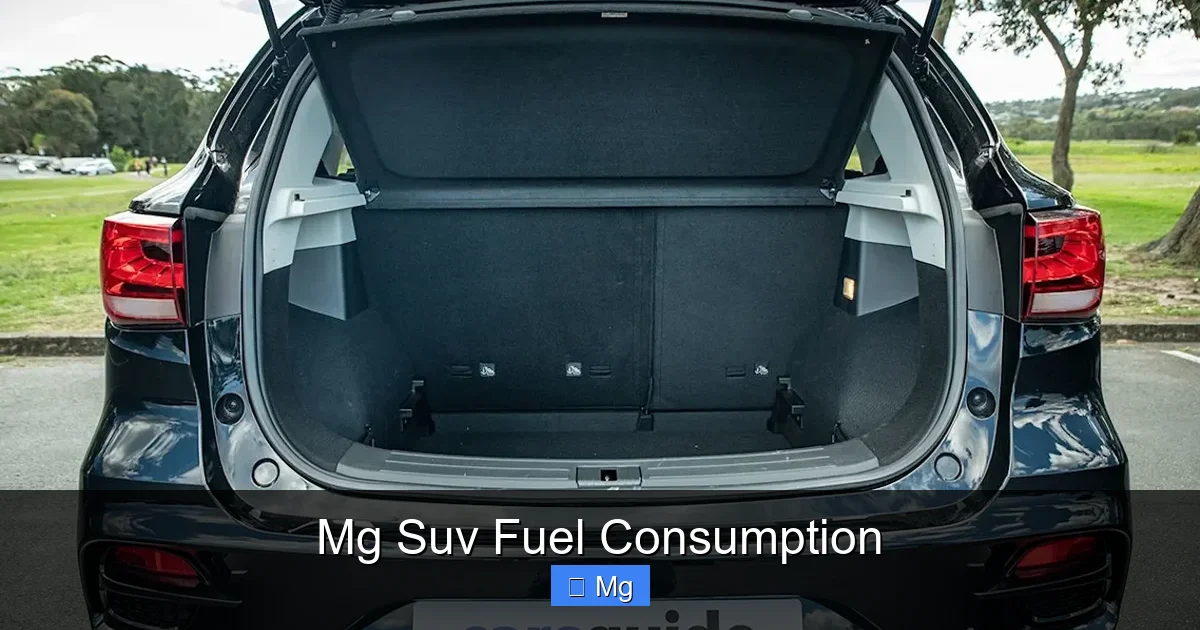
Visual guide about Mg Suv Fuel Consumption
Image source: carsguide-res.cloudinary.com
The MG ZS is one of the brand’s best-selling models, known for its spacious interior, modern infotainment system, and attractive pricing. It’s available in several variants, including the standard ZS, the sportier ZS Trophy, and the electric ZS EV. For this section, we’ll focus on the gasoline-powered versions.
The MG ZS is powered by a 1.5-liter turbocharged engine that delivers 162 horsepower and 250 Nm of torque. It’s paired with either a 6-speed manual or a 7-speed DCT automatic transmission. Front-wheel drive is standard, which also contributes to better fuel efficiency compared to all-wheel-drive systems.
According to official WLTP testing, the MG ZS 1.5T DCT achieves a combined fuel consumption of 6.5 L/100km (36 MPG). In city driving, this drops to around 7.8 L/100km (30 MPG), while highway cruising can improve to 5.8 L/100km (40 MPG). These numbers are impressive for a compact SUV with this level of space and features.
In real-world conditions, many owners report average fuel consumption between 7.0 and 8.0 L/100km (34–29 MPG). This can vary based on driving habits and location. For example, drivers in rural areas with long, steady highway commutes may see closer to 6.8 L/100km (35 MPG), while city drivers in heavy traffic might average 8.5 L/100km (27 MPG).
One practical example comes from a driver in Melbourne, Australia, who uses their MG ZS for daily commuting (about 40 km round trip) and weekend trips. Over six months, they recorded an average of 7.4 L/100km (32 MPG). They noted that using the eco-driving mode and avoiding rapid acceleration helped maintain better fuel economy.
Tips to Improve MG ZS Fuel Efficiency
If you own or are considering an MG ZS, here are some practical tips to maximize fuel efficiency:
– **Use eco mode:** The ZS comes with an eco-driving mode that adjusts throttle response and climate control to save fuel. Activating it can improve mileage by 5–10%.
– **Maintain steady speeds:** Avoid frequent acceleration and braking. Use cruise control on highways to maintain a constant speed.
– **Keep tires properly inflated:** Underinflated tires increase rolling resistance. Check tire pressure monthly and follow the recommended PSI in your owner’s manual.
– **Reduce weight:** Remove unnecessary items from the trunk. Every extra 50 kg can reduce fuel economy by up to 2%.
– **Service regularly:** Follow the maintenance schedule. Clean air filters, fresh oil, and properly functioning spark plugs all contribute to efficient engine performance.
– **Plan routes:** Use GPS to avoid traffic jams and construction zones. Idling in traffic burns fuel without moving you forward.
MG HS Fuel Consumption Overview
The MG HS is a step up from the ZS, offering a larger cabin, more premium features, and a more powerful engine. It’s positioned as a midsize SUV and competes with models like the Toyota RAV4 and Mazda CX-5. While it’s more spacious and comfortable, it also tends to consume more fuel due to its size and weight.
The standard MG HS comes with a 1.5-liter turbocharged engine producing 169 horsepower, paired with a 7-speed DCT. There’s also a 2.0-liter turbo option with 231 horsepower, which offers better performance but lower fuel efficiency. Additionally, MG offers a plug-in hybrid (PHEV) version of the HS, which significantly improves fuel economy for drivers who can charge regularly.
According to official WLTP figures, the MG HS 1.5T has a combined fuel consumption of 7.0 L/100km (34 MPG). City driving averages around 8.5 L/100km (28 MPG), while highway cruising can drop to 6.2 L/100km (38 MPG). The 2.0T model is less efficient, with a combined rating of 8.2 L/100km (29 MPG).
In real-world use, the 1.5T HS typically achieves between 8.0 and 9.0 L/100km (29–26 MPG). The larger size, heavier weight (around 1,550 kg), and more powerful engine contribute to this higher consumption. However, for drivers who value space and comfort, the trade-off may be worth it.
MG HS Plug-in Hybrid: A Game Changer
The MG HS Plug-in Hybrid is where fuel efficiency really shines. This model combines a 1.5-liter turbo engine with an electric motor and a 16.6 kWh battery. It offers an all-electric range of up to 50 km (31 miles), which is ideal for short commutes and city driving.
When running on electric power alone, the HS PHEV consumes no fuel. Once the battery is depleted, it operates like a regular hybrid, switching between the engine and motor for optimal efficiency. The official combined fuel consumption is just 1.7 L/100km (138 MPG equivalent), though this assumes regular charging.
In real-world conditions, drivers who charge daily often report fuel consumption below 3.0 L/100km (78 MPG). Even without frequent charging, the hybrid system still delivers better efficiency than the standard gasoline model—typically around 6.0–7.0 L/100km (39–34 MPG).
For example, a driver in London uses their MG HS PHEV for school runs and weekend trips. They charge at home every night and rarely use the engine during the week. Their average fuel consumption over three months was 2.1 L/100km (112 MPG), saving them hundreds in fuel costs compared to a traditional SUV.
Factors That Affect MG SUV Fuel Consumption
While engine specs and vehicle design play a big role, several external factors can influence how much fuel your MG SUV uses. Understanding these can help you drive more efficiently and save money.
Driving Style and Habits
How you drive has a major impact on fuel economy. Aggressive driving—rapid acceleration, hard braking, and speeding—can reduce fuel efficiency by up to 30%. Smooth, gradual inputs are key.
For instance, accelerating gently from a stop and anticipating traffic lights (to avoid unnecessary braking) can make a noticeable difference. Using cruise control on highways helps maintain a steady speed, which is more efficient than fluctuating between 90 and 110 km/h.
Road and Weather Conditions
Driving uphill, on rough roads, or in heavy rain or snow increases fuel consumption. Cold weather also affects efficiency—engines take longer to warm up, and winter tires create more resistance.
In winter, it’s common to see a 10–20% drop in fuel economy. Using block heaters (in very cold climates) and avoiding excessive idling can help mitigate this.
Vehicle Load and Aerodynamics
Carrying heavy loads or towing increases fuel use. Roof racks and cargo boxes also create drag, reducing aerodynamics. Removing them when not in use can improve mileage by 5–15%, especially at highway speeds.
Fuel Quality and Type
Using the correct fuel grade (as recommended in your owner’s manual) ensures optimal engine performance. While premium fuel isn’t always necessary, using low-quality or incorrect fuel can harm efficiency and engine health over time.
Comparing MG SUVs to Competitors
To put MG SUV fuel consumption in perspective, let’s compare it to some popular rivals.
The MG ZS competes with the Nissan Qashqai, Hyundai Kona, and Toyota C-HR. The Qashqai 1.3 DIG-T has a combined fuel consumption of 6.2 L/100km (38 MPG), slightly better than the ZS. However, the ZS offers more interior space and a lower price point, making it a strong value contender.
The MG HS goes up against the Toyota RAV4 and Mazda CX-5. The RAV4 Hybrid achieves an impressive 5.0 L/100km (47 MPG), outperforming the standard HS. However, the MG HS PHEV closes the gap with its hybrid efficiency and lower upfront cost.
Overall, MG SUVs offer competitive fuel economy, especially when you consider their affordability and feature-rich packages. They may not be the absolute most efficient in every category, but they strike a great balance between cost, comfort, and consumption.
Tips to Maximize Fuel Efficiency in Your MG SUV
No matter which MG SUV you drive, these tips can help you get the most out of every liter of fuel:
– **Drive smoothly:** Avoid jackrabbit starts and sudden stops.
– **Use cruise control:** On highways, it helps maintain a steady, efficient speed.
– **Keep up with maintenance:** Regular oil changes, tire rotations, and air filter replacements keep your engine running clean.
– **Reduce idling:** Turn off the engine if you’re stopped for more than a minute.
– **Plan your trips:** Combine errands into one outing to avoid multiple cold starts.
– **Use air conditioning wisely:** At low speeds, open windows; at high speeds, use AC to reduce drag.
– **Monitor your fuel economy:** Use the onboard computer to track your MPG and adjust habits accordingly.
Conclusion
MG SUVs deliver solid fuel efficiency for their class, especially when you consider their price, features, and driving dynamics. The MG ZS stands out as a fuel-sipping compact SUV, ideal for city drivers and families on a budget. The MG HS offers more space and power, with the plug-in hybrid version delivering exceptional economy for those willing to charge regularly.
While real-world fuel consumption may differ from official figures, MG’s use of modern engines, lightweight construction, and fuel-saving technologies helps keep mileage competitive. By adopting smart driving habits and maintaining your vehicle, you can further improve efficiency and reduce your fuel costs.
Whether you’re commuting daily, taking weekend road trips, or just looking for a reliable, stylish SUV, MG offers a range of options that balance performance and economy. With rising fuel prices and growing environmental awareness, choosing a fuel-efficient SUV like an MG is not just smart—it’s sustainable.
Frequently Asked Questions
How fuel efficient is the MG ZS?
The MG ZS 1.5T has an official combined fuel consumption of 6.5 L/100km (36 MPG). Real-world averages typically range from 7.0 to 8.0 L/100km (34–29 MPG), depending on driving conditions.
Is the MG HS good on fuel?
The standard MG HS 1.5T achieves around 7.0 L/100km (34 MPG) officially, with real-world use between 8.0 and 9.0 L/100km (29–26 MPG). The plug-in hybrid version is much more efficient, often under 3.0 L/100km (78 MPG).
What affects MG SUV fuel consumption?
Driving style, road conditions, vehicle load, weather, and maintenance all impact fuel use. Smooth driving and regular servicing can improve efficiency by up to 20%.
Can I improve my MG SUV’s fuel economy?
Yes. Use eco mode, maintain steady speeds, keep tires inflated, reduce weight, and service regularly. These habits can significantly boost your MPG.
How does the MG HS PHEV compare to gasoline models?
The MG HS Plug-in Hybrid uses far less fuel, especially when charged regularly. It can achieve under 3.0 L/100km (78 MPG), making it ideal for short commutes and eco-conscious drivers.
Are MG SUVs cheaper to run than competitors?
MG SUVs offer competitive fuel economy and lower purchase prices than many rivals. Combined with affordable maintenance, they can be cheaper to run over time.