
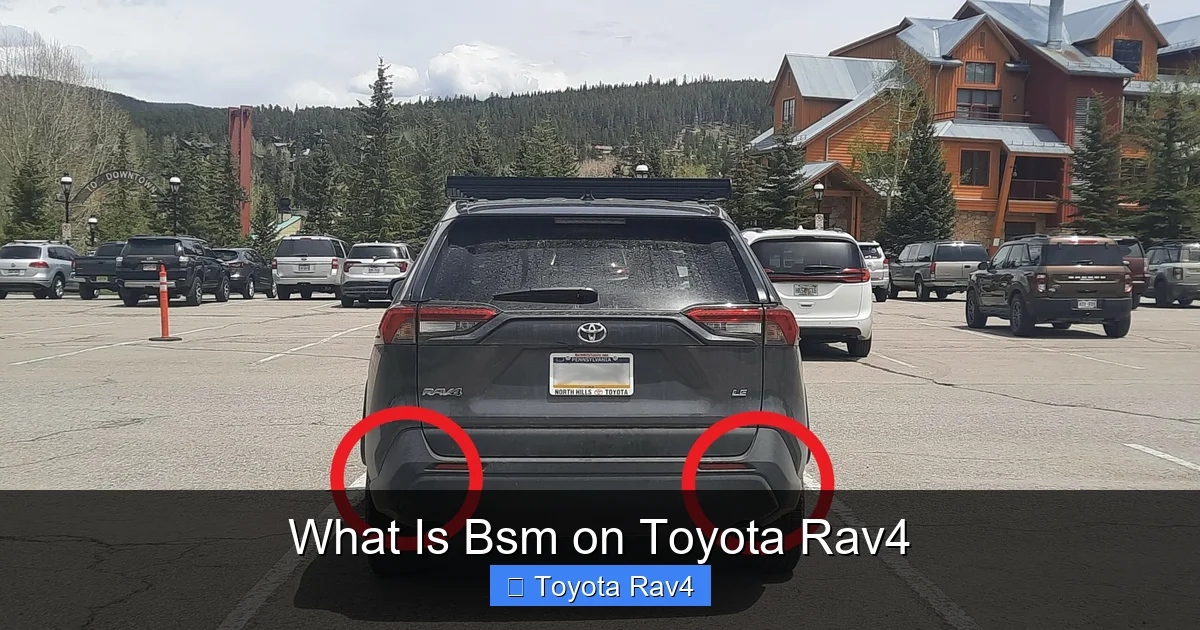
BSM on the Toyota RAV4 stands for Blind Spot Monitor, a smart safety system that alerts drivers to vehicles in their blind spots. It uses radar sensors to detect nearby cars and warns you with visual or audible signals, helping prevent accidents during lane changes.
If you’ve ever driven a Toyota RAV4—especially a newer model—you may have noticed a small icon light up on your side mirror or dashboard when changing lanes. That’s your car saying, “Hey, there’s someone in your blind spot!” This helpful feature is called BSM, or Blind Spot Monitor. It’s one of the many intelligent safety technologies Toyota has built into the RAV4 to keep you and your passengers safer on the road.
But what exactly is BSM? How does it work? And why should you care about it when shopping for or driving a RAV4? In this guide, we’ll break down everything you need to know about BSM on the Toyota RAV4—from how it functions to when it’s most useful, and even how to maintain it. Whether you’re a current RAV4 owner or considering buying one, understanding BSM can make your driving experience smoother, safer, and more confident.
The Toyota RAV4 has evolved from a compact SUV into one of the most popular vehicles in its class, thanks in large part to its blend of reliability, fuel efficiency, and advanced safety features. Among these, BSM stands out as a practical, everyday tool that helps prevent one of the most common causes of accidents: lane-change collisions. Unlike some high-tech features that feel futuristic or unnecessary, BSM is something you’ll actually use—and appreciate—on a daily basis.
Key Takeaways
- BSM stands for Blind Spot Monitor: A driver-assist technology designed to enhance safety by detecting vehicles in hard-to-see areas.
- Uses radar sensors: Located in the rear bumper, these sensors continuously scan the sides of your RAV4 for approaching vehicles.
- Visual and audible alerts: Warns drivers with dashboard icons and, in some models, steering wheel vibrations or chimes.
- Improves lane change safety: Especially helpful on highways or in heavy traffic where blind spots pose a risk.
- Standard on most trims: Available on nearly all modern RAV4 models, including LE, XLE, Limited, and hybrid versions.
- Works with other safety systems: Often paired with Rear Cross-Traffic Alert (RCTA) and Lane Departure Warning for full coverage.
- Not a substitute for checking mirrors: BSM is an aid, not a replacement for safe driving habits like shoulder checks.
📑 Table of Contents
What Does BSM Stand For?
BSM stands for **Blind Spot Monitor**. It’s a driver-assistance system designed to detect vehicles in the areas alongside and slightly behind your RAV4 that are difficult to see using just your side mirrors. These “blind spots” exist on every vehicle, but they’re especially problematic during highway driving or when merging into traffic.
The Blind Spot Monitor uses a combination of radar sensors and onboard software to monitor the zones on both sides of your vehicle. When another car enters this zone—typically about one lane over and up to 10–15 feet behind you—the system triggers a warning. This warning usually appears as a small illuminated icon on your side mirror. If you signal to change lanes while a vehicle is in your blind spot, the system may escalate the alert with a flashing light, a chime, or even a vibration in the steering wheel, depending on your RAV4’s trim level and options.
It’s important to note that BSM is not the same as a rearview camera or parking sensors. While those help with low-speed maneuvers and reversing, BSM is specifically focused on highway and city driving scenarios where lane changes occur. It’s a proactive safety net that works quietly in the background, giving you peace of mind without requiring any action on your part—until it’s needed.
How Does BSM Work on the Toyota RAV4?
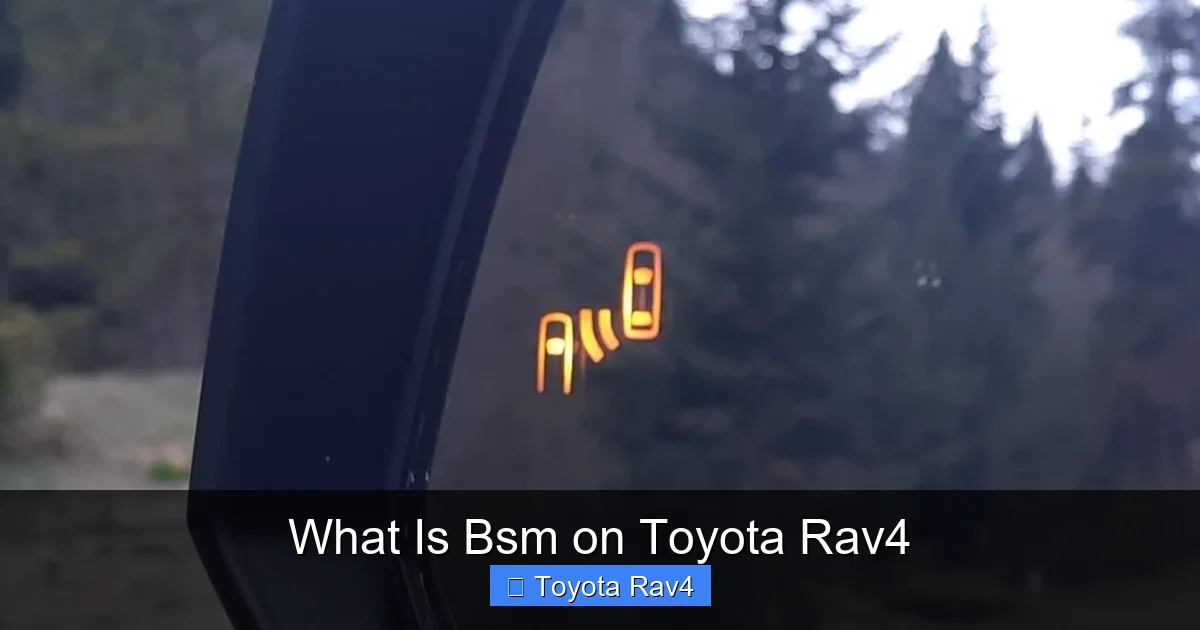
Visual guide about What Is Bsm on Toyota Rav4
Image source: rav4resource.com
The Blind Spot Monitor on the Toyota RAV4 operates using advanced radar technology. Two small radar sensors are embedded in the rear bumper, one on each side of the vehicle. These sensors emit radio waves that bounce off nearby objects—like other cars, trucks, or motorcycles—and return to the sensor. The system then calculates the distance, speed, and direction of those objects to determine if they’re in your blind spot.
Here’s a step-by-step breakdown of how it works:
1. **Continuous Monitoring:** The radar sensors are always active when the vehicle is in motion (usually above 20–30 mph, though this varies slightly by model year). They scan the areas approximately one lane width to the left and right, extending several feet behind the RAV4.
2. **Detection:** When another vehicle enters the monitored zone, the system registers its presence. It doesn’t matter if the other vehicle is moving faster or slower than you—BSM detects relative motion and position.
3. **Warning Activation:** If a vehicle is detected in your blind spot, a yellow or orange icon lights up on the corresponding side mirror. This is your first-level alert.
4. **Escalated Alert (if needed):** If you activate your turn signal to change lanes while a vehicle is in the blind spot, the system escalates the warning. This might include a flashing icon, an audible beep, or—on higher trims like the Limited or Adventure—a gentle vibration in the steering wheel.
5. **Deactivation:** Once the other vehicle moves out of the blind spot zone, the warning light turns off automatically.
One of the smartest aspects of BSM is that it’s designed to avoid false alarms. It won’t trigger for stationary objects like guardrails or parked cars, nor will it react to vehicles that are far behind you. It focuses only on moving vehicles in the critical blind spot area where a collision could occur during a lane change.
Sensor Placement and Range
The radar sensors are strategically placed in the rear bumper, just above the exhaust or near the taillights. This positioning allows them to cover a wide arc without being obstructed by the vehicle’s body. The effective range is typically about 10–15 feet behind the RAV4 and extends outward to cover the adjacent lane.
Because the sensors are radar-based, they work well in various weather conditions—rain, fog, or snow—unlike camera-based systems that might struggle with visibility. However, heavy snow buildup on the bumper or mud covering the sensors can temporarily reduce effectiveness, so it’s important to keep the rear bumper clean, especially in winter.
Integration with Other Safety Features
BSM doesn’t work in isolation. On the Toyota RAV4, it’s often part of a broader suite of safety technologies known as Toyota Safety Sense (TSS). Depending on your model year and trim, BSM may be bundled with:
– **Rear Cross-Traffic Alert (RCTA):** Alerts you when vehicles are approaching from the sides while reversing, such as in parking lots.
– **Lane Departure Warning (LDW):** Warns you if you begin to drift out of your lane without signaling.
– **Dynamic Radar Cruise Control (DRCC):** Maintains a set distance from the vehicle ahead.
– **Pre-Collision System (PCS):** Detects potential front-end collisions and can apply brakes automatically.
When combined, these features create a comprehensive safety net. For example, if you’re reversing out of a parking space, RCTA might warn you of an oncoming car, while BSM could alert you to a vehicle approaching from the side as you prepare to merge into traffic. This layered approach is what makes the RAV4 one of the safest SUVs in its class.
Which Toyota RAV4 Models Have BSM?
Blind Spot Monitor has become increasingly common across the Toyota RAV4 lineup. While it wasn’t standard on earlier models, it’s now available—and often included—on most trims starting from around 2016 and later.
Here’s a quick overview of BSM availability by trim level (as of recent model years):
– **LE:** BSM is typically available as part of an optional package, such as the LE Convenience Package or Safety Package.
– **XLE:** Often includes BSM as standard or available with the XLE Premium Package.
– **XLE Premium:** Usually comes with BSM standard.
– **Limited:** BSM is standard, along with other advanced features like RCTA and parking assist.
– **Adventure and TRD Off-Road:** These rugged trims include BSM as standard, recognizing that off-road drivers still need safety support on highways.
– **Hybrid and Prime Models:** All hybrid and plug-in hybrid RAV4s come with BSM standard, as Toyota prioritizes safety in its electrified lineup.
If you’re buying a used RAV4, it’s worth checking the vehicle’s window sticker or asking the dealer about BSM availability. You can also look for the side mirror warning icons—if your RAV4 has them, it likely has BSM.
How to Confirm BSM Is Active
To verify that BSM is working on your RAV4, follow these steps:
1. Turn on the ignition (you don’t need to drive).
2. Look at the side mirrors. You should see a small icon—usually a car shape with lines radiating from it.
3. If the icon is off, BSM may be disabled. Check your vehicle settings via the multi-information display (MID) on the dashboard.
4. To enable or disable BSM, go to the “Settings” menu, then “Driver Assistance,” and toggle “Blind Spot Monitor.”
Note: Some models allow you to customize BSM sensitivity or turn it off entirely. However, it’s generally recommended to keep it on for maximum safety.
Real-World Benefits of BSM on the RAV4
So, why does BSM matter in everyday driving? Let’s look at some practical scenarios where this feature can make a real difference.
Highway Driving and Merging
Imagine you’re cruising down the highway at 70 mph. You signal to change lanes, but a car is riding in your blind spot, just out of view in your side mirror. Without BSM, you might not see it until it’s too late. With BSM, the warning light on your mirror flashes, and you pause your lane change. That extra second of awareness could prevent a sideswipe collision.
This is especially helpful for drivers who frequently commute on busy interstates or multi-lane roads. BSM acts like a second set of eyes, constantly scanning areas you can’t easily see.
City Driving and Heavy Traffic
In stop-and-go traffic, drivers often change lanes frequently to find faster routes. But with cars zipping in and out, it’s easy to miss someone in your blind spot. BSM helps you make safer decisions by alerting you to vehicles that might be hidden from view.
For example, if you’re trying to merge into the left lane during rush hour, BSM can warn you if a motorcycle is approaching quickly from behind. Motorcycles are particularly hard to spot due to their small size, making BSM especially valuable.
Parking and Reversing (with RCTA)
While BSM focuses on forward motion, it often works in tandem with Rear Cross-Traffic Alert. When you’re backing out of a parking spot, RCTA uses the same rear sensors to detect vehicles approaching from the sides. If a car is coming, you’ll hear a beep and see a warning on the infotainment screen.
This dual-system approach is a game-changer in crowded parking lots, where visibility is limited and drivers are often distracted.
Driving at Night or in Poor Weather
At night, or in rain, fog, or snow, visibility drops significantly. BSM’s radar-based system continues to function reliably, even when your eyes can’t. This makes it a dependable ally during winter driving or late-night commutes.
Limitations and Things to Keep in Mind
While BSM is a powerful safety tool, it’s not perfect. Understanding its limitations will help you use it wisely.
Not a Replacement for Shoulder Checks
BSM is an assistive technology, not a substitute for safe driving habits. Always perform a quick shoulder check before changing lanes, especially in heavy traffic or when towing a trailer (which can alter your blind spot). The system can’t detect everything—like bicycles, pedestrians, or vehicles in extreme weather—so your eyes and judgment are still essential.
Sensor Obstruction
Dirt, snow, ice, or mud on the rear bumper can block the radar sensors and disable BSM. If the system isn’t working, check the bumper for debris. A quick wipe with a cloth or hose can often restore functionality.
Doesn’t Detect All Objects
BSM is designed to detect vehicles, not smaller objects like animals, debris, or stationary poles. It also may not detect vehicles approaching at very high speeds from far behind, though it’s optimized for typical driving conditions.
Can Be Disabled
Some drivers find the alerts annoying and turn off BSM. While this is possible, it’s not recommended. The system is there to help, not hinder. If the alerts are too frequent, consider adjusting your driving habits or checking if the sensitivity can be tuned in your vehicle settings.
Tips for Getting the Most Out of BSM
To make the most of your RAV4’s Blind Spot Monitor, follow these practical tips:
1. **Keep the Bumper Clean:** Regularly wash the rear bumper, especially in winter, to ensure sensors aren’t blocked.
2. **Don’t Rely on It Exclusively:** Always check your mirrors and do a shoulder check before changing lanes.
3. **Use It in Conjunction with Turn Signals:** BSM is most effective when you use your turn signals. The system escalates alerts only when you signal, so make it a habit.
4. **Educate Passengers:** If you’re teaching a teen or new driver how to use the RAV4, explain how BSM works and why it’s important.
5. **Check for Software Updates:** Occasionally, Toyota releases updates that improve sensor performance. Visit your dealer or check Toyota’s website for updates.
6. **Test It Safely:** On a quiet road, you can test BSM by having a friend drive alongside you in the blind spot zone. Watch for the warning light to confirm it’s working.
Conclusion
The Blind Spot Monitor (BSM) on the Toyota RAV4 is more than just a fancy acronym—it’s a smart, reliable safety feature that can help prevent accidents and boost your confidence behind the wheel. By using radar sensors to detect vehicles in your blind spots, BSM gives you an extra layer of protection during lane changes, highway driving, and busy traffic situations.
Whether you’re navigating a crowded city street or cruising down the interstate, BSM works quietly in the background, alerting you when it matters most. While it’s not a replacement for attentive driving, it’s a valuable tool that complements your skills and enhances overall safety.
As Toyota continues to refine its safety technology, features like BSM are becoming standard across the RAV4 lineup, making this popular SUV even more appealing to families, commuters, and adventure seekers alike. So the next time you see that little icon light up on your mirror, remember: it’s your car looking out for you.
Frequently Asked Questions
What does BSM stand for on a Toyota RAV4?
BSM stands for Blind Spot Monitor. It’s a safety system that uses radar sensors to detect vehicles in your blind spots and alerts you with visual or audible warnings.
Is BSM standard on all Toyota RAV4 models?
BSM is standard on most newer RAV4 trims, including XLE Premium, Limited, and hybrid models. It may be optional on base trims like the LE, depending on the package.
Can I turn off BSM on my RAV4?
Yes, you can disable BSM through the vehicle’s settings menu. However, it’s recommended to keep it on for added safety.
Does BSM work in the rain or snow?
Yes, BSM uses radar technology, so it works well in most weather conditions. However, heavy snow or mud on the rear bumper can temporarily block the sensors.
Will BSM detect motorcycles or bicycles?
BSM is designed to detect vehicles, including motorcycles, but it may not detect smaller objects like bicycles or pedestrians, especially at high speeds.
How do I know if BSM is working properly?
Look for the warning icon on your side mirror when driving. If it doesn’t light up when a vehicle is in your blind spot, check for sensor obstruction or consult your dealer.