
The Toyota RAV4 does not come with a third-row seat in any current model year. Despite its popularity as a compact SUV, the RAV4 is designed with two rows and seating for up to five passengers, making it ideal for small families or urban drivers who prioritize fuel efficiency and maneuverability over maximum passenger capacity.
If you’re in the market for a reliable, fuel-efficient SUV that blends city-friendly size with off-road capability, the Toyota RAV4 is likely high on your list. Since its debut in the mid-1990s, the RAV4 has evolved from a quirky compact crossover into one of the best-selling SUVs in the world. It’s known for its rugged styling, impressive fuel economy, standard all-wheel drive on most trims, and Toyota’s legendary reliability. But as your family grows or your travel needs expand, you might be wondering: Does the Toyota RAV4 have a 3rd row?
The short answer? No—it doesn’t. Despite its spacious interior and versatile design, the RAV4 is built as a two-row SUV with seating for five. This has been consistent across every generation and model year, including the latest 2024 lineup. While some competitors in the compact SUV segment—like the Honda CR-V or Mazda CX-5—also stick to five seats, others, such as the Hyundai Santa Fe or Kia Sorento, offer optional third rows. Toyota, however, has chosen a different path with the RAV4, focusing on maximizing cargo space, ride comfort, and fuel efficiency rather than adding a cramped third row.
That said, the absence of a third row doesn’t make the RAV4 a poor choice for families. In fact, many buyers appreciate the extra room in the second row and the larger cargo area behind it. The RAV4’s rear seats offer ample legroom and headroom for adults and children alike, and the flat floor design makes it easy for three passengers to sit comfortably on long trips. Plus, with up to 69.8 cubic feet of cargo space when the rear seats are folded down, the RAV4 outperforms many three-row SUVs in terms of storage flexibility.
So why doesn’t Toyota offer a third row in the RAV4? The reasons are rooted in design philosophy, market positioning, and practicality. Toyota already has a strong lineup of larger SUVs—like the Highlander and 4Runner—that cater to families needing seven or eight seats. By keeping the RAV4 as a five-seater, Toyota ensures it remains agile, fuel-efficient, and affordable, while avoiding direct competition with its own bigger models. It’s a smart segmentation strategy that allows each vehicle to serve a distinct purpose.
In this article, we’ll dive deep into the RAV4’s seating configuration, explore why Toyota made this design choice, compare it to three-row alternatives, and help you decide whether the RAV4 is the right fit for your lifestyle—even without that elusive third row.
Key Takeaways
- No Third Row Available: The Toyota RAV4 has never offered a factory-installed third-row seat in its standard configuration across all model years and trims.
- Five-Passenger Seating: All RAV4 models are built with two rows of seating, comfortably accommodating five passengers—two in the front and three in the rear.
- Cargo Space Over Passengers: Toyota prioritizes cargo versatility and interior flexibility in the RAV4, offering generous storage even without a third row.
- Alternative Toyota SUVs with Third Rows: Families needing more seating should consider the Toyota Highlander, Grand Highlander, or 4Runner, which offer third-row options.
- RAV4 Hybrid and Plug-in Variants: Even the RAV4 Hybrid and RAV4 Prime plug-in hybrid models lack a third row, maintaining the same five-seat layout.
- Aftermarket Modifications Not Recommended: Adding a third row after purchase is unsafe, impractical, and voids warranties—stick to factory configurations.
- Perfect for Small Families: The RAV4 remains a top choice for drivers who want SUV utility without the bulk of a larger three-row vehicle.
📑 Table of Contents
Understanding the Toyota RAV4’s Seating Layout
When you step inside the Toyota RAV4, the first thing you’ll notice is how open and airy the cabin feels. The dashboard is clean and modern, with intuitive controls and high-quality materials—especially on higher trims like the Limited or Adventure. But when it comes to seating, the layout is straightforward: two front bucket seats and a three-person bench in the back. That’s it. No hidden jump seats, no fold-out trays, no secret third row.
The RAV4’s interior is designed around the needs of five passengers. The front seats are supportive and adjustable, with available features like heating, ventilation, and power adjustments. The rear bench seat splits 60/40 and reclines slightly, offering a comfortable ride for backseat passengers. Legroom in the second row is generous—about 37.8 inches—which is more than enough for most adults and teenagers. Headroom is also ample, even for taller passengers, thanks to the RAV4’s tall roofline.
One of the standout features of the RAV4’s rear seating is the flat floor. Unlike some SUVs that have a center tunnel raising the floor in the back, the RAV4’s floor is nearly level. This makes it much easier for the middle passenger to sit comfortably, especially on long drives. The seat cushions are also well-padded, and the backrest angle is adjustable on some trims, adding to the overall comfort.
Cargo space is another area where the RAV4 shines—partly because it doesn’t have to accommodate a third row. With the rear seats up, you get 37.5 cubic feet of storage behind the second row. That’s enough room for several suitcases, a week’s worth of groceries, or a stroller and diaper bag. Fold the rear seats down, and that number jumps to an impressive 69.8 cubic feet—more than many midsize SUVs with third rows.
This design choice reflects Toyota’s focus on practicality. Instead of squeezing in a third row that would likely be cramped and hard to access, Toyota gave the RAV4 more usable space for people and gear. It’s a trade-off that makes sense for the majority of buyers who don’t need to transport seven people regularly.
Why Toyota Doesn’t Offer a Third Row in the RAV4

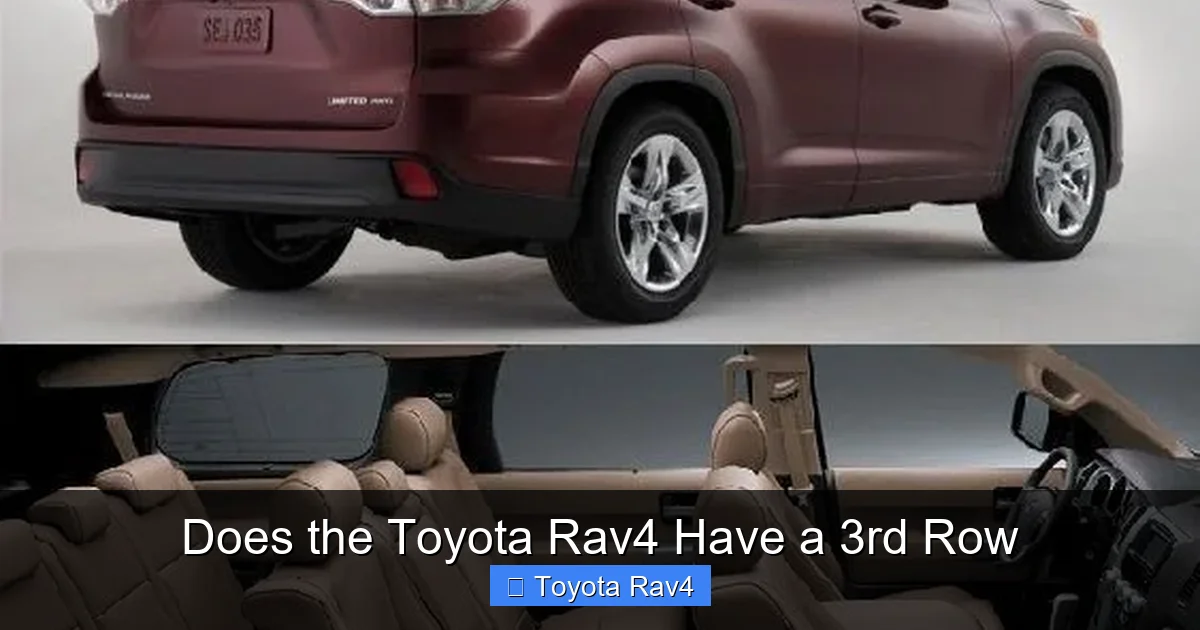
Visual guide about Does the Toyota Rav4 Have a 3rd Row
Image source: i.pinimg.com
So, why hasn’t Toyota added a third row to the RAV4, especially when competitors like the Ford Explorer or Nissan Pathfinder offer them in smaller packages? The answer lies in a combination of engineering, market strategy, and brand positioning.
First, let’s talk about size. The RAV4 is classified as a compact SUV, with an overall length of around 180 inches. That’s about 15 inches shorter than the Toyota Highlander, which does offer a third row. Adding a third row would require either stretching the wheelbase (which would change the vehicle’s character) or shrinking the cargo area and second-row space. Toyota has chosen to keep the RAV4’s dimensions compact to maintain its agility, fuel efficiency, and ease of parking—key selling points for urban and suburban drivers.
Second, there’s the issue of safety and structural integrity. A third row would require reinforcing the rear of the vehicle, adding weight, and potentially compromising crash performance. Toyota is known for its rigorous safety standards, and introducing a third row could complicate airbag placement, seatbelt systems, and overall crashworthiness. The current five-seat layout allows Toyota to optimize safety features like side curtain airbags and rear-seat reminders without compromise.
Third, Toyota already has a well-established lineup of three-row SUVs. The Highlander, for example, is a midsize SUV that seats up to eight passengers and offers a smooth ride, plenty of tech, and Toyota’s hybrid powertrain. The newer Grand Highlander takes it a step further with even more space and luxury features. The 4Runner, while more rugged and off-road focused, also offers an optional third row. By keeping the RAV4 as a two-row vehicle, Toyota avoids cannibalizing sales from its larger models.
Finally, there’s the matter of cost and complexity. Adding a third row isn’t just about folding down a seat—it involves redesigning the floor pan, adding more seatbelts, installing additional airbags, and reconfiguring the HVAC system to reach the back. All of this would increase the vehicle’s price, weight, and maintenance needs. For a vehicle that’s marketed as an affordable, efficient, and reliable compact SUV, that’s a significant drawback.
In short, Toyota’s decision to forgo a third row in the RAV4 is a deliberate one. It allows the RAV4 to excel in areas that matter most to its target audience: fuel economy, cargo space, ease of driving, and value. And for the majority of buyers, that’s more than enough.
RAV4 Hybrid and Plug-in Hybrid: Same Seating, More Efficiency
One common question among eco-conscious buyers is whether the RAV4 Hybrid or the RAV4 Prime plug-in hybrid offers a third row. The answer is no—both variants stick to the same five-seat configuration as the gas-only model.
The RAV4 Hybrid, which has been available since 2016, combines a 2.5-liter four-cylinder engine with electric motors to deliver up to 219 horsepower and an EPA-estimated 40 mpg in the city. It’s one of the most fuel-efficient SUVs in its class, and it maintains the same interior layout as the standard RAV4. The battery pack is tucked under the rear seats, so it doesn’t eat into cargo or passenger space.
The RAV4 Prime, introduced in 2021, takes things a step further. It’s a plug-in hybrid that can travel up to 42 miles on electric power alone—enough for most daily commutes. When the battery is depleted, it operates like a regular hybrid. Despite the added complexity of the plug-in system, Toyota managed to keep the interior unchanged. There’s no third row, but you do get the same spacious second row and generous cargo area.
In fact, the RAV4 Prime’s electric range makes it an even more appealing option for families who want to reduce their carbon footprint without sacrificing utility. You can drive to school, run errands, and commute to work on electricity alone, then switch to hybrid mode for longer trips. And because there’s no third row, you still have plenty of room for sports gear, camping equipment, or luggage.
For buyers who want both efficiency and space, the RAV4 Hybrid and Prime are excellent choices—just don’t expect a third row.
Three-Row Alternatives from Toyota
If you love the Toyota brand but need seating for seven or eight, don’t worry—Toyota has you covered. The company offers several SUVs with third-row seating, each tailored to different needs and lifestyles.
The Toyota Highlander is the most direct alternative to the RAV4. It’s a midsize SUV that seats up to eight passengers (seven with captain’s chairs) and offers a smooth, car-like ride. Available in gas and hybrid versions, the Highlander comes with a long list of standard safety features, including Toyota Safety Sense 2.5+, and offers up to 84.3 cubic feet of cargo space with the seats folded. It’s perfect for families who want Toyota reliability with more room.
For even more space, consider the Toyota Grand Highlander, a newer model that debuted in 2023. It’s longer and wider than the standard Highlander, with a more upscale interior and optional features like a panoramic sunroof and premium audio. The Grand Highlander offers best-in-class third-row legroom and up to 97.5 cubic feet of cargo space. It’s ideal for larger families or those who frequently travel with passengers.
If you prefer a more rugged, off-road-capable SUV, the Toyota 4Runner is a great option. While it’s body-on-frame and less fuel-efficient than the RAV4, it offers an optional third row and legendary durability. The 4Runner is perfect for adventurers who need to tow, off-road, or explore remote areas.
Finally, the Toyota Sequoia is a full-size SUV with three rows and seating for up to eight. It’s powered by a twin-turbo V6 hybrid engine and can tow up to 9,520 pounds. It’s overkill for city driving, but ideal for large families or those who need serious hauling power.
Each of these models fills a different niche, ensuring that Toyota buyers can find the right SUV for their needs—whether they prioritize efficiency, space, or capability.
Practical Tips for Families Considering the RAV4
Even without a third row, the RAV4 can be a great fit for many families. Here are some practical tips to help you make the most of its five-seat layout:
1. Use the Rear Seatbelt Reminder System: The RAV4 comes with a rear seatbelt reminder that alerts you if a passenger hasn’t buckled up. This is especially helpful with kids who might forget.
2. Install Car Seats Correctly: The RAV4 has two full LATCH systems in the outboard rear seats, making it easy to install car seats securely. The flat floor also helps with proper installation.
3. Maximize Cargo Space: Use the under-floor storage compartments and fold-down rear seats to organize gear. The available cargo cover keeps items out of sight and secure.
4. Consider the Hybrid for Long Trips: If you frequently drive long distances, the RAV4 Hybrid’s fuel efficiency can save you hundreds of dollars a year in gas.
5. Use the Rear Climate Controls: Higher trims offer rear air vents and climate controls, keeping backseat passengers comfortable in extreme temperatures.
6. Plan for Extra Passengers: If you occasionally need to carry six people, consider using a roof rack or trailer for gear, or carpooling with another vehicle.
With smart planning, the RAV4 can handle most family needs—even without a third row.
Conclusion: Is the RAV4 Right for You?
So, does the Toyota RAV4 have a third row? The answer remains a clear no. But that doesn’t mean it’s the wrong choice. For drivers who value fuel efficiency, cargo space, and a comfortable ride for five, the RAV4 is one of the best compact SUVs on the market.
Its lack of a third row is a deliberate design choice that enhances practicality, safety, and driving dynamics. And with Toyota’s lineup of larger SUVs available for those who need more seats, there’s no shortage of options.
If your family is small or you rarely transport more than five people, the RAV4 is an excellent investment. It’s reliable, efficient, and packed with features that make every drive enjoyable. But if you regularly need to seat six or seven passengers, it’s worth exploring the Highlander, Grand Highlander, or 4Runner instead.
Ultimately, the RAV4 proves that you don’t need a third row to have a great SUV. Sometimes, less really is more.
Frequently Asked Questions
Does the Toyota RAV4 have a third row of seats?
No, the Toyota RAV4 does not have a third row of seats in any current or past model year. It is designed as a two-row SUV with seating for up to five passengers.
Can I add a third row to my RAV4 after purchase?
No, adding a third row after purchase is not recommended. It would be unsafe, impractical, and would void your warranty. Toyota does not support or sell third-row kits for the RAV4.
Which Toyota SUV has a third row and is similar to the RAV4?
The Toyota Highlander is the closest alternative, offering a third row, similar reliability, and available hybrid powertrain. It’s larger than the RAV4 but shares many of its features.
Does the RAV4 Hybrid have a third row?
No, the RAV4 Hybrid maintains the same five-seat layout as the gas-only model. The hybrid system does not affect seating capacity.
How much cargo space does the RAV4 have without a third row?
The RAV4 offers 37.5 cubic feet behind the second row and up to 69.8 cubic feet with the rear seats folded down—more than many three-row SUVs.
Is the RAV4 a good family SUV without a third row?
Yes, the RAV4 is an excellent family SUV for small families or those who prioritize cargo space and fuel efficiency over maximum passenger capacity.