
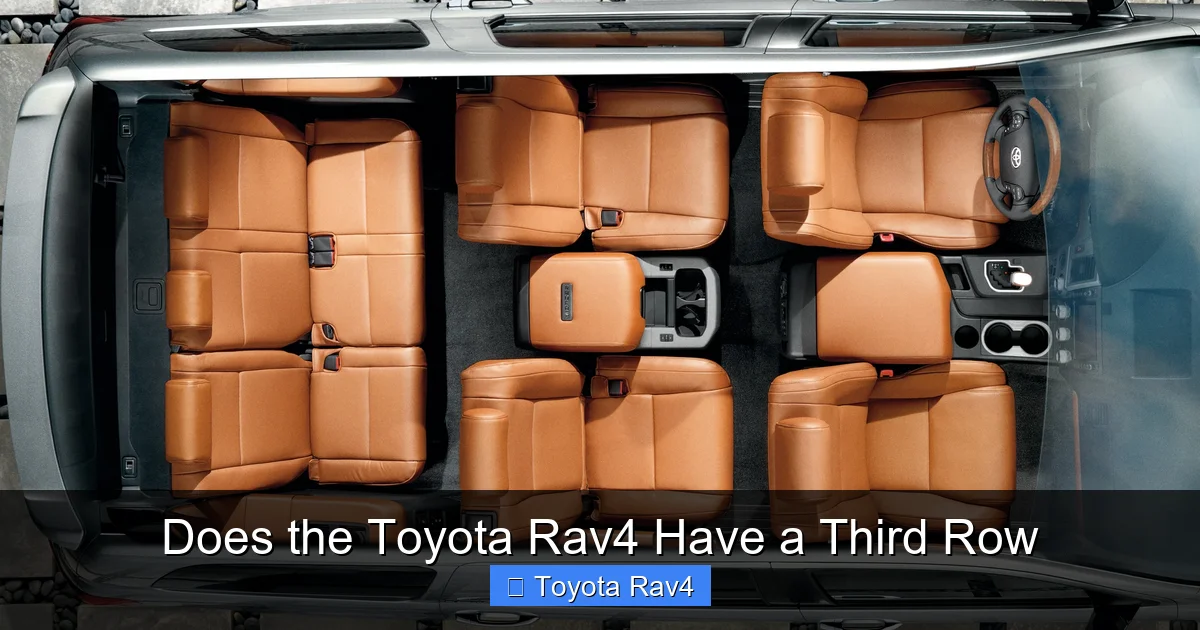
The Toyota RAV4 does not come with a third row of seats in any current model year. It’s designed as a compact SUV with seating for five passengers, prioritizing cargo space, fuel efficiency, and everyday usability over extra seating.
If you’re in the market for a reliable, fuel-efficient SUV that handles city streets and weekend adventures with ease, the Toyota RAV4 is likely on your shortlist. It’s one of the best-selling compact SUVs in America for good reason—great fuel economy, strong resale value, advanced safety features, and Toyota’s legendary reliability. But if you’re a growing family or frequently transport more than four passengers, you might be wondering: Does the Toyota RAV4 have a third row?
The short answer? No—it doesn’t. The Toyota RAV4 is designed as a two-row, five-passenger compact SUV. There is no third row available in any current or recent model year, including the gas-powered, hybrid, or plug-in hybrid (RAV4 Prime) versions. While this might be a letdown for some, it’s important to understand why Toyota made this design choice and what it means for your driving experience.
The RAV4 has evolved over the years from a small, car-based crossover into a rugged, capable SUV that still maintains its roots in practicality and efficiency. Its compact footprint makes it easy to park in tight city spots, while its available all-wheel drive and higher ground clearance give it enough off-road chops for light trails or snowy roads. But with only five seats, it’s not built to be a family hauler in the same way as a midsize or full-size SUV.
That said, the RAV4 excels in other areas. It offers impressive cargo space, modern tech features, and a comfortable ride—all at a competitive price point. So while it won’t seat seven like some of its larger siblings, it’s an excellent choice for couples, small families, or solo adventurers who value versatility without the bulk.
In this article, we’ll dive deep into the RAV4’s seating configuration, explore why Toyota hasn’t added a third row, compare it to other Toyota models that do offer extra seating, and help you decide whether the RAV4 is the right fit for your lifestyle.
Key Takeaways
- No third row available: The Toyota RAV4 is strictly a five-passenger vehicle with no factory-installed third row in any trim or model year.
- Compact SUV design: Built for urban driving and light off-roading, the RAV4 focuses on agility, fuel economy, and interior versatility rather than maximum seating.
- Cargo space over passengers: With only two rows, the RAV4 offers generous cargo room—up to 69.8 cubic feet with rear seats folded—making it ideal for gear, groceries, or road trips.
- RAV4 Hybrid and Prime variants: Even the electrified versions (Hybrid and Plug-in Hybrid) maintain the same five-seat layout without a third row.
- Alternatives with third rows: Families needing seven seats should consider the Toyota Highlander, 4Runner, or Sienna minivan instead.
- Aftermarket modifications not recommended: Adding a third row voids warranties, compromises safety, and is not supported by Toyota.
- Future updates unlikely: Toyota has shown no plans to introduce a third-row RAV4, as it would conflict with the vehicle’s core design philosophy.
📑 Table of Contents
- Understanding the Toyota RAV4’s Seating Layout
- RAV4 Hybrid and Plug-In Hybrid: Same Seating, More Efficiency
- Comparing the RAV4 to Toyota Models with Third Rows
- Can You Add a Third Row to a RAV4?
- Who Is the RAV4 Best Suited For?
- The Future of the RAV4: Will a Third Row Ever Come?
- Final Thoughts: Is the RAV4 Right for You?
Understanding the Toyota RAV4’s Seating Layout
When you step inside the Toyota RAV4, the first thing you’ll notice is the clean, functional interior design. The dashboard is intuitive, the materials feel durable, and the layout is driver-focused. But when it comes to seating, the RAV4 keeps things simple: two rows, five seats.
The front row features two bucket seats with available power adjustments, heating, and ventilation depending on the trim level. The driver’s seat is positioned high for excellent visibility, which is a big plus for city driving and parking. The second row consists of a 60/40 split-folding bench seat that comfortably fits three passengers—though two adults and a child or three smaller passengers will feel most at ease.
There is no third row. Not in the base LE trim, not in the sporty XSE Hybrid, and not in the plug-in RAV4 Prime. Even the most premium Limited or Adventure trims don’t offer an optional third row. This is consistent across all model years from 2019 to 2024, and Toyota has made no announcements about changing this in the near future.
Why Only Five Seats?
Toyota designed the RAV4 to be a compact SUV, and compact SUVs typically max out at five passengers. Adding a third row would require a longer wheelbase, a larger body, and significant structural changes—essentially turning the RAV4 into a different vehicle. That’s not to say it’s impossible, but it would compromise the RAV4’s core strengths: maneuverability, fuel efficiency, and affordability.
For example, the current RAV4 has a wheelbase of about 105.9 inches. To comfortably fit a third row, that would likely need to stretch to over 115 inches—similar to the Toyota Highlander. That extra length would make the RAV4 harder to park, reduce its agility, and increase its weight, which would hurt fuel economy.
Instead, Toyota chose to maximize the space it has. The RAV4 offers up to 37.5 inches of rear legroom, which is generous for the class. The rear seats also recline slightly and slide forward and back (on most trims), allowing you to prioritize passenger comfort or cargo space as needed.
Cargo Space: A Major Advantage
One of the biggest benefits of not having a third row is the abundance of cargo room. With the rear seats up, the RAV4 offers 37.5 cubic feet of storage behind the second row. Fold those seats down, and you get a massive 69.8 cubic feet—enough to fit mountain bikes, luggage for a week-long trip, or even a small piece of furniture.
This makes the RAV4 a fantastic choice for outdoor enthusiasts, pet owners, or anyone who values hauling capability. Whether you’re loading up camping gear, groceries, or sports equipment, the RAV4 handles it with ease.
Compare that to a seven-seat SUV like the Highlander, which offers only 16 cubic feet behind the third row—and that’s before you even put anyone in the back. If you fold the third row down, you get about 48.4 cubic feet, which is still less than the RAV4’s maximum.
So while the RAV4 can’t seat seven, it can carry more stuff than many larger SUVs when you don’t need the extra passengers.
RAV4 Hybrid and Plug-In Hybrid: Same Seating, More Efficiency
Visual guide about Does the Toyota Rav4 Have a Third Row
Image source: 3.bp.blogspot.com
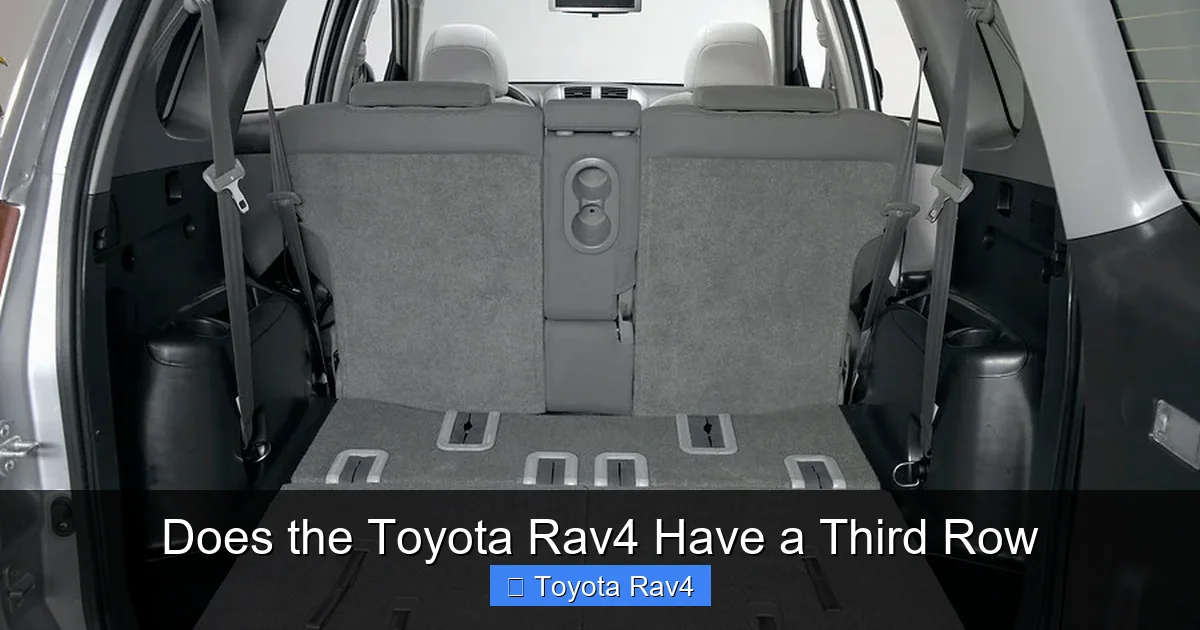
Toyota offers the RAV4 in several powertrain options, including a traditional gas engine, a hybrid, and a plug-in hybrid (RAV4 Prime). But no matter which version you choose, the seating remains the same: five passengers, two rows.
The RAV4 Hybrid combines a 2.5-liter four-cylinder engine with electric motors to deliver up to 219 horsepower and an EPA-estimated 40 mpg in the city. It’s a great option for commuters and eco-conscious drivers who want better fuel economy without sacrificing performance.
The RAV4 Prime takes it a step further. As a plug-in hybrid, it can travel up to 42 miles on electric power alone—perfect for short commutes or school runs. Once the battery depletes, it switches to hybrid mode, giving you a combined range of over 600 miles. With 302 horsepower, it’s also the most powerful RAV4 ever made.
Despite these impressive upgrades, neither the Hybrid nor the Prime adds a third row. The battery pack in the Prime is located under the floor, which actually helps maintain a flat cargo area and doesn’t eat into passenger space. But it also means there’s no room to squeeze in extra seats.
Why No Third Row in the Hybrid?
You might think that because the RAV4 Hybrid is more expensive, it would offer more features—like a third row. But Toyota’s strategy is clear: the RAV4 is a compact SUV, and compact SUVs don’t typically have third rows. Adding one would require a complete redesign, and Toyota already has other models for that purpose.
Moreover, the hybrid system adds complexity and cost. Toyota likely decided to keep the RAV4 Hybrid focused on efficiency and performance rather than trying to cram in extra seating that would reduce cargo space and increase weight.
Comparing the RAV4 to Toyota Models with Third Rows
If you love the Toyota brand but need more than five seats, don’t worry—Toyota has several excellent options with third rows. Here’s how the RAV4 stacks up against its larger siblings.
Toyota Highlander: The Family-Friendly SUV
The Toyota Highlander is the natural upgrade if you need a third row. It’s a midsize SUV that seats up to eight passengers (seven with captain’s chairs in the second row). It offers a smooth ride, plenty of tech features, and available all-wheel drive.
The Highlander comes with a 2.4-liter turbocharged four-cylinder engine or a hybrid powertrain. The gas version delivers 265 horsepower, while the Hybrid offers 243 horsepower and up to 36 mpg combined. It also has a towing capacity of up to 5,000 pounds when properly equipped.
But the Highlander is significantly larger than the RAV4. It’s about 10 inches longer and 3 inches wider, which makes it less nimble in tight spaces. It also costs more—starting around $38,000 compared to the RAV4’s $28,000 starting price.
So if you need the space and seating, the Highlander is a great choice. But if you don’t regularly carry more than five people, you might find it overkill.
Toyota 4Runner: Rugged and Capable
For off-road enthusiasts, the Toyota 4Runner is a legendary option. It’s a body-on-frame SUV with serious trail capability, available four-wheel drive, and a powerful 4.0-liter V6 engine.
The 4Runner seats up to seven passengers with its optional third row. However, that third row is best suited for children or short trips—it’s quite cramped for adults. The cargo space behind the third row is also minimal, at just 10.2 cubic feet.
The 4Runner is built for adventure, not fuel efficiency. It gets around 17 mpg combined, which is much lower than the RAV4. But if you’re planning frequent off-road trips or need a rugged, durable SUV, the 4Runner is hard to beat.
Toyota Sienna: The Minivan Alternative
If you need maximum seating and versatility, the Toyota Sienna minivan is worth considering. It seats up to eight passengers and comes standard with a hybrid powertrain that delivers up to 36 mpg combined—better than most SUVs.
The Sienna offers sliding doors, a low step-in height, and plenty of storage compartments. It’s ideal for families with young children or anyone who values ease of access and cargo flexibility.
But minivans aren’t for everyone. Some drivers prefer the higher seating position and SUV styling of the RAV4 or Highlander. The Sienna also lacks all-wheel drive in most trims (though it’s available), which might be a concern in snowy climates.
Can You Add a Third Row to a RAV4?
You might be wondering: can you install a third row in a RAV4 yourself? The short answer is technically yes—but it’s not recommended, and it’s not legal in most cases.
Some aftermarket companies offer third-row conversion kits for older SUVs, but these are rare, expensive, and often unsafe. Adding seats requires modifying the floor, reinforcing the chassis, and installing new seat belts and airbags—all of which must meet strict federal safety standards.
Even if you could install a third row, it would likely be cramped, uncomfortable, and potentially dangerous in a crash. Toyota does not support or warranty any such modifications, and your insurance company might not cover accidents involving altered vehicles.
Moreover, the RAV4’s roofline and rear window are not designed for a third row. Passengers in a makeshift back row would have poor visibility, limited headroom, and no access to climate controls or airbags.
In short: don’t do it. If you need a third row, buy a vehicle that’s designed for it from the factory.
What About Jump Seats or Cargo Area Modifications?
Some owners have experimented with folding jump seats or cargo area modifications to squeeze in an extra passenger. For example, you could install a small bench in the cargo area and use seat belts from the rear seats.
But this is extremely unsafe and illegal in most states. Passengers in the cargo area are not protected by airbags, and the seat belts may not be rated for that position. In a collision, they could be seriously injured.
Always follow federal and state laws regarding passenger seating. The safest and most legal option is to choose a vehicle with a factory-installed third row.
Who Is the RAV4 Best Suited For?
Now that we’ve covered the facts, let’s talk about who should consider the RAV4—and who should look elsewhere.
The RAV4 is ideal for:
– Young professionals or couples: It’s affordable, fuel-efficient, and easy to drive in the city.
– Small families with one or two children: The rear seats are spacious, and there’s plenty of room for car seats, strollers, and diaper bags.
– Outdoor enthusiasts: With available all-wheel drive and generous cargo space, it’s perfect for camping, skiing, or road trips.
– Commuters: The hybrid and Prime versions offer excellent fuel economy and low emissions.
– First-time SUV buyers: It’s user-friendly, reliable, and packed with standard safety features like Toyota Safety Sense 2.0.
On the other hand, the RAV4 may not be the best fit if:
– You regularly transport six or seven passengers.
– You need maximum cargo space with all seats occupied.
– You prefer a larger, more commanding driving position.
– You frequently tow heavy trailers (the RAV4 maxes out at 3,500 pounds).
Real-World Example: The Johnson Family
Take the Johnson family, for instance. They have two kids, a dog, and love weekend hikes. They considered the RAV4 and the Highlander. After test-driving both, they chose the RAV4 because it was easier to park, got better gas mileage, and had enough space for their gear. They don’t need a third row because the kids are still young, and they usually travel with just four people.
But if the Johnsons had three kids or often hosted friends’ children, they might have opted for the Highlander instead.
The Future of the RAV4: Will a Third Row Ever Come?
Given Toyota’s current lineup and design philosophy, it’s highly unlikely that the RAV4 will ever get a third row. The brand already has the Highlander, 4Runner, and Sienna to cover the seven- and eight-passenger market. Adding a third row to the RAV4 would blur the lines between these models and create internal competition.
Moreover, the compact SUV segment is booming, and buyers are prioritizing fuel efficiency, tech, and style over maximum seating. The RAV4’s success proves that five seats are enough for most people.
That said, Toyota is always innovating. Future updates could include more advanced hybrid systems, improved infotainment, or even a fully electric RAV4. But a third row? Don’t hold your breath.
What About the RAV4 Prime’s Success?
The RAV4 Prime has been a hit, selling out in many markets due to its impressive electric range and performance. Its success reinforces Toyota’s focus on electrification and efficiency—not expanding seating capacity.
If Toyota were to introduce a larger RAV4 with a third row, it would likely be a new model altogether, not a modification of the current one.
Final Thoughts: Is the RAV4 Right for You?
So, does the Toyota RAV4 have a third row? The answer is a clear no. But that doesn’t mean it’s the wrong choice for you.
The RAV4 shines as a compact SUV that balances practicality, efficiency, and capability. It’s perfect for daily driving, weekend adventures, and everything in between. While it won’t seat seven, it offers more cargo space than many larger SUVs and delivers a smooth, comfortable ride.
If you need a third row, consider the Toyota Highlander, 4Runner, or Sienna. But if you’re looking for a reliable, versatile, and fuel-efficient SUV for five, the RAV4 is hard to beat.
Ultimately, the best vehicle is the one that fits your lifestyle. Don’t let the lack of a third row deter you if the RAV4 checks all your other boxes. Take one for a test drive, load up your gear, and see how it feels on the road. You might just fall in love with its simplicity and capability.
Frequently Asked Questions
Does the Toyota RAV4 have a third row of seats?
No, the Toyota RAV4 does not have a third row of seats in any current or recent model year. It is designed as a compact SUV with seating for five passengers across two rows.
Can I add a third row to my RAV4?
While technically possible through aftermarket modifications, adding a third row is not recommended. It can compromise safety, void your warranty, and may not meet legal standards for passenger transport.
Which Toyota SUV has a third row?
The Toyota Highlander, 4Runner, and Sienna minivan all offer third-row seating. The Highlander seats up to eight, the 4Runner up to seven, and the Sienna up to eight passengers.
Does the RAV4 Hybrid have a third row?
No, the RAV4 Hybrid does not have a third row. Like the gas-powered version, it seats five passengers and prioritizes fuel efficiency and cargo space over extra seating.
Is the RAV4 Prime available with a third row?
No, the RAV4 Prime plug-in hybrid does not offer a third row. It maintains the same five-seat layout as other RAV4 models, with a focus on electric range and performance.
Why doesn’t the RAV4 have a third row?
Toyota designed the RAV4 as a compact SUV focused on agility, fuel economy, and cargo space. Adding a third row would require a larger body and compromise its core strengths, which is why Toyota offers other models for larger families.