

The Toyota RAV4 Hybrid is primarily manufactured in North America and Japan, with key production facilities in Canada, the United States, and Japan. These plants uphold Toyota’s global quality standards, ensuring every RAV4 Hybrid delivers reliability, fuel efficiency, and performance.
Key Takeaways
- Primary Production Locations: The RAV4 Hybrid is mainly built in Canada (Cambridge, Ontario), the U.S. (Georgetown, Kentucky), and Japan (Tahara, Aichi).
- North American Focus: Over 70% of RAV4 Hybrids sold in the U.S. and Canada are produced locally, reducing shipping costs and delivery times.
- Global Quality Standards: All manufacturing plants follow Toyota’s rigorous production system, ensuring consistent quality across regions.
- Environmental Commitment: Hybrid production emphasizes sustainability, with eco-friendly practices in energy use and waste reduction.
- VIN Decoding Tip: The Vehicle Identification Number (VIN) reveals the exact plant where your RAV4 Hybrid was assembled.
- Future Expansion: Toyota continues to invest in hybrid and electric vehicle production, with potential new facilities in North America.
- Why It Matters: Knowing where your vehicle is made can influence perceptions of quality, resale value, and environmental impact.
📑 Table of Contents
Where Are Toyota RAV4 Hybrids Made?
If you’re in the market for a fuel-efficient, reliable, and versatile SUV, the Toyota RAV4 Hybrid is likely on your shortlist. But have you ever wondered where this popular hybrid actually comes from? It’s not just about what’s under the hood—it’s also about where it’s built. Understanding where the Toyota RAV4 Hybrid is made gives you insight into its quality, supply chain efficiency, and even its environmental footprint.
Toyota has long been a global leader in hybrid technology, and the RAV4 Hybrid is one of its most successful models. Since its introduction, it has consistently ranked among the top-selling hybrid SUVs in North America and beyond. But unlike some vehicles that are imported from distant countries, the RAV4 Hybrid benefits from a strategic production network that brings manufacturing closer to major markets. This means faster delivery, better support, and often, a smaller carbon footprint from transportation.
So, where exactly are Toyota RAV4 Hybrids made? The answer isn’t as simple as one country or one factory. Instead, Toyota uses a global production strategy that leverages multiple plants across North America and Asia. This approach allows the company to meet high demand while maintaining strict quality control and adapting to regional market needs. In this article, we’ll take a deep dive into the manufacturing origins of the RAV4 Hybrid, explore the key production facilities, and explain why location matters when you’re choosing your next vehicle.
Global Production Strategy: A Closer Look at Toyota’s Hybrid Manufacturing
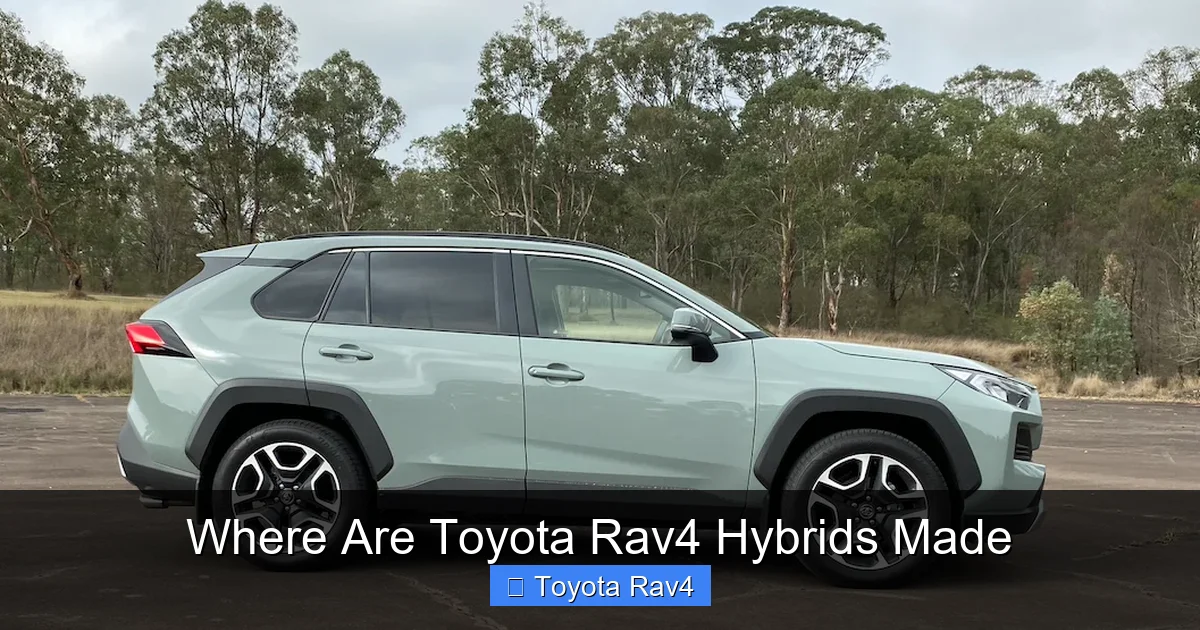
Visual guide about Where Are Toyota Rav4 Hybrids Made
Image source: eftm.com
Toyota doesn’t just build cars—it builds a global ecosystem of production, innovation, and sustainability. The company’s hybrid vehicles, including the RAV4 Hybrid, are the result of decades of research, engineering excellence, and a commitment to reducing environmental impact. To meet worldwide demand, Toyota has established a network of manufacturing plants that are strategically located near major markets.
This decentralized approach has several advantages. First, it reduces shipping distances and costs, which helps keep prices competitive. Second, it allows Toyota to respond quickly to regional demand fluctuations. For example, if the U.S. market sees a surge in hybrid SUV sales, Toyota can ramp up production at its North American plants without waiting for imports. Third, local production supports regional economies by creating jobs and fostering supplier networks.
The RAV4 Hybrid is a prime example of this strategy in action. While Toyota is a Japanese company, the majority of RAV4 Hybrids sold in North America are built in North America. This localization not only speeds up delivery but also aligns with consumer preferences for domestically produced vehicles. It also helps Toyota comply with regional regulations, such as fuel economy standards and emissions requirements.
But it’s not just about geography—Toyota’s production philosophy plays a big role too. The Toyota Production System (TPS), also known as “lean manufacturing,” emphasizes efficiency, quality, and continuous improvement. Every plant that builds the RAV4 Hybrid follows these principles, ensuring that each vehicle meets the same high standards, no matter where it’s made.
Why Location Matters for Hybrid Vehicles
You might be thinking, “Does it really matter where my car is made?” The short answer is yes—especially when it comes to hybrid vehicles like the RAV4 Hybrid. Location affects everything from build quality and parts availability to environmental impact and resale value.
For starters, vehicles built closer to their primary market often have shorter supply chains. This means fewer delays, lower transportation emissions, and faster access to service parts. If you buy a RAV4 Hybrid made in Kentucky and live in Texas, for example, it’s likely to arrive at the dealership faster and with less logistical complexity than one shipped from overseas.
Additionally, local production supports regional economies. When Toyota builds vehicles in the U.S. or Canada, it creates thousands of jobs and invests in local infrastructure. This economic impact can influence consumer perception and loyalty. Many buyers feel more confident purchasing a vehicle that’s “Made in America” or “Made in Canada,” especially when it comes from a trusted brand like Toyota.
There’s also the environmental angle. Hybrid vehicles are already more eco-friendly than traditional gas-powered SUVs, but the manufacturing and shipping process still contributes to their overall carbon footprint. By producing the RAV4 Hybrid in nearby facilities, Toyota reduces the need for long-haul shipping, which cuts down on fuel use and emissions.
Finally, knowing where your vehicle is made can give you peace of mind about quality. Toyota’s global plants are held to the same high standards, but some buyers prefer vehicles built in certain regions due to perceived craftsmanship or regulatory oversight. Understanding the production origins helps you make a more informed decision.
Primary Manufacturing Plants for the Toyota RAV4 Hybrid
Now that we’ve covered the “why,” let’s get into the “where.” The Toyota RAV4 Hybrid is produced in several key facilities around the world, with the majority of units destined for North America coming from plants in Canada and the United States. A smaller portion is still manufactured in Japan, particularly for export to other regions or for special trims.
Let’s take a closer look at the main production sites.
Toyota Motor Manufacturing Canada (TMMC) – Cambridge, Ontario
One of the most important hubs for RAV4 Hybrid production is Toyota Motor Manufacturing Canada (TMMC) in Cambridge, Ontario. This facility has been a cornerstone of Toyota’s North American operations since the 1980s and has evolved into one of the most advanced automotive plants in the world.
The Cambridge plant is actually split into two sites: North and South. The South plant is where the RAV4 Hybrid is primarily assembled. It’s equipped with state-of-the-art robotics, hybrid-specific assembly lines, and rigorous quality control systems. The plant employs thousands of workers and operates on a just-in-time production model, meaning parts arrive exactly when they’re needed, reducing waste and increasing efficiency.
What makes TMMC stand out is its commitment to sustainability. The plant uses renewable energy sources, recycles over 95% of its waste, and has achieved zero landfill status. It’s also one of the first Toyota facilities to integrate hybrid production seamlessly into its operations, allowing it to switch between gas and hybrid models with minimal downtime.
For North American buyers, a RAV4 Hybrid built in Cambridge means faster delivery, strong local support, and the satisfaction of driving a vehicle made in Canada. The plant also supplies vehicles to the U.S. market, making it a key player in Toyota’s hybrid strategy.
Toyota Motor Manufacturing, Kentucky (TMMK) – Georgetown, Kentucky
Another major production site is Toyota Motor Manufacturing, Kentucky (TMMK), located in Georgetown. This massive facility is one of the largest Toyota plants outside of Japan and has been producing vehicles since 1988. It’s known for its high output, advanced technology, and role as a training ground for Toyota’s global workforce.
TMMK assembles a wide range of Toyota vehicles, including the Camry, Avalon, and Highlander. In recent years, it has also taken on RAV4 Hybrid production to meet growing demand in the U.S. market. The plant features dedicated hybrid assembly lines, where batteries, electric motors, and control systems are integrated with precision.
One of the strengths of TMMK is its workforce. Employees undergo extensive training in Toyota’s production methods and are encouraged to suggest improvements through the company’s kaizen (continuous improvement) program. This culture of excellence ensures that every RAV4 Hybrid built in Kentucky meets Toyota’s high standards.
The plant also emphasizes sustainability. It uses solar panels, recycles water, and has reduced its carbon emissions significantly over the past decade. For American buyers, a RAV4 Hybrid from TMMK represents a blend of domestic manufacturing pride and cutting-edge hybrid technology.
Toyota Motor Corporation – Tahara Plant, Japan
While North America handles the bulk of RAV4 Hybrid production, Toyota’s flagship plant in Tahara, Aichi, Japan, still plays a vital role. The Tahara plant is renowned for its precision engineering and is often used for high-end models, limited editions, and vehicles destined for export.
Some RAV4 Hybrids—especially those with premium features or special trims—are still built in Tahara and shipped to markets around the world. This plant is considered one of the most advanced in the Toyota network, with a focus on craftsmanship and attention to detail.
Buyers who receive a RAV4 Hybrid from Japan may notice subtle differences in fit and finish, though all vehicles meet the same global standards. The Tahara plant also serves as a testing ground for new technologies, some of which eventually make their way to North American production lines.
How to Tell Where Your RAV4 Hybrid Was Made
Curious about where your specific RAV4 Hybrid was built? It’s easier than you think. Every vehicle comes with a Vehicle Identification Number (VIN), a 17-character code that contains a wealth of information—including the manufacturing plant.
The first character of the VIN indicates the country of origin. For example:
– “J” means Japan
– “2” means Canada
– “1” or “4” means the United States
The 11th character of the VIN specifies the assembly plant. For instance:
– “C” in the 11th position typically indicates Cambridge, Ontario
– “K” often refers to Georgetown, Kentucky
– “T” may point to Tahara, Japan
You can use free online VIN decoders or contact your Toyota dealer to get a detailed breakdown of your vehicle’s origin. This information can be useful for warranty claims, recalls, or simply satisfying your curiosity.
The Future of RAV4 Hybrid Production
As demand for hybrid and electric vehicles continues to grow, Toyota is investing heavily in expanding its production capacity. The company has announced plans to build new battery plants and upgrade existing facilities to support its electrification goals.
In North America, Toyota is building a $1.3 billion battery plant in North Carolina, which will supply batteries for hybrid and electric vehicles, including future RAV4 models. The company is also exploring the possibility of new assembly plants in the U.S. to further localize production.
These investments signal Toyota’s long-term commitment to hybrid technology and sustainable manufacturing. For RAV4 Hybrid buyers, this means continued access to high-quality, locally produced vehicles with cutting-edge features.
Conclusion
The Toyota RAV4 Hybrid is more than just a fuel-efficient SUV—it’s a product of global engineering, local manufacturing, and a commitment to sustainability. Whether it’s built in Cambridge, Georgetown, or Tahara, each RAV4 Hybrid reflects Toyota’s dedication to quality, innovation, and environmental responsibility.
Knowing where your vehicle is made adds another layer of confidence to your purchase. It tells you about the supply chain, the workforce, and the values behind the brand. And with Toyota’s ongoing investments in hybrid production, the future looks bright for this popular SUV.
So the next time someone asks, “Where are Toyota RAV4 Hybrids made?” you’ll have the full story—and maybe even a fun fact about your own vehicle’s origin.
Frequently Asked Questions
Where is the Toyota RAV4 Hybrid primarily manufactured?
The Toyota RAV4 Hybrid is primarily manufactured in North America, with key production facilities in Cambridge, Ontario (Canada), and Georgetown, Kentucky (USA). A smaller portion is also built in Tahara, Japan.
Are all RAV4 Hybrids sold in the U.S. made in America?
Most RAV4 Hybrids sold in the U.S. are made in North America—either in Kentucky or Canada. However, some special trims or export models may come from Japan.
How can I find out where my RAV4 Hybrid was made?
Check the Vehicle Identification Number (VIN). The first character indicates the country, and the 11th character reveals the assembly plant. Use a free VIN decoder or contact your dealer for details.
Does the manufacturing location affect the quality of the RAV4 Hybrid?
No. All Toyota plants follow the same global quality standards, so a RAV4 Hybrid made in Canada, the U.S., or Japan will have the same reliability and performance.
Why does Toyota build RAV4 Hybrids in multiple countries?
Building in multiple locations reduces shipping costs, speeds up delivery, supports local economies, and allows Toyota to meet regional demand more efficiently.
Will Toyota increase RAV4 Hybrid production in the future?
Yes. Toyota is investing in new battery plants and expanding hybrid production capacity in North America to meet growing demand for electrified vehicles.